
There is a reason rosewood nails show up every winter and never quite leave. Rosewood sits in that rare middle ground between red, pink and brown: warm enough to feel cozy against a wool coat, deep enough to look polished at a dinner table, and muted enough to wear every single day without thinking about it. This palette gathers six shades that move step by step from a soft blushing rosewood down to a near-black midnight rosewood, so you can find your depth whether you like your manicure subtle or dramatic.
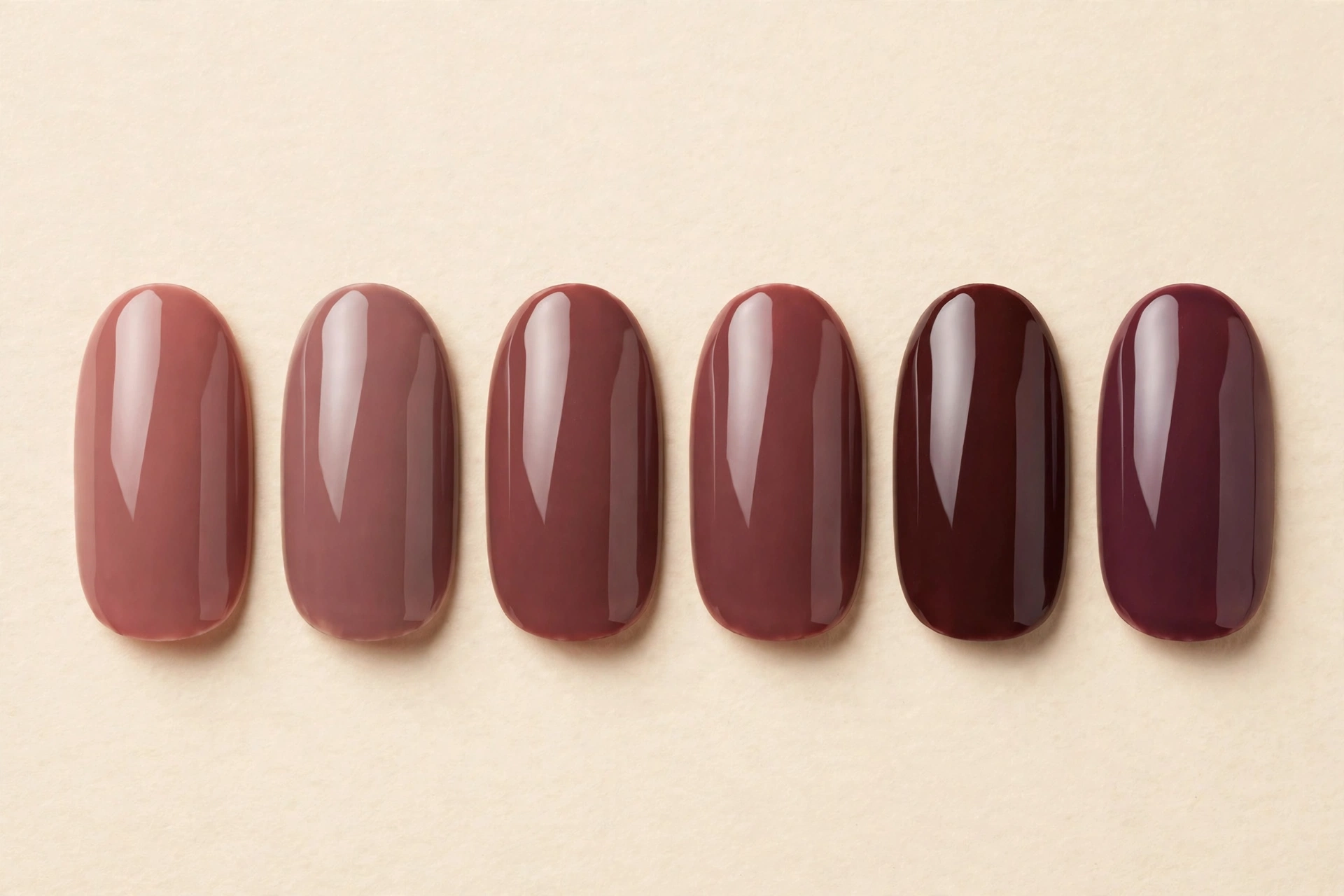
How to Use This Rosewood Nails Palette
- Pick your depth first. If your wardrobe is mostly light neutrals, start with shades 1–3. If you wear a lot of black, navy or dark denim, shades 4–6 will look intentional rather than heavy.
- Wear one shade, or wear the gradient. All six shades belong to the same rose-brown family, so painting each nail a different shade from lightest to darkest (a skittle manicure) looks deliberate and expensive.
- Keep the finish glossy for winter. A high-shine top coat makes rosewood look like polished wood rather than flat brown, which is the whole point of the color family.
- Match your undertone, not the bottle. Cool undertones should lean toward the plum-leaning shades at the deep end; warm undertones glow in the true rosewood and wine shades in the middle.
- Let the shade do the work. Rosewood is a statement color on its own, so skip heavy nail art and let a clean shape and a glossy finish carry the look.
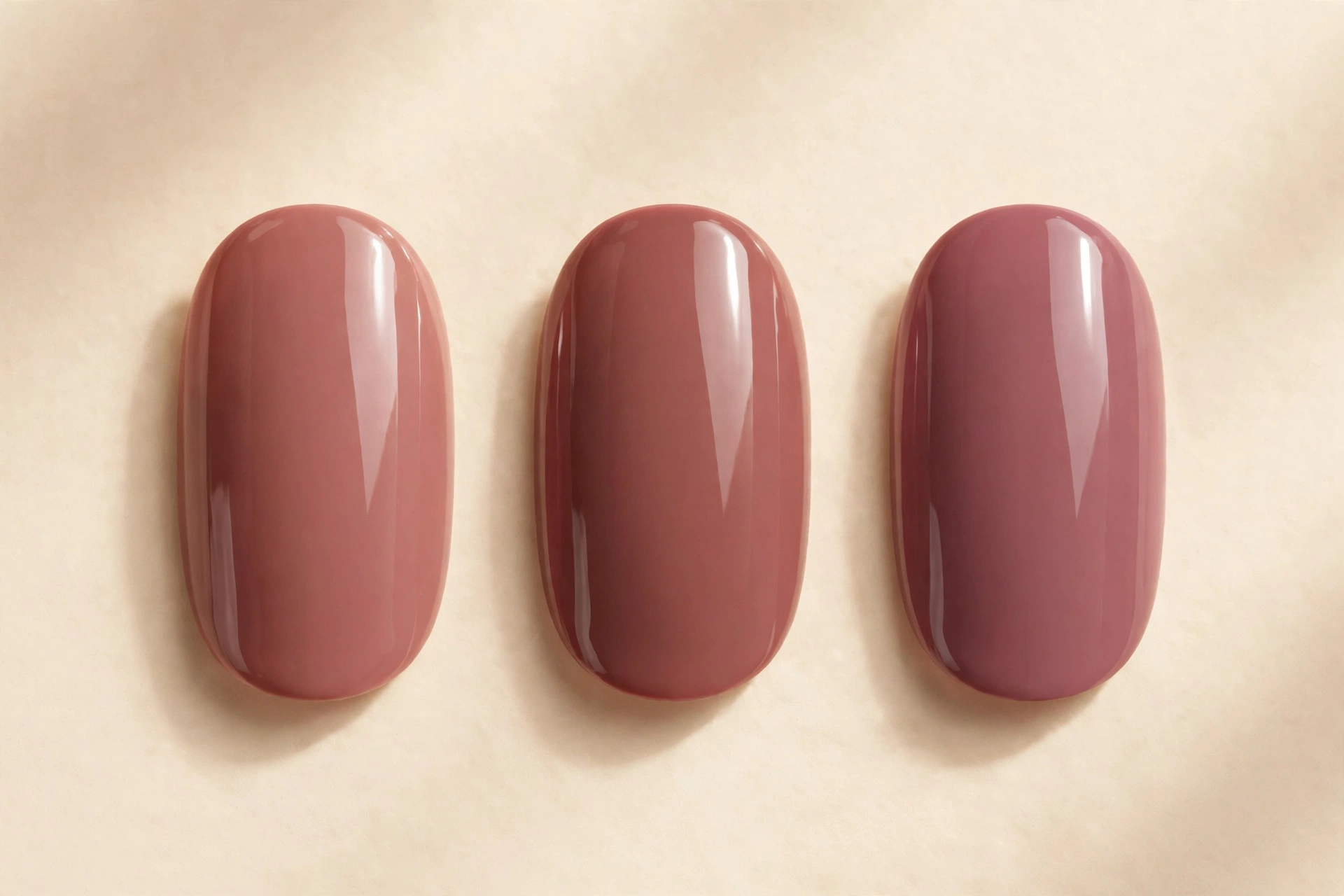
1. First Light Rosewood — #B57A74
First Light Rosewood is the softest shade in this palette, a dusty rose-brown that reads as a warm, muted rose on the nail. It has a gentle brown base that keeps it from looking like a pastel pink, and a rosy warmth that keeps it from reading as a plain nude. This balance is exactly what makes it so wearable: it flatters the hand without demanding attention, and it looks polished in daylight, office lighting and evening light alike. On short nails it gives a neat, finished look, and on longer almond or oval shapes it reads soft and romantic rather than sweet.
This shade is the most forgiving of the six when it comes to skin tone. Fair skin with cool undertones will see the rosy side of it come forward, giving a healthy flush to the hands, while warm and olive skin tones will find it settles into a soft, tawny rose that never turns orange. Deep skin tones get a beautiful muted contrast from it, especially in a glossy crème finish, where the shade looks like a lighter rosewood stain rather than a stark pink. If you have ever found dusty rose polishes too pink or nudes too beige, this is the shade that sits between them.
First Light Rosewood is made for everyday winter wear: workdays, school runs, coffee dates and weekends at home. It also works beautifully as a bridesmaid shade or a wedding-guest shade in winter, because it photographs softly and pairs with burgundy, navy and forest green outfits without clashing. For the best result, apply two thin coats rather than one thick one, since dusty rose-brown shades can go streaky if they are flooded on. A glossy top coat is essential here; a matte finish can make this lightest shade look chalky, while shine keeps it looking like real rosewood.
2. Classic Rosewood — #9C5B57
Classic Rosewood is the truest rosewood in the palette, the shade the whole color family is named after: a rich, medium rose-brown with equal parts rose and brown. It is deep enough to read as a real color rather than a nude, but not so dark that it loses its warmth. Indoors it looks like polished rosewood furniture, and in sunlight the rose tones open up and give it a soft glow. This is the shade to choose if you want one bottle that does everything, because it works for the office, for evenings out and for the whole stretch of the winter season.
On skin, Classic Rosewood is remarkably democratic. Fair skin tones get a refined contrast that makes the hands look elegant rather than washed out, especially when the nails are kept at a medium length. Medium and olive skin tones will find it harmonizes beautifully, since the brown base echoes warm undertones while the rose keeps it from looking muddy. Deep skin tones get a rich, tonal effect where the shade reads as a deep rose stain, sophisticated rather than loud. If you love the warmth of a red-brown but find pure browns too flat, this shade gives you that warmth with a rosy lift. For a redder, warmer cousin in the same family, explore our mahogany nails palette.
Classic Rosewood is the workhorse of winter occasions: it suits office days, dinner parties, family gatherings and holiday events without ever feeling underdressed or overdressed. It pairs especially well with camel, cream, charcoal and black, and it is one of the few deep shades that looks equally good with gold and silver jewelry. Wear it in a crème finish for the most classic result, or add a subtle shimmer top coat for evenings if you want a little extra light. Because it is a mid-depth shade, it also grows out gracefully, which makes it a practical pick if you stretch your manicures to two weeks.
3. Smoked Rosewood — #7E4A4E
Smoked Rosewood takes the classic shade one step deeper and adds a whisper of smoke, a muted, slightly greyed rose-brown that feels like the color of winter evenings. It is the shade in this palette that reads most like a fashion color: moody, grown-up and quietly dramatic, without crossing into the territory of a full vampy manicure. The smoky undertone mutes the brightness of the rose, so the shade looks expensive and understated, the kind of color that gets compliments from people who notice details.
This shade is particularly flattering on cool and neutral undertones, because the smoky base echoes cool skin rather than fighting it. Fair cool skin tones will find it gives a chic contrast without the harshness of a true dark red, and it is an excellent alternative to burgundy when you want something softer. Warm skin tones should wear it in a glossy finish, which brings out the rose and stops the smoke from reading grey. On deep skin tones, Smoked Rosewood looks like a deep, velvety stain, especially on short square or squoval nails where the shape keeps it modern. If your skin has visible redness, this muted shade is also a kind choice, since it does not amplify pink in the hands the way brighter reds can.
Smoked Rosewood shines at occasions that call for quiet polish: work dinners, theater evenings, winter weddings and any event where you want to look put-together without a loud manicure. It is also a superb everyday shade for people who find lighter rosewoods too subtle but are not ready for the darkest shades in this palette. Styling-wise, it loves charcoal wool, dark denim, leather and deep green, and it looks striking with a single gold ring or a simple silver band. Apply it over a ridge-filling base coat for the smoothest result, since deeper muted shades show every ridge and imperfection if the nail surface is uneven.
4. Wine Rosewood — #6E3540
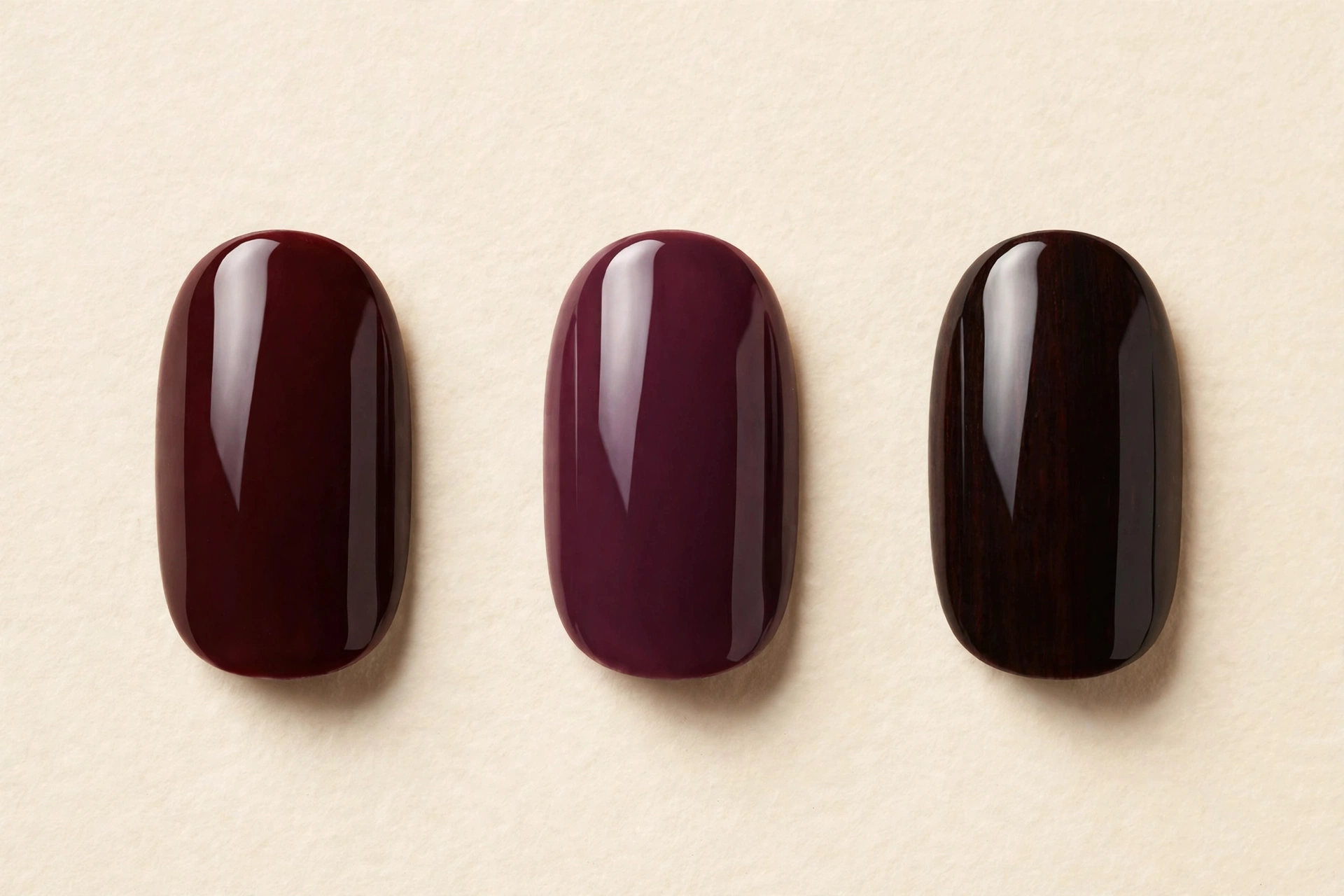
Wine Rosewood is where this palette turns unmistakably evening-ready: a deep rose-brown with a strong wine influence, like a glass of red wine held up to lamplight. It keeps the brown base that makes rosewood wearable, but the wine tones give it a richness and depth that reads festive and romantic. On the nail it looks darker than it does in the bottle, which is typical of wine shades, so expect a deep, glossy color that still shows its rose character in bright light. This is the shade to reach for when a regular rosewood feels too quiet for the occasion.
Wine Rosewood flatters a wide range of skin tones, but it is especially beautiful on medium and deep skin, where the wine depth creates a luxurious, tonal effect that looks like it was made for the hands. Fair skin tones get a dramatic contrast that makes the manicure the focal point, which works beautifully for evenings and parties, though it can feel bold for a first-time dark shade wearer. Warm undertones will see the brown base warm it up nicely, while cool undertones will pull out the wine and plum notes. If you already love wine and burgundy manicures, this shade is the rosewood version of that love; for a fuller tour of the wine family, see our burgundy nails palette.
This is a holiday-party, date-night and celebration shade through and through. It pairs with black velvet, satin, sequins and deep jewel tones, and it is one of the best shades in this palette for a winter wedding guest or a New Year’s Eve manicure that is not glitter. For longevity, wine shades benefit from a gel finish or a long-wear top coat, because chips show more clearly on dark colors than on light ones. Keep your cuticles moisturized too: dark shades draw the eye to the whole nail area, and neat cuticles make the difference between a good manicure and a great one.
5. Rosewood Plum — #5E2F3D
Rosewood Plum is the most purple-leaning shade in the palette, a deep rose-brown pulled toward plum. It is still unmistakably rosewood, because the brown base keeps it grounded, but the plum influence gives it a cool, mysterious quality that the warmer shades do not have. In low light it can read almost like a dark plum, while in daylight the rose-brown warmth comes back, so it shifts with the light in a way that makes it interesting to wear for days. This is the shade for people who love deep plum manicures but want something softer and more wearable than a straight purple.
Cool undertones will love Rosewood Plum immediately, since plum is one of the most flattering deep families for cool skin. Fair cool skin gets a striking, elegant contrast, and the shade looks particularly refined on longer nails where the color has room to show its depth. Neutral skin tones can wear it easily too, especially with a glossy finish that keeps the plum from reading too dark. Warm and olive skin tones should try it before committing to a full manicure, because plum can occasionally pull grey on very warm skin; if it does, layering it over a warm base or choosing the wine shade instead will solve the problem. On deep skin tones it reads as a rich, dark berry-brown that is gorgeous for evenings.
Rosewood Plum is made for winter evenings, formal events and any occasion where you want a manicure with presence. It pairs beautifully with silver jewelry, black outfits, deep navy and charcoal, and it is a natural partner for a smoky eye or a berry lip. Because it is a cool-leaning dark shade, it also works well as an accent: paint nine nails in Smoked Rosewood and one accent nail in Rosewood Plum, or reverse the combination, for a tonal look that stays within the family. Two coats are usually enough for full opacity, but a third thin coat will deepen the plum even further if you prefer an almost-black result.
6. Midnight Rosewood — #4A2329
Midnight Rosewood is the darkest shade in the palette, a near-black rosewood brown that only reveals its rose character in direct light. At first glance it looks like a very dark brown, almost black, but hold your hand up to the light and the deep rose undertones glow through. This is the shade that gives you the drama of a black manicure without the flatness of one, and the sophistication of a dark brown without the heaviness. It is the boldest choice here, and also, paradoxically, one of the easiest to wear, because dark neutrals go with everything.
Every skin tone can wear Midnight Rosewood, which is part of its appeal. On fair skin it creates a high-contrast, editorial look that is striking on short nails and elegant on long ones. On medium and olive skin it reads as a deep, glossy neutral that lengthens the look of the fingers. On deep skin it becomes a tonal, almost-black stain with a warm rose glow in the light, which is softer and more flattering than a true black polish. If you have been curious about dark winter nails but found black too stark and oxblood too red, Midnight Rosewood is the middle path that solves both problems.
Midnight Rosewood is the ultimate winter-evening shade: holiday parties, New Year’s Eve, formal dinners and nights out all suit it perfectly. It is also surprisingly practical for everyday wear, because it hides tip wear better than mid-tone shades and pairs with every color in a winter wardrobe, from cream knitwear to black coats. For the most polished result, use a high-gloss top coat and reapply it every two to three days to keep the shine, since dark shades lose their impact the moment they go dull. Short, neatly shaped nails keep this darkest shade looking chic rather than severe, which makes it an excellent pick if you keep your nails short in winter.
Rosewood Nails Polish and Gel Picks
You do not need a specific brand to get this palette right; you need the right tone and finish. For polish, look for a creamy rosewood crème in a true brown-rose tone for shades 1–3, and a richly pigmented wine or plum crème for shades 4–6. A ridge-filling base coat is worth using under the deeper shades, since they show nail texture more than light colors do. For gel, choose a soak-off rosewood gel polish in your preferred depth and pair it with a high-gloss gel top coat; gel is the better choice for the darkest two shades, because it keeps the shine that makes them look expensive and resists the chips that show up fastest on dark colors. Whichever route you take, finish with cuticle oil daily: rosewood shades look their best when the skin around the nail is as cared for as the color itself.
Styling Rosewood Nails for Winter
Rosewood is one of the easiest deep colors to style because it is already a neutral with warmth. With camel, cream and oatmeal knitwear, the lighter shades in this palette create a soft tonal story, while the darker shades provide contrast that keeps a pale outfit from looking washed out. With black, charcoal and navy, the whole palette works, but the wine and plum shades are the stars, adding warmth to cool dark outfits without clashing. With leather, denim and suede, rosewood feels right at home, echoing the natural brown tones of the materials. For jewelry, gold warms up the lighter shades beautifully, while silver and rose gold both suit the deeper plum and midnight shades.
If you want to add nail art, keep it minimal so the rosewood stays the hero. A single thin gold line near the cuticle, a tiny gold dot on the ring finger, or a matte top coat on one accent nail all add interest without breaking the palette’s quiet luxury. A French tip in Midnight Rosewood over a sheer nude base is another elegant option that uses the darkest shade as an accent rather than a full color. Avoid pairing rosewood with bright neon art or heavy glitter, which fight the muted, woody character of the color; if you want sparkle for the holidays, a fine gold shimmer top coat over Wine Rosewood gives you festivity without losing the palette.
Rosewood vs. Similar Winter Shades
It helps to know where rosewood ends and its neighbors begin, especially since winter is full of similar deep shades. Compared with burgundy, rosewood is browner and softer; burgundy leans red and wine, while rosewood leans brown and wood. Compared with mahogany, rosewood is rosier and cooler; mahogany is a redder, warmer brown. Compared with a straight plum, rosewood is warmer and more grounded thanks to its brown base. And compared with dusty rose, which is lighter and pinker, rosewood is the grown-up, winter-weight version of the same idea. If you like the softness of dusty rose but want more depth for winter, this palette is the natural next step, and our dusty rose nails palette shows where that lighter family lives.
For readers building a full winter rotation, rosewood also pairs well with other seasonal palettes. Wear it alongside deep rose shades for a tonal rose story, or contrast it with icy and frosted shades when you want a warm-versus-cool balance across a manicure. Our winter rose nails palette explores the deeper rose side of this family if you want to push further toward rose and away from brown.
Application and Longevity Tips for Deep Rose-Brown Shades
Deep shades reward good prep more than light ones do, so the extra two minutes are worth it. Start with clean, dry nails, push back cuticles gently and buff lightly so the surface is smooth. Always use a base coat: it prevents the darker rosewood shades from staining the nail plate, which matters because wine and plum pigments are the most likely to leave a tint behind. Apply two thin coats, letting the first dry fully before the second, and cap the free edge with each coat to slow down tip wear. Finish with a glossy top coat, and reapply a thin layer of top coat every two to three days to keep the shine and protect against chips.
Removal deserves the same care. Soak a cotton pad in remover, hold it on the nail for ten seconds before wiping, and wipe in one direction rather than scrubbing, which keeps dark pigment from staining the surrounding skin. Follow with hand cream and cuticle oil, and give your nails a day or two bare between dark manicures if you wear them back to back all winter. Stored properly, with bottles kept upright and tightly closed, rosewood polishes last well, though the darkest shades can thicken over time; a few drops of polish thinner, never remover, will bring them back.
The shades in this post are an inspiration palette to help you find your perfect rosewood tone; exact colors may vary slightly by brand, finish and lighting.
Frequently Asked Questions
What exactly is a rosewood nail color?
Rosewood is a deep, muted color that blends rose pink with brown, inspired by the warm reddish-brown wood of the rosewood tree. On nails it sits between dusty rose, burgundy and chocolate brown: warmer than plum, rosier than chocolate, and softer than a true red. That blend is why it flatters so many skin tones and works across so many occasions.
Are rosewood nails good for winter?
Yes, rosewood is one of the best winter nail colors because its depth suits the season’s darker wardrobe while its warmth keeps it from looking harsh. The lighter shades work for everyday winter wear and the office, while the wine, plum and midnight shades are made for holiday parties and evenings. It is also a practical winter choice because deeper shades hide tip wear better than pale colors.
Which rosewood shade suits my skin tone?
Fair skin tones look beautiful in the full range, but the lighter shades give a softer everyday effect while the darkest shades create striking contrast. Medium and olive skin tones glow in the true rosewood and wine shades, where the brown base harmonizes with warm undertones. Deep skin tones can wear all six shades, with the wine, plum and midnight shades giving a particularly rich, tonal result. If you are unsure, start with Classic Rosewood, the most universally flattering shade in the palette.
How do rosewood nails differ from burgundy nails?
Burgundy leans red and wine, while rosewood leans brown and wood, which makes rosewood softer and more muted on the nail. Burgundy is the bolder, more attention-grabbing choice; rosewood is the quieter, more wearable one. Many people who find burgundy slightly too red for everyday wear end up preferring rosewood, and the two families pair beautifully together if you want a tonal manicure using both.