
There is a particular kind of quiet luxury in a manicure that does not shout. Buttercream nails sit right in that space: soft, warm, creamy, and endlessly wearable. They are not stark white, not quite nude, and not yellow in the way a bold butter-yellow polish can be. Instead, they borrow the pale, whipped warmth of freshly churned butter and turn it into a nail colour that looks polished in every setting, from a Monday morning meeting to a spring wedding. If you have ever loved the idea of a neutral manicure but found pure white too harsh and beige too flat, this is the palette that finally makes sense.
Buttercream nails work so well in spring because they match the season’s mood. Spring style leans lighter — linen shirts, soft knits, pastel dresses, bare wrists with a single gold bracelet — and a creamy nail colour ties all of it together without competing for attention. The shades in this palette range from barely-there buttermilk to a richer golden butter, so there is a version for every skin tone and every comfort level, whether you like your nails to look almost bare or you want a visible wash of warm colour.
How to use this palette
- Pick your depth first: If you are new to creamy shades, start with the palest tones (Soft Buttermilk or Whipped Ivory) and move deeper only if you want more visible colour.
- Match the undertone to your skin: Warm and golden buttercreams flatter warm and olive skin beautifully, while cooler, milkier creams suit fair and cool-toned skin best. The shade notes below spell this out for each colour.
- Wear one shade alone or mix two: A single buttercream shade across all ten nails looks the most elegant, but a tonal gradient — palest on the thumb, deepest on the pinky — is a lovely way to show off the whole palette.
- Keep the finish glossy: Buttercream shades look their best with a high-shine top coat. A glossy finish keeps pale creams from looking chalky and gives the colour its signature whipped, creamy depth.
- Pair with gold, not silver: Warm gold jewellery, tortoiseshell accessories, and tan leather all sit naturally next to buttercream nails. Silver can work with the palest shades, but gold is the effortless match.
- Try it on short nails first: Creamy opaque shades are famously flattering on short, neatly shaped nails, where they make the nail bed look clean and even. Longer lengths work too, especially almond and oval shapes.
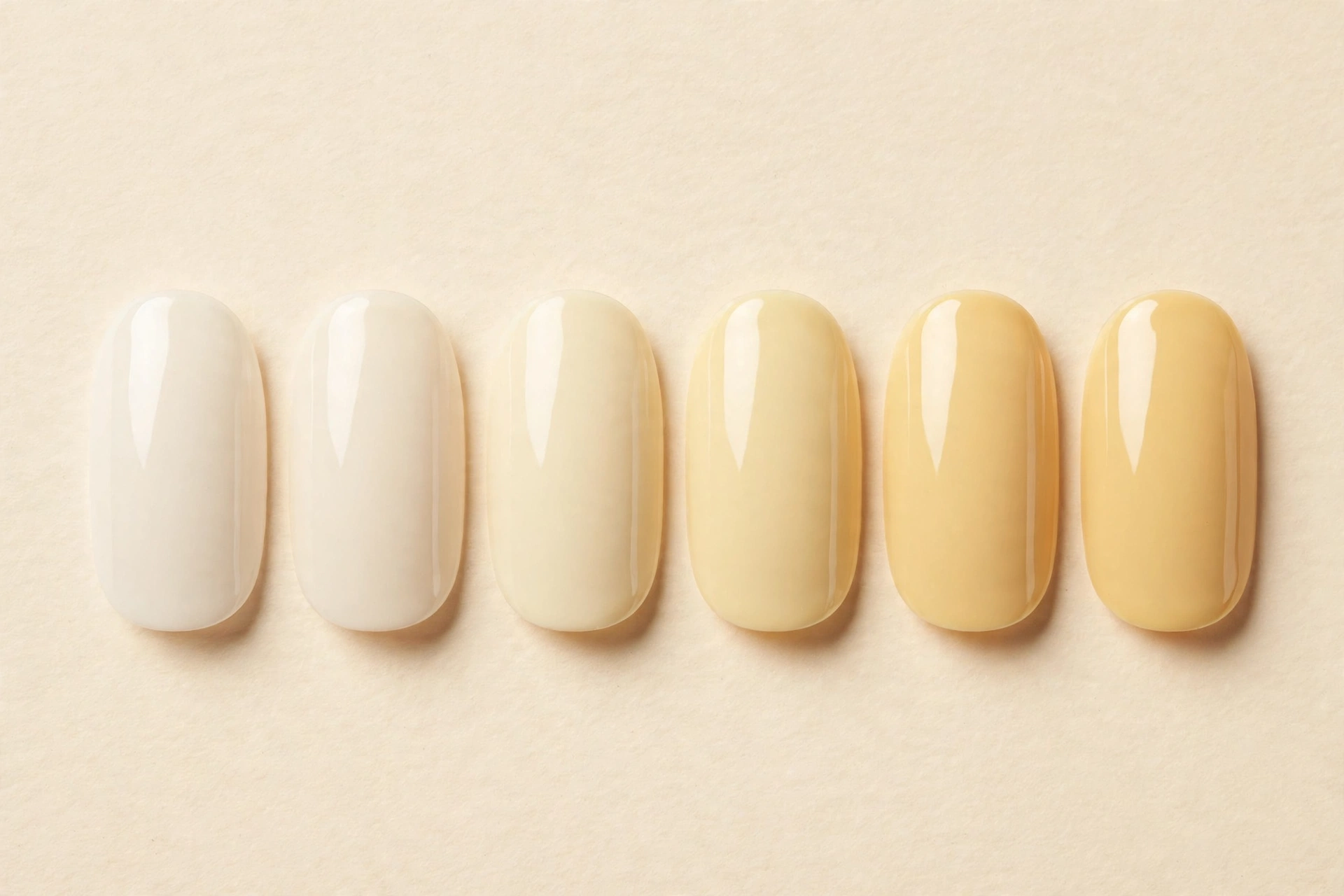
Buttercream Nails: The 6 Shades
This palette moves gently from the palest milk-cream to a warm golden butter, so you can see exactly where each shade sits before you commit to a bottle. Every shade below is a creamy, opaque finish — no glitter, no shimmer, no frost — because buttercream is at its best when the colour itself does all the talking. Read the undertone and skin-tone note for each one, and you will know which shade is yours before you ever paint a nail.
1. Soft Buttermilk — #FAF0DC
Soft Buttermilk is the palest shade in the palette, a whisper of cream with just enough warmth to keep it from reading as white. It has a soft neutral-warm undertone and a smooth, opaque creamy finish that evens out the nail bed in two coats. On fair skin, it looks like a polished version of your natural nail, only cleaner and brighter; on medium skin, it reads as a delicate pale cream that makes hands look fresh and well-groomed. It is the safest first step into buttercream nails, and the shade to choose when you want something that goes with absolutely everything in your wardrobe. Wear it to work, to brunch, to a spring wedding — it never looks out of place, and it photographs beautifully in natural light.
2. Whipped Ivory — #FDF6E9
Whipped Ivory is a touch warmer and slightly more luminous than Soft Buttermilk, like cream that has just been whipped into soft peaks. Its undertone is warm-neutral, and its finish is a rich, glossy cream that catches the light without any shimmer at all. This is the shade for anyone who finds stark white polishes too cold but still wants that bright, clean-nail effect. It flatters fair and light-medium skin tones especially well, because its warmth stops it from washing the hands out, and it also looks lovely on deep skin as a soft, milky contrast shade. If you love the look of milky white nails but want something softer and warmer for spring, Whipped Ivory is the natural next step, and it pairs beautifully with the sheer, soft-white tones explored in our guide to milky nails.
3. Classic Buttercream — #F5E6C4
Classic Buttercream is the heart of the palette and the shade the whole trend is named for: a true pale butter colour, warm and golden without tipping into yellow. Its undertone is gently golden, and its opaque creamy finish gives full, even coverage that looks like silk on the nail. This is the most universally flattering shade of the six. On fair skin it adds visible warmth and stops hands from looking washed out; on medium and olive skin it blends in that perfect “my nails but better, warmer” way; on deep skin it offers a soft, creamy contrast that looks intentional rather than pale. Classic Buttercream is the shade to pick if you only want one bottle from this palette. It works for everyday wear, for brides who want something softer than white, and for anyone building a capsule wardrobe of neutrals.
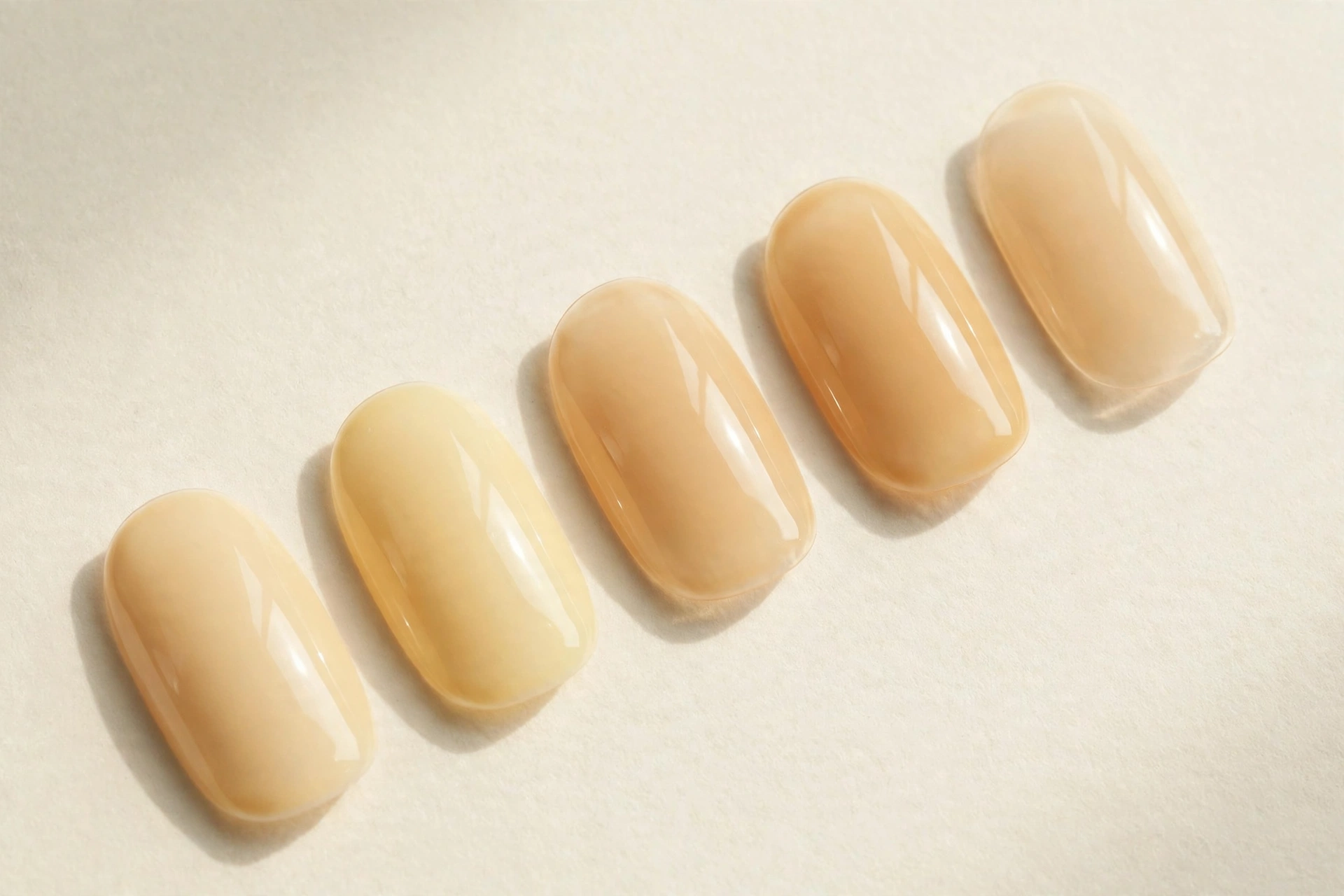
4. Warm Honey Butter — #EED9A4
Warm Honey Butter deepens the palette with a drizzle of honey: still creamy, still soft, but with a richer golden warmth that shows up clearly on the nail. Its undertone is warm-golden, and its finish is a full-coverage cream with a naturally glossy surface. This shade is a dream on medium, olive, and warm-toned skin, where its golden depth echoes the skin’s own warmth and makes hands look sun-kissed even in early spring. On fair skin it reads as a definite colour rather than a near-nude, which makes it a great choice if you want your manicure to be noticed without going bright. Warm Honey Butter is also the shade to reach for when you want buttercream nails with a little more personality — it looks wonderful with tan sandals, gold rings, and the soft floral prints that dominate spring.
5. Golden Churn — #E9C979
Golden Churn is the boldest shade in the palette, a true golden butter that leans closer to a soft butter yellow while staying firmly in creamy, wearable territory. Its undertone is warm and golden, and its finish is a rich opaque cream that stays smooth and streak-free when applied in thin coats. On medium to deep skin tones, Golden Churn is genuinely stunning: the gold in the polish warms the whole hand and looks expensive next to gold jewellery. On fair skin it makes more of a statement, reading as a deliberate pastel-yellow neutral rather than a nude, so it suits anyone who likes their manicure to have a visible point of view. For spring events — garden parties, Easter gatherings, outdoor weddings — Golden Churn is the shade that photographs warm and joyful without ever looking loud.
6. Toasted Butter — #D9B878
Toasted Butter closes the palette with the deepest, warmest tone: a toasted, caramel-tinged butter that sits on the border between cream and light caramel. Its undertone is warm with a hint of honeyed brown, and its finish is a deep, glossy cream that looks almost edible in sunlight. This shade flatters deep and rich skin tones beautifully, offering a tonal, elegant manicure that enhances rather than contrasts, and it gives medium skin a warm, polished glow. On fair skin it works as a statement neutral — deeper than a classic nude, softer than a brown — and it is an excellent bridge shade if you love buttercream in spring but want something that will carry you into autumn too. Toasted Butter also pairs wonderfully with the deeper creamy neutrals in our collection of vanilla nails, if you ever want to step one shade deeper than buttercream.
How to Choose Your Buttercream Shade
With six shades sitting so close together, the choice can feel harder than it looks. The simplest rule is to hold the shade against your skin in natural daylight, not under shop lighting, and notice whether it blends in or stands out. If you want a barely-there manicure, choose a shade close to your skin’s lightness: Soft Buttermilk for fair skin, Classic Buttercream for medium skin, Toasted Butter for deep skin. If you want contrast, go one step paler or deeper than your natural nail bed.
Undertone matters more than depth. Cool-toned skin — skin that looks best in silver jewellery and pink-based colours — will feel most at home in the milkier end of the palette, Soft Buttermilk and Whipped Ivory, where the warmth is gentle rather than golden. Warm-toned skin — skin that glows in gold jewellery and peachy colours — can wear the whole palette but will look especially good in Warm Honey Butter, Golden Churn, and Toasted Butter. Neutral and olive skin sits happily in the middle: Classic Buttercream is almost always a safe, flattering bet, and the golden shades add warmth without clashing.
It also helps to think about what you already own. If your spring wardrobe is full of white, sage, and soft blue, the paler buttercreams will blend in seamlessly. If you wear a lot of camel, tan, cream knitwear, and gold, the deeper buttercreams will feel like they were made for your closet. And if you are torn between two shades, remember that buttercream is forgiving: neighbouring shades in this palette look beautiful worn together as a tonal manicure, so you do not have to choose just one.
Styling Buttercream Nails for Spring Occasions
Buttercream nails are famously easy to style because they behave like a neutral, but a few thoughtful pairings take them from simple to striking. For everyday wear, keep the rest of your look soft: a cream knit, light-wash denim, and a single gold band are all this manicure needs. The nails read as groomed and intentional without demanding attention, which is exactly why buttercream has become a go-to for people who want to look polished with minimal effort.
For spring weddings and formal occasions, buttercream nails are a quiet triumph. They suit brides who want something softer than stark white, bridesmaids matching a cream or champagne palette, and guests who want to look elegant without upstaging anyone. A glossy buttercream manicure pairs beautifully with satin, chiffon, and lace, and it will not clash with any dress colour, from blush pink to sage green. Add a thin gold ring or a delicate bracelet, and the whole look feels complete. If your wedding palette leans green, the soft sage tones in our guide to sage green nails make a lovely companion shade for an accent nail or a bridesmaid’s matching manicure.
For work, buttercream is one of the safest polished choices you can make. It looks professional in every industry, it does not chip as visibly as dark colours, and it grows out gracefully because the pale colour blends with the natural nail. For weekends, the same manicure suddenly feels relaxed and fresh next to a sundress or a linen shirt — proof that a good neutral is never boring, just versatile. And for holidays and travel, buttercream is a practical pick: it hides minor wear well, suits every outfit you pack, and never looks wrong in photos.
Buttercream Nails vs. Similar Creamy Shades
It is easy to confuse buttercream with its creamy cousins, so here is how it differs. Milky nails are sheerer and cooler, often with a translucent, jelly-like finish that lets the natural nail show through; buttercream is fully opaque and warmer. Vanilla nails sit close to buttercream but tend to be paler and cooler, with less of the golden butter depth that defines this palette. Coconut milk shades are creamy and opaque like buttercream, but usually whiter and less yellow, giving a cooler, milkier result — our guide to coconut milk nails is the place to compare if you are deciding between the two.
Cashmere nails, meanwhile, are the cosier, greyer-beige side of the neutral family, with a muted softness that feels more autumnal; buttercream is brighter, warmer, and more spring-like by comparison. If you love cashmere’s softness but want something fresher for spring, buttercream is the natural seasonal swap, and our cashmere nails palette shows exactly where that softer, muted neutral sits. The bottom line: buttercream is the warmest, most golden member of the creamy neutral family, and that warmth is what makes it feel so right in spring sunshine.
Application Tips for a Smooth, Creamy Finish
Pale creamy polishes show every flaw in preparation, so a little care here pays off enormously. Start with clean, dry nails: remove all old polish, push cuticles back gently, and shape the free edge with a fine-grit file. Buff the nail surface very lightly — just enough to smooth ridges, never enough to thin the nail — and wipe away dust with a lint-free pad. A ridge-filling base coat is worth its weight in gold under buttercream shades, because it creates the perfectly even canvas that pale creams need.
Apply buttercream polish in two thin coats rather than one thick one. Thick coats of pale polish pool at the cuticles, take forever to dry, and streak as they settle. Thin coats dry faster, level out more evenly, and give you control over the final opacity. Let the first coat dry for at least two minutes before the second, and cap the free edge of the nail with each coat to help prevent chipping. Finish with a high-shine, quick-dry top coat, and reapply that top coat every two to three days to keep the gloss alive and extend the life of the manicure.
If you use gel polish, the same rules apply with one addition: cure each coat fully and avoid flooding the cuticle, because pale gel shades magnify any unevenness at the edges. A gel buttercream manicure typically lasts two to three weeks with proper preparation, and it keeps its glossy, whipped-cream look far longer than regular polish. For regular polish, expect five to seven days of good wear with a top-coat refresh, which is perfectly respectable for a pale shade. Whichever system you use, wear gloves for washing up and gardening — pale creams stain more easily than dark colours, and gloves are the simplest way to protect your manicure.
Making Buttercream Nails Last
Longevity is the one honest weakness of pale manicures, but it is entirely manageable. The biggest enemies of buttercream nails are water exposure, harsh cleaning products, and using your nails as tools. Gloves for household chores, a cuticle oil applied nightly, and a fresh layer of top coat mid-week will add days to any buttercream manicure. Cuticle oil matters more than most people realise: it keeps the skin around the nail supple, stops the polish from lifting at the edges, and gives the whole manicure a healthy, cared-for look.
If a chip does appear, do not panic. Because buttercream shades are pale and close to the natural nail, small chips are far less visible than they would be with a dark or bright colour. A tiny dab of the same polish on the chipped edge, sealed with top coat, will usually carry you through to your next full manicure. And when it is time to remove the polish, use a gentle, acetone-free remover if your nails are dry or brittle, and always follow removal with cuticle oil and hand cream. Healthy nails hold pale polish better, so the care you give between manicures is part of the manicure itself.
Polish and Gel Picks
- A creamy opaque buttercream polish in a classic pale butter shade, with a wide, rounded brush for smooth, streak-free application.
- A soft buttermilk cream polish for the palest, most natural-looking version of the trend.
- A warm honey-butter cream polish for medium and olive skin tones that want visible golden warmth.
- A golden butter gel polish for a long-wearing, high-gloss salon finish that lasts two to three weeks.
- A toasted butter cream polish for the deepest shade in the palette, ideal as a bridge into autumn neutrals.
- A ridge-filling base coat to create an even canvas under pale creamy shades.
- A high-shine quick-dry top coat to keep buttercream nails glossy and chip-resistant.
- A nourishing cuticle oil for nightly use to protect the manicure and keep cuticles supple.
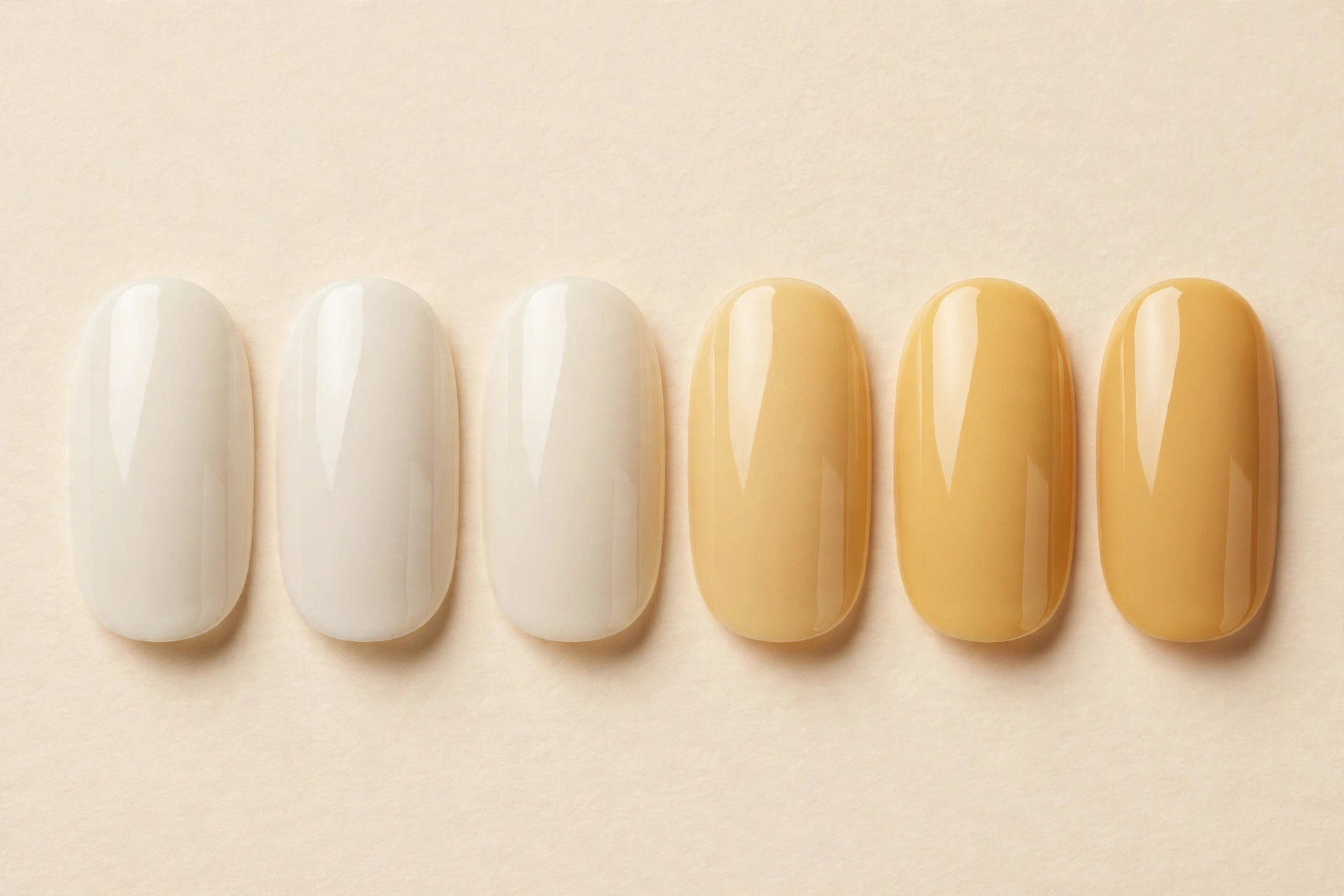
The shades in this palette are inspiration colours: use the hex codes as a guide when choosing a polish or showing a reference to your nail technician, and expect small variations between brands, batches, and lighting. Every polish formula renders cream tones slightly differently, so always check a shade in natural daylight before committing to a full manicure.
Frequently Asked Questions
Are buttercream nails the same as butter yellow nails?
Not quite. Butter yellow nails are a clearer, brighter pastel yellow, while buttercream nails are softer, paler, and more neutral, with a milky, creamy quality that sits closer to off-white. Think of butter yellow as the sunny version and buttercream as the whipped, muted version. If you like pastel yellow but find it too bright for work or formal occasions, buttercream gives you the same warmth in a quieter, more wearable form.
What skin tones do buttercream nails suit?
Buttercream nails suit every skin tone, because the palette spans pale buttermilk to deep toasted butter. Fair and cool-toned skin looks best in the milkier shades like Soft Buttermilk and Whipped Ivory, while medium, olive, and warm-toned skin glows in Classic Buttercream, Warm Honey Butter, and Golden Churn. Deep skin tones look beautiful in the whole palette, with Toasted Butter offering an especially elegant tonal match. The key is matching the shade’s warmth to your undertone, as described in the shade notes above.
Do buttercream nails work on short nails?
Yes, buttercream nails are one of the most flattering choices for short nails. The opaque creamy finish evens out the nail bed, makes short nails look neat and clean, and does not visually shorten the fingers the way very dark colours sometimes can. A rounded or squoval shape with a glossy buttercream shade is a classic, low-maintenance combination that looks polished with almost no effort.
How do I stop buttercream polish from looking streaky?
Streaks happen when pale polish is applied too thickly or over an uneven nail surface. Use a ridge-filling base coat, apply two thin coats instead of one thick coat, and let the first coat dry fully before the second. A wide, good-quality brush helps enormously, as does floating the brush lightly over the nail rather than pressing down. If streaks persist, a third very thin coat usually evens everything out, sealed with a glossy top coat.
Buttercream nails are proof that the quietest manicure in the room can also be the most memorable. They are soft without being plain, warm without being loud, and polished without trying too hard — the kind of shade you reach for again and again once you have tried it. Pick the shade that matches your skin and your spring wardrobe, keep the finish glossy, and let the cream do the talking.