
There is a particular kind of brown that only makes sense in winter. It is not the pale, milky nude of spring or the golden caramel of early autumn. It is deeper, warmer, and a little bit serious — the colour of coffee beans just out of the roaster, dark at the edges and glowing amber in the middle. French roast nails take that exact feeling and put it on your fingertips, and this winter they are the brown to reach for when every other neutral starts to feel tired.
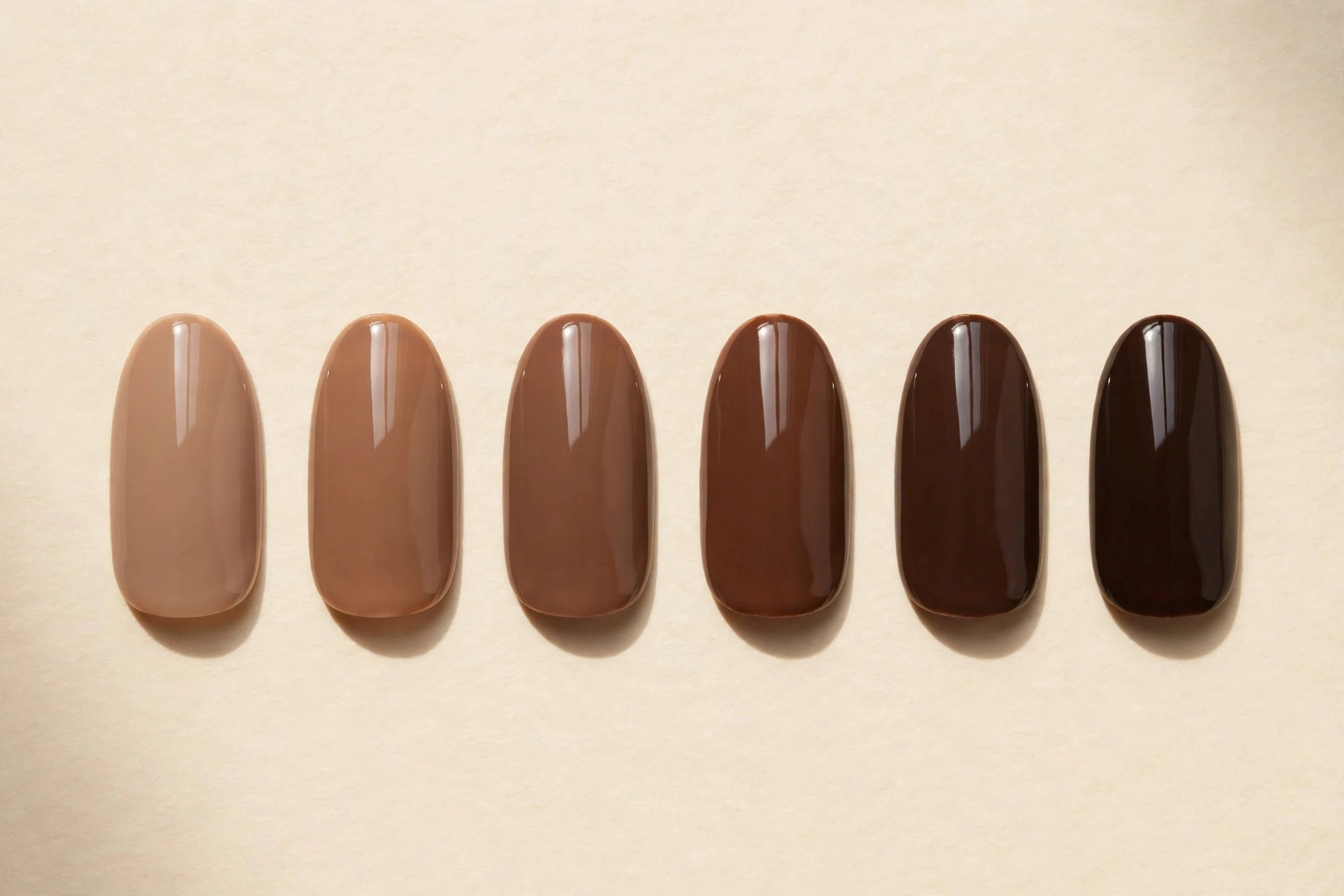
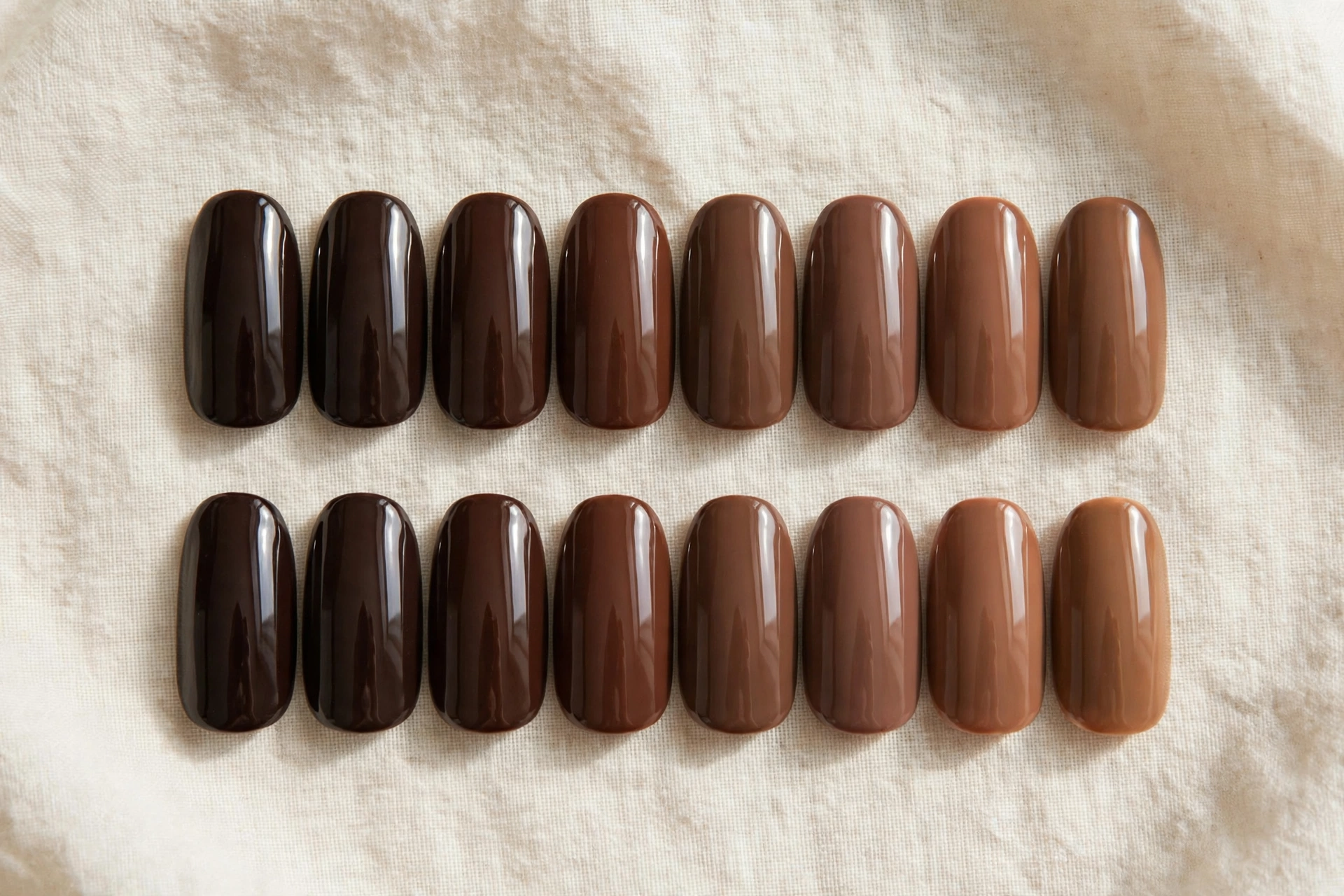
The idea is simple. A French roast is the darkest roast coffee can take before it turns bitter, which means the colour story runs from warm, creamy tan all the way down to near-black espresso, with every shade carrying a little heat. That range is what makes this palette so wearable. You can go soft and creamy for the office, rich and glossy for a dinner out, or almost-black for the evenings when you want your manicure to do the talking. Below are six shades that cover the whole roast, plus honest notes on who each one flatters, where it works best, and how to keep it looking good for as long as possible.
How to Use This French Roast Nails Palette
- Start with the lightest shade on your list and work darker. Trying Café Crème first tells you how warm your skin reads against brown before you commit to the deeper roasts.
- Wear one shade on all ten nails for the most polished result. This palette is at its best as a single, confident colour rather than a mix.
- If you do want contrast, pair a dark roast on most nails with Café Crème or Honey Roast as a single accent nail. Two shades are enough; three starts to look busy.
- Always use a ridge-filling base coat. Dark browns show every ridge and uneven patch, and a smooth base is what makes the colour look expensive instead of streaky.
- Apply two thin coats rather than one thick one. Dark polish pools at the cuticle and the free edge when it goes on too heavy, and thin coats dry faster and more evenly.
- Seal the free edge with top coat by running the brush lightly across the tip of each nail. Dark shades chip at the tips first, and capping adds a day or two of wear.
- Keep the rest of your look warm and simple. Gold jewellery, camel coats, cream knitwear, and brown leather all sit naturally next to these shades, while cool silver and icy pastels can fight with the warmth.
French Roast Nails: The 6 Shades
1. Café Crème — #D3A87C
Café Crème is the lightest shade in this palette, and it is the one to start with if you have never worn brown polish before. It is a warm, creamy tan with a soft golden undertone, the colour of coffee with a generous pour of steamed milk. On the nail it reads as a true neutral rather than a statement colour, which is exactly why it earns its place here. It softens the palette, gives the darker shades something to sit against, and works as a standalone manicure for anyone who wants warmth without depth.
The undertone is warm and golden, with just enough yellow to keep it from going grey on the nail. That matters more than it sounds. Cool-toned light browns can look ashy or dull, especially on fair skin, but Café Crème stays creamy and alive. The finish is a classic crème — smooth, glossy, and opaque in two coats, with no shimmer and no frost. That clean finish is what keeps it looking polished rather than flat, and it is also what makes it so easy to pair with other colours.
Skin tone is where Café Crème really earns its keep. On fair skin, it is a shade or two deeper than the natural nail, which gives a gentle, healthy contrast without looking harsh. It warms up pale hands in a way that sheer pink nudes sometimes cannot, and it looks particularly good with gold rings and warm-toned jewellery. On medium skin, it sits close to the skin tone, which creates a long, elegant line from fingertip to knuckle — a quiet lengthening effect that works on both short and long nails. On deep skin, it reads as a soft, milky contrast shade, lighter and warmer than the skin, and it looks beautiful with a high-gloss top coat that catches the light.
Café Crème is best for daytime and for work. It is the shade in this palette you can wear to the office, to a family lunch, or to a daytime wedding without a second thought. It also makes a lovely base for nail art if you like a little detail — a thin gold line near the cuticle, a single dark roast accent nail, or a subtle French tip in Double Shot all sit beautifully on top of it. Compared with its sibling Honey Roast, Café Crème is lighter, softer, and more forgiving. Honey Roast has more depth and more presence, while Café Crème is the one you reach for when you want the warmth of the palette without the weight of it.
Wear-wise, light crème shades are honest about chips. A small chip at the tip shows quickly against the nail underneath, so a good top coat and a fresh coat every two or three days on the tips will keep it looking new. The trade-off is that regrowth is barely visible, so a Café Crème manicure grows out gracefully. In gel, expect a full two weeks of clean wear; in regular polish, five to seven days with careful top-coat maintenance is realistic.
2. Honey Roast — #B08254
Honey Roast is the golden middle of the light end of this palette, a warm caramel-brown with a honeyed glow that catches the light. Think of the colour of roasted hazelnuts, or the amber edge of a well-poured coffee. It is richer than Café Crème and lighter than French Roast, and it sits in the sweet spot where brown stops being a safe neutral and starts being a colour choice in its own right.
The undertone is warm and golden-brown, leaning amber rather than red. That amber lean is what keeps Honey Roast from looking muddy. Many mid-tone browns slide into a dull, greyish place on the nail, especially in winter light, but the honey in this shade keeps it warm and luminous. The finish is a glossy crème with a very slight warmth in the depth of the colour, the kind of shade that looks different in sunlight and in lamplight without ever changing its character.
On fair skin, Honey Roast gives a clear, warm contrast that flatters without overwhelming. It is deep enough to look intentional and light enough to stay soft, which makes it one of the easiest browns in this palette for first-time brown wearers. On medium skin, it is close to a tone-on-tone match with a little extra golden warmth, and it looks especially good on almond and oval shapes where the colour can run the full length of the nail. On deep skin, Honey Roast glows. The amber undertone picks up the warmth in the skin and the shade reads as a rich, honeyed brown that looks expensive with a glossy finish.
This is a shade for afternoons and early evenings — coffee dates, winter markets, a long lunch that runs into golden hour. It pairs beautifully with camel, cream, and warm grey, and it is one of the few browns that looks good next to both gold and warm rose-gold jewellery. Compared with Café Crème, Honey Roast is the bolder sister: same family, same warmth, but with twice the presence. Compared with Cocoa Dust, which sits a step darker and redder, Honey Roast is the lighter, more golden option, better for daytime and for anyone who wants warmth without going dark.
For wear, Honey Roast is forgiving. Mid-tone browns hide small tip chips better than very light or very dark shades, and the warmth of the colour means regrowth is not obvious for several days. Two thin coats give full opacity, and a glossy top coat deepens the honeyed look. In regular polish, expect six to eight days; in gel, a comfortable two weeks.
3. Cocoa Dust — #9C6B43
Cocoa Dust is the heart of the palette, a true milk-chocolate brown with a soft reddish warmth running through it. If Café Crème is coffee with milk and Honey Roast is caramel, Cocoa Dust is the cocoa itself — rich, warm, and a little bit indulgent. It is the shade most people picture when they hear “brown nails,” and it is the most versatile colour in this set.
The undertone is warm with a gentle red-brown lean, which gives Cocoa Dust a softness that cooler browns lack. That red warmth is subtle, not pink and not orange, just enough to keep the shade from looking flat or grey in cold winter light. The finish is a smooth, opaque crème with a high gloss. It takes top coat beautifully, and the shine is what sells the cocoa comparison — a well-finished Cocoa Dust manicure looks almost edible, like the surface of a good chocolate bar.
Cocoa Dust flatters nearly everyone, and that is not an exaggeration. On fair skin, it is a strong, clear contrast that makes hands look polished and intentional, and the warm undertone stops it from looking stark. On medium skin, it is the closest thing in this palette to a perfect tone-on-tone brown, deep enough to read as a colour and close enough to the skin to lengthen the fingers. On deep skin, it reads as a warm, medium brown that sits beautifully against the skin without disappearing into it, and it looks particularly good with gold jewellery and warm metallics.
This shade works everywhere. It is polished enough for the office, warm enough for a winter weekend, and rich enough for an evening out. It is also the best shade in this palette for short nails, because the depth of the colour gives short nails presence without making them look heavy. If you only try one shade from this palette, make it this one. Compared with Honey Roast, Cocoa Dust is deeper and redder, with more evening presence. Compared with French Roast, the signature shade of the set, Cocoa Dust is lighter and softer — French Roast is the darker, more dramatic version of the same warm-brown idea.
Wear notes are straightforward. Cocoa Dust is opaque in two coats, and the medium depth hides minor wear well. Tip chips are visible but not glaring, and the colour holds its warmth as it wears rather than fading grey. In regular polish, seven to nine days is a fair expectation with a top coat refresh midway. In gel, two to three weeks is normal. If you like a matte finish, Cocoa Dust takes a matte top coat beautifully — the warmth stays, the shine goes, and the result looks like suede.
4. French Roast — #7C4A26
French Roast is the signature shade of this palette and the one the whole set is named for. It is a deep, full-bodied roast brown, dark and warm at once, the colour of coffee beans at their darkest roast — nearly black at first glance, but warm brown through and through once the light hits it. This is the shade that makes the palette feel like winter rather than autumn, and it is the one to choose when you want your manicure to be the main event.
The undertone is warm and reddish-brown, with a depth that keeps it from ever reading as black. That distinction matters. Black polish can look flat and hard in winter, especially on shorter nails. French Roast has the same drama with more warmth, and in sunlight the brown comes forward clearly. The finish is a rich, glossy crème, opaque in two coats, with a depth that rewards a good top coat. A high-shine finish makes it look almost lacquered, while a matte top coat turns it into something softer and more velvety.
On fair skin, French Roast is a bold contrast, and it looks best on nails that are neatly shaped — almond, oval, or a soft square — because the colour draws the eye to the shape of the nail. It is a shade that asks for tidy cuticles and a clean application, and it repays the effort. On medium skin, it is a deep, warm brown that sits close to the deeper end of the skin’s own range, creating a rich, tonal look that feels expensive and understated at the same time. On deep skin, French Roast reads as a dark, glossy brown with real presence, and it is one of the most flattering dark shades in this palette because the warmth in the undertone works with the skin instead of fighting it.
French Roast is an evening shade first and foremost. It belongs at winter dinners, holiday parties, and nights out, where low light lets the depth of the colour do its work. It also works beautifully as an accent — a single French Roast nail against Café Crème on the other nine, or French Roast tips over a Café Crème base for a modern take on a French manicure. For anyone who loves the depth of black coffee nails but wants something a touch warmer and softer, French Roast is the natural next step. Compared with its sibling Double Shot, French Roast is lighter and warmer, with more visible brown. Double Shot goes darker and cooler, closer to espresso. Compared with Cocoa Dust, French Roast is the deeper, more dramatic version — same warm family, but with evening weight.
Wear-wise, dark browns are honest about application. Any unevenness in the first coat will show through, so take your time and keep coats thin. The payoff is that chips are less obvious than you might expect, because the dark colour is close to the shadow under the nail tip, and a glossy top coat hides small wear well. In regular polish, expect six to eight days with careful capping of the free edge. In gel, two to three weeks. If you are new to dark polish, wear French Roast first on a weekend, when you have time to fix a smudge without rushing.
5. Double Shot — #4B2A17
Double Shot is the darkest everyday brown in this palette, a deep espresso shade that sits just this side of black. It is the colour of a double shot pulled dark, almost black in the cup, with a warm brown heart. If French Roast is the signature shade, Double Shot is the bold one — the shade for the days when you want your nails to look deliberate, polished, and a little bit fearless.
The undertone is warm and dark, with a coffee-brown base that keeps it from reading as pure black. In bright light you can see the brown clearly; in low light it reads as a very dark, very glossy neutral. The finish is a smooth, opaque crème that is usually fully covered in two coats, though a third thin coat on the first application can help if your polish is on the sheer side. It takes a high-shine top coat exceptionally well, and that shine is part of the point — a glossy Double Shot manicure catches light along the curve of the nail and looks almost wet.
On fair skin, Double Shot is the strongest contrast in this palette, and it makes short nails look sharp and intentional. It is the shade that turns a simple manicure into a statement, and it looks best with clean, simple styling — a plain gold band, a camel coat, a cream sweater. On medium skin, it is a rich, deep brown that reads as a sophisticated dark neutral, and it pairs well with both gold and warm-toned jewellery. On deep skin, Double Shot is a deep, glossy brown that looks seamless and elegant, and the shine of the finish is what gives it dimension against the skin.
Double Shot is for evenings, events, and the coldest, darkest weeks of winter. It is a natural fit for holiday parties, New Year gatherings, and nights when the rest of your outfit is simple and your nails carry the colour. It also works as a pedicure shade in winter, when dark toes peek out of boots and heels. Compared with French Roast, Double Shot is darker, cooler, and more dramatic — French Roast shows its brown openly, while Double Shot keeps its brown in reserve. Compared with Smoked Roast, the darkest shade in this set, Double Shot is the warmer, more wearable option, with a clearer brown identity.
For wear, Double Shot behaves like most very dark polishes. It can stain the nail plate slightly if worn without a base coat, so never skip that step. It also shows smudges during application more than lighter shades, so give each coat a full minute or two to set before the next. The reward is longevity: dark shades hide tip wear well, and a Double Shot manicure in gel can look fresh for a full three weeks. In regular polish, seven to ten days is realistic with a top coat refresh around day four.
6. Smoked Roast — #2E1A0F
Smoked Roast is the deepest shade in this palette, a near-black brown with a smoky, roasted depth. It is the colour of coffee beans roasted until they are almost charred, dark enough to read as black in a dim room, but unmistakably brown when the light catches it. This is the shade for the very end of the roast scale, and it closes the palette with a quiet, confident darkness.
The undertone is warm but very deep, with a smoky brown base and the faintest hint of red. That warmth is what separates Smoked Roast from a true black. Put it next to black polish and the difference is clear: black is flat and cool, Smoked Roast is warm and alive. The finish is a glossy crème, opaque in two coats, with a depth that looks almost lacquered under a good top coat. In a matte finish it turns smoky and soft, like charcoal with a warm heart.
On fair skin, Smoked Roast is a striking, high-contrast shade, and it looks best on well-shaped nails with a clean, short-to-medium length. It is a shade that rewards good nail care, because every detail of the nail is on display. On medium skin, it reads as a very dark, warm brown that feels polished and deliberate, and it works beautifully with gold jewellery and warm metallics. On deep skin, Smoked Roast is a deep, tonal brown that sits close to the skin and looks seamless, with the gloss of the finish providing the contrast and dimension.
Smoked Roast is best for the darkest evenings of winter — formal events, holiday nights, and the weeks around New Year when dark, glossy nails feel exactly right. It is also the shade in this palette most likely to be mistaken for black, which makes it a good choice for anyone who likes the look of black nails but wants something softer and warmer. For a softer take, try it as an accent nail against Cocoa Dust, or as a French tip over Café Crème. Compared with Double Shot, Smoked Roast is darker and smokier, with less visible brown in low light. Compared with French Roast, it is the far, dark end of the same family — French Roast shows its warmth openly, Smoked Roast keeps it hidden until the light finds it.
Wear notes are similar to Double Shot. Always use a base coat to prevent staining, apply thin coats, and cap the free edge with top coat. Very dark shades show regrowth less than light shades, which is a small mercy, but they do show chips at the tips, so a mid-week top coat refresh helps. In regular polish, expect seven to ten days. In gel, two to three weeks of clean wear.
How to Style French Roast Nails
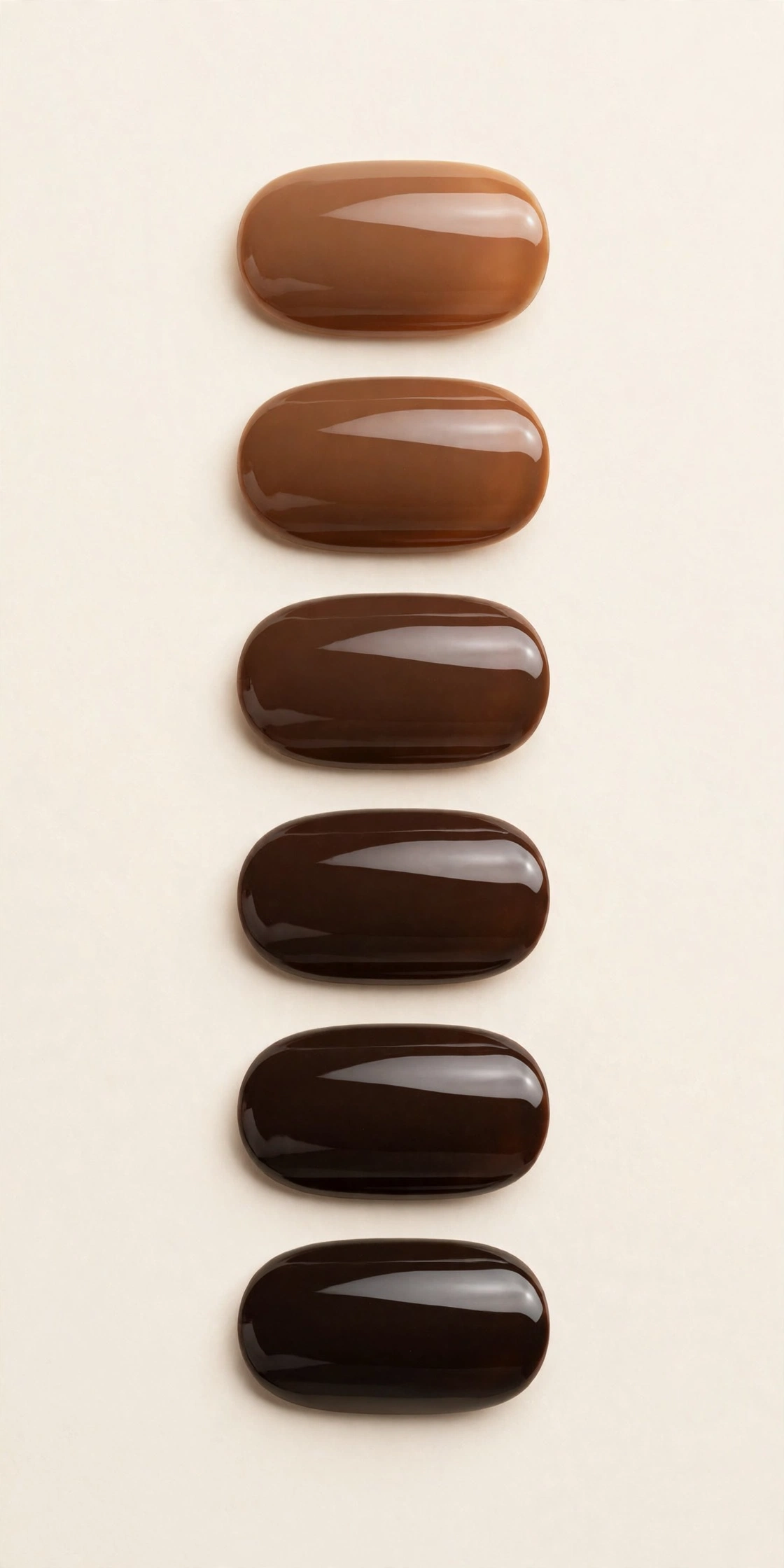
Styling these shades is mostly about letting the warmth of the brown do the work. Gold is the natural jewellery partner across the whole palette — a thin gold band, small gold hoops, or a delicate gold chain all sit comfortably next to roast browns. Rose gold works too, especially with Cocoa Dust and Honey Roast, while cool silver can make the warm browns look muddy, so it is worth reaching for gold first.
Clothing follows the same rule. Camel, cream, oatmeal, and warm grey are the easiest partners, and they let the nails be the warmest thing in the outfit. Deep burgundy and forest green also work, because they share the same rich, winter depth. If you wear a lot of black, French Roast and Double Shot are your best friends in this palette — they soften black without clashing with it, which is more than most colours can say. For texture, think knitwear, leather, suede, and wool. A chunky cream sweater next to a French Roast manicure is one of the simplest, most satisfying winter combinations there is.
Makeup can stay simple. A warm nude lip, a soft brown eye, and a little bronzer are all these nails need. A red lip works too, especially with French Roast or Double Shot, because the warm browns and a classic red share the same confident, winter energy. What you want to avoid is a cool pink lip or icy eyeshadow next to the warm browns, because the temperature clash shows up immediately.
Best Occasions for French Roast Nails
The lighter end of the palette — Café Crème and Honey Roast — belongs to daytime. Wear them to work, to brunch, to a daytime wedding, or to a family gathering where you want to look polished without looking done-up. They are also the right choice for a first date in daylight, when you want your hands to look cared for rather than dramatic.
Cocoa Dust is the all-rounder. It works at the office, at a winter wedding, at a holiday lunch, and at an evening dinner, which makes it the shade to choose when you are not sure what the day holds. If you have one event after another and no time to change your manicure, Cocoa Dust will carry you through all of them.
The darker end — French Roast, Double Shot, and Smoked Roast — belongs to the evening. Holiday parties, winter dinners, New Year gatherings, and nights out are where these shades earn their keep. They also suit formal occasions, because a dark, glossy manicure reads as polished and intentional in a way that lighter shades sometimes do not. For a winter wedding guest, French Roast with a simple gold ring is a safe, elegant choice. For a more relaxed winter evening, Double Shot with a chunky knit is hard to beat.
Application Tips for Dark Brown Polish
Dark polish is less forgiving than light polish, but a few habits make it easy. Start with clean, dry nails and a ridge-filling base coat, and let the base dry fully before the first colour coat. Load the brush with a modest amount of polish and place the first stroke in the centre of the nail, then pull the brush toward the cuticle without touching it, leaving a hairline gap. That gap is what keeps dark polish from flooding the cuticle and looking messy.
Two thin coats are the rule, and three thin coats are better than one thick one. Let the first coat dry until it is no longer tacky to a light touch before adding the second. Clean up any polish on the skin with a small brush dipped in remover while the polish is still slightly wet — it is much harder to fix once it has dried. Finish with a top coat, cap the free edge, and then leave your hands alone for ten minutes. Dark polish looks dry before it is dry, and touching it too soon is the most common way a good manicure gets ruined.
If you are doing this at home, a clean-up brush and a bottle of remover with a pointed cotton bud are worth keeping nearby. For anyone who prefers a professional finish, these shades are a good ask at the salon, because a trained hand can get the cuticle line perfectly clean on the first pass.
Finish and Longevity: Glossy, Matte, or Something In Between
Gloss is the default finish for this palette, and it suits every shade here. A high-shine top coat deepens the browns, makes the colour look richer, and gives the manicure a freshly-done look for days. If you want to change the mood without changing the colour, try a matte top coat. Cocoa Dust goes soft and suede-like, French Roast turns velvety, and Smoked Roast becomes smoky and muted. Matte finishes show wear a little faster, so they are best for a weekend or a single event rather than a two-week manicure.
For the longest wear, gel is the honest answer. These shades in gel last two to three weeks with minimal chipping, and the colour stays true rather than fading. Regular polish is perfectly good too, especially if you refresh the top coat every two or three days and wear gloves for washing up. Cold weather and hot water are the two things that shorten the life of any manicure, and winter has plenty of both, so a little care goes a long way. Hand cream matters as well — dry cuticles make even a perfect manicure look tired, so keep a small tube nearby and use it through the day. For more ideas on how brown shades wear through the cold months, the cosy range in our hot cocoa nails round-up sits in the same warm family and layers well with these roast tones.
French Roast Nails vs Other Brown Palettes
Brown is having a proper moment this winter, and it helps to know how this palette sits next to the other brown families already on the site. Against the creamy, milky browns of our mocha mousse nails collection, French roast nails are deeper, darker, and more roasted — mocha mousse is soft and milky, French roast is bold and full-bodied.
Against the warm nut browns in our chestnut nails post, the roast palette runs darker and redder, with more evening weight, while chestnut stays in the warm, golden middle. And against the near-black coffee shades, French roast keeps more visible brown — it is a brown palette first and a dark palette second.
That range is the point. You can wear the light end of this palette on a Monday, the dark end on a Saturday night, and never leave the same colour family. Few palettes offer that much range without a single shade feeling out of place, and that is why French roast nails work so well as a winter staple rather than a one-week trend.
Polish and Gel Picks for French Roast Nails
For Café Crème, look for a warm creamy tan crème polish or a matching gel in a milky coffee shade, and pair it with a ridge-filling base coat and a high-shine top coat. For Honey Roast, a golden caramel-brown crème polish or a honey-amber gel gives the same warm glow, and a glossy top coat deepens the amber. For Cocoa Dust, a milk-chocolate brown crème polish or a cocoa gel in a warm red-brown is the closest match, and it works well under both glossy and matte top coats. For French Roast, a deep roast-brown crème polish or a dark roast gel gives the signature look, and a high-shine top coat is worth the extra step. For Double Shot, a deep espresso brown polish or a dark coffee gel is the match, and a good base coat matters more here than anywhere else in the palette. For Smoked Roast, a near-black warm brown polish or a smoked espresso gel completes the set, and a matte top coat is a lovely alternative if you want a softer finish. Across all six shades, a quality base coat, a glossy top coat, a matte top coat for variety, and a small clean-up brush are the only tools you need.
The shades in this palette are inspiration colours — use the hex codes and descriptions as a guide when choosing a polish or asking your salon to mix a close match, and expect small differences between brands.
Frequently Asked Questions
What are French roast nails?
French roast nails are a winter manicure palette built around deep, full-bodied brown shades inspired by dark-roasted coffee. The palette runs from light, creamy café tones through milk-chocolate browns to near-black espresso, with every shade carrying a warm undertone. The look is defined by rich, warm browns worn glossy, usually as a single colour across all ten nails.
When should you wear French roast nails?
French roast nails are at their best in late autumn and winter, when deep, warm colours suit the season and the light. The lighter shades work for daytime and the office, while the darker shades suit evenings, holiday parties, and formal occasions. The palette is a natural fit for November through February, and the darker shades carry well into the coldest weeks of the year.
Which French roast nail shade is best for fair skin?
Café Crème and Honey Roast are the easiest starting points for fair skin, because they add warmth without overwhelming pale hands. Cocoa Dust also works well as a clear, warm contrast. For a bolder look, French Roast is a strong evening choice, and it looks best on neatly shaped nails with a clean application.
Which French roast nail shade lasts the longest?
In gel, all six shades last two to three weeks with similar wear, though the darker shades tend to hide tip chips a little better. In regular polish, the mid-tone shades such as Cocoa Dust and Honey Roast usually look freshest for longest, because they hide both chips and regrowth well. Whichever shade you choose, a base coat, two thin colour coats, a top coat, and a mid-week top coat refresh will add several days of wear.