
Frosted rose nails are what happens when the softness of a blush pink meets the chill of a winter morning. There is nothing loud about this palette, and that is exactly the point. Each shade carries a cool, silvery undertone that keeps rose from turning warm or saccharine, so the colour reads fresh on the nail even under grey winter light. If you have ever loved pink but found it too sweet for December, frosted rose is the version that finally fits.
The frost in frosted rose nails is not glitter for its own sake. It is a cool sheen, a whisper of silver or pearl that sits inside the colour rather than on top of it. On the nail that translates to a finish that catches light when you move your hand and settles back into a soft rose when you are still. It works on short nails, long nails, almond, square, and oval alike, and it pairs with everything winter asks of a manicure: wool coats, silver jewellery, dark denim, and the soft neutrals that fill a cold-weather wardrobe.
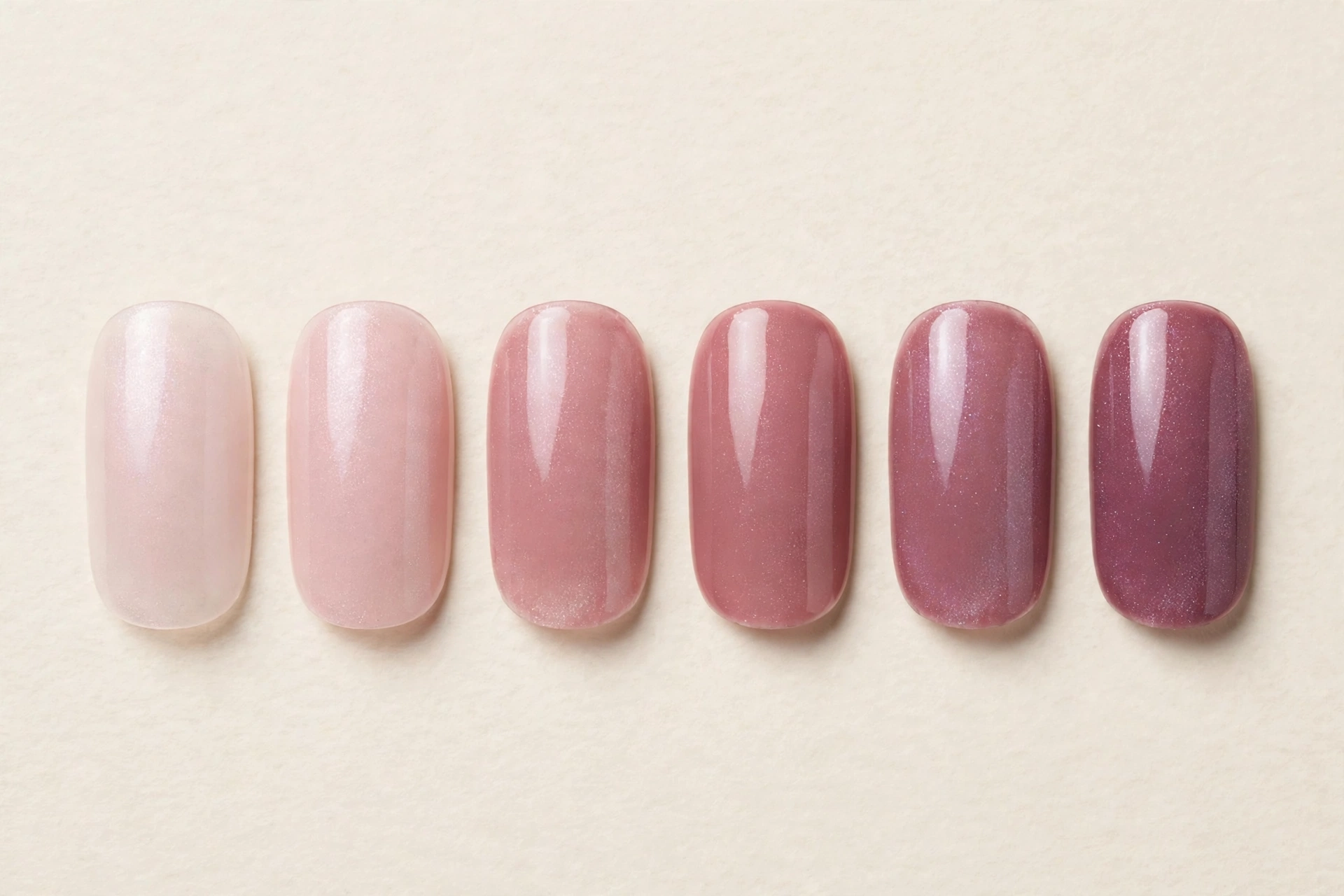
How to Use This Frosted Rose Nails Palette
- Start with the palest shade if you are new to cool pinks. First Frost Rose is forgiving on every skin tone and shows you how much frost you actually like before you commit to a deeper shade.
- Wear one shade on all ten nails for the cleanest winter look. Frosted rose is a palette that rewards simplicity; a single even colour lets the cool undertone do the talking.
- Pair two shades from this chart for a gradient. The palest shade on the thumb fading to the deepest on the little finger gives a quiet ombre that looks intentional without any blending work.
- Use the deepest shade as an accent. One or two nails in Frozen Berry Rose against a base of Rosewater Ice gives depth without turning the manicure dark.
- Keep your base coat thin and your top coat glossy. Frosted finishes look best with a high-shine top coat, which deepens the rose and makes the silver shimmer read as frost rather than chalk.
- Match your jewellery to the undertone. Silver, white gold, and platinum flatter these cool roses far more than yellow gold, which can pull the pink warmer than you want.
- Let the palette do the work across the whole season. The pale shades suit early winter and daytime, the deeper shades carry evenings, parties, and the weeks around the holidays.
Frosted Rose Nails: The 6 Shades
1. First Frost Rose — #E8C8D0
First Frost Rose is the palest shade in this palette, a blush pink so light it almost reads as a tinted white on the nail. The undertone is cool and slightly blue, which is what stops it from looking like a warm baby pink. There is a fine pearl shimmer suspended in the colour, visible in direct light and nearly invisible in shade, so the finish sits somewhere between a cream and a frost. On the nail it looks like the first hour of a cold morning, soft and a little luminous.
This is the shade to reach for when you want a manicure that looks polished without announcing itself. It flatters fair skin beautifully, because the cool undertone echoes the natural pink in fair complexions rather than fighting it. On light-to-medium skin it reads as a clean, bright neutral, the kind of shade that makes hands look well kept even when the rest of the outfit is a chunky knit and jeans. On medium and deep skin tones it becomes a delicate contrast shade, pale against the skin in a way that looks deliberate and striking rather than washed out, especially on shorter nails where the pale colour keeps the nail bed looking neat.
First Frost Rose is at home anywhere a quiet manicure is the right call. It suits the office, family gatherings, daytime winter weddings, and the long stretch of ordinary January days when you want your nails done but not discussed. It also works as a base for nail art, since its pale surface takes a thin silver line, a single snowflake stamp, or a French tip in one of the deeper shades from this chart without competing for attention.
Compared with its sibling Rosewater Ice, First Frost Rose is lighter, sheerer in feel, and less obviously pink. Rosewater Ice declares itself as a rose; First Frost Rose suggests one. If your wardrobe leans heavily toward white, grey, and silver, First Frost Rose will slot in without a second thought. If you want a shade that photographs as clearly pink, step down to Rosewater Ice instead.
Wear and longevity are straightforward with a shade this pale. Two coats give full, even coverage on most nail polishes in this colour family, and a third coat deepens the pink slightly without streaking. Pale shades show chips sooner than dark ones, so a glossy top coat is not optional here, and reapplying top coat on day three or four keeps the edges sealed. With gel, First Frost Rose wears well for two weeks, and because it is so light, regrowth at the cuticle is far less noticeable than it would be with a dark shade.
2. Rosewater Ice — #DDA8B8
Rosewater Ice is the shade most people picture when they hear the words frosted rose nails. It is a mid-light rose with a cool, almost silvery base, the colour of rosewater held up to a winter window. The finish is a soft frost, not a glitter and not a flat cream, with a fine shimmer that reads as light bouncing off ice rather than sparkle. It is pink enough to be unmistakably rose, and cool enough to feel like a winter colour rather than a spring one borrowed out of season.
The undertone here is blue-pink, which is the key to its versatility. Cool undertones flatter the widest range of skin tones because they sit in harmony with the skin instead of clashing with it. On fair skin, Rosewater Ice gives a healthy flush of colour without overwhelming a pale hand. On medium skin it is the most natural-looking rose in the chart, close enough to a flushed lip colour to feel like it belongs. On deep skin it glows, the cool pink standing out against warm skin in a way that looks rich and intentional, particularly with a glossy top coat that deepens the colour by half a shade.
This is the most versatile shade in the palette, and the one to choose if you only want to buy a single frosted rose. It works for workdays and weekends, for a winter wedding guest and for a quiet Sunday. It suits every nail length, though it is especially flattering on almond and oval shapes, where the soft colour follows the curve of the nail. It also makes a good French tip base, a good pedicure shade, and a good choice when you are choosing a manicure for someone else, since it is the least likely shade in the chart to clash with an unknown skin tone.
Against its sibling Frosted Petal, Rosewater Ice is lighter, softer, and more forgiving. Frosted Petal is the bolder sister, the one you pick when you want the rose to be the point of the outfit. Rosewater Ice is the one you pick when you want the rose to be a quiet part of it. If you have ever found classic pink polish too bright or too warm, Rosewater Ice is the correction. If you have ever found pale pink too pale to bother with, Rosewater Ice is the shade that gives you a reason to bother.
For wear, Rosewater Ice is the easiest shade in the chart. Two coats give opaque, even colour, and the mid-light tone hides small imperfections in application better than either the palest or the darkest shade. It chips less visibly than First Frost Rose because the colour is deeper, and it grows out more gracefully than the darkest shades. In regular polish, expect four to six days of clean wear with a good top coat; in gel, a full two weeks with minimal tip wear.
3. Frosted Petal — #D18A9E
Frosted Petal is the heart of the palette, a true medium rose with a cool mauve edge and a frosted, satin-leaning finish. It is the colour of a rose petal after a night of frost, still pink, still soft, but with its warmth pulled back and a silvery cast laid over the top. The shimmer here is finer than in the paler shades, more of a glow than a sparkle, and it gives the colour a depth that flat rose polishes do not have.
The undertone is cool rose with a whisper of mauve, which makes Frosted Petal one of the most flattering mid-tone pinks for winter. On fair skin it reads as a proper statement pink, visible and confident without being loud. On light-to-medium skin it is the shade that looks like it was made for you, deep enough to show up, soft enough to wear every day. On medium-deep and deep skin it is rich and luminous, a rose that holds its own against a deeper complexion and looks especially good with silver rings and a dark coat. Cool and neutral undertones in the skin will love it most, but warm undertones can wear it too, since the frost keeps the pink from turning peachy.
Frosted Petal is the shade for the days when you want your manicure to be noticed. It suits winter parties, date nights, holiday dinners, and any occasion where a pale pink would disappear. It also works beautifully as a single-colour manicure on short nails, where a mid-tone rose gives the nail bed presence without needing length to carry it. On longer nails it looks romantic and a little dramatic, especially in an almond shape with a high-shine top coat.
The comparison that matters most is with Rosewater Ice above it and Winter Rosehip below it. Rosewater Ice is the softer, quieter option, the one for days when you want pink to whisper. Winter Rosehip is deeper and berry-leaning, the one for evenings when you want pink to speak up. Frosted Petal sits exactly between them, and that middle position is its strength. It is the shade to choose when you cannot decide between light and dark, because it gives you a little of both: the softness of a pale rose and the presence of a deeper one.
In terms of wear, Frosted Petal is a workhorse. The mid-tone depth means chips are less obvious than on the palest shades, and the colour is opaque in two coats with most formulas. It holds a glossy top coat well, and the frost finish means it does not show the small scratches that can dull a flat cream. In gel, it is a two-week shade with confidence, and it is one of the few mid-tone pinks that still looks good on day ten, when the shine has softened and the colour has settled into something a little deeper and moodier.
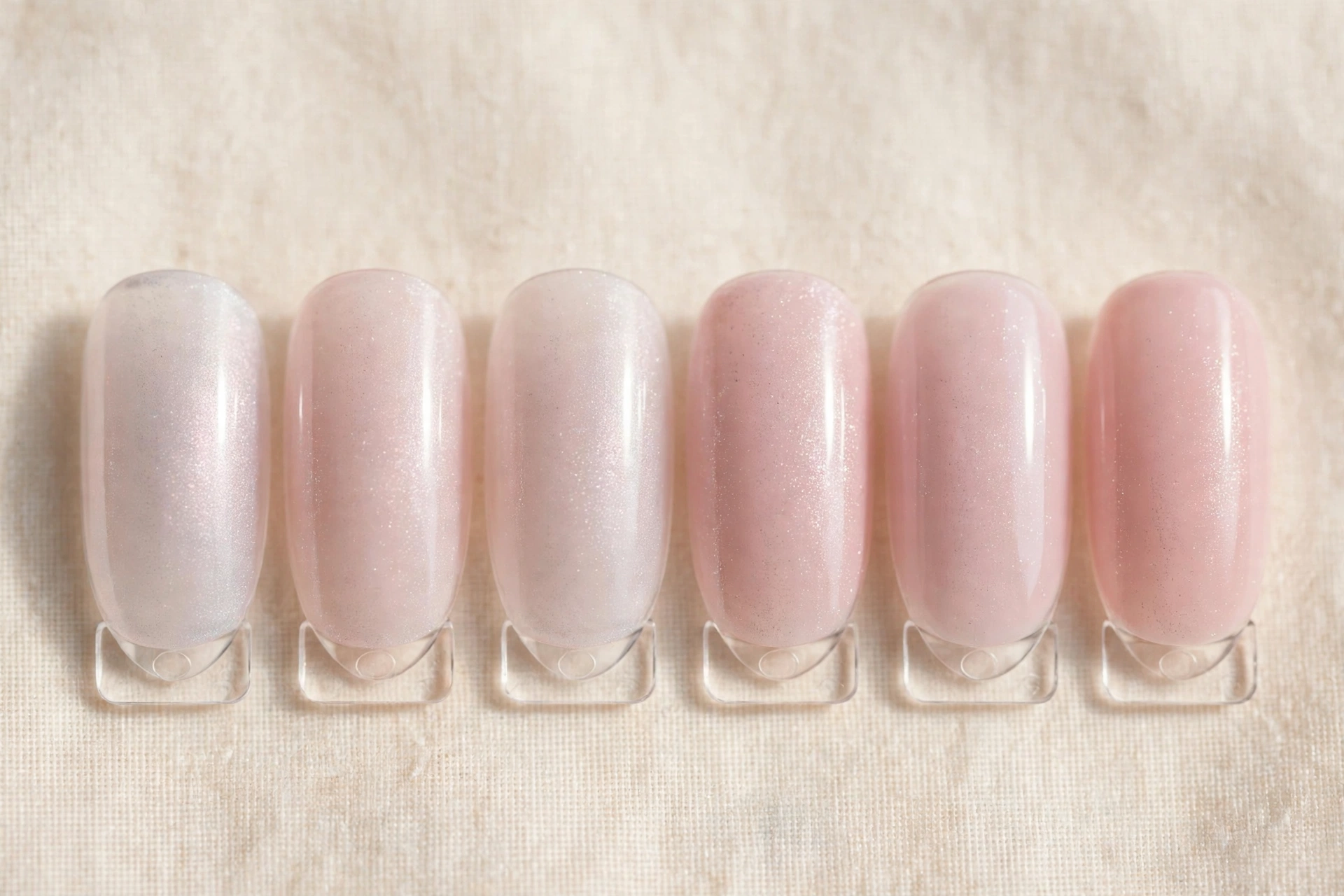
4. Winter Rosehip — #B96A80
Winter Rosehip takes its name from the deep pink fruit that holds its colour through the coldest months, and the shade earns the name. It is a medium-deep rose with a clear berry pull, cooler and dustier than a classic berry pink, with a frosted finish that keeps it from reading as a summer shade. The undertone is cool berry-rose, with enough mauve in it to keep the colour grounded and enough pink to keep it from turning plum.
This is the shade in the chart that flatters deep skin most dramatically. On deep complexions, Winter Rosehip looks jewel-like, a rich rose that glows against the skin and makes a short, neat manicure look expensive. On medium skin it is a confident, polished colour, the kind of shade that pairs with a dark winter coat and silver earrings and needs nothing else. On fair skin it is a bold choice, a real statement rose that stands out against a pale hand, and it works best when the rest of the look is kept simple so the nails can carry the colour.
Winter Rosehip is an evening shade by nature, though it is not too dark for daytime if you like a stronger manicure. It suits holiday parties, winter weddings as a guest, dinners out, and the weeks between Christmas and New Year when a deeper colour feels right. It also makes a beautiful pedicure shade in winter, when closed shoes mean the colour is a private pleasure rather than a public one, and it pairs well with the dark reds and deep greens that fill a holiday wardrobe without matching them exactly.
Compared with Frosted Petal, Winter Rosehip is deeper, cooler, and more berry than petal. Frosted Petal is the everyday rose; Winter Rosehip is the occasion rose. Compared with Mauve Frost below it, Winter Rosehip is pinker and brighter, while Mauve Frost is dustier and more muted. If you want a rose that reads as pink from across the room, Winter Rosehip is your shade. If you want a rose that reads as a neutral with a pink memory, Mauve Frost is the better pick.
Wear notes are kind to this shade. Deeper colours hide tip wear better than pale ones, and Winter Rosehip is opaque in two coats with a smooth, even finish. The berry depth means it stains the nail slightly more than the paler shades if worn without a base coat, so a base coat matters here. With gel, it wears for a full two weeks and the colour deepens slightly over time, which suits the shade rather than working against it.
5. Mauve Frost — #9C5B70
Mauve Frost is the most muted shade in the palette, a dusty mauve-rose with a cool grey undertone and a soft frosted finish. It is the colour of dried rose petals and cold mornings, a rose that has been quieted down until it behaves almost like a neutral. There is very little sparkle here, just a satin frost that gives the surface a soft, diffused light. On the nail it reads as sophisticated, understated, and a little moody, the winter rose for people who do not think of themselves as pink people.
The undertone is cool mauve with a grey cast, and that grey cast is what makes Mauve Frost so wearable. Grey-mauve shades flatter almost every skin tone because they sit close to the skin’s own shadows rather than fighting them. On fair skin, Mauve Frost is a polished, grown-up colour that looks intentional without being loud. On medium skin it is a beautiful neutral-rose, the shade you reach for when you want colour but not a statement. On deep skin it is a soft, smoky contrast, lighter than the skin and cooler than most mauve polishes, which tend to run warm. It is also the best shade in the chart for short nails and for workplaces with unspoken rules about nail colour, since it reads as professional from any distance.
Mauve Frost is the shade for the long middle of winter, the weeks when the holidays are over and the weather is still cold. It suits the office, everyday errands, quiet weekends, and any outfit built around grey, charcoal, navy, or black. It pairs with silver and with pewter, with wool and with leather, and it never clashes with a red lip, because its muted tone stays out of the way. It is also the best shade in the chart for a French manicure variation, used as the tip colour over a pale base, or as the base under a thin silver line.
Against its sibling Winter Rosehip, Mauve Frost is dustier, greyer, and quieter. Winter Rosehip wants to be seen; Mauve Frost is content to be noticed only by people who look closely. Against Frozen Berry Rose below it, Mauve Frost is lighter and more wearable day to day, while Frozen Berry Rose is the deeper, more dramatic finish to the palette. If you love mauve polish but find most mauve shades too warm or too brown, Mauve Frost is the cool version you have been looking for. Readers who like this dusty direction will also enjoy the muted rose family in our dusty rose nails chart, which explores the same soft, greyed-rose territory in more depth.
For longevity, Mauve Frost is one of the strongest shades here. Its mid-deep, muted tone hides chips well, it is opaque in two coats, and it grows out gracefully because the colour is neither very light nor very dark. In regular polish, a week of wear is realistic with a good top coat. In gel, it is a reliable two-week shade, and it is the one in this palette most likely to still look good on day twelve, when brighter colours would have started to look tired.
6. Frozen Berry Rose — #7E4356
Frozen Berry Rose is the deepest shade in the palette, a dark berry-rose with a cool plum undertone and a frosted, almost velvety finish. It is the colour of frozen berries, dark and rich with a pink heart, and it is the shade that turns this palette from a soft winter story into a complete one. The shimmer is minimal, a faint silver frost that keeps the dark colour from going flat, and the overall effect is deep, cool, and a little dramatic.
The undertone is cool berry with a plum edge, which makes Frozen Berry Rose flattering across skin tones in a different way from the paler shades. On fair skin it is a bold, high-contrast manicure, the kind of dark shade that makes pale hands look striking and polished, especially on shorter nails where a dark colour can feel more modern than a pale one. On medium skin it is rich and jewel-like, a deep rose that reads as a winter berry rather than a red. On deep skin it is luminous, the dark berry glowing against a deep complexion with a depth that lighter shades cannot match. It is the shade to choose when you want a dark manicure but find black, burgundy, or oxblood too heavy.
Frozen Berry Rose belongs to evenings, holidays, and occasions. It suits New Year’s Eve, winter parties, formal dinners, and the festive weeks when a deeper manicure feels right. It also works as an accent shade, one or two nails against a base of First Frost Rose or Rosewater Ice, which gives the drama of a dark shade without committing all ten nails to it. On its own it pairs with silver jewellery, dark coats, and deep green or charcoal outfits, and it looks especially good in an almond or stiletto shape where the dark colour follows a longer line.
Compared with Mauve Frost, Frozen Berry Rose is deeper, richer, and more obviously berry. Mauve Frost is the daytime dusty rose; Frozen Berry Rose is the evening version, the shade you change into when the day is done. Compared with Winter Rosehip, it is darker and more plum, a step further into berry territory. If you love the idea of a berry manicure but find classic berry shades too warm or too red, Frozen Berry Rose is the cool, frosted answer. For a wider look at this frosted berry family, our frosted berry nails chart covers six icy berry shades that sit alongside this rose palette.
Wear and longevity are excellent for a dark shade. Frozen Berry Rose is opaque in two coats, hides tip wear better than any other shade in the chart, and holds its gloss well. The one caution is staining: dark berry shades can tint the nail plate if worn without a base coat, so a base coat is essential, and a double layer of base coat is worth it if you plan to wear this shade for two weeks in gel. With that precaution, it is a two-week shade in gel and a five-to-seven-day shade in regular polish, and it looks good for the whole of that time.
How to Style Frosted Rose Nails
Styling frosted rose nails is mostly a matter of letting the cool undertone lead. Silver is the natural jewellery partner, and it does not need to be precious: a simple silver band, a pair of small silver studs, or a delicate silver chain all sit comfortably against these shades. White gold and platinum work the same way. Yellow gold can work with the deeper shades, Frozen Berry Rose in particular, but it tends to warm the paler shades up in a way that fights the frost, so keep gold to the deeper end of the chart if you wear it at all.
Clothing pairings follow the same cool logic. Frosted rose looks at home with grey wool, charcoal knitwear, navy coats, black denim, white shirts, and the soft cream and ivory layers that fill a winter wardrobe. It also pairs well with deep green and plum, which sit opposite rose on the colour wheel without clashing. The shades to be careful with are warm oranges, mustard, and camel, which can make a cool rose look slightly off. That does not mean you cannot wear them together, only that the rose will read cooler and the outfit warmer, and the contrast is something to notice rather than ignore.
For occasions, the palette covers the whole winter calendar. The pale shades carry daytime, work, and family events. The mid shades carry dinners, dates, and parties. The deepest shade carries formal evenings and the festive season. If you are choosing one shade for a winter wedding, whether as a guest or as part of the wedding party, Rosewater Ice and Frosted Petal are the safest choices, polished and romantic without competing with the bride. For a deeper take on romantic winter roses, our winter rose nails chart explores six deeper rose shades that work beautifully for evening occasions.
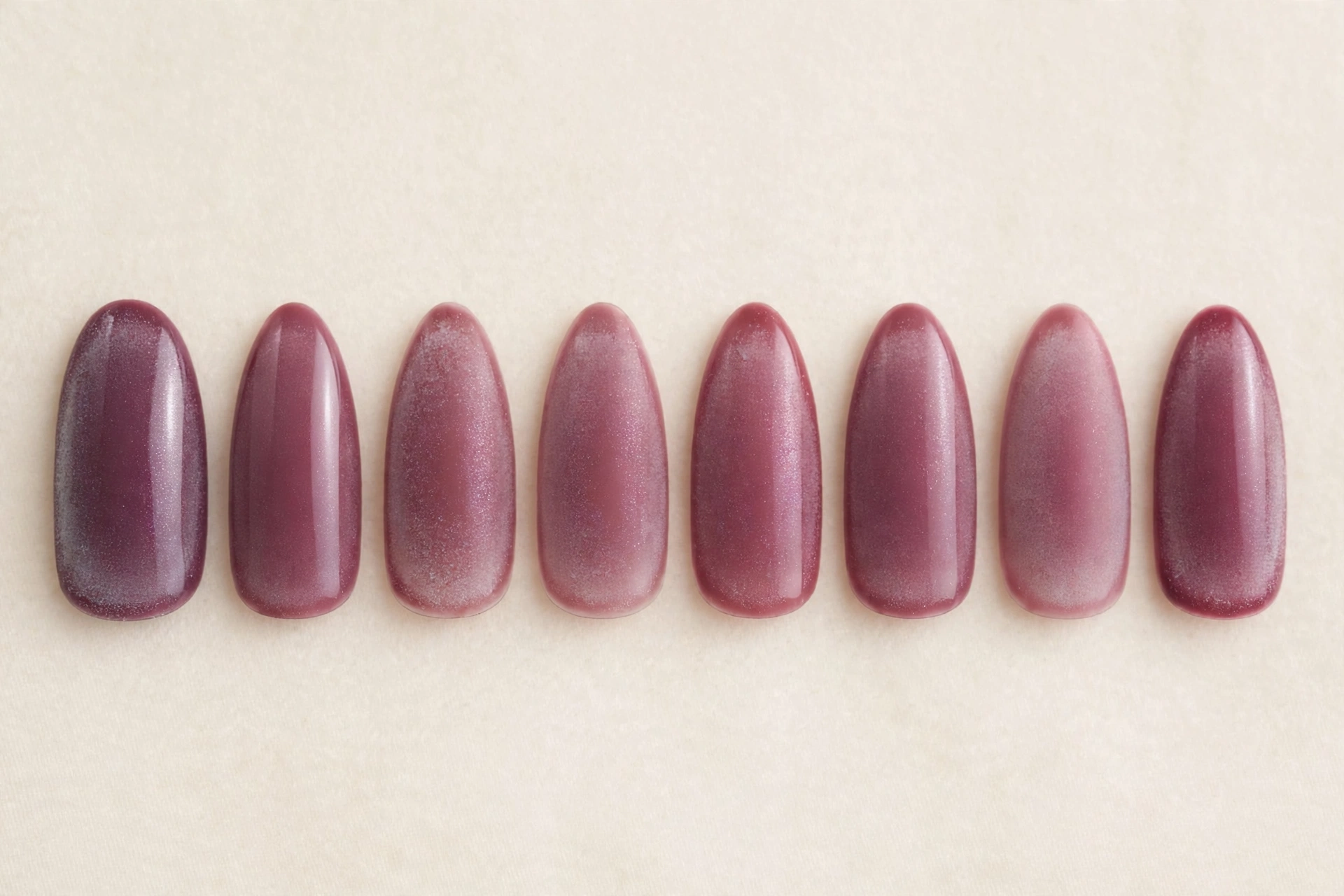
Best Occasions for Frosted Rose Nails
Winter gives frosted rose more occasions than any other season. The pale shades are right for the office, for school runs, for coffee with friends, and for the ordinary days that make up most of a season. The mid shades are right for lunches, shopping trips, and the kind of afternoon that turns into an evening without a change of outfit. The deep shades are right for parties, dinners, and the nights when getting dressed up is the point.
The holiday season is where this palette earns its place. Frosted rose is festive without being obviously Christmassy, which makes it useful for the whole stretch from early December through January. It works for office parties, family dinners, New Year’s Eve, and the quiet days in between, and it does not demand a red dress or a green accessory to make sense. It is also a good choice for winter weddings and winter birthdays, where a soft rose feels celebratory without being tied to a single holiday.
Beyond the holidays, frosted rose suits the long, grey weeks of January and February, when a soft, cool colour is a small brightness against a dull sky. It is a good palette for a fresh start manicure in the new year, for a Valentine’s Day look that is not a clichéd red, and for the first days of spring, when the frost is still in the air but the light is starting to change.
Application Tips for a Frosted Finish
A frosted finish is less forgiving than a flat cream, so application matters more than usual. Start with clean, dry nails, and push the cuticles back gently rather than cutting them. A ridge-filling base coat helps more here than with other finishes, because frost shimmer can catch on ridges and show them. Apply the base coat thinly and let it dry fully before the first colour coat.
Apply the colour in thin coats, two at minimum, three for the palest shade if you want full opacity. Thick coats are the enemy of a frosted finish: they pool at the cuticle, they take too long to dry, and they can leave the shimmer patchy. Let each coat dry for at least two minutes before the next, and cap the free edge with each coat, colour and top coat alike, to seal the tip against chipping.
Choose a glossy top coat rather than a matte one for this palette. Matte top coat over a frosted rose can turn the finish chalky, which defeats the purpose of the shimmer. A high-shine top coat deepens the rose, sharpens the frost, and protects the manicure. If you want a matte effect, save it for an accent nail in Mauve Frost, where the muted tone can carry a matte finish without looking chalky.
For gel, the same rules apply with one addition: cure each coat fully, and do not flood the cuticle. Frosted gel shades can look patchy if the gel is applied too thickly, so two thin coats cured properly will always look better than one thick coat. A glossy gel top coat is the finish that makes these shades look their best, and it is worth wiping the inhibition layer carefully so no dull film is left behind.
Finish and Longevity Guidance
The six shades in this palette share a frosted finish, but they do not all wear the same way, and knowing the differences helps you choose. The palest shades, First Frost Rose and Rosewater Ice, show chips soonest and grow out most visibly at the cuticle in gel, but they also hide regrowth better than dark shades because the colour is close to the natural nail. The mid shades, Frosted Petal and Winter Rosehip, are the best all-rounders for wear, hiding chips reasonably well and growing out gracefully. The deepest shades, Mauve Frost and Frozen Berry Rose, hide chips best of all but need a base coat to prevent staining, and their regrowth is the most visible in gel because the contrast with the natural nail is greatest.
In regular polish, expect four to seven days of clean wear across the palette with a good base and top coat, with the deeper shades lasting a day or two longer than the palest. Reapplying top coat every two or three days extends the life of any shade in the chart, and it is the single most effective habit for keeping a frosted manicure looking fresh. Keep your hands moisturised, since dry cuticles make any manicure look older than it is, and wear gloves for cleaning and washing up, since hot water and detergent are the fastest way to dull a frosted finish.
In gel, all six shades will wear for two weeks with proper application, and the choice between them becomes a matter of taste rather than durability. The palest shades will show regrowth as a soft line at the cuticle, the deepest as a sharper one, and the mid shades as something in between. None of them is a bad gel choice, and the frosted finish holds up well under a gel top coat, keeping its shimmer for the full wear period.
Shade-to-Shade Comparisons
If you are choosing between two shades, the comparisons in this section should settle it. First Frost Rose versus Rosewater Ice is a question of how much pink you want to see. First Frost Rose is a whisper, Rosewater Ice is a voice. Choose the first for a barely-there manicure, the second for a manicure that reads as pink in any light.
Rosewater Ice versus Frosted Petal is a question of softness against presence. Rosewater Ice is the gentle everyday rose, Frosted Petal is the rose that gets noticed. If you wear pink often and want a shade that works every day, Rosewater Ice is the safer buy. If you want one frosted rose that can carry a whole outfit, Frosted Petal is the one.
Frosted Petal versus Winter Rosehip is a question of petal against berry. Frosted Petal is a true rose, soft and floral. Winter Rosehip is a rose with berry in it, deeper and cooler. Choose Frosted Petal for romance, Winter Rosehip for richness.
Winter Rosehip versus Mauve Frost is a question of brightness against dust. Winter Rosehip is vivid and berry-bright, Mauve Frost is muted and greyed. If you want your nails to stand out, Winter Rosehip. If you want them to blend in beautifully, Mauve Frost.
Mauve Frost versus Frozen Berry Rose is a question of day against night. Mauve Frost is the dusty daytime rose, Frozen Berry Rose is the dark evening berry-rose. They are the two ends of the muted side of the palette, and together they cover every hour of a winter day. For another take on cool, frosted pinks, our icy pink nails chart covers six soft frosty pink shades that pair naturally with this rose palette.
Polish and Gel Picks
For First Frost Rose, look for a pale frosted blush pink with pearl shimmer in a classic cream-frost formula, and a matching pale blush gel with a fine pearl finish. For Rosewater Ice, look for a cool mid-light rose with silver frost shimmer, and a gel version in a soft rose with a frosted sheen. For Frosted Petal, look for a medium cool rose with a satin frost finish, and a gel in a true rose with a subtle shimmer top layer. For Winter Rosehip, look for a medium-deep berry rose with a cool undertone, and a gel in a deep rose-berry with a frosted finish. For Mauve Frost, look for a dusty mauve-rose with a grey cast and a satin finish, and a gel in a muted mauve with a soft frost. For Frozen Berry Rose, look for a dark berry-rose with a cool plum undertone, and a gel in a deep berry-rose with a frosted velvet finish. A clear glossy top coat and a ridge-filling base coat complete the set for any of these shades.
These shades are shared as an inspiration palette to help you find a similar colour in your own collection or at the salon.
Frequently Asked Questions
What are frosted rose nails?
Frosted rose nails are rose pink manicures with a cool, frosty finish. The rose is kept cool with blue or silver undertones, and a fine pearl or silver shimmer gives the colour a frosted look, like a rose petal after a cold night. The effect is softer than glitter and cooler than a classic pink, which is why the look works so well in winter.
When should I wear frosted rose nails?
Frosted rose nails suit the whole winter season, from late November through February. The pale shades work for daytime and the office, the mid shades for dinners and parties, and the deepest shade for evenings and the festive season. The palette also works for winter weddings, holiday parties, and Valentine’s Day, where a cool rose feels romantic without being a clichéd red.
Which frosted rose shade is best for fair skin?
Rosewater Ice and Frosted Petal are the most flattering choices for fair skin. Rosewater Ice gives a soft flush of cool pink that looks natural, while Frosted Petal gives a more visible rose that still sits comfortably against a pale hand. First Frost Rose also works well if you prefer a barely-there manicure, and Frozen Berry Rose is the bold option for fair skin when you want a high-contrast dark manicure.
Which frosted rose shade lasts the longest?
The deeper shades last the longest in regular polish, because chips are less visible on a dark colour. Frozen Berry Rose and Mauve Frost will typically look good for a day or two longer than First Frost Rose. In gel, all six shades wear for about two weeks, so durability is less of a deciding factor and the choice comes down to which colour you like best.