
Heritage brown nails are the quiet, confident answer to spring 2027. While spring usually arrives in a rush of pastel pink and mint green, this palette looks further back — to worn leather, old wood, warm toffee and the deep brown of a well-loved coat — and brings those colours forward in a way that feels fresh rather than dated. The result is a manicure that looks expensive without trying hard, suits almost every outfit you already own, and never goes out of style halfway through the season.
Brown has spent years being treated as the safe, boring choice, the shade you pick when you cannot decide on a colour. That reputation is wrong, and spring 2027 is the season it finally gets corrected. A good brown is not one flat colour. It is a whole family: pale camel that brightens fair skin, warm chestnut that glows on medium tones, deep mahogany that looks like polished wood, and espresso so dark it reads almost black until the light catches it. Each shade in this palette earns its place by doing a different job, and together they cover every mood of spring, from a soft daytime neutral to a rich evening statement.
The six shades below are chosen to work as a set, not just as six separate colours. You can wear one on its own all season, pair two for a French tip or an accent nail, or move from the palest to the darkest shade as the weather warms up and your wardrobe lightens. Each shade is described in full — undertone, finish, skin tones, occasions and how it wears — so you can pick with confidence instead of guessing from a bottle.
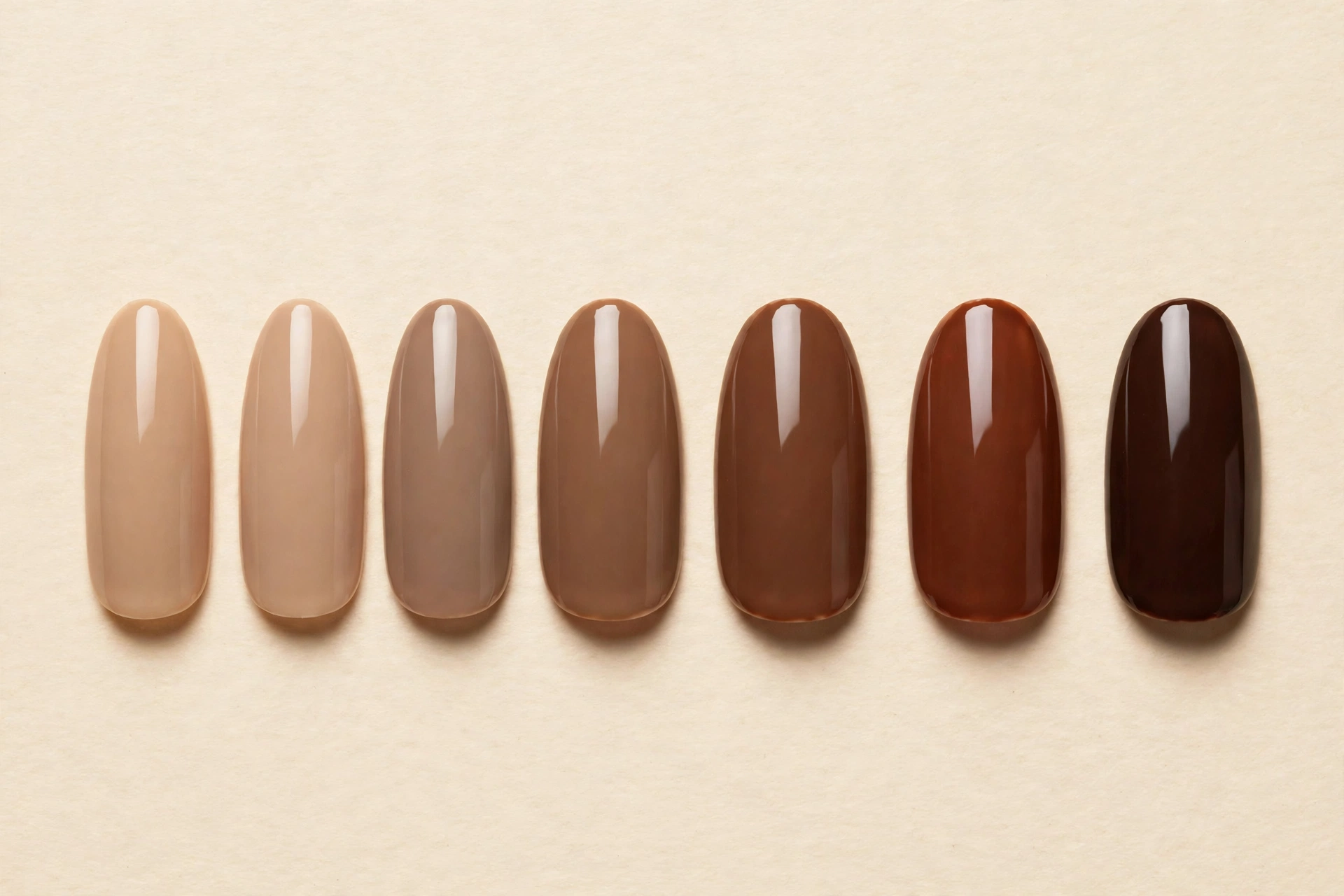
How to Use This Heritage Brown Nails 2027 Palette
- Start with the shade that matches your skin’s warmth. If your veins look green at the wrist, start with Heritage Camel or Toffee Heritage; if they look blue, start with Warm Mahogany or Soft Taupe Brown. Matching the undertone first makes every shade in the palette easier to wear.
- Wear one shade on all ten nails for the most polished result. Brown looks best when it is even and glossy, so two thin coats and a good top coat matter more than any nail art.
- Use the darkest shade as an accent on one or two nails. Espresso Heritage on the ring fingers, with Chestnut Classic everywhere else, gives depth without making the whole manicure feel heavy.
- Try a brown French tip on a sheer nude base. A thin line of Warm Mahogany or Espresso Heritage at the tip reads as a grown-up version of the classic French, and it suits short nails particularly well because the tip stays slim.
- Match your lipstick loosely, not exactly. A brown manicure with a soft nude, warm rose or terracotta lip looks intentional; an exact colour match can look overdone. Keep the rest of the makeup warm and simple.
- Keep cuticles neat and moisturised. Dark and mid-tone browns show every dry edge and every chip, so a drop of cuticle oil each evening makes more difference with brown shades than it does with a pale nude.
- Give dark brown shades a proper base coat. Deep pigments can stain the nail plate, especially the darkest ones, so a ridge-filling base coat protects the nail and gives a smoother finish for the colour to sit on.
- Let one shade lead the season. Wear Heritage Camel through early spring, move to Chestnut Classic and Toffee Heritage as the days warm up, and save Warm Mahogany and Espresso Heritage for evenings and cooler days.
Heritage Brown Nails 2027: The 6 Shades
1. Heritage Camel — #C49A6C
Heritage Camel is the lightest shade in the palette, and the one to choose if you only pick one. It is a warm, golden camel brown with a soft creamy finish, the colour of a classic camel coat held up in spring sunlight. In the bottle it looks like milky coffee with honey in it, but on the nail it opens up into a smooth, warm neutral that makes hands look polished and healthy. It is the shade that proves brown can be light, bright and genuinely flattering, not just dark and serious.
The undertone is warm golden-brown, leaning honey rather than grey. That matters because it is what makes this shade so forgiving. Cool-toned beige shades with a grey pull can look dull on warm skin, and pink-beige shades can clash with golden undertones, but Heritage Camel sits in the warm middle. It reads as golden on cool skin and as soft and seamless on warm skin, which is rare for a light neutral. The finish is a high-gloss cream with no shimmer and no glitter, just a smooth, lacquered surface that reflects light cleanly. That clean finish is part of its appeal: it looks like a well-made thing, not a trend.
On fair skin, Heritage Camel gives gentle warmth without strong contrast, and it makes hands look tanned and healthy even in early spring. It is the kind of shade that turns a plain white shirt or a cream knit into an outfit. On medium skin it looks warm and seamless, almost like a deeper version of the skin’s own warmth, and it pairs beautifully with gold jewellery. On deep skin it glows as a soft, milky contrast shade — lighter than the skin, warm enough to harmonise, and elegant in a way that pale pink neutrals rarely manage on deep tones. There is no skin tone this shade argues with, which is why it earns its place as the lead shade in the palette. For a wider look at the brown family, our chocolate brown nails palette explores twelve shades from espresso to mocha that sit close to this one.
Wear it anywhere across spring. It is formal enough for work, a wedding guest look or a family lunch, and relaxed enough for weekends, errands and the school run. It suits short nails, long nails, almond, square and oval shapes alike, though it looks particularly good on a short almond or a neat square, where the light colour keeps the shape looking clean. For a subtle lift, add a thin gold line at the cuticle on one nail, or wear it with a single darker accent nail. Keep the rest plain and let the warm, clean colour do the work.
Next to its sibling shades, Heritage Camel is the reference point for lightness. It is paler and warmer than Soft Taupe Brown, and much lighter and softer than Chestnut Classic. If you hold the three together, Heritage Camel is the top of the scale: the shade you reach for when you want brown without any extra drama. That lightness also makes it the easiest to maintain. Chips show less than they do with dark polish, because the contrast with the bare nail is gentle, and small wear at the tips is barely visible.
For longevity, expect a good gel version to last two to three weeks with a proper top coat, and a regular polish version to last five to seven days before tip wear shows. The light, warm pigment means two coats are usually enough for full opacity, though a third coat can deepen the honey tone slightly on very fair nails. If you are doing it at home, wipe the brush well and paint in thin layers — thick coats of light polish are the main cause of streaking, and they also dry unevenly. Seal everything with a glossy top coat to keep the camel glow alive for days, and refresh the top coat around day three if you want the shine to hold all week.
2. Chestnut Classic — #8A5A33
Chestnut Classic is the heart of the palette, and the shade most people picture when they hear the words heritage brown. It is a rich, warm chestnut brown with a glossy cream finish, the colour of polished chestnuts and roasted hazelnuts. It is deep enough to feel substantial, warm enough to feel alive, and balanced enough to wear every single day. If Heritage Camel is the soft introduction to brown, Chestnut Classic is the full statement: brown, done properly, with nothing to apologise for.
The undertone is warm red-brown, with a clear chestnut heart and a honey edge that stops it from becoming a flat, muddy brown. That warmth makes it flattering on warm and golden skin tones, where it looks vibrant and healthy, and on olive skin, where it brings out the warmth without clashing. On fair skin it is bold but not overwhelming, because the honey depth keeps it grounded and the gloss keeps it polished. On deep skin it is rich and seamless, a true tone-on-tone brown that looks like it was made for the wearer. If you love brown nails but want one shade that works everywhere, this is your shade. The finish is a high-gloss cream, smooth and lacquered, with no shimmer to distract from the colour itself.
The finish is what makes Chestnut Classic feel expensive. It is the glossiest of the mid-tone shades in this palette, and that shine is part of its appeal — it makes the colour look fresh and polished, even on a grey spring day. It also photographs well, which is worth knowing if you like sharing manicure photos or if family photographs are part of your spring. The colour stays true in different lights, shifting from a deep chestnut indoors to a warmer, honeyed brown in daylight, but never turning orange or grey.
Wear Chestnut Classic everywhere across the season. It is the most versatile shade here for daily wear: work in the morning, lunch with friends, dinner in the evening, and the long, lazy weekend after. It suits every nail length, but it is especially good on medium nails, where a warm mid-tone brown has room to show its depth. It also suits every nail shape, and it is a good choice for a French tip base or for a half-moon design, where the warm chestnut gives the design definition without darkness.
Compared with Heritage Camel, Chestnut Classic is deeper, redder and warmer, and it reads as a brown first and a neutral second. Next to Warm Mahogany, it is lighter and softer, with more honey and less wine. That middle position is its strength: it is the shade that holds the whole palette together, and the one to reach for if the rest of your outfit is light and you want your nails to add warmth. It also pairs well with the other shades as a base — a chestnut base with an espresso tip, or a chestnut manicure with one camel accent nail, gives the look a focal point without changing its mood.
Longevity is strong for a mid-tone shade. Mid browns tend to show tip wear sooner than the palest shades, because the contrast with the bare nail is sharper, so a good top coat and a thin seal over the free edge help a lot. In gel, expect two to three weeks. In regular polish, five to seven days is realistic, with a top coat refresh at day three or four. Staining is a minor worry at this depth, but a base coat is still worth using, especially if you wear it back to back through the season.
3. Warm Mahogany — #6B3226
Warm Mahogany is the richest shade in the palette, and the most interesting colour here for people who already own a classic brown. It is a deep reddish-brown with a glossy cream finish, the colour of polished mahogany wood and dark red wine held up to the light. On the nail it looks like dark wood with warmth hiding in it — deep, slightly dusky, and very much a heritage colour. It is the shade that turns a simple brown manicure into something with history.
The undertone is warm red-brown, with brown and red in near-equal balance and a touch of wine in bright light. That warmth makes it especially flattering on warm and neutral skin tones, where it picks up the warmth in the skin and looks harmonious rather than clashing. On cool skin it still works, but it reads as a warmer contrast, which some people love and others find less natural than the cooler browns. If your veins look green at the wrist, this is likely to be one of your best shades in the palette. If your veins look blue, try Soft Taupe Brown first and use Warm Mahogany as an accent. The finish here is a deep, glossy cream with no shimmer, and it gives the mahogany a polished, lacquered glow that stops it from looking flat or heavy.
The finish is a high-gloss cream with a lacquered quality. It is not a matte, and it is not a glitter. The smooth surface reflects light cleanly, so the colour looks like polished wood rather than painted nails. That polished finish suits the mahogany tone, which can look harsh in a very flat finish, and it makes the shade forgiving on nails that are not perfectly smooth, because the gloss evens out the light reflection. It is also one of the more forgiving shades in the palette when it comes to application: the rich colour covers in two coats, and small imperfections in the first coat disappear under the second.
Occasions for Warm Mahogany lean elegant and a little romantic. It is lovely for a spring wedding, an evening dinner, and a weekend away, when you want colour with depth rather than brightness. It also works well in the daytime with cream, navy and charcoal outfits, where its red-brown side picks up the warm tones in the clothes. It is less of an everyday neutral than Chestnut Classic, but it is still restrained enough for most settings, especially on short nails. Try it with gold jewellery — the warm tones match beautifully — or with a cream knit and dark jeans for a quiet, polished spring look. If you love this deep, wine-leaning direction, our burgundy nails palette explores fifteen wine and black cherry shades in the same rich family.
Against its siblings, Warm Mahogany is the reddest of the six, and the one most likely to be mistaken for a deep burgundy in a photograph. Next to Chestnut Classic it looks deeper and redder; next to Espresso Heritage it looks warmer and lighter. That in-between position is its strength: it gives you a way to wear red-brown without committing to a full red manicure, and a way to wear brown with a warmer, more romantic feel. It also layers well: a single coat over a darker base gives a mahogany-black depth, and a single coat over Chestnut Classic deepens it slightly and adds a wine edge.
For wear, Warm Mahogany is a good all-rounder. It needs two coats for full depth, and a third coat will deepen the red-brown without making it muddy. It wears about as well as Chestnut Classic in both gel and regular polish, with tip wear showing first on the dominant hand. Because the colour is deep, chips are slightly more visible against fair skin, so keep a bottle handy for a quick tip touch-up, or choose gel if you want a full two weeks without thinking about it. The gloss helps here too, keeping the light reflection even so small chips are less obvious than they would be in a flat cream.
4. Espresso Heritage — #3E2723
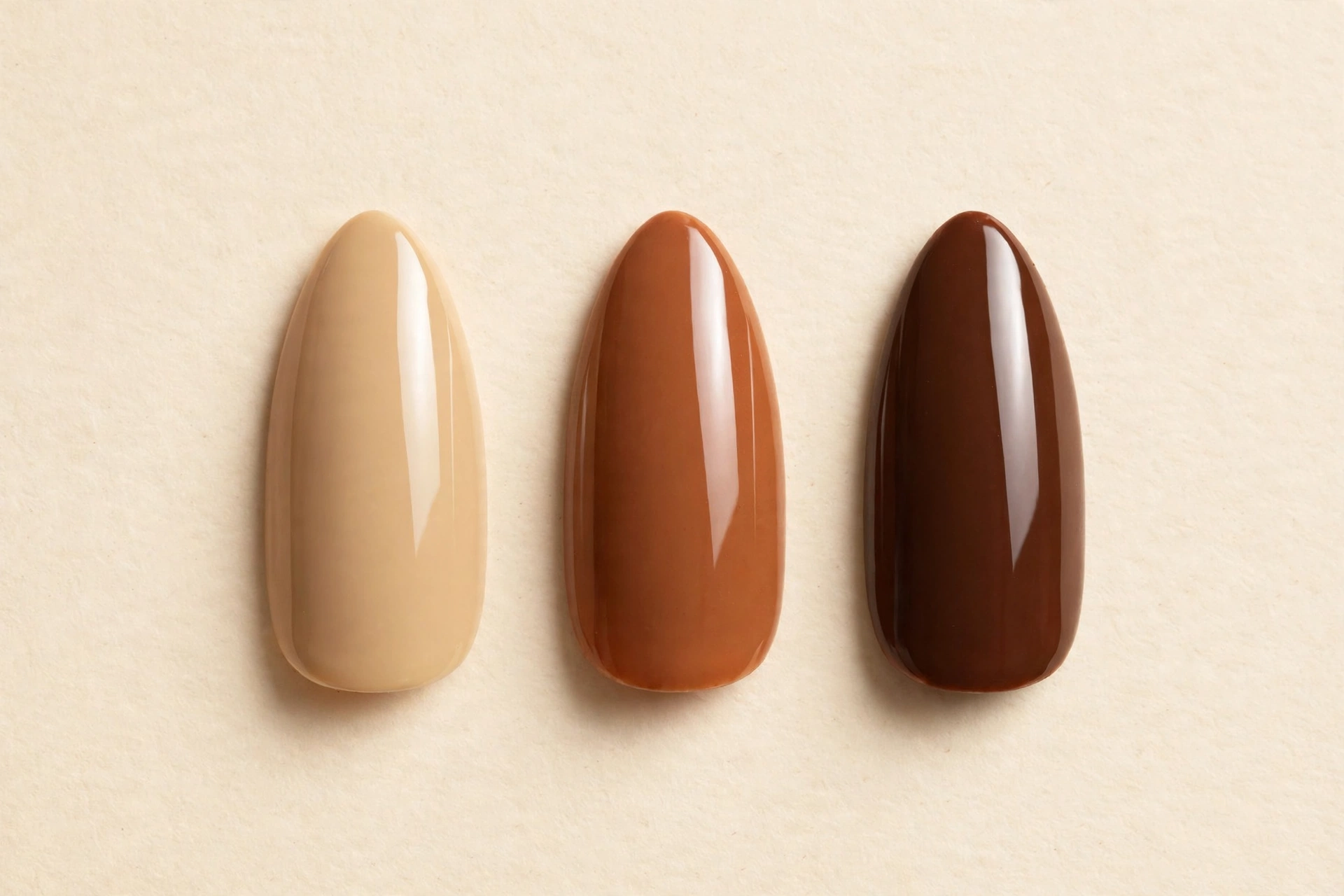
Espresso Heritage is the deepest brown in the palette, and the most quietly luxurious. It is a dark espresso brown with a glossy cream finish, like a shot of strong coffee poured into a small cup. Indoors it reads as near-black brown, with only a hint of warmth at the edges. In sunlight or under bright light, the brown comes alive, and the nails look like polished dark coffee beans. It is the shade for people who love black nails but want something warmer, softer and more alive.
The undertone is warm deep brown, with a cocoa base and a faint red-brown pull. Unlike a true black, which can look flat and harsh, this shade has warmth hiding in it. That warmth is what keeps it from looking severe, and it is also what makes it flattering on deep skin, where it reads as a rich, glossy espresso-brown. On fair skin it is high-contrast and bold, the kind of manicure that gets noticed, so it suits people who are comfortable with a statement nail. On medium skin it looks moody and elegant, especially with gold jewellery and dark spring fabrics. The finish is a deep, glossy cream with no shimmer and no glitter, and that restraint is the right choice here, because shimmer would lighten the colour and take away the near-black depth that makes it special.
The finish is a high-shine gloss. The gloss is what saves it from looking matte and heavy. With a high-shine top coat, the nails look wet and lacquered, almost like patent leather. With a matte top coat, the same shade turns soft and velvety in a different way, and looks wonderful for evening events, though matte will show fingerprints and wear faster at the tips. For spring, the glossy version is the safer choice — it looks polished in photographs and it holds up through a long day.
This is an evening shade first and an everyday shade second. It is perfect for a spring dinner, a wedding evening, and any occasion where you want your nails to be part of the outfit. It also works for the daytime if your style leans dark and polished, but it is honest to say it reads as bold in a bright, casual setting. For a softer everyday version, wear it on short nails, where the dark colour covers less surface and feels less intense, or use it as an accent with Chestnut Classic. It is also a strong base for a French tip: a thin line of Heritage Camel over Espresso Heritage is one of the prettiest combinations in this palette, light against dark in a way that feels deliberate rather than loud.
Compared with its closest sibling, Espresso Heritage is darker, browner and quieter than Warm Mahogany. Side by side, Warm Mahogany looks warm and red, while Espresso Heritage looks like its shadow in brown. It is also deeper and less red than most chocolate shades, which tend to lean milk-chocolate and light. This one sits a step darker and richer, closer to dark cocoa. That depth makes it the best shade in the palette for a long, elegant nail, and the best shade for pairing with gold — the warm brown and the warm metal suit each other perfectly.
Wear notes matter with a shade this dark. Staining is a real risk, so never skip base coat, and use a double layer of base on the thumbnails if you are prone to staining. Removal takes a little patience: hold a remover-soaked cotton pad on each nail for ten seconds before wiping, rather than scrubbing, which pushes pigment into the cuticles. In gel, this shade is a strong performer — dark gels cure well and resist chipping, and you can expect a full two to three weeks. In regular polish, plan on a top coat refresh around day four to keep the gloss alive.
5. Soft Taupe Brown — #9C8B7A
Soft Taupe Brown is the coolest shade in the palette, and the one that keeps it from being all warm honey and red. It is a soft, muted taupe-brown with a satin-cream finish, the colour of warm stone and mushroom brown. It is neither grey nor beige, but a gentle blend of both with a brown heart, and it is the shade for people who find warm browns too golden and cool greys too cold. On the nail it looks calm, modern and quietly expensive, like a neutral chosen by someone who knows exactly what they are doing.
The undertone is cool-neutral taupe, with brown and grey in near-equal balance and a hint of mauve in bright light. That coolness makes it especially flattering on cool and neutral skin tones, where it picks up the pink in the skin and looks harmonious rather than clashing. On warm skin it still works, but it reads as a cooler contrast, which some people love for its modern feel and others find less natural than the warmer shades. If your veins look blue or purple at the wrist, this is likely to be your best shade in the palette. If your veins look green, try Heritage Camel first and use Soft Taupe Brown as an accent or a French tip shade. The finish is a soft satin cream, slightly less glossy than the other shades, and it gives the taupe a gentle, powdery glow that stops it from looking flat.
The finish is a soft satin cream with a muted quality. It is not a high mirror gloss, and it is not a glitter. The softer light reflection suits the taupe tone, which can look harsh in a very high gloss, and it makes the shade forgiving on nails that are not perfectly smooth, because the softer reflection hides small ridges better than a mirror gloss does. It is also the most forgiving shade in the palette when it comes to regrowth and wear: the muted colour blends with the natural nail, so tip wear and small chips are less obvious than they are with the darkest shades.
Occasions for Soft Taupe Brown lean calm and professional. It is lovely for work, for interviews, for a spring wedding guest look, and for any day when you want your nails to look finished without drawing attention to themselves. It also works well in the daytime with grey, navy, white and charcoal outfits, where its cool side picks up the tones in the clothes. It is the most understated shade in the palette, and that restraint is its strength: it suits every nail length and every nail shape, and it never clashes with an outfit. Try it with silver jewellery — the cool tones match beautifully — or with a white shirt and dark trousers for a clean, modern spring look.
Against its siblings, Soft Taupe Brown is the coolest and the most muted of the six. Next to Heritage Camel it looks grey and quiet; next to Chestnut Classic it looks cooler and softer. That in-between position is its strength: it gives you a way to wear brown without warmth, and a way to wear taupe without committing to a full grey manicure. It also layers well: a single coat over a darker base gives a taupe-brown depth, and a single coat over Heritage Camel cools it down slightly and adds a stony edge.
For wear, Soft Taupe Brown is a gentle all-rounder. It needs two coats for full, even coverage, and a third coat will deepen the taupe without making it muddy — but watch for streaking, because muted shades show brush marks more easily than rich ones. Paint in thin, even coats and let the first coat dry fully before the second. It wears about as well as Heritage Camel in both gel and regular polish, with tip wear showing first on the dominant hand. Because the colour is muted, chips are less visible than they are with the darkest shades, so it is a good choice if you are hard on your nails or if you do your own manicure at home.
6. Toffee Heritage — #B07C4F
Toffee Heritage is the sweetest shade in the palette, and the one that smells most like spring baking. It is a warm, golden toffee brown with a glossy cream finish, the colour of melted toffee and warm caramel poured over cream. It is not a pale nude and not a dark brown — it sits in the golden middle, with enough warmth to feel sunny and enough depth to feel grown-up. If the rest of the palette is the wood and the leather, this is the honey and the toffee: the shade that makes the whole set feel warm and welcoming.
The undertone is warm golden-brown, with a caramel base and a hint of honey in bright light. That warmth makes it flattering on warm, golden and olive skin tones, where it looks rich and harmonious, almost like an extension of the skin’s own warmth. On fair skin it is warm and sunny, the kind of shade that makes a cream or white outfit look complete. On deep skin it glows — the golden brown comes forward in a warm, honeyed way that looks especially good with gold jewellery and with the warm fabrics of spring. It is the shade most likely to surprise people who think golden brown is not for them, because the toffee depth keeps it from ever looking yellow or loud.
The finish is a high-gloss cream with a warm glow. There is no shimmer and no glitter, just a smooth, lacquered surface that reflects light cleanly and makes the colour look fresh and appetising. In low light it looks like a deep caramel cream; in sunlight the honey notes come forward and the brown deepens into something that looks almost like polished amber. That changeability is part of its charm, and it is why it looks different — and good — in kitchen light, in daylight and in candlelight at a dinner table.
Wear Toffee Heritage for the daytime parts of spring: brunch, a garden lunch, a walk in the sunshine, and the long afternoon after. It is a warm, welcoming colour, and it suits the outdoors better than any other shade here. It also works for spring weddings, for a birthday lunch, and for the whole week leading up to a holiday, when you want a seasonal colour that is not a pink or a pastel. It suits medium and long nails particularly well, where the warm colour has room to show, but it also looks polished on short nails, especially in a square or almond shape. Pair it with cream, camel, white, olive and deep green clothes, and keep jewellery warm — gold, copper and bronze all suit it.
Compared with its siblings, Toffee Heritage is the golden middle of the palette, and that is its value. Next to Heritage Camel it looks deeper and more golden; next to Chestnut Classic it looks lighter and sweeter. It is the shade that stops the palette from being all dark wood and deep espresso, and it is the one to reach for when you want your nails to say warm and sunny rather than serious. It also works beautifully as an accent with the darker shades: one toffee nail among chestnut nails, or a toffee French tip over an espresso base, gives the manicure a honeyed focal point.
For longevity, Toffee Heritage is a strong performer. Warm golden browns cover well in two coats, they do not streak as much as some muted shades, and they hold their gloss well. In gel, two to three weeks is normal. In regular polish, expect a week of good wear, with tip wear showing first. Because it is a warm, mid-depth colour, chips are less obvious than they are with the darkest shades, and the gloss helps disguise small wear at the tips. Removal is straightforward, with less staining than the mahogany and espresso shades, though a base coat is still worth using.
How to Style Heritage Brown Nails
Heritage brown nails are easy to style because the colour already does the work. The simplest rule is to let the nails be the warmest colour in the outfit, and keep everything else in the same warm, heritage family. Cream is the obvious partner, and it works every time — a cream knit or a white shirt, brown nails, and a soft neutral lip is a complete spring look. Camel and tan are softer partners, and they let the chestnut and mahogany stand out without the contrast of black. Navy also works, especially with Soft Taupe Brown, where the cool tones match. Olive green and deep green soften the whole look and make brown nails feel fresh and spring-like, which is useful if you want to wear a dark nail in the daytime without feeling overdressed.
Jewellery is straightforward. Gold warms up Heritage Camel, Chestnut Classic, Warm Mahogany and Toffee Heritage, and it suits the warm side of the palette. Silver suits Soft Taupe Brown, where the cooler tones match. If you wear mixed metals, brown nails sit comfortably with both, because the palette has both warm and cool notes. Keep rings simple when the nails are dark and glossy — a thin band or a single stone reads better than a cluster of chunky rings, which can fight with the shine.
For clothes, think texture. Brown nails look best against wool, knit, linen, cotton, leather and denim — the fabrics of spring. A chunky knit in cream with chestnut nails is a classic cool-weather combination. A linen dress in white or sage with camel nails is a warm-day look that needs nothing else. A denim jacket with toffee nails is a relaxed, everyday version. Avoid pairing brown nails with bright orange or bright pink clothes, where the warm brown can clash; instead, reach for cream, camel, olive, navy, burgundy and deep green, which sit in the same colour family and make the manicure look intentional.
Makeup should stay warm and simple. A soft brown eye, a little mascara, and a nude or warm rose lip let the nails lead. If you want a brown or terracotta lip as well, choose a lip colour one step lighter or softer than the nail shade, so the two do not compete. Blush in a soft rose or warm peach ties the look together. Keep the base natural and the skin glowing rather than matte, because dark nails against very matte skin can look harsh, while a soft glow balances the depth.
Best Occasions for Heritage Brown Nails
Heritage brown nails suit the whole spring season, but some occasions suit them especially well. A spring wedding is the natural fit. A warm brown nail is elegant in photographs, it does not clash with a pastel or cream wedding palette, and it looks good holding a glass or a bouquet. For a wedding guest, Chestnut Classic on medium nails is a tasteful choice that survives a long day; for the bride who wants something different from pale pink, Heritage Camel or Soft Taupe Brown adds warmth without stealing attention. Our spring nail colors 2027 collection is another good place to look if you are choosing a fresh shade for the season.
Work and everyday wear are a close second. Brown is one of the few colour families that reads as both polished and relaxed, which makes it ideal for the office, for meetings, and for days when you want to look put together without thinking about it. Heritage Camel and Soft Taupe Brown are the safest work choices, because they are light and muted; Chestnut Classic and Toffee Heritage add warmth for days when you want a little more colour.
The days around spring holidays suit brown nails too. A single shade on short nails looks polished for a family lunch, a garden party or a long weekend away, and the same manicure still looks good days later, because brown shades wear well and the gloss hides small chips. If you are travelling in spring, do the manicure the day before you travel, in gel if you can, so it survives the journey and the whole trip without a touch-up.
Date nights and evenings out in spring are also ideal. Brown nails read as warm and grown-up, and they suit candlelight and low light, where the chestnut and mahogany tones deepen. Warm Mahogany is a good date-night shade because it is rich without being loud, and it looks good with a simple cream dress. For daytime, brown nails work for brunch, for shopping, and for everyday errands, especially in the lighter and warmer shades. The darkest shade, Espresso Heritage, is better saved for evenings, or worn on short nails in the daytime.
Application Tips for a Flawless Brown Manicure
Brown polish is less forgiving than a pale nude, so the preparation matters. Start with clean, dry nails. Push the cuticles back gently, shape the nails with a file, and buff the surface lightly so the polish has a smooth base. Wipe each nail with a little polish remover or a nail cleanser to remove oils — this one step makes a real difference to how long a brown manicure lasts, because oils stop the colour from sitting evenly.
Apply a ridge-filling base coat and let it dry fully. Then paint in thin coats: load the brush, wipe one side, and paint the centre of the nail first, then the sides, keeping a tiny gap at the cuticle so the polish does not pool. Two thin coats are better than one thick coat, and they dry faster, with less bubbling. For brown shades, the second coat is the important one: it evens out the colour and deepens it to the true shade. Do one nail at a time, and do not rush — a steady hand gives a clean edge, and a hurried hand gives a wobbly one.
Clean up as you go. Keep a small brush dipped in remover nearby, and tidy the edges after each coat, while the polish is still slightly wet. Dark polish on the skin is obvious, and it is much easier to clean now than after it has dried. Finish with a glossy top coat, and seal the free edge by running the top coat brush lightly along the tip of the nail. That sealed edge is what stops chips starting at the tip, which is where most brown manicures fail first. Use a thin layer of top coat and do not over-brush, or you will drag the colour.
Let the manicure dry properly. Brown polish looks dry on the surface long before it is dry underneath, and pressing a nail into fabric or a bag too soon leaves a dent that is hard to fix. Give it at least fifteen minutes before you do anything with your hands, and avoid hot water for the first few hours. If you are using a quick-dry top coat or drops, they help the surface, but the layers underneath still need time. For gel brown, cure each coat fully and follow your lamp and polish instructions.
Finish and Longevity: Gloss, Satin and Matte
The finish changes a brown manicure more than most people expect, so it is worth choosing deliberately. A high-gloss finish is the default for this palette, and it is the right choice for most shades. Gloss makes the brown colour look wet, rich and freshly painted, and it brings out the honey and caramel in the colours. It also makes the nails look longer and more polished. Use a good glossy top coat, and refresh it after three or four days if the shine starts to dull.
A satin finish is a different look entirely. On Soft Taupe Brown and Heritage Camel, satin turns the colour soft and powdery, and it looks striking for daytime and work. Satin shows fingerprints less than gloss, though it can flatten the richness of the deeper shades, because the warm glow depends on light reflection. A satin top coat over a brown manicure can still look beautiful, but it softens the very warmth that makes brown special, so it is best reserved for the lighter shades rather than the darkest ones. If you want to try a softer finish, use a satin top coat over a gloss manicure, so you can remove the satin layer and go back to gloss without redoing the colour. For a wider look at quiet, polished neutrals, our old money nails palette explores twelve shades in the same understated, timeless direction.
A matte finish is the boldest choice. On Espresso Heritage and Warm Mahogany, matte turns the colour soft and velvety, and it looks wonderful for evening events. Matte shows fingerprints and wear more quickly, though, and it can flatten the depth of the colour. It is best reserved for short wear — a dinner, an evening out — rather than a full week. If you want to try matte, use a matte top coat over a gloss manicure, so you can remove the matte layer and go back to gloss without redoing the colour.
Longevity depends on the formula. Gel brown manicures last two to three weeks with good preparation, and they hold their gloss well. Regular polish lasts five to seven days for most people, with tip wear showing first. To get the longest wear from regular polish, use a base coat, two thin colour coats, a top coat, and a top coat refresh at day three or four. Wear gloves for washing up and cleaning, and use cuticle oil daily — hydrated nails flex rather than chip, and the oil keeps the cuticles looking neat against a brown colour.
Shade-to-Shade Comparisons
If you are choosing between two shades, the differences are clearer side by side. Heritage Camel versus Chestnut Classic is light versus deep: Heritage Camel is the soft, golden, everyday neutral, and Chestnut Classic is the richer, warmer, more substantial brown. Choose Heritage Camel if you want one shade to wear all season without thinking; choose Chestnut Classic if you want warmth and depth for the whole look.
Heritage Camel versus Soft Taupe Brown is warm versus cool: Heritage Camel is the warm, golden, honeyed neutral, and Soft Taupe Brown is the cool, stony, modern neutral. If you wear a lot of cream, camel and gold, Heritage Camel will blend in beautifully. If you wear grey, navy and silver, Soft Taupe Brown will suit you better.
Chestnut Classic versus Warm Mahogany is brown versus red-brown: Chestnut Classic is the warm, honeyed, everyday brown, and Warm Mahogany is the deeper, redder, more romantic brown. If you love brown nails, Chestnut Classic is yours. If you love red-brown nails with a wine edge, Warm Mahogany is yours. Chestnut Classic versus Toffee Heritage is deep versus golden: Chestnut Classic is deeper and more serious, Toffee Heritage is lighter, sweeter and sunnier.
Warm Mahogany versus Espresso Heritage is red versus dark: Warm Mahogany is warmer and redder, Espresso Heritage is darker, browner and quieter. If you love black nails, Espresso Heritage is your spring version of them. If you love red nails, Warm Mahogany is yours. Toffee Heritage versus Chestnut Classic is the closest pairing in the palette for a two-tone manicure, because they share a warm golden base — toffee on two nails and chestnut on the rest is one of the easiest elegant combinations here.
Polish and Gel Picks
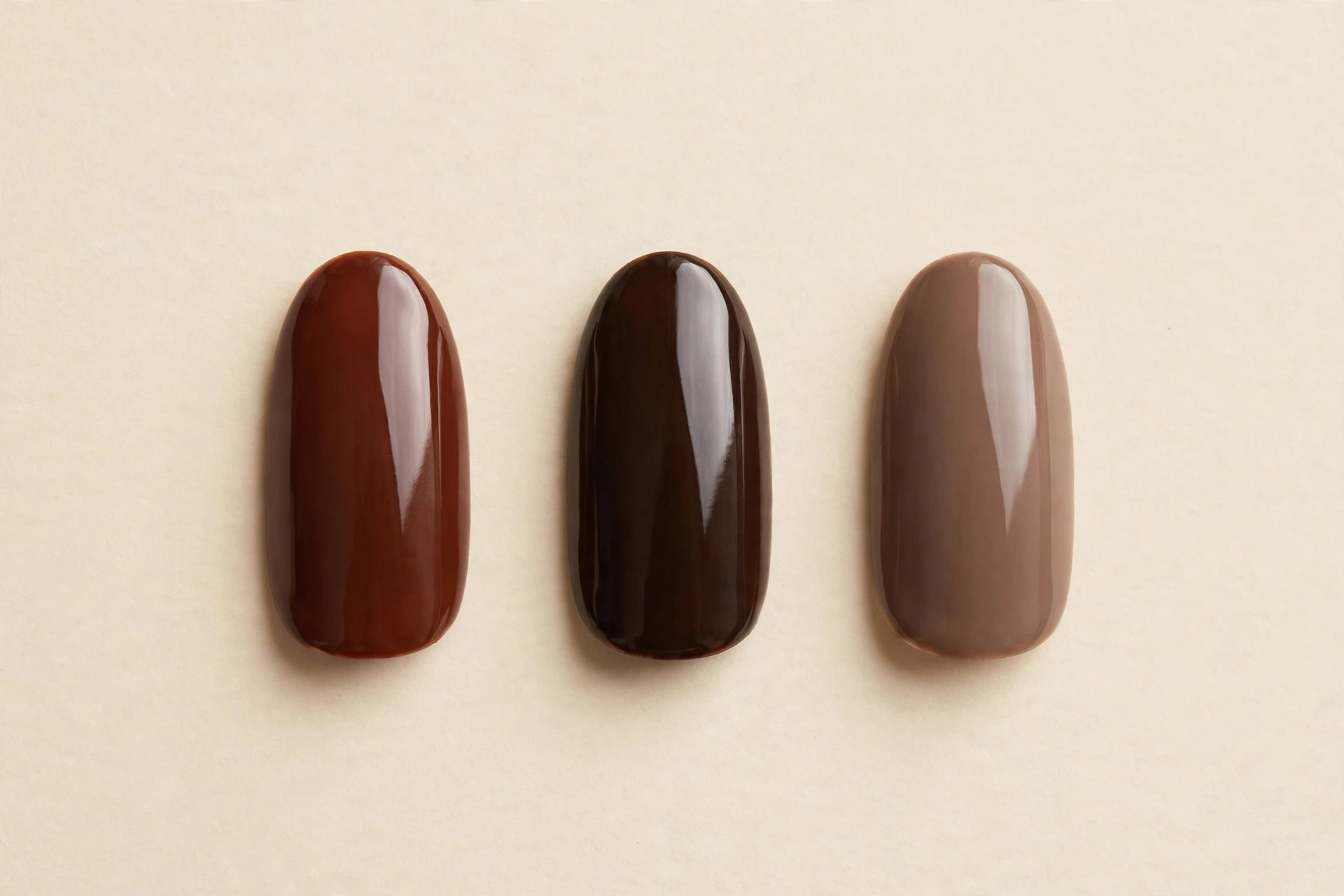
Heritage Camel polish: OPI Samoan Sand, Essie Topless and Barefoot, Sally Hansen Camel. Heritage Camel gel: OPI Samoan Sand Gel, Essie Gel Couture Topless and Barefoot, DND Camel Brown.
Chestnut Classic polish: OPI Espresso Your Inner Self, Essie Chestnut, China Glaze Chestnut. Chestnut Classic gel: OPI Espresso Your Inner Self Gel, Essie Gel Couture Chestnut, DND Chestnut Brown.
Warm Mahogany polish: OPI Mahogany, Essie Mahogany, Sally Hansen Mahogany Brown. Warm Mahogany gel: OPI Mahogany Gel, Essie Gel Couture Mahogany, DND Mahogany.
Espresso Heritage polish: OPI Espresso, Essie Wicked, China Glaze Espresso. Espresso Heritage gel: OPI Espresso Gel, Essie Gel Couture Wicked, DND Espresso Brown.
Soft Taupe Brown polish: OPI Taupe-less Beach, Essie Taupe, Sally Hansen Taupe. Soft Taupe Brown gel: OPI Taupe-less Beach Gel, Essie Gel Couture Taupe, DND Taupe Brown.
Toffee Heritage polish: OPI Toffee, Essie Toffee, Revlon Toffee. Toffee Heritage gel: OPI Toffee Gel, Essie Gel Couture Toffee, DND Toffee Brown.
These shades are inspiration picks to help you find the colours in the palette. Exact shade names vary by brand and season, so check the bottle in daylight before you buy, and swatch on one nail first if you are unsure.
Frequently Asked Questions
What are heritage brown nails?
Heritage brown nails are a palette of warm, timeless brown shades — camel, chestnut, mahogany, espresso, taupe and toffee — inspired by classic materials like worn leather, old wood and warm toffee. The shades are chosen to feel established and enduring rather than trendy, so they suit spring 2027 and keep looking good long after the season ends.
When should I wear heritage brown nails?
Heritage brown nails suit the whole spring season, from early spring through to early summer. Wear the lighter shades, Heritage Camel and Soft Taupe Brown, for daytime and work, and save the deeper shades, Warm Mahogany and Espresso Heritage, for evenings, weddings and special occasions. Do the manicure the day before an event so it is fully dry and settled, and choose gel if you want it to last two to three weeks without a touch-up.
Which heritage brown shade suits fair skin best?
Heritage Camel and Toffee Heritage suit fair skin particularly well, because they give gentle warmth without strong contrast. Chestnut Classic is also a good choice if you want a richer, more defined brown. The darkest shades, Espresso Heritage and Warm Mahogany, look dramatic on fair skin, so they suit people who like a bold manicure, while Soft Taupe Brown suits fair skin with cool undertones.
Do brown nails suit short nails?
Yes, brown nails suit short nails very well. The lighter shades, Heritage Camel and Soft Taupe Brown, look clean and polished on short nails, and the darker shades, Chestnut Classic and Espresso Heritage, look bold and deliberate without overwhelming a short nail. A neat square or short almond shape works best, and a glossy top coat keeps the colour looking fresh. If you want a softer look on short nails, try a brown French tip on a sheer nude base.