
Thanksgiving mustard nails are the warmest way to wear gold without wearing glitter. Mustard sits right in the middle of the autumn palette — richer than yellow, softer than orange, deeper than cream — and on the nail it reads as confident, cosy and quietly expensive all at once. It is the colour of roasted squash, of golden leaves underfoot, of the light coming through a kitchen window on a November afternoon, and it brings that same warmth to a manicure without needing a single extra decoration.
The reason mustard works so well for Thanksgiving is that it flatters almost everyone and goes with almost everything the season puts on the table. A bright yellow can look harsh and a pale gold can disappear, but mustard has enough brown in it to ground it and enough warmth in it to glow. It looks striking against knitwear, plaid, denim and corduroy, it picks up the gold in jewellery without competing with it, and it sits naturally next to the cranberries, pumpkins and browns of a Thanksgiving spread. It is a statement shade that never shouts.
The six shades below cover the full mustard range for Thanksgiving, from a soft pale mustard cream to a deep spiced mustard brown, with classic dijon, honey mustard, golden ochre and burnt mustard in between. Each one is described in full — undertone, finish, skin tones, occasions and how it wears — so you can choose with confidence instead of guessing from a bottle. For the wider autumn range behind this palette, our Thanksgiving nail colors palette explores twenty-four harvest shades in the same warm, seasonal world.
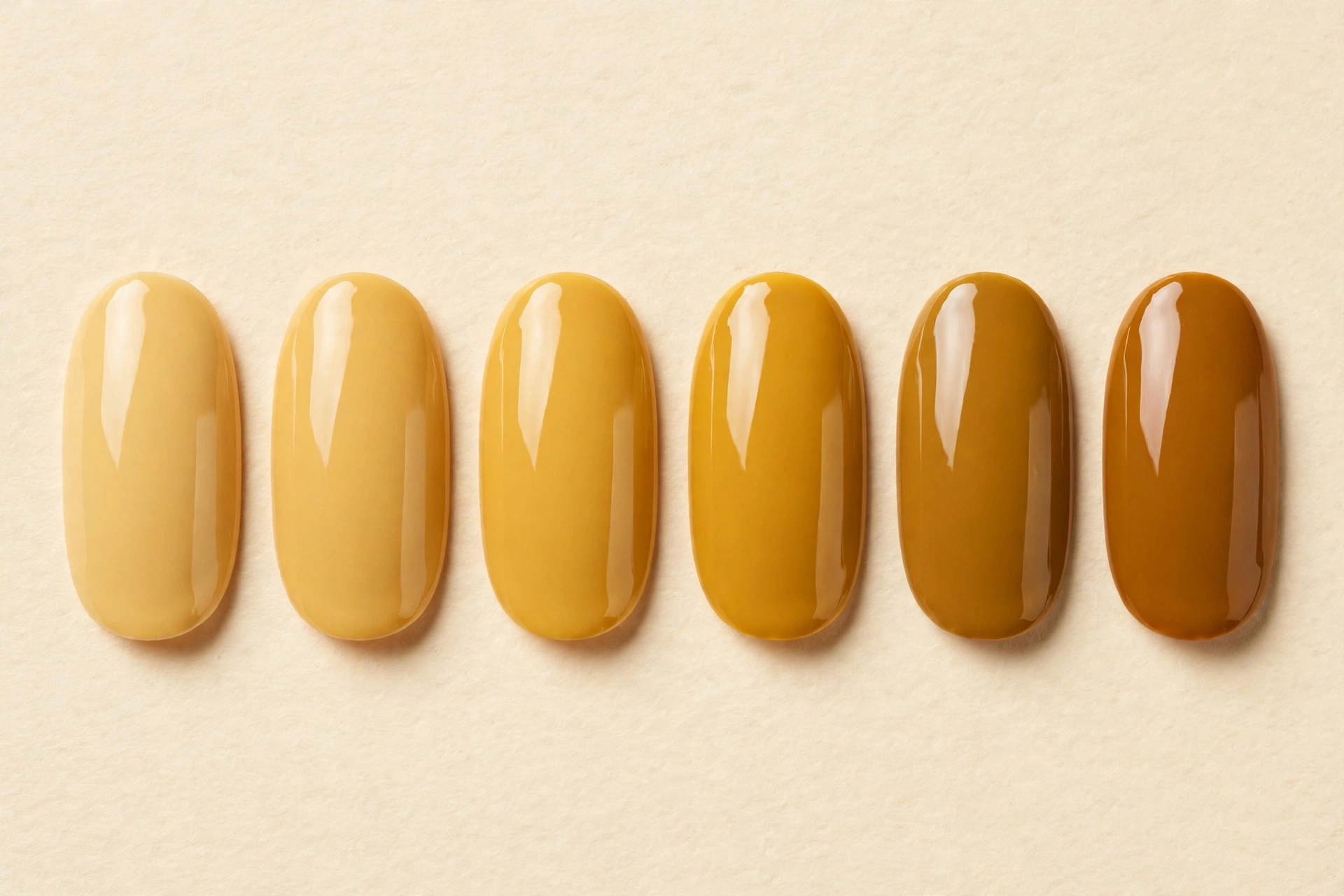
How to Use This Thanksgiving Mustard Nails Palette
- Start with Classic Dijon Mustard if you are new to mustard nails. It is the truest mustard in the set, the easiest to picture on your own nails, and the best way to see how the colour family sits against your skin before you try a paler or deeper version.
- Pick by undertone, not by bottle. Warm, golden mustards suit warm and neutral skin best, while the deeper, browner mustards in this set are the most forgiving across cool skin. If a mustard looks too yellow in the bottle, look for the one with more brown or gold in it.
- Wear one shade on all ten nails for the most polished result. Mustard is a strong colour on its own, and a single even shade across the whole hand looks deliberate and expensive. Save the mixing for accents, not for the whole manicure.
- Use the deepest shade as an accent on one or two nails. Spiced Mustard Brown on the ring fingers, with Classic Dijon Mustard everywhere else, gives depth without making the whole manicure feel heavy or dark.
- Keep the rest of the look simple. Mustard nails already carry the colour, so plain gold jewellery, a neutral knit and a bare lip or a soft berry lip let the manicure do the talking. One warm accessory is enough.
- Match your outfit loosely, not exactly. Mustard nails sit naturally with cream, brown, olive, burgundy and denim, and the warm tones pick up the browns, oranges and golds already in a November wardrobe.
- Seal the colour properly. Yellow-based shades show tip wear and staining more readily than darker colours, so a good base coat underneath and a glossy top coat on top matter more than usual, plus a second thin top coat run lightly along the free edge.
Thanksgiving Mustard Nails: The 6 Shades
1. Classic Dijon Mustard — #C9971C
Classic Dijon Mustard is the shade the whole palette is built around, and it is the one to choose if you only pick one. It is a true mustard yellow with a warm golden pull — not a lemon yellow, not a brown, but the rich, savoury gold of dijon itself. On the nail it reads as warm and confident, bright enough to notice from across the table and grounded enough to feel like an autumn colour rather than a summer one.
The undertone is warm golden yellow with a hint of brown, which is exactly why it is so wearable. A pure yellow can look garish on the nail, but the brown undertone in Dijon Mustard softens it and ties it to the rest of the autumn palette. The finish is a smooth, glossy cream, with no shimmer and no glitter to distract from it. The colour itself does all the work, and a glossy top coat deepens it into something that looks almost like polished brass in lamplight.
On fair skin, Classic Dijon Mustard gives bold, cheerful contrast, and the hands look warm and lively against a cream or brown sweater. It is the kind of shade that turns a plain outfit into a finished one. On medium skin it looks seamless and golden, and it pairs beautifully with gold jewellery and with the warm browns and oranges of November clothes. On deep skin it glows — the mustard stands out clearly and richly, and the result is a striking, joyful finish that looks especially good with a glossy top coat. There is no skin tone this shade argues with, which is why it earns the “classic” name.
Wear it anywhere. It is festive enough for a Thanksgiving dinner and relaxed enough for a weekend of errands, and it suits short nails, long nails, almond, square and oval shapes alike, though it looks particularly good on a short almond or a neat square, where the strong colour keeps the shape looking clean and modern. For a festive touch, add a single tiny gold dot at the cuticle on one nail, or wear it plain and let the colour speak. Keep the rest of the manicure simple.
Next to its sibling shades, Classic Dijon Mustard is the reference point. It is deeper and warmer than Pale Mustard Cream, and brighter and yellower than Golden Ochre. If you hold the three together, Classic Dijon Mustard is the truest mustard of the scale: the shade you reach for when you want mustard, full stop. That middle position also makes it the easiest to wear with other autumn colours, because it sits comfortably next to rust, cranberry, brown and olive without clashing with any of them.
For longevity, expect a good gel version to last two to three weeks with a proper top coat, and a regular polish version to last five to seven days before tip wear shows. The yellow base means two things matter more than usual: a base coat that prevents staining, because mustard pigment can tint the nail plate if it sits directly on it, and a top coat that does not dull the gold. If you are doing it at home, apply the base coat, then two thin coats of colour rather than one thick one, and seal it well. A quick top coat refresh around day four keeps the mustard looking freshly painted.
2. Honey Mustard Glow — #D9A441
Honey Mustard Glow is the softest, sweetest mustard in the set, and the one to choose when you want warmth without boldness. It is a golden honey yellow with a soft amber pull — lighter and sweeter than Classic Dijon Mustard, with a glow that reads as warm sunlight rather than spice. On the nail it looks like honey poured over toast: golden, gentle and quietly luxurious.
The undertone is warm honey gold, which makes it one of the most forgiving shades in the palette. The honey pull softens the yellow, so the colour never looks sharp or acidic, and the amber depth keeps it from washing out pale skin. The finish is a smooth, glossy cream with a faint warm sheen, almost like the surface of honey itself. There is no glitter and no shimmer, just a clean, luminous gold that catches the light.
On fair skin, Honey Mustard Glow is a gentle introduction to mustard. It gives warm contrast without the boldness of a true dijon, so it suits anyone who likes the idea of mustard but worries a stronger shade might overwhelm their hands. On medium skin it looks rich and seamless, like a natural extension of the skin’s own warmth, and it pairs beautifully with gold jewellery and cream knitwear. On deep skin it glows softly rather than shouting, and the result is an elegant, understated finish that looks especially good in daylight. If Classic Dijon Mustard is the statement, Honey Mustard Glow is the whisper.
Wear it for daytime gatherings, family lunches and the long Thanksgiving weekend, when you want a manicure that looks polished without feeling dressed up. It suits short and medium nails best, where the soft colour keeps the shape looking neat, and it looks lovely on almond and oval shapes. For a little extra interest, pair it with a single accent nail in Spiced Mustard Brown, or wear it plain with a gold ring and let the warmth do the work. Our honey nails palette explores twelve golden amber shades in this same honeyed family, if you want to see how far the colour can go beyond mustard.
Next to its siblings, Honey Mustard Glow is the lightest of the true mustards in this set — paler and sweeter than Classic Dijon Mustard, warmer and deeper than Pale Mustard Cream. It sits between the two, which makes it the easiest shade to pair with other autumn colours: it works next to cream, caramel, brown and soft rust without ever looking out of place.
For longevity, the same rules apply as for Classic Dijon Mustard: a base coat to prevent staining, two thin coats of colour, and a glossy top coat sealed along the free edge. Because Honey Mustard Glow is a lighter shade, chips show a little more readily than they do on the deeper mustards, so a top coat refresh around day three or four is worth the minute it takes. In gel, expect a full two to three weeks of wear.
3. Golden Ochre — #BF7F1A
Golden Ochre is the earthiest mustard in the set, and the one to choose when you want mustard with real depth. It is a deep golden brown-yellow with a strong earthy pull — darker and browner than Classic Dijon Mustard, with the warmth of autumn leaves and the richness of ochre pigment. On the nail it reads as grounded, sophisticated and unmistakably seasonal, the colour of a November afternoon.
The undertone is warm earthy gold with a brown base, which is what gives Golden Ochre its depth. The brown keeps the yellow from ever looking bright, and the gold keeps the brown from ever looking dull, so the shade sits in a rich middle ground that feels expensive. The finish is a smooth, glossy cream. A matte top coat turns it into something even more interesting — a soft, suede-like ochre that looks like autumn suede — so it is worth trying both finishes if you own a matte top coat.
On fair skin, Golden Ochre gives strong, warm contrast, and the hands look rich and deliberate against cream or brown clothing. It is the kind of shade that makes a simple sweater look considered. On medium skin it looks deep and seamless, and it pairs beautifully with bronze and gold jewellery. On deep skin it glows with a quiet richness, the ochre sitting close to the skin’s own warmth and looking especially good with a glossy top coat. Of all the shades in this set, Golden Ochre is the one that looks most at home in candlelight, where it deepens into something almost bronze.
Wear it for the Thanksgiving meal itself, for evening gatherings and for the days either side of the holiday, when you want a manicure that feels as rich as the food on the table. It suits every nail length and shape, though it looks particularly good on a medium almond or a neat square, where the deep colour gives the shape real presence. Pair it with a cranberry or burgundy lip and a brown knit, and the whole look comes together without any extra effort.
Next to its siblings, Golden Ochre is the bridge between mustard and brown. It is deeper and browner than Classic Dijon Mustard, and lighter and more golden than Spiced Mustard Brown. If you hold the three together, Golden Ochre is the middle step of the scale: the shade you reach for when Dijon feels a touch too bright and Spiced Mustard Brown feels a touch too dark. For a neighbouring warm autumn family, our pumpkin spice nails palette covers twelve cosy orange shades that sit naturally beside ochre on the Thanksgiving table.
For longevity, Golden Ochre is one of the most forgiving shades in this set. Its depth hides small chips well, and its earthy tone means tip wear shows as a subtle lightening rather than a stark break in colour. Expect a good gel version to last two to three weeks, and a regular polish version to last a full week with a proper top coat. A base coat is still worth using, because the pigment is strong, and a glossy top coat keeps the ochre looking rich rather than flat.
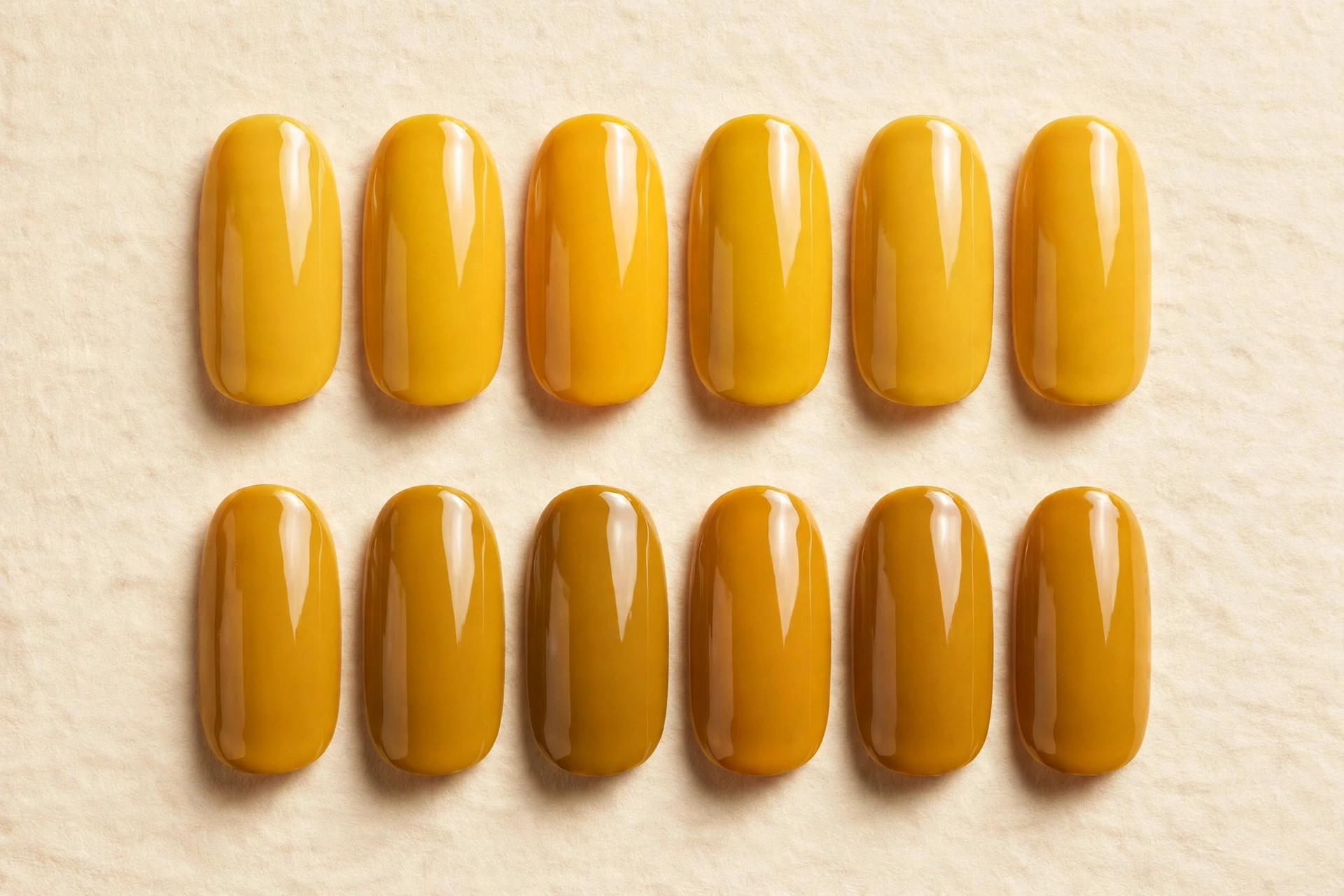
4. Burnt Mustard — #9C6B0E
Burnt Mustard is the boldest, darkest mustard in the set before the palette turns fully brown, and the one to choose when you want drama without darkness. It is a deep, smoky mustard with a strong brown pull — darker and moodier than Golden Ochre, with a burnt, toasted warmth that reads as autumn at its richest. On the nail it looks like the edge of a roasted squash or the last leaves on a November tree: deep, warm and full of character.
The undertone is warm burnt gold with a brown base, which is what keeps Burnt Mustard from ever looking like a plain brown. The gold still shows through, especially in daylight, so the shade shifts as the light changes — deeper and browner in the evening, brighter and more golden in the sun. The finish is a smooth, glossy cream. In a matte finish it turns into something even more striking, a soft, smoky ochre that looks like brushed suede, so it is one of the best shades in this set to try matte.
On fair skin, Burnt Mustard gives dramatic, warm contrast, and the hands look bold and deliberate. It is the kind of shade that makes a plain black or cream outfit look finished. On medium skin it looks rich and seamless, and it pairs beautifully with gold and bronze jewellery and with the deep browns and burgundies of November clothes. On deep skin it glows with a deep, quiet warmth, the burnt gold sitting close to the skin and looking especially good with a glossy top coat. If you love autumn colour but find true brown a little flat, Burnt Mustard is your shade.
Wear it for evening gatherings, for the Thanksgiving meal itself and for the weekend after, when you want a manicure that feels as rich as the season. It suits medium and long nails best, where the deep colour has room to show, and it looks lovely on almond, oval and square shapes. Keep the rest of the look simple — a neutral knit, a gold ring, a soft berry lip — and let the nails carry the colour.
Next to its siblings, Burnt Mustard is the darkest true mustard in this set. It is deeper and browner than Golden Ochre, and lighter and more golden than Spiced Mustard Brown. It is the shade that proves mustard does not have to be bright to be mustard: the warmth is still there, just turned down into something smokier and more grown-up.
For longevity, Burnt Mustard is the most forgiving shade in this set. Its depth hides chips and tip wear better than any of the paler mustards, and its earthy tone means small imperfections barely show. Expect a good gel version to last a full three weeks, and a regular polish version to last seven to ten days with a proper top coat. A base coat is still worth using to prevent staining, and a glossy top coat keeps the burnt gold looking rich.
5. Spiced Mustard Brown — #8A5A12
Spiced Mustard Brown is the deepest shade in the palette, and the one to choose when you want mustard to behave like a neutral. It is a rich brown with a strong mustard-gold pull — browner than Burnt Mustard, warmer than a plain chocolate brown, with a spiced depth that reads as cinnamon, nutmeg and toasted sugar all at once. On the nail it looks like the richest part of the Thanksgiving table: deep, warm and quietly luxurious.
The undertone is warm spiced brown with a golden base, which is what keeps Spiced Mustard Brown from ever looking flat. The gold lifts the brown and stops it from reading as muddy, while the brown grounds the gold and stops it from reading as bright. The finish is a smooth, glossy cream. A matte top coat turns it into a soft, spiced suede that looks like the inside of a winter coat, so it is worth trying both finishes if you like to vary your manicures.
On fair skin, Spiced Mustard Brown gives strong, elegant contrast, and the hands look polished and deliberate without the boldness of a brighter mustard. It is the most office-friendly shade in this set, and the easiest to wear with a work wardrobe. On medium skin it looks deep and seamless, and it pairs beautifully with gold jewellery and with cream, brown and olive clothing. On deep skin it glows with a rich, quiet warmth, the spiced brown sitting close to the skin’s own depth and looking especially good with a glossy top coat. Of all the shades here, this is the one that works hardest as a neutral: it goes with everything, and it never argues with an outfit.
Wear it anywhere, from the office to the Thanksgiving table to a winter evening out. It suits every nail length and shape, though it looks particularly good on a short square or a medium almond, where the deep colour gives the shape real presence. It is also the best accent shade in this set: one or two nails in Spiced Mustard Brown lift a whole manicure of Classic Dijon Mustard or Honey Mustard Glow without making it feel dark.
Next to its siblings, Spiced Mustard Brown is the end of the scale — the deepest, browniest mustard in the palette. It is darker and browner than Burnt Mustard, and it sits a step beyond Golden Ochre in the same direction. If you love the warmth of mustard but want a shade you can wear every day from November into January, this is the one to reach for.
For longevity, Spiced Mustard Brown is as forgiving as Burnt Mustard. Its depth hides chips well, and its rich tone means tip wear shows slowly. Expect a good gel version to last two to three weeks, and a regular polish version to last a full week or more with a proper top coat. A base coat prevents staining, and a glossy top coat keeps the spiced gold looking rich rather than flat.
6. Pale Mustard Cream — #E3C878
Pale Mustard Cream is the lightest shade in the palette, and the one to choose when you want mustard at its softest. It is a pale, creamy mustard with a soft golden pull — lighter and gentler than Honey Mustard Glow, with a buttery warmth that reads as cream with sunshine in it. On the nail it looks like pale honey, like the inside of a ripe pear, like morning light on a November windowsill.
The undertone is warm pale gold, which is what keeps Pale Mustard Cream from ever looking like a plain cream. The gold gives it warmth and character, while the paleness keeps it soft and wearable. The finish is a smooth, glossy cream. Because it is so pale, it shows the nail underneath more than the deeper shades do, so two thin coats — sometimes three, if your polish is sheer — give the most even result.
On fair skin, Pale Mustard Cream is a gentle, flattering wash of warmth. It gives soft contrast without boldness, so it suits anyone who likes mustard but wants the quietest version of it. On medium skin it looks warm and creamy, and it pairs beautifully with gold jewellery and cream knitwear. On deep skin it glows softly, a pale golden wash that looks elegant and understated, especially with a glossy top coat. It is the most delicate shade in this set, and the one that feels most like a neutral.
Wear it for daytime gatherings, for work, and for the long Thanksgiving weekend, when you want a manicure that looks polished without feeling dressed up. It suits short and medium nails best, where the pale colour keeps the shape looking neat, and it looks lovely on almond, oval and square shapes. For a little extra interest, pair it with a single accent nail in Burnt Mustard or Spiced Mustard Brown, or wear it plain and let the soft gold speak.
Next to its siblings, Pale Mustard Cream is the beginning of the scale — the lightest, softest mustard in the palette. It is paler and creamier than Honey Mustard Glow, and a world away from the depth of Spiced Mustard Brown. If you hold the whole set together, Pale Mustard Cream is the shade that shows how wide the mustard family really is: from this pale, buttery gold all the way down to deep spiced brown, with a mustard for every mood and every skin tone.
For longevity, Pale Mustard Cream needs the most care of the six, because pale shades show chips and unevenness more readily. A ridge-filling base coat helps, two or three thin coats of colour give the most even finish, and a glossy top coat seals it. Expect a good gel version to last two to three weeks, and a regular polish version to last five to seven days. A top coat refresh around day three keeps the pale gold looking freshly painted.
How the Six Mustard Shades Compare
The six shades in this palette form a single scale, from Pale Mustard Cream at the lightest end to Spiced Mustard Brown at the deepest, and understanding that scale is the quickest way to pick the right one. Pale Mustard Cream and Honey Mustard Glow are the soft mustards: gentle, creamy and easy to wear every day. Classic Dijon Mustard and Golden Ochre are the true mustards: the heart of the family, warm, golden and unmistakably mustard. Burnt Mustard and Spiced Mustard Brown are the deep mustards: smoky, earthy and rich, the shades that carry a manicure into the evening.
If you are choosing between two neighbours on the scale, think about the occasion and your skin tone rather than the bottle. Pale Mustard Cream suits fair skin and daytime best; Honey Mustard Glow suits everyone and every daytime occasion; Classic Dijon Mustard suits everyone and makes the boldest statement; Golden Ochre suits medium and deep skin and evening best; Burnt Mustard suits anyone who wants depth without darkness; Spiced Mustard Brown suits anyone who wants a mustard that behaves like a neutral. There is no wrong choice in the set — only a shade that fits your day a little better than the next one along.
The other comparison worth making is with the rest of the Thanksgiving palette. Mustard sits between the oranges and the browns, so it pairs naturally with both. Next to rust, mustard looks brighter and more golden; next to cranberry, it looks warmer and more earthy; next to chocolate brown, it looks lighter and more joyful. That flexibility is why mustard is such a useful Thanksgiving shade: it never clashes with the other colours of the season, and it lifts a manicure that might otherwise feel too dark or too plain. Our Thanksgiving rust nails palette covers six warm harvest shades that sit right beside mustard on the Thanksgiving table, if you want to see the two families side by side.
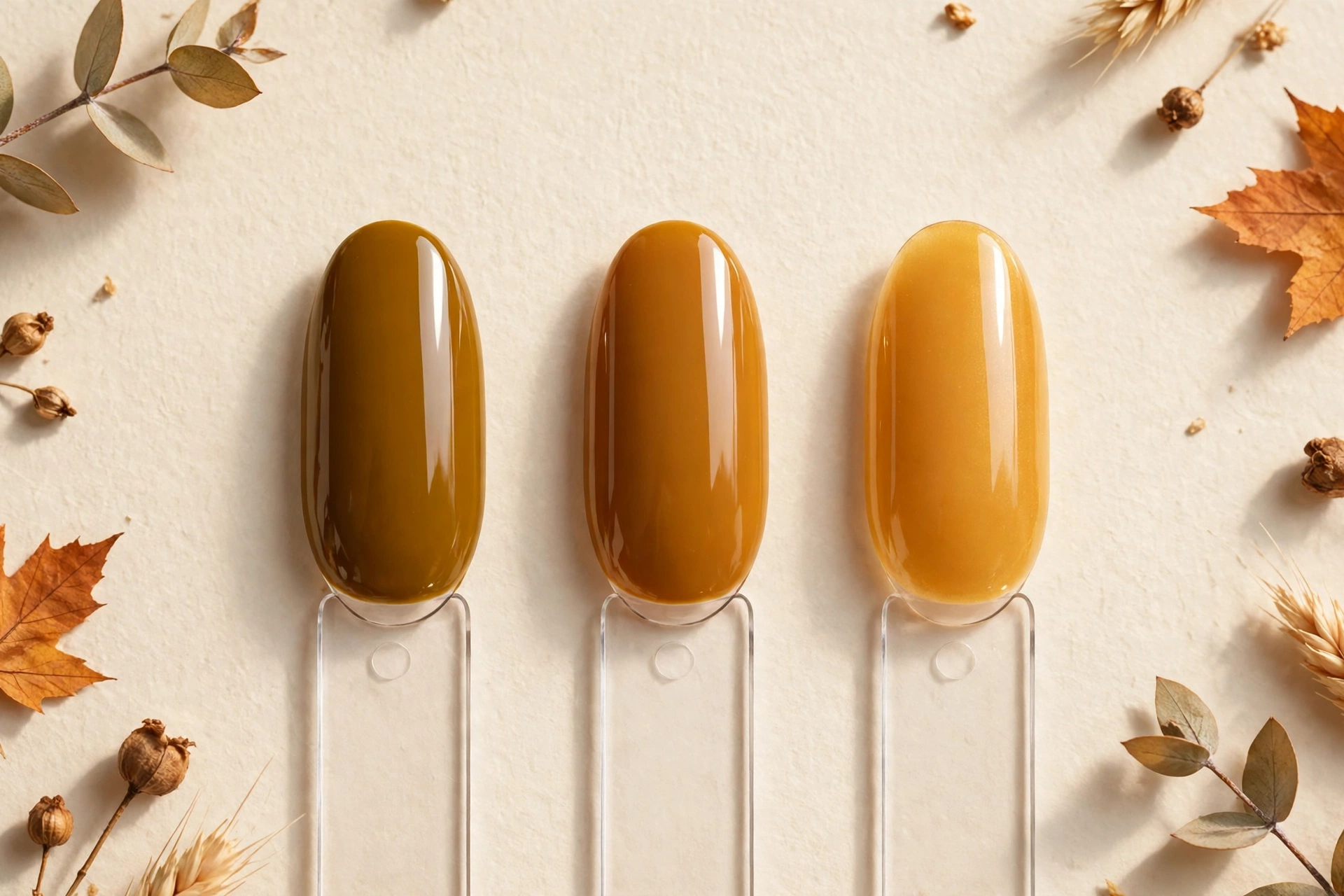
Styling Thanksgiving Mustard Nails
Mustard nails are easy to style because the colour already does so much of the work. The simplest rule is to let the nails be the colour and keep everything else warm and quiet. A cream or oatmeal knit, a brown corduroy skirt, dark denim, an olive jacket or a burgundy scarf all sit naturally with mustard, and each one picks up a different part of the colour. Cream makes mustard look brighter and fresher; brown makes it look richer and deeper; olive makes it look earthy and sophisticated; burgundy makes it look festive and warm.
Jewellery is simple with mustard: gold is the natural partner, and it suits every shade in this set. A thin gold band, a small gold hoop or a delicate gold chain picks up the gold in the polish without competing with it. Silver works too, especially with the deeper mustards, where it adds a cool contrast that keeps the look from feeling too warm overall — but gold is the safer, warmer choice for Thanksgiving. Bronze and copper jewellery sit beautifully with Golden Ochre and Burnt Mustard in particular, and they echo the metallic tones of the season without needing any glitter on the nails themselves.
Makeup follows the same warm, quiet rule. A soft berry or deep plum lip works beautifully with mustard nails, because the cool berry balances the warm gold. A nude or brown lip keeps the whole look soft and natural. For eyes, a warm brown or bronze shadow and a soft brown liner are enough; a black liner can look a little harsh next to mustard, so brown is the kinder choice. Keep blush warm and peachy rather than pink, and the whole face will sit in the same golden world as the nails.
For the Thanksgiving table itself, mustard nails look their best in warm light. Candlelight and lamplight deepen the gold and make the deeper shades glow, while daylight shows the true colour of the paler shades. If you are hosting, mustard nails look wonderful against a wooden table, a linen napkin and the golden food of the meal itself. If you are a guest, they look polished without ever looking like you tried too hard — which is exactly the right note for a family holiday.
Finishes, Application and Longevity
Every shade in this palette is written as a glossy cream, because that is the finish that shows mustard at its truest. A glossy top coat deepens the gold, smooths the surface and makes the colour look freshly painted for days. But mustard is one of the best colour families to try in a matte finish, and the deeper shades in particular — Golden Ochre, Burnt Mustard and Spiced Mustard Brown — turn into something genuinely different under matte: soft, suede-like, almost like brushed autumn fabric. If you own a matte top coat, try it on one hand and glossy on the other, and see which you prefer. There is no wrong answer, only a different mood.
Application matters more with mustard than with many other colours, because yellow pigment is strong and pale shades are sheer. The base coat is not optional: it stops the mustard pigment from staining the nail plate, it smooths ridges that a pale shade would otherwise show, and it gives the colour something to grip. Apply two thin coats of colour rather than one thick one, and let the first coat dry properly before the second. A thick coat takes longer to dry, bubbles more easily and chips sooner. For Pale Mustard Cream, a third thin coat is often worth it for full, even coverage.
Top coat is the other half of the job. A good glossy top coat seals the colour, adds shine and protects the free edge, which is where chips start. Run a thin line of top coat along the free edge itself, not just across the top of the nail, and the manicure will last noticeably longer. Refresh the top coat around day three or four — a single thin coat over the whole nail — and a regular polish manicure that would have lasted five days will often stretch to seven or eight.
In gel, all six shades last two to three weeks with proper preparation: a clean, dry nail plate, a good base coat, thin colour coats cured fully, and a top coat sealed along the edge. The deeper shades — Burnt Mustard and Spiced Mustard Brown — are the most forgiving in gel, because their depth hides regrowth and small chips. The paler shades — Pale Mustard Cream and Honey Mustard Glow — show regrowth a little sooner, so they suit a shorter wear or a more frequent refresh. Either way, mustard is a practical Thanksgiving choice: it is a colour that looks good on day one and still looks good on day seven, which is exactly what a long holiday weekend needs.
Polish and Gel Picks
For Classic Dijon Mustard, look for a true mustard cream polish in a standard creme finish, or a mustard gel polish with a warm golden base. The closest matches in most ranges sit in the yellow-gold family rather than the orange family, so check the bottle in daylight before you buy.
For Honey Mustard Glow, look for a honey gold polish with a soft amber pull, or a honey mustard gel polish in a glossy creme finish. The shade should read as golden honey rather than yellow, with enough warmth to flatter the skin.
For Golden Ochre, look for a golden ochre polish in a rich creme finish, or an ochre gel polish with a brown-gold base. The shade should read as earthy and golden rather than bright, with real depth in the bottle.
For Burnt Mustard, look for a deep burnt mustard polish in a creme finish, or a burnt ochre gel polish with a smoky brown pull. The shade should look darker in the bottle than Classic Dijon Mustard, with the gold still visible.
For Spiced Mustard Brown, look for a spiced brown polish with a golden undertone, or a mustard brown gel polish in a glossy creme finish. The shade should read as brown first and mustard second, with warmth rather than coolness.
For Pale Mustard Cream, look for a pale mustard cream polish in a sheer-to-opaque creme finish, or a pale honey gel polish with a soft golden pull. The shade should read as buttery and warm rather than white, with enough pigment to cover in two or three thin coats.
When you are choosing between brands, the finish matters as much as the colour. A creme finish is the safest choice for every shade in this set, because it shows the true mustard colour without any distraction. A shimmer finish can work on the deeper shades, but it changes the character of the colour, so try it on one nail first if you are tempted.
These shades are an inspiration palette, not an exact colour match to any single polish. Use the hex codes as a guide when you are comparing bottles, and trust your eye in daylight over a photograph or a screen.
Frequently Asked Questions
What colour is mustard nails?
Mustard nails are a warm golden yellow with a brown undertone, sitting between yellow and brown on the colour scale. The family ranges from pale mustard cream, which is soft and buttery, to spiced mustard brown, which is deep and earthy, with classic dijon mustard in the middle. The brown undertone is what makes mustard wearable: it softens the yellow, ties the colour to the rest of the autumn palette, and keeps it from ever looking garish or acidic on the nail.
Are Thanksgiving mustard nails in style for 2026?
Yes. Mustard is one of the warmest autumn shades for 2026, and it fits the Thanksgiving palette perfectly because it sits naturally next to rust, cranberry, pumpkin and chocolate brown. It is a colour that reads as seasonal without needing any nail art, and it works on every nail length and shape. The deeper mustards in particular — Golden Ochre, Burnt Mustard and Spiced Mustard Brown — suit the richer, earthier direction that autumn manicures have taken this year.
Which skin tone suits mustard nails best?
Mustard suits every skin tone, because the family is wide enough to offer a shade for everyone. Fair skin looks best in the softer mustards — Pale Mustard Cream and Honey Mustard Glow — or in the deep, rich mustards, which give strong, elegant contrast. Medium skin suits the whole range, with Classic Dijon Mustard and Golden Ochre looking particularly seamless. Deep skin glows in the true and deep mustards, where the gold sits richly against the skin. If a mustard looks too yellow against your skin, try the next shade along the scale towards brown.
How do I wear mustard nails without them looking too bright?
Pick a mustard with a strong brown or gold undertone rather than a pure yellow, wear it on short or medium nails, and keep the rest of your look warm and quiet. Golden Ochre, Burnt Mustard and Spiced Mustard Brown are the least bright shades in this palette, and they read as rich and sophisticated rather than loud. A glossy top coat deepens the colour, a matte top coat softens it further, and plain gold jewellery with a neutral knit lets the nails be the colour without anything competing with them.