
Terracotta nails are the color fall was built for. That sunbaked clay tone — warm, earthy, somewhere between orange and brown — shows up on pumpkin fields, pottery, and desert sunsets every autumn, and on nails it reads instantly cozy without trying. Below are 12 terracotta shades charted from pale clay to deep kiln-fired umber, each with its undertone, finish, who it flatters, and where it belongs — plus a full swatch chart so you can compare them side by side.
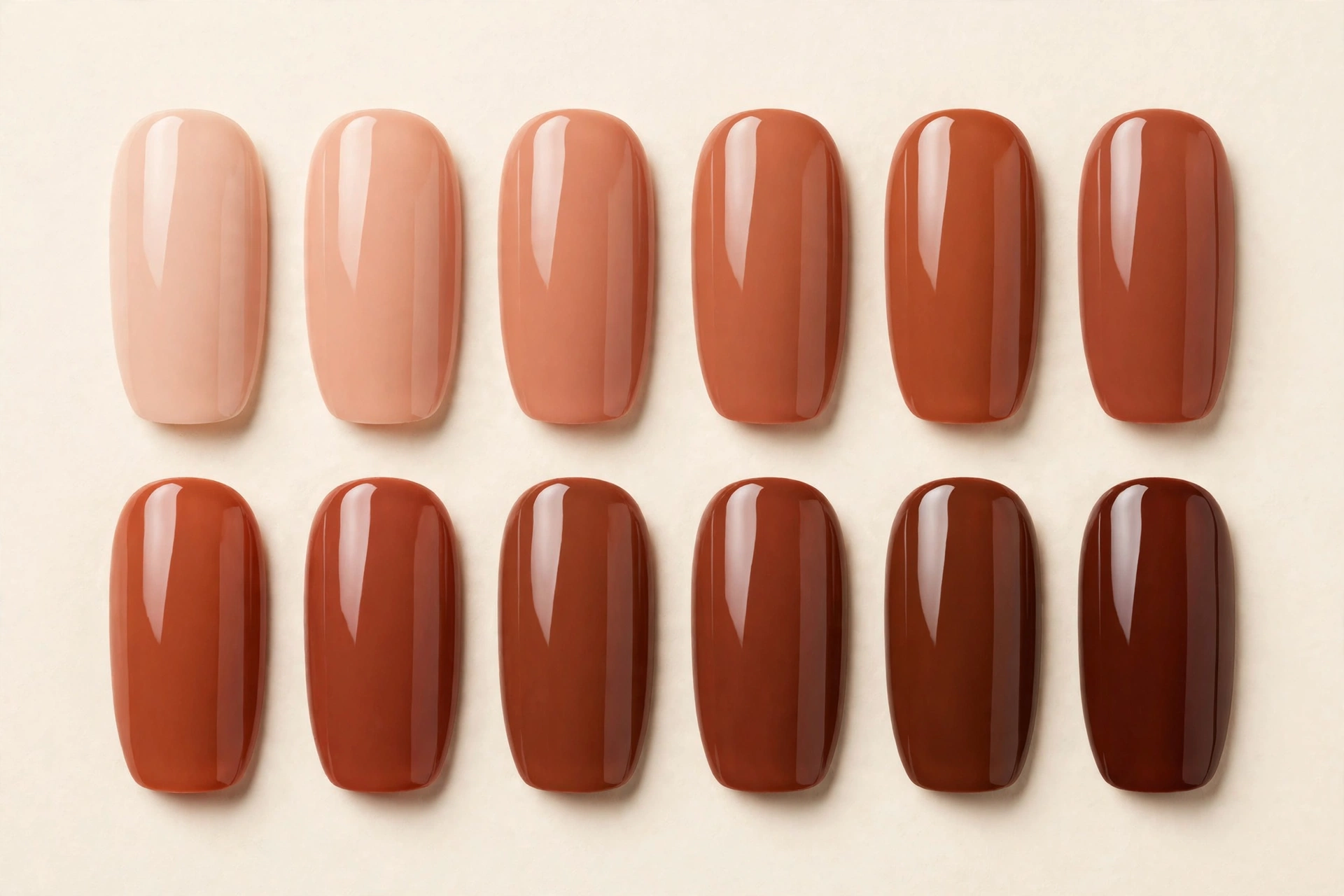
How to Use This Terracotta Nails Palette
- Start with your undertone. Warm and golden skin leans into the mid-chart classics like Classic Terracotta and Rustic Ember; cool skin should reach for the lighter, pinker entries like Pale Clay and Peach Terracotta, which carry enough pink to balance blue undertones. Neutral skin can wear the whole chart — pick by mood, not by rule.
- Compare in daylight, two at a time. Terracotta shades differ by degrees of red, orange and brown. Hold any two swatches against your fingertip near a window: the right one makes your skin look warm and alive; the wrong one makes it look tired.
- Terracotta loves short to medium lengths. These are rich, saturated earth tones — on very long nails the mid-chart shades can look heavy, so keep almond or square shapes at a moderate length and let the color do the talking.
- Use this chart as a shade map, not a shopping list. Salons mix their own versions — show your nail tech the row and name the undertone you want (“redder like kiln-fired rust, not oranger like classic terracotta”).
- Plan the occasion first. The pale clays work for offices and weddings; the mid-chart oranges own October weekends; the deep siennas carry Thanksgiving and holiday dinners.
1. Pale Clay — #E8C4A8
The softest entry on the chart: a light, creamy terracotta with a pink-beige undertone and a satiny gloss finish that reads almost like a warm nude. It flatters fair and light-medium skin beautifully — on porcelain skin it looks like a polished-up version of a natural nail, warm and healthy rather than colorless. Best occasions: offices, weddings, and anyone who wants the terracotta vibe without the commitment of a bold color. Next to Peach Terracotta below, Pale Clay looks distinctly paler and pinker — the two sit together as the “barely terracotta” end of the spectrum, and they’re the easiest entry point if you’ve never worn an earth tone.
2. Peach Terracotta — #E0A67E
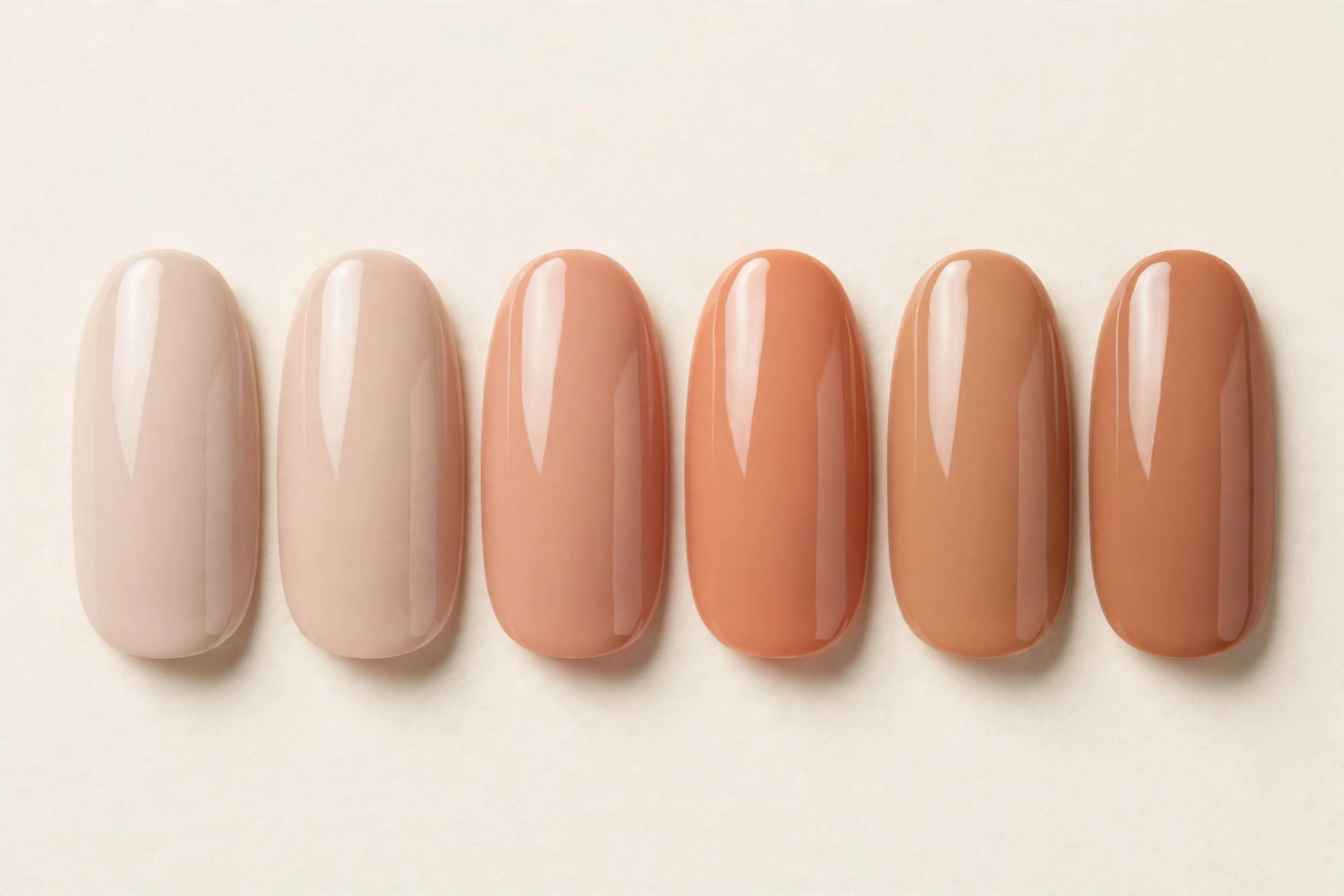
A friendly, peachy terracotta with a soft orange undertone — think of ripe apricot skin — finished in a smooth, even gloss. It flatters light to medium skin tones across the board, and it’s especially kind to warm undertones, which it harmonizes with instead of fighting. Cool-undertoned wearers can still pull it off because the peach carries enough pink to bridge the gap. Best occasions: early fall, garden parties, and daytime events when you want warmth that photographs softly. Compared with Pale Clay, it’s noticeably more orange and more saturated; compared with Sunbaked Sand, it’s pinker and less golden — the sweet spot between nude and statement.
3. Sunbaked Sand — #DCA57C
A golden, sun-warmed terracotta with a distinct yellow-orange undertone, like sand at noon in the desert — finished in a rich, buttery gloss. It flatters medium, olive and golden skin tones gorgeously; olive skin in particular loves this shade, because the golden cast echoes the skin’s own warmth instead of clashing with it. Best occasions: late summer into early fall transitions, beach weddings, and any look paired with gold jewelry, which picks up the same golden light. Side by side with Peach Terracotta, the difference is temperature — Sunbaked Sand runs warmer and more yellow; next to Soft Adobe, it’s lighter and more luminous.
4. Soft Adobe — #D4956A
Named for sun-dried mud brick: a mid-light terracotta with a balanced red-orange undertone and a velvety, almost suede-like gloss finish that reads expensive and grounded. It flatters medium skin tones best, sitting on the nail like it belongs there, and it’s one of the most forgiving shades in the palette for application — the mid-depth hides brush strokes that paler shades would show. Best occasions: everyday autumn wear, casual Fridays, and the whole “cozy girl” aesthetic. Compared with Sunbaked Sand, Soft Adobe is deeper and redder; compared with Classic Terracotta, it’s softer and more muted — pick Adobe when you want the earthiness dialed to a whisper.
5. Classic Terracotta — #C87E57
The reference point for the entire color: a true terracotta with equal parts red and orange, like the inside of a flowerpot, finished in a clean high-gloss. It flatters medium to deep skin tones in a way the pale clays can’t — on rich skin it creates a warm, tonal harmony rather than contrast — and it looks striking on light skin too, where the saturation reads deliberate and bold. Best occasions: October everything — pumpkin patches, apple picking, Halloween-adjacent looks that aren’t costume-y. Next to Soft Adobe, Classic Terracotta is brighter and more vivid; next to Desert Rose Terracotta, it’s more orange and less red — this is the shade to choose when someone says “terracotta nails” and you want exactly that.
6. Desert Rose Terracotta — #C96F55
Terracotta with a secret: a dusty rose undertone woven through the clay base, giving it a romantic, sunset-in-the-desert quality in a smooth gloss finish. It flatters light-medium and medium skin tones, especially those with pink or neutral undertones — the rose whisper makes it the most romantic shade on the chart. Best occasions: date nights, fall weddings, and anyone who loves terracotta but lives in pinks. Compared with Classic Terracotta, it’s redder and softer; compared with Rustic Ember, it’s lighter and more feminine — the bridge shade between the terracotta family and the rose family.
7. Rustic Ember — #B95E43
The bonfire shade: a deep, glowing terracotta with a strong red-orange undertone — embers under ash — finished in a rich, almost lacquered gloss. It flatters medium, olive and deep skin tones powerfully, and on fair skin it becomes a genuine statement, especially on short, squared nails where the color concentrates. Best occasions: bonfires, fall festivals, and evening events where you want one bold, warm note. Side by side with Desert Rose Terracotta, Rustic Ember is deeper and more orange-red; next to Burnt Sienna, it’s brighter and less brown — choose Ember when you want the glow, not the earth.
8. Burnt Sienna — #A6532F
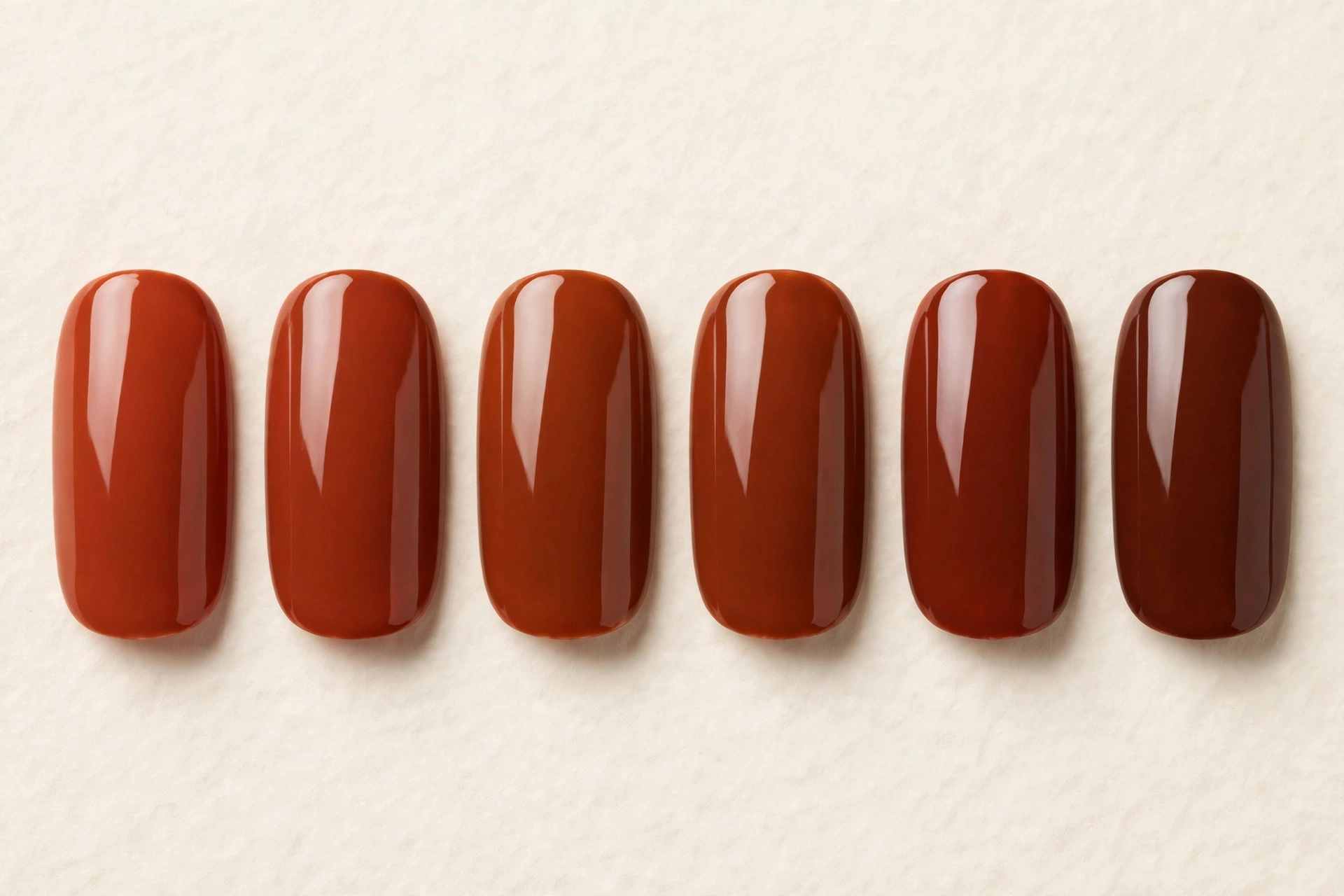
The artist’s pigment, straight off the palette: a deep reddish-brown terracotta with a definite brown base and a warm, glowing finish. It flatters medium and deep skin tones beautifully — the brown base keeps it from looking neon against rich skin — and it’s the shade that pairs best with brown leather, suede boots and camel coats. Best occasions: Thanksgiving week, late-fall wardrobes, and anywhere the outfit leans brown. Compared with Rustic Ember, Burnt Sienna is browner and moodier; compared with Kiln-Fired Rust, it’s a touch lighter and more red — the classic, no-surprises deep terracotta.
9. Kiln-Fired Rust — #9C4F28
Named for what happens to clay in the kiln: a deep, oxidized rust with a strong brown-red undertone and a dense, almost metallic-looking gloss that catches light like glazed pottery. It flatters deep and warm skin tones especially well, where the dark warmth reads tonal and luxurious, and it makes a striking accent nail against the paler clays. Best occasions: holiday dinners, evening events, and pairing with copper or bronze jewelry. Next to Burnt Sienna, Kiln-Fired Rust is deeper and more oxidized; next to Roasted Paprika, it’s browner and less spicy — pick it when you want depth with a metallic-adjacent glow.
10. Roasted Paprika — #8F4426
The spiciest shade on the chart: a deep, smoky red-brown terracotta with a hint of warmth that reads almost like ground paprika — finished in a rich, even gloss. It flatters medium-deep to deep skin tones and looks dramatic on fair skin in the best way, especially with gold accents or a glossy top coat that deepens the color. Best occasions: dinner parties, holiday season, and the weeks when your wardrobe goes dark. Compared with Kiln-Fired Rust, Roasted Paprika is redder and spicier; compared with Deep Adobe, it’s lighter and more vibrant — the shade for people who find browns boring but reds too loud.
11. Deep Adobe — #7E3A22
Adobe after dark: a dark, muted terracotta-brown with a soft, dusty undertone — the color of canyon walls at dusk — in a smooth, low-key gloss finish. It flatters deep skin tones in a tonal, seamless way and gives medium skin a sophisticated, almost editorial edge. It’s also the most office-friendly of the deep shades — dark enough to read polished, warm enough to avoid goth territory. Best occasions: work weeks, formal fall events, and anyone transitioning from black or burgundy who wants something warmer. Next to Roasted Paprika, Deep Adobe is darker and dustier; next to Earth Fired Umber, it’s redder and a touch lighter — the quiet luxury end of terracotta.
12. Earth Fired Umber — #6B3220
The deepest shade on the chart: a dark, earthy umber-terracotta with a strong brown base and just enough red to keep it in the family, finished in a deep, glassy gloss. It flatters deep skin tones gorgeously — tonal, rich, and deliberate — and on lighter skin it reads as a bold, moody statement, best on short nails where the darkness stays chic. Best occasions: late November, evening events, and pairing with chunky knits and dark denim. Compared with Deep Adobe, Earth Fired Umber is darker and browner; compared with the pale clays at the top of the chart, it’s a different universe — the full journey from clay to earth in one palette.
Terracotta Nails vs. Burnt Orange Nails: What’s the Difference?
They’re neighbors, not twins. Terracotta is the earthier, more muted sibling — every terracotta shade carries a brown or clay undertone that keeps it grounded and dusty, like pottery. Burnt orange is brighter, more vivid, more purely orange — it glows where terracotta smolders. Think of it this way: terracotta is the clay pot; burnt orange is the flame inside it.
If your heart leans toward the brighter, more saturated end, our burnt orange nails guide charts 12 rich autumn shades with the same undertone-first approach. And if you love the dusty, grounded quality of terracotta but want it warmer and spicier, cinnamon nails take the same earth-tone idea into spiced-brown territory. The overlap zone: shades like Rustic Ember and Classic Terracotta sit close to burnt orange, so they make easy transition shades if you’re moving between the two families.
Why Terracotta Nails Own Fall 2026
Every autumn, the same thing happens: the fashion cycle rediscovers earth. This fall it’s terracotta leading the charge — the shade shows up in knitwear, boots, handbags and home decor, and nails followed naturally. What makes terracotta nails different from other fall trends is their range: the same color family stretches from a barely-there office nude (Pale Clay) to a near-black evening shade (Earth Fired Umber), so one palette covers the entire season.
There’s also a practical reason terracotta keeps winning. These shades are forgiving — mid-depth earth tones hide chips better than darks, streak less than neons, and flatter a wider range of skin tones than most color families. If you’ve ever bought a trendy fall shade and worn it twice, terracotta is the opposite bet: it’s the shade you’ll still be reaching for in December.
For the deeper, browner end of the earth-tone spectrum, chocolate brown nails continue where this chart leaves off — 12 shades from espresso to mocha that pair naturally with the deep adobes and umbers here.
Styling Tips for Terracotta Nails
Terracotta is a team player — it was born to sit next to the textures and colors of fall. A few ways to get the most out of it:
- Pair with gold, not silver. Terracotta’s warm undertones harmonize with gold jewelry, brass hardware and warm metals. Silver can work with the pale clays, but gold is the safe, flattering default across the chart.
- Match your textures. The mid-chart shades (Soft Adobe through Rustic Ember) look best against knitwear, suede, corduroy and leather — materials with the same earthy warmth. Against sleek synthetics, terracotta can look out of place.
- Try a tonal gradient. Paint each nail a different shade from the chart, lightest on the thumb to deepest on the pinky. The pale-to-deep progression is one of the easiest nail-art looks there is, and it shows off the palette’s range.
- Accent with the deeps. Wear Pale Clay or Peach Terracotta on four nails and put Earth Fired Umber or Roasted Paprika on the ring finger. The contrast makes both shades look richer.
- Matte it down for daytime. A matte top coat over Classic Terracotta or Soft Adobe turns the look dusty and modern — very “canyon at noon.” Keep gloss for evenings.
Best Occasions for Terracotta Nails
The chart’s range means there’s a terracotta for nearly every fall moment:
- Offices and interviews: Pale Clay, Peach Terracotta, or Soft Adobe — warm, polished, and professional without being loud.
- October weekends: Classic Terracotta, Desert Rose Terracotta, or Rustic Ember — the pumpkin-patch shades, made for daylight and denim.
- Fall weddings: Desert Rose Terracotta or Soft Adobe — romantic, photogenic, and formal without competing with the dress.
- Thanksgiving and holiday dinners: Burnt Sienna, Kiln-Fired Rust, or Roasted Paprika — deep, rich, and made for candlelight and brown leather.
- Date nights: Desert Rose Terracotta or Rustic Ember — warm glow shades that flatter in low light.
If your fall style leans toward the cozy-spiced end of things, pumpkin spice nails — 12 cozy orange shades — sit right next to this palette and share several of the same occasions.
Polish and Gel Picks
Regular polish picks: OPI Clay Dreaming. Essie Playing Koi. Sally Hansen Terra-cotta. Zoya Arizona. Olive & June Desert Rose. ILNP Autumn Clay. Orly Canyon Clay.
Gel picks: Beetles Terracotta Gel. Modelones Clay Brown Gel. DND Terracotta Gel. OPI Terracotta-ble GelColor. Essie Gel Couture Terracotta Tile.
Inspiration-Palette Disclaimer
This post is an inspiration palette: the shades are charted as swatch art to show undertones and finishes, not exact product matches. Take the row to your nail tech and name the undertone you want — they’ll mix or match the closest real-world shade.
Frequently Asked Questions
What color is terracotta nail polish?
Terracotta nail polish is a warm, earthy shade between orange and brown — named after baked clay pottery. It ranges from pale clay nudes like Pale Clay (#E8C4A8) to deep kiln-fired browns like Earth Fired Umber (#6B3220), always with a dusty, grounded undertone that keeps it from looking neon or bright.
Do terracotta nails suit fair skin?
Yes — pick from the right end of the chart. Fair skin looks best in the lighter, pinker terracottas: Pale Clay, Peach Terracotta and Desert Rose Terracotta, which carry enough pink to flatter cool undertones. The mid-chart oranges like Classic Terracotta can work as a deliberate bold statement, but very fair wearers should keep them on shorter nails so the saturation doesn’t overwhelm.
What’s the difference between terracotta nails and burnt orange nails?
Undertone and brightness. Terracotta is earthier and more muted — every shade has a brown or clay undertone that keeps it dusty, like pottery. Burnt orange is brighter and more vivid, with a purer orange glow. If you want grounded and sophisticated, go terracotta; if you want vivid and energetic, go burnt orange.
How long do terracotta nail colors last without chipping?
In regular polish, expect 5-7 days with a good base and top coat — terracotta’s mid-depth tones hide small chips better than dark or pale shades, so wear looks graceful. In gel, terracotta shades typically last 2-3 weeks. The deeper shades (Roasted Paprika, Earth Fired Umber) show tip wear less than the pale clays, so choose deeper if longevity is the priority.