
Chestnut nails are the shade winter has been quietly waiting for. Not as stark as black, not as sweet as chocolate, chestnut sits right in the middle: warm, grounded, and endlessly wearable. If you have been reaching for the same dark red or deep plum every cold season, this is the palette that will make you rethink brown entirely.
There is a reason chestnut works so well in winter. The colour mirrors everything we associate with the season — roasted nuts, crackling fires, worn leather boots, wool coats in camel and chocolate. On the nail, it reads as polished without trying too hard, and it flatters just about every skin tone because the family itself runs from golden light to near-black depth. The trick is picking the right chestnut for you, and that is exactly what this guide does.
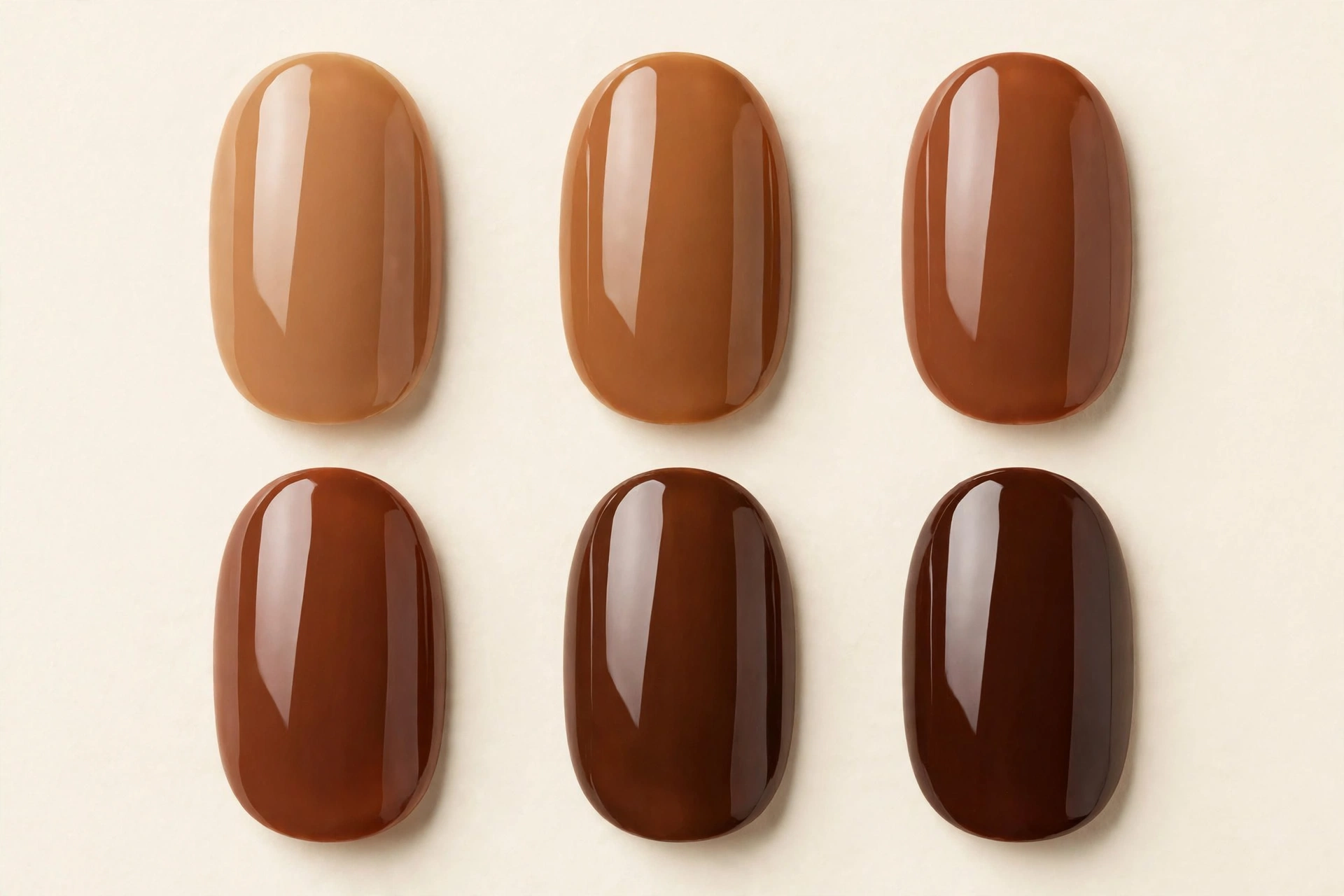
How to Use This Chestnut Nails Palette
- Start with the lightest shade if you are new to brown nails. Golden chestnut is the gentlest entry point and looks soft rather than dramatic.
- Match the undertone, not just the depth. Warm, golden undertones suit warm skin; cooler, ash-leaning chestnuts suit cool skin; neutral chestnuts suit everyone.
- Wear one shade alone for a clean, expensive look, or use the lightest shade on most nails with the darkest as an accent on the ring finger.
- Keep the shape simple. Short to medium almond or squoval shapes let the colour do the talking; very long, sharp shapes can push chestnut into costume territory.
- Pair chestnut nails with gold jewellery, camel coats, cream knitwear, and tortoiseshell accessories. The whole palette is built to sit comfortably next to those textures.
- If you want a little extra winter sparkle, add a thin gold line at the cuticle or a single matte accent nail rather than glitter all over. Chestnut is at its best when it stays understated.
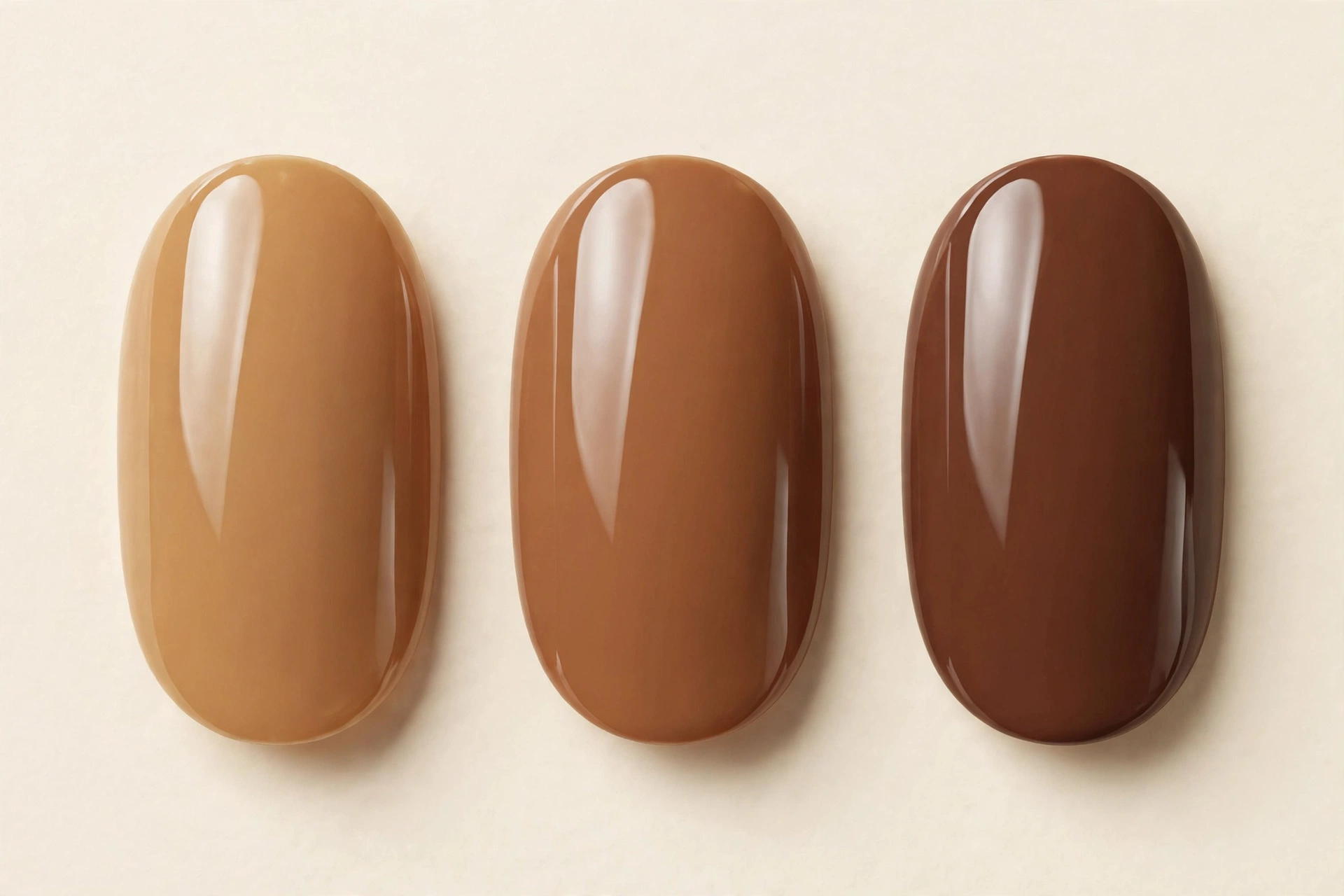
1. Golden Chestnut — #B07D4F
Golden chestnut is the lightest shade in this palette, a honeyed brown with a clear warm, golden undertone and a glossy crème finish. It looks like sunlight caught in a roasted chestnut shell, and on the nail it reads soft, warm, and quietly luxurious rather than dark or heavy.
This is the shade to choose if brown nails feel like a leap for you. On fair skin, golden chestnut adds warmth without washing you out, especially if your skin leans warm or neutral. On medium skin, it blends beautifully and looks like a richer version of a nude. On deep skin, it works as a luminous lighter brown that still shows up clearly against the nail.
Wear it to the office, to brunch, or on a winter weekend when you want to look put together without a dark manicure. It pairs especially well with cream, camel, and soft gold, and it is one of the few browns that looks just as good on short nails as it does on longer ones. If you are torn between a nude and a brown, golden chestnut is the compromise that actually satisfies both urges.
2. Caramel Chestnut — #9C6B43
Caramel chestnut is the crowd-pleaser of the palette: a medium warm brown with a golden-caramel undertone and a high-gloss crème finish. It is sweet without being sugary, rich without being dark, and it is the shade most people picture when they hear the word chestnut.
On warm and neutral skin tones, caramel chestnut looks almost made to measure. It warms up fair skin, deepens gracefully on medium skin, and reads as a glowing mid-brown on deep skin. Cool-toned wearers can still enjoy it, but should look for a version that leans slightly more neutral than golden so it does not pull orange against the skin.
This is a true everyday winter shade. It works for work, for dinners out, for holiday gatherings where you want to look festive without wearing red or glitter. Caramel chestnut also makes a wonderful base for minimal nail art: a single gold dot at the cuticle, a thin French tip in cream, or a delicate half-moon in a deeper brown all sit beautifully on top of it. If you only try one shade from this palette, make it this one.
3. Milk Chocolate Chestnut — #7B5233
Milk chocolate chestnut is a medium-deep brown with a warm, cocoa-leaning undertone and a glossy crème finish. It is the shade that bridges the lighter, golden end of the palette and the darker, moodier end, and it is arguably the most versatile brown you can own.
What makes it so wearable is its balance. It is deep enough to read as a proper winter colour, but warm enough never to look harsh. Fair skin gets a lovely contrast that makes hands look elegant rather than pale; medium skin finds a near-perfect tonal match that elongates the fingers; deep skin gets a rich, chocolatey depth that looks expensive in any light.
Milk chocolate chestnut is made for occasions that call for polish: winter weddings, work dinners, family gatherings, and evenings out. It looks stunning with burgundy, forest green, and navy, which makes it an easy partner for most winter wardrobes. For a similar cosy brown mood with a slightly different finish, our hot cocoa nails explore the softer, drink-inspired side of the brown family. Milk chocolate chestnut, by contrast, stays firmly in the polished, grown-up lane.
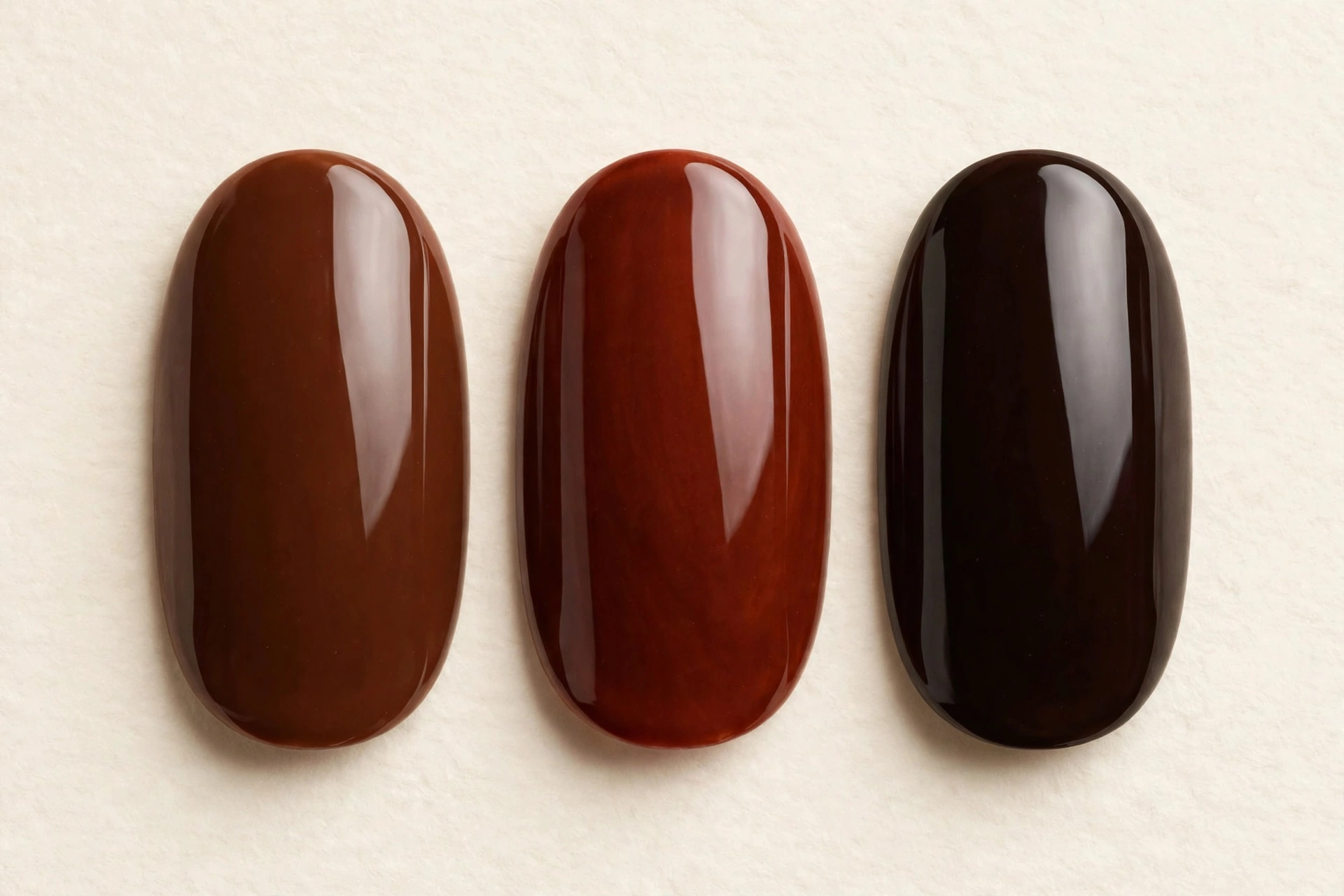
4. Roasted Chestnut — #6B4226
Roasted chestnut is the namesake shade, the colour of a chestnut fresh from the fire: a deep, warm brown with a reddish undertone and a glossy crème finish. This is the shade that gives the whole palette its identity, and on the nail it looks rich, autumnal, and quietly dramatic.
The red undertone is what sets roasted chestnut apart from plainer browns. It stops the colour from looking flat or muddy, and it gives the manicure a warmth that photographs beautifully. On fair skin, it provides striking contrast and a jewel-like depth. On medium skin, it reads as a deep, warm neutral that pairs with almost everything. On deep skin, it glows, the red undertone catching the light and keeping the shade from disappearing into the skin.
Wear roasted chestnut when you want your nails to be noticed without shouting. It is ideal for date nights, holiday parties, and any evening where a classic red would feel too expected. It also works beautifully as an accent shade: try it on the ring and little fingers with milk chocolate chestnut on the rest, or use it as a French tip over a sheer nude base for a winter twist on a classic.
5. Mahogany Chestnut — #5C2E1E
Mahogany chestnut is the deepest red-brown in the palette, a luxurious shade with a strong reddish-mahogany undertone and a glossy crème finish. It sits on the border between brown and oxblood, which gives it a drama that the lighter chestnuts deliberately avoid.
This is a statement shade, and it rewards confidence. On fair skin, mahogany chestnut looks bold and vampy, especially on a short, neat shape. On medium skin, it reads as a deep, romantic neutral with a wine-like warmth. On deep skin, it is pure richness, a shade that looks like it was mixed specifically for you.
Save mahogany chestnut for evenings, celebrations, and moments when you want your manicure to carry the outfit. It pairs beautifully with black, gold, and deep green, and it looks especially good with gold rings and a dark coat. Readers who love this deeper, redder end of brown will also enjoy our mahogany nails, which explore the full red-brown family in more depth. Within this chestnut palette, though, mahogany chestnut is the shade to reach for when the occasion calls for something a little more grown-up and a little more daring.
6. Espresso Chestnut — #3E2723
Espresso chestnut is the darkest shade in the palette, a near-black brown with a cool, coffee-like undertone and a glossy crème finish. In bright light you can see the brown clearly; in low light it reads almost black, which makes it one of the most versatile dark shades you can wear.
The cool undertone is the key detail here. While the rest of the palette leans warm, espresso chestnut leans cool, which makes it the best pick for cool-toned skin and for anyone who finds warm browns pull orange on them. On fair cool skin, it gives the drama of black polish without the harshness. On medium and deep skin, it is a deep, grounding neutral that looks sleek and modern.
Espresso chestnut is the workhorse of winter. It suits the office, formal events, and everyday wear equally well, and it never clashes with an outfit. It is also the most forgiving dark shade for chips, since small wear at the tips is less obvious than it is on true black. If you love a dark manicure but want something softer and warmer than black, espresso chestnut is your answer.
Chestnut Nails for Every Skin Tone
The beauty of a six-shade chestnut palette is that nobody has to force a single brown to work. Fair skin tends to shine in golden chestnut and roasted chestnut, where the contrast is flattering rather than overwhelming. Medium skin has the widest choice: caramel chestnut and milk chocolate chestnut both sit beautifully, with roasted chestnut as the evening option. Deep skin looks stunning across the whole range, but milk chocolate chestnut, mahogany chestnut, and espresso chestnut are the standouts, offering depth that still reads clearly on the nail.
Undertone matters more than depth. If your veins look green and gold jewellery suits you, lean warm: golden, caramel, and roasted chestnut. If your veins look blue and silver suits you, lean cool: espresso chestnut first, then milk chocolate chestnut in a neutral version. If you genuinely suit both metals, you are neutral, and the entire palette is open to you. When in doubt, hold the bottle against your hand in natural daylight rather than under shop lighting, which can make every brown look warmer than it really is.
Styling Tips for Chestnut Nails
Chestnut nails are at their best when the rest of your look stays in the same warm, textured world. Camel, cream, chocolate, olive, and burgundy are natural partners, and gold jewellery warms the whole effect up. Silver can work too, particularly with espresso chestnut, but gold is the safer, more harmonious choice across the palette.
For texture, think knitwear, leather, suede, and wool. A chunky cream sweater with caramel chestnut nails is a winter look that never fails. A camel coat with roasted chestnut nails looks intentional in the best way. And a black outfit with mahogany chestnut nails and gold hoops is an evening look that needs nothing else.
If you like nail art, keep it minimal. Chestnut is a colour that rewards restraint: a single gold accent nail, a thin metallic stripe, a matte top coat on one or two nails, or a subtle tortoiseshell accent. Heavy glitter or busy patterns fight the quiet luxury of the shade. Let the brown be the statement.
Best Occasions for Chestnut Nails
Chestnut nails are genuinely hard to get wrong, which is why they work across so many occasions. For everyday winter wear, caramel chestnut and milk chocolate chestnut are the safest, most polished choices. For the office, any shade from golden to espresso chestnut reads professional, provided the finish is glossy and the length is neat.
For weddings and formal events, milk chocolate chestnut and roasted chestnut are elegant without competing with the occasion. For holiday parties, mahogany chestnut brings the drama, and espresso chestnut brings the sophistication. For cosy weekends, golden chestnut and caramel chestnut feel relaxed and warm. And for date nights, roasted chestnut and mahogany chestnut are the two shades that consistently earn compliments, thanks to their reddish warmth.
Application and Longevity: Making Chestnut Nails Last
Brown shades show chips and uneven application more readily than sheer pinks, so preparation matters. Start with clean, dry nails and a ridge-filling base coat if your nail surface is uneven. Apply two thin coats rather than one thick one, letting the first coat dry properly before the second. Thin coats level out more smoothly and are far less likely to bubble or peel.
Because chestnut is a pigmented colour, wipe a little polish off the brush before each nail to avoid flooding the cuticles, and clean up the edges with a flat brush dipped in remover before the top coat. A glossy top coat is essential for this palette: it deepens the colour, adds the shine that makes chestnut look expensive, and protects the manicure for longer. Reapply top coat every two to three days to keep the shine alive and delay chipping.
In winter, hands take a beating from cold air, hot water, and central heating, all of which dry out nails and polish. Wear gloves outdoors, use cuticle oil daily, and avoid using your nails as tools. With those habits, a chestnut manicure should comfortably last a full week, and a gel version two to three weeks. If you are choosing between finishes for the season, our winter nail colors for 2027 roundup puts chestnut-style browns in context alongside the other shades defining the cold months.
Chestnut vs Other Brown Nails: How to Choose
It is worth knowing how chestnut differs from its brown neighbours, because the names get used loosely. Chocolate brown is usually deeper and more neutral than chestnut, with less red and gold. Caramel is lighter and sweeter, leaning golden rather than roasted. Espresso is darker and cooler, closer to black. Mocha sits between caramel and chocolate with a grey-beige softness that chestnut does not have.
Chestnut’s defining feature is its warmth with a hint of red. That red-gold character is what makes it feel autumnal and alive rather than flat. If you have tried a brown before and found it dull or muddy, chances are it was missing that warmth. A true chestnut should look like something you could imagine finding in nature, not something mixed from grey and black. When shopping, look for shade names that mention chestnut, roasted, or warm brown, and check the swatch in daylight before committing.
Polish and Gel Picks for Chestnut Nails
For a classic glossy manicure, look for crème-finish polishes in warm brown families: a golden chestnut crème for the lightest shade, a caramel brown crème for the mid-tone, and a deep roasted brown crème for the darkest end. Brands with strong brown ranges tend to label these as chestnut, roasted chestnut, warm chocolate, or espresso, so check the undertone description rather than the name alone.
For gel, choose a warm brown gel polish in a similar range, applied over a clear gel base with a high-shine gel top coat. Gel is the better choice if you want two to three weeks of wear without chipping, especially in winter when hands are washed more often. For a softer, more forgiving option, a tinted gel base in a sheer chestnut tone gives a wash of colour that grows out gracefully.
Whatever format you choose, keep a matching glossy top coat on hand. Chestnut lives or dies by its shine, and a fresh top coat every few days is the simplest way to keep the colour looking salon-fresh between manicures.
Frequently Asked Questions About Chestnut Nails
Are chestnut nails flattering on all skin tones?
Yes, because chestnut is a family, not a single shade. Fair skin suits golden and roasted chestnut, medium skin suits caramel and milk chocolate chestnut, and deep skin suits milk chocolate, mahogany, and espresso chestnut. The key is matching the undertone to your skin: warm undertones for warm skin, cooler espresso chestnut for cool skin.
What is the difference between chestnut nails and chocolate brown nails?
Chocolate brown is usually deeper and more neutral, while chestnut is warmer with a golden-red character. Chestnut looks like a roasted nut, with visible warmth in the colour. Chocolate brown looks like a bar of dark chocolate, richer and flatter. If a brown looks muddy or grey on you, try a chestnut instead.
Do chestnut nails work for short nails?
Absolutely. Chestnut is one of the best colours for short nails because the warmth keeps it from looking harsh, unlike black or very dark red. Golden chestnut and caramel chestnut are especially flattering on short, neat shapes, while espresso chestnut gives short nails a sleek, polished finish.
How do I stop chestnut nail polish from chipping?
Use a base coat, two thin coats of colour, and a glossy top coat, and reapply the top coat every two to three days. Wear gloves for washing up and cleaning, moisturise your cuticles daily, and avoid hot water directly on freshly painted nails for the first few hours. Gel polish will last longer if chipping is a regular problem.
Chestnut nails are proof that the quietest colour in the room can also be the most interesting. Six shades, one warm family, and a manicure that works for the office, the party, and every cold day in between. Pick your chestnut, keep the shine high, and let winter do the rest.
The shades in this post are an inspiration palette: use the hex codes as a guide when choosing a polish, and expect small variations between brands, finishes, and lighting.