
Snowberry nails are what winter looks like when it softens. This palette pairs the cool, clean brightness of fresh snow with the warm, ripe depth of winter berries, and the result is a manicure that feels festive without shouting, polished without trying too hard. If you love a berry manicure but find the darkest shades a little heavy, or you love white nails but want something with more warmth and dimension, snowberry nails sit right in the middle — frosted, flattering, and easy to wear from a quiet weekday to a holiday dinner.
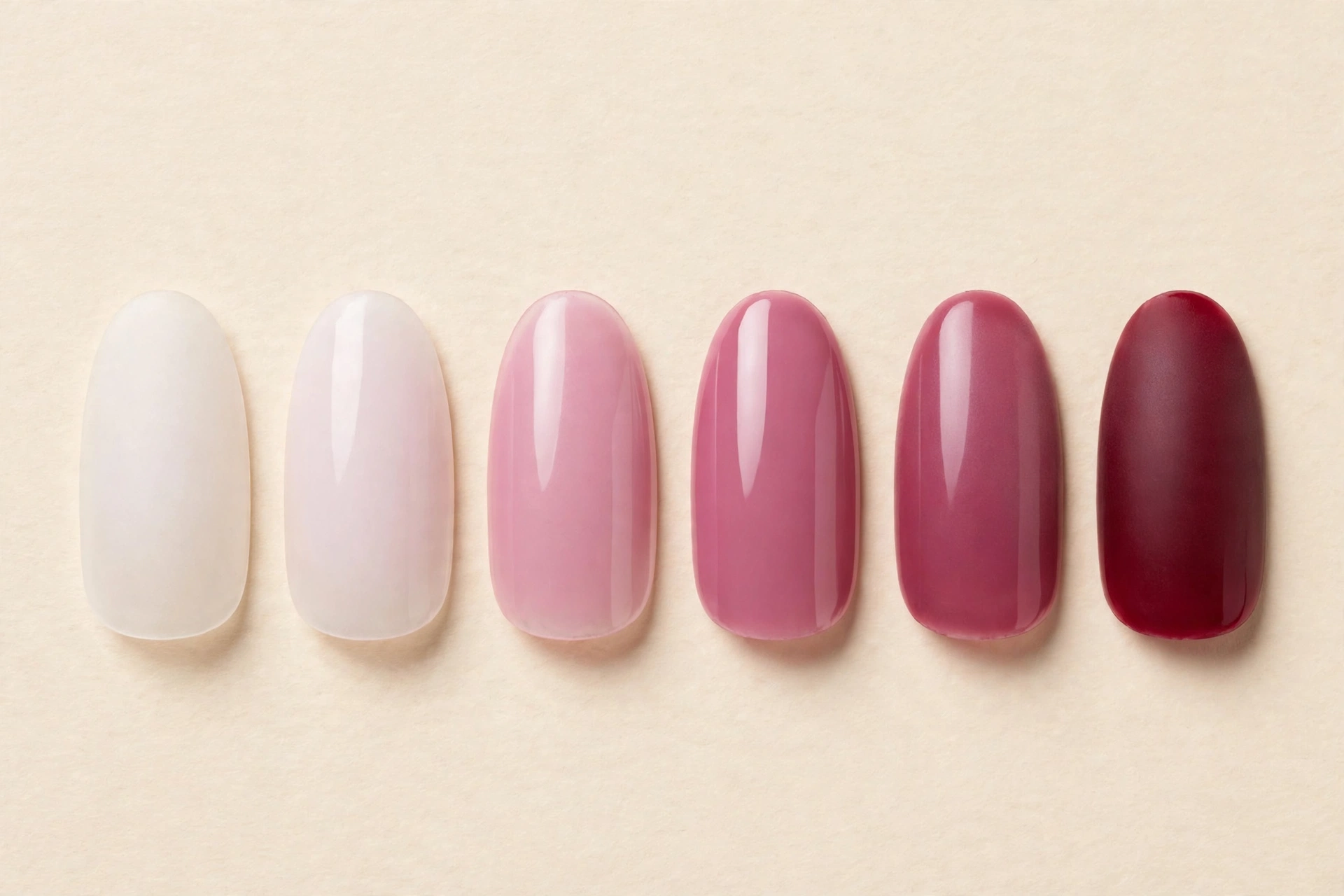
How to Use This Snowberry Nails Palette
- Start with the lightest shade as your base decision. If you are unsure which snowberry shade suits you, try First Snow or Snowberry Blush first — the pale end of the palette is the most forgiving, and it tells you quickly whether you want to go warmer or deeper.
- Use two thin coats rather than one thick one. Frosted and berry-white shades show brush strokes and uneven patches more readily than a dark opaque cream, so thin, even coats are the difference between a smooth finish and a streaky one.
- Let each coat dry fully before the next. Berry pigments can drag if the layer underneath is still soft, and white-based shades can lift at the edges. Give each coat a full two to three minutes.
- Pick one shade for all ten nails when you want the cleanest look. Snowberry nails look best as a single, confident colour; save the mixing for an accent nail or a French tip rather than a different shade on every finger.
- Try the deepest shade as an accent. One or two nails in Deep Snowberry against a paler base gives you the drama of a dark berry without committing your whole manicure to it.
- Seal with a glossy top coat. Frosted berry shades come alive with shine — a good top coat deepens the berry, brightens the white, and adds the icy, glassy finish this palette is built around.
- Keep a small brush and remover nearby for cleanup. Pale shades make even a tiny slip at the cuticle obvious, so a quick tidy-up while the polish is still fresh keeps the manicure looking salon-clean.
Snowberry Nails: The 6 Shades
1. First Snow — #F6F1EC
First Snow is the palest shade in the palette, a soft white with the faintest warm pink undertone. It is not a stark, blue-white or a flat office white. It reads like snow in late-afternoon light — bright, but with a gentle warmth that keeps it from looking cold or clinical on the nail. In the bottle it can look almost plain, but on the nail it has a quiet glow that makes hands look clean, rested, and well cared for. The finish is a smooth, creamy gloss with no shimmer, which is exactly what lets the colour do its work without distraction.
The undertone matters here more than the shade itself. That whisper of pink is what separates First Snow from the many white polishes that can wash out fair skin or look chalky on deeper skin. On fair skin, the pink keeps the white from blending into the hand and disappearing; instead it creates a soft contrast that makes the nails visible and deliberate. On medium skin, First Snow reads as a true milky white with a warm edge, and it pairs beautifully with gold jewellery and warm winter knits. On deep skin, it is a striking, high-contrast choice — a bright, clean white that stands out in the best way, especially on shorter, neatly shaped nails where the colour can look crisp rather than heavy.
First Snow is the most versatile shade in this palette when it comes to occasions. It works for a winter wedding, a work meeting, a family gathering, or a quiet week at home when you simply want your nails to look tidy. It is also the best shade in the set for a French manicure base or for layering: a single sheer coat over a berry shade softens it into something frosted, and two coats on their own give you full, even coverage. If you like the look of snow white nails, First Snow is the warmer, slightly softer cousin — less icy, more wearable day to day.
Compared with its sibling shade Snowberry Blush, First Snow is cooler in feel and lighter in every way. Blush brings visible pink to the nail; First Snow keeps the pink as an undertone you feel rather than see. That makes First Snow the better pick when you want a neutral, and Blush the better pick when you want colour. For wear, First Snow behaves like most pale creams: it needs a good base coat to prevent any staining from previous dark polishes, and it benefits from a ridge-filling base if your nails have any ridges, since pale shades show texture more than dark ones. With two thin coats and a glossy top coat, expect a clean three to five days before tip wear shows, and a little longer if you cap the free edge with top coat each time.
2. Snowberry Blush — #E9B7C2
Snowberry Blush is the soft pink heart of the palette, a muted berry-pink that looks like a snowberry just touched by frost. It is pink, clearly and unmistakably, but it is not a bright or bubblegum pink. The berry undertone gives it depth, and a cool, frosted edge keeps it from turning warm or peachy on the nail. In most lights it reads as a dusty rose-pink with a berry core; in warm indoor light, the berry comes forward; in daylight, the frosted pink takes over. That shift is part of its charm — it never looks flat, and it never looks the same twice.
The finish is a creamy gloss with a very soft, almost satin sheen. There is no glitter and no shimmer, which keeps the shade feeling grown-up and calm. On fair skin, Snowberry Blush is a gentle, romantic pink that looks natural and flattering without washing out the hand. On medium skin, it is one of the most forgiving pinks in the palette — the berry depth gives it enough presence to show up clearly, while the frosted lightness keeps it soft. On deep skin, it reads as a delicate, milky berry pink, lighter than the skin and therefore a lovely contrast, particularly with a glossy top coat that brings out the berry undertone.
Snowberry Blush suits almost every winter occasion that calls for something pretty without being loud. It is a natural choice for a winter date, a holiday lunch, a baby shower, or a work week when you want colour but not attention. It also layers well: one coat over First Snow gives you a sheer, frosted pink that is barely there, while two coats give you the full, soft berry-pink shown in the chart. If your taste runs to soft, frosted pinks, the frosted berry shades in our frosted berry chart sit close to this one, but Snowberry Blush is lighter and pinker, where those shades lean deeper and more saturated.
Next to First Snow, Snowberry Blush is the shade with visible colour, and next to Berry Frost, it is the lighter, softer sister. Berry Frost has more berry and more depth; Blush has more air and more light. If you are choosing between the two, think about what you are wearing: Blush pairs with pale knits, cream coats, and silver jewellery, while Berry Frost pairs with deeper tones and darker winter outfits. For longevity, Snowberry Blush wears well for a pale-to-mid pink. It is opaque enough in two coats to hide the nail line, and because it is neither very dark nor very pale, small chips at the tip are less noticeable than they are with First Snow. A top coat every second day will keep the gloss fresh and stretch the wear toward a full week.
3. Berry Frost — #B65C7A
Berry Frost is the middle of the palette and, for many people, the shade that defines snowberry nails. It is a medium berry pink with a cool, frosted finish — the colour of crushed winter berries dusted with snow. It is deeper than Snowberry Blush and lighter than Frosted Cranberry, and it carries the balance of the whole palette: enough berry to feel rich, enough frost to feel wintry. On the nail it looks polished and intentional, the kind of shade that gets noticed without needing any nail art on top of it.
The undertone is cool berry with a touch of mauve. That coolness is what makes Berry Frost so flattering in winter, when skin tends to be paler and cooler than in summer. It does not pull orange or warm on the nail, which is a common problem with berry shades that lean red. Instead it stays a clean, rosy berry, and that steadiness is why it works across skin tones. On fair skin, Berry Frost is a clear, medium berry that gives the hands a healthy flush of colour — it is bold enough to be the focus of the manicure, but not so dark that it overwhelms a fair hand. On medium skin, it is a true berry pink that sits beautifully against warm and neutral undertones alike, and it looks especially good with silver and cool-toned jewellery. On deep skin, Berry Frost reads as a soft, luminous berry — lighter than the skin, with a pink glow that catches the light, and it is one of the most flattering mid-tones in this set.
Berry Frost is a strong choice for occasions that sit between casual and dressed-up. It is polished enough for a holiday party, soft enough for a family dinner, and easy enough for a normal work week. It also photographs well, which matters if you are choosing a manicure for a winter event where photos are likely — the shade holds its colour in flash and in daylight, and it does not wash out the way paler shades sometimes can. Wear it on its own for the cleanest look, or pair it with First Snow as a French tip for a frosted take on a classic.
Compared with Snowberry Blush, Berry Frost is deeper, cooler, and more present on the nail. Blush whispers; Berry Frost speaks clearly. Compared with Frosted Cranberry, Berry Frost is lighter and pinker, where Cranberry is darker and redder. If you love berry nails but usually find them too dark or too red, Berry Frost is the shade to start with — it gives you the berry without the weight. For wear, Berry Frost is the easiest shade in the palette to live with. It is opaque in two coats, it hides the nail line completely, and small chips are far less visible than on the pale shades. With a base coat and a glossy top coat, a week of wear is realistic, and the colour stays true without fading or dulling at the tips.
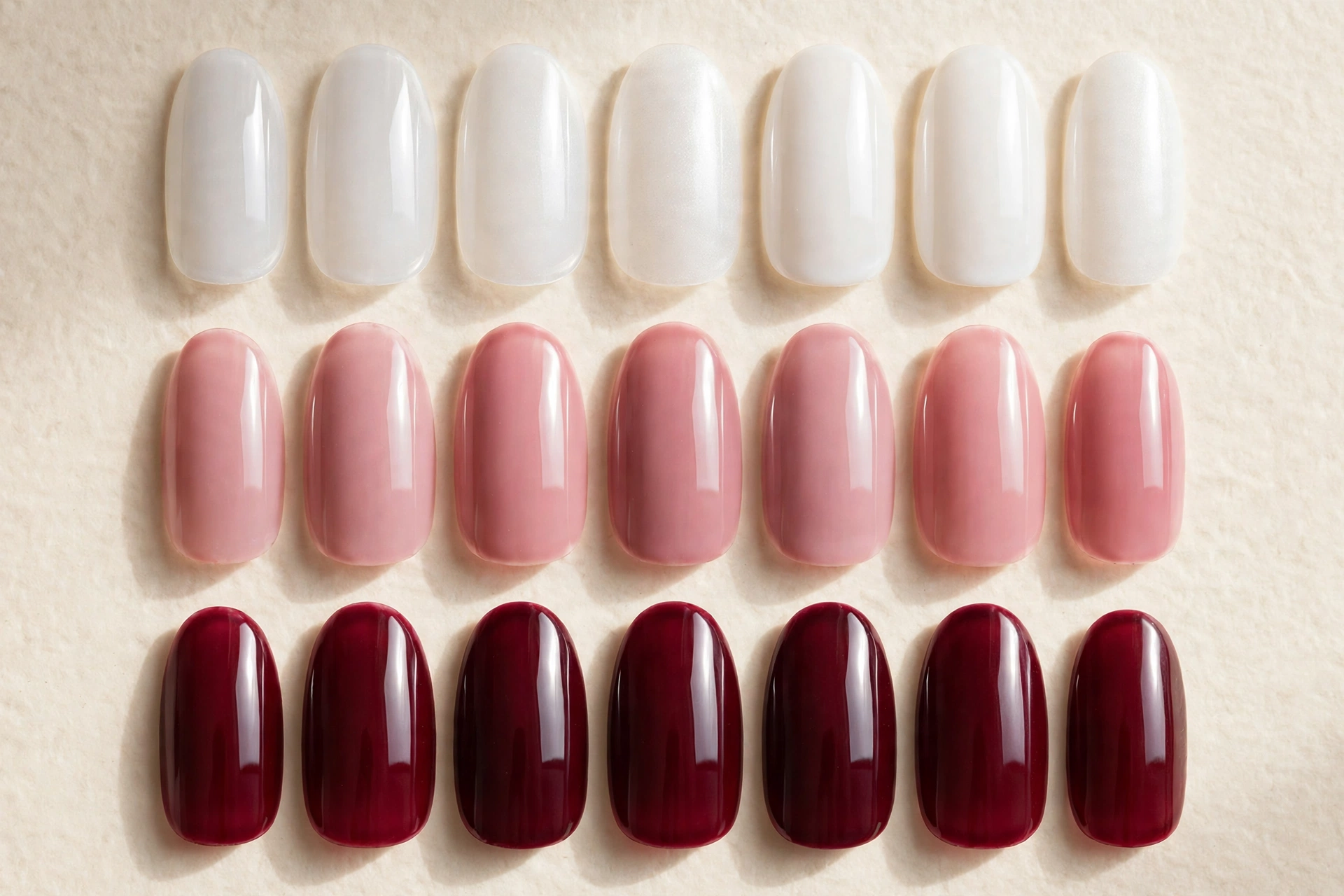
4. Frosted Cranberry — #8E2F4A
Frosted Cranberry is the boldest berry in the palette before you reach the deepest shade, a rich cranberry red with a cool, frosted edge. It is the colour of cranberries in a winter bowl — deep, juicy, and red, but with a softness that keeps it from looking harsh. The frosted quality comes from a slightly muted, cool finish rather than from glitter; the shade looks as though a thin layer of frost has settled over a deep red, taking the edge off the brightness and leaving something elegant and wintry.
The undertone is cool red with a berry base, and that coolness is what makes Frosted Cranberry wearable for people who usually avoid red. Warm reds can clash with cool winter skin and with silver jewellery, but this shade stays on the cool side of red, so it pairs naturally with silver, with grey and white winter clothing, and with the pale shades in this palette. On fair skin, Frosted Cranberry is a statement — a deep, rich red that makes the hands look striking and the nails look long, especially on an almond or oval shape. On medium skin, it is a classic winter red with a berry twist, flattering and festive without being costume-like. On deep skin, it is a gorgeous, rich cranberry that reads as a deep berry-red, with enough depth to look luxurious and enough brightness to stand out.
Frosted Cranberry is the shade to reach for when the occasion calls for something festive. It is made for holiday dinners, New Year gatherings, winter weddings, and evenings out — the moments when a pale shade would feel too quiet and a bright red would feel too much. It also works as a pedicure shade in winter, when a deep berry on the toes feels seasonal and polished under boots and thick socks. If you already love deep red winter shades, the winter berry shades in our winter berry chart cover similar ground, but Frosted Cranberry is cooler and more frosted, where those shades run warmer and more saturated.
Next to Berry Frost, Frosted Cranberry is darker, redder, and more dramatic. Berry Frost is a pink-berry; Frosted Cranberry is a red-berry, and the difference shows most clearly in warm indoor light, where Cranberry glows red and Berry Frost stays pink. Next to Deep Snowberry, Cranberry is the brighter, more festive sister — Deep Snowberry is moodier and more muted, while Cranberry has a lively, juicy quality. For longevity, Frosted Cranberry is a strong performer. Dark berry-reds are among the longest-wearing creams, and two coats give full, even coverage that hides imperfections in the nail underneath. The one thing to watch is staining: a good base coat is essential, since berry-red pigments can leave a faint tint on the nail if worn for a full week without one. With base and top coat, expect five to seven days of clean wear, with tip wear showing later than on the pale shades.
5. Winter Berry Cream — #D98A9E
Winter Berry Cream is the softest berry in the palette after Snowberry Blush, a creamy, muted berry-pink that feels like a berry shade softened with a spoonful of cream. It is warmer than Snowberry Blush and lighter than Berry Frost, with a gentle, milky quality that makes it look soft on the nail rather than sharp. In the bottle it can look like a pale rose, but on the nail the berry comes through more clearly, giving you a shade that is unmistakably berry yet easy and understated.
The undertone is warm-neutral berry with a creamy, milky base. That warmth makes Winter Berry Cream a particularly good choice for people whose skin has warm or neutral undertones and who find cool pinks a little stark. On fair skin with warm undertones, it looks like a natural, healthy pink — soft, flattering, and never washed out. On fair skin with cool undertones, it still works, because the berry keeps it from turning peachy; it simply reads a little warmer and cosier than Snowberry Blush. On medium skin, Winter Berry Cream is a lovely everyday berry — present enough to be noticed, soft enough to wear to work, and warm enough to pair with gold jewellery and camel or cream winter coats. On deep skin, it reads as a soft, milky berry pink, a gentle contrast that looks pretty and deliberate, especially with a glossy finish that brings out the creaminess.
Winter Berry Cream is an everyday shade that also handles dressier moments well. It is a natural pick for a winter brunch, a day at the office, a school run, or a quiet evening at home when you want your nails to look cared for without drawing attention. It is also one of the best shades in the palette for shorter nails, because its softness does not demand length to look good — it looks neat and polished on a short, rounded nail, and it does not make the nail bed look smaller the way a very dark shade can. Try it with a matte top coat if you want a softer, more velvety version, or keep the gloss for the creamy, frosted look in the chart.
Compared with Snowberry Blush, Winter Berry Cream is warmer, creamier, and a touch deeper. Blush is cool and frosted; Winter Berry Cream is warm and milky, and the two make a good pair if you like to compare cool and warm pinks on your own hands before choosing. Compared with Berry Frost, Winter Berry Cream is lighter and softer, with less berry intensity — Frost is the statement, Cream is the everyday version. For wear, Winter Berry Cream is forgiving. It is opaque in two coats, it covers the nail line, and because it sits in the middle of the palette — neither very pale nor very dark — chips and tip wear are less obvious than with First Snow or Deep Snowberry. Expect a solid five to seven days with a base and top coat, and refresh the top coat midway through the week if you want the gloss to stay fresh.
6. Deep Snowberry — #6E1F38
Deep Snowberry is the darkest shade in the palette, a deep, moody berry that sits between a dark cranberry and a black cherry. It is the colour of snowberries at dusk — dark, rich, and quietly dramatic, with a cool undertone that keeps it from looking black on the nail. In low light it can look almost blackberry-dark, but in daylight the berry comes forward clearly, a deep wine-berry that is unmistakably a berry shade and not a black polish in disguise.
The undertone is cool, deep berry with a hint of plum. That plum edge is what gives Deep Snowberry its depth and keeps it interesting — it is not a flat dark red, and it is not a purple. It is a berry that has been darkened rather than a purple that has been reddened, and that distinction matters on the nail. On fair skin, Deep Snowberry is a dramatic, high-contrast choice that makes short nails look chic and long nails look striking; it is the shade that turns a simple manicure into a statement. On medium skin, it is a rich, luxurious berry that looks especially good in the evening, with silver or dark jewellery and deep winter colours like charcoal, forest green, and navy. On deep skin, Deep Snowberry is a deep, tonal berry — darker than the skin, but with a visible berry glow in the light, and it looks elegant and understated rather than stark.
Deep Snowberry suits the dressiest winter occasions in this palette: a formal holiday party, a winter wedding as a guest, a New Year celebration, or an evening out when you want your nails to match the mood of the season. It is also a good choice for a winter pedicure, where a dark berry feels seasonal and polished. Wear it on all ten nails for the full effect, or use it as an accent against First Snow for a high-contrast look that keeps the manicure from feeling too heavy. A single accent nail in Deep Snowberry next to Snowberry Blush is one of the prettiest combinations in this palette — light and dark, soft and deep, in the same berry family.
Compared with Frosted Cranberry, Deep Snowberry is darker, cooler, and more muted. Cranberry is the festive, juicy red-berry; Deep Snowberry is the moody, evening berry, and the two work well together if you want a gradient or an ombre from light to dark. Compared with Berry Frost, Deep Snowberry is the opposite end of the same family — Frost is the light, frosted berry, Snowberry is the dark, ripe one, and wearing them side by side shows how much range a single berry family can hold. For longevity, Deep Snowberry wears the longest of the six shades. Dark creams are opaque in two coats, they hide nail imperfections, and small chips are less visible than on pale shades. The trade-off is the same as with any dark shade: use a base coat to prevent staining, be careful with application at the cuticle since a dark slip is more obvious, and remove with care, holding the remover-soaked pad on the nail for a few seconds rather than scrubbing. With that care, a week or more of wear is realistic.
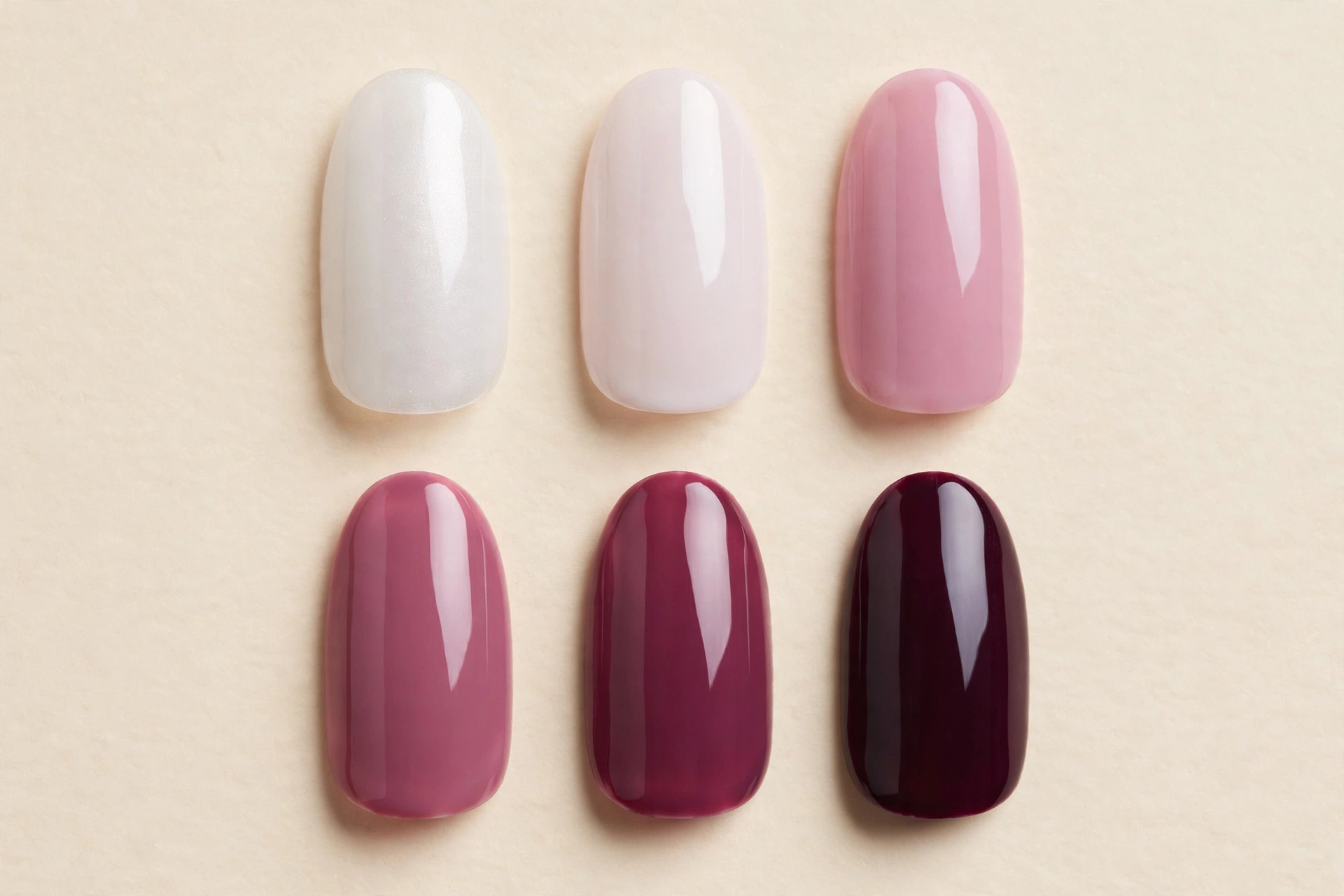
How to Style Snowberry Nails
Snowberry nails are easy to style because the palette already contains its own contrast — pale frost and deep berry in the same family. The simplest approach is to let the nails be the accessory: wear one shade on all ten nails and keep the rest of your look simple. A cream knit, a grey coat, or a white shirt lets a berry shade stand out, while a deep berry outfit lets a pale shade like First Snow or Snowberry Blush shine. Silver jewellery suits the cool, frosted side of the palette, and gold suits the warmer shades like Winter Berry Cream; if you are wearing a mix, either metal works, because the palette itself is a mix of cool and warm.
For nail shape, snowberry shades are forgiving. Short, rounded nails look neat and modern in First Snow and Winter Berry Cream, while almond and oval shapes show off the deeper shades — Berry Frost, Frosted Cranberry, and Deep Snowberry — to their best advantage, because the longer shape gives the dark colour room to look elegant rather than heavy. Square nails suit the whole palette, but they look particularly sharp in Frosted Cranberry, where the clean edge of the nail matches the clean, festive colour. If you are growing your nails out, the pale shades are the kindest choice while the length is uneven, since they draw less attention to differences in shape.
Nail art, if you want it, should stay simple. A thin silver line at the tip over Berry Frost, a single snowflake on one accent nail in First Snow, or a French tip in Deep Snowberry over a First Snow base are all in keeping with the palette — frosted, wintry, and restrained. Avoid busy patterns or heavy glitter over these shades; the palette already has enough depth and frost, and too much decoration can make it look crowded. If you love sparkle, a single coat of a fine silver shimmer over First Snow, or a glitter accent nail next to Frosted Cranberry, gives you the festive touch without overwhelming the berry.
Best Occasions for Snowberry Nails
The strength of this palette is that it covers the whole winter calendar without needing a different manicure for every event. First Snow and Snowberry Blush are the daytime shades — work, school runs, coffee with friends, and family lunches — where you want to look polished without looking dressed up. Winter Berry Cream sits in the same daytime space, with a little more warmth for days when you want colour. Berry Frost bridges day and evening: it is polished enough for a holiday lunch and festive enough for a dinner, and it is the safest single choice if you need one manicure to carry you through a whole week of different plans.
Frosted Cranberry and Deep Snowberry are the evening shades. They are made for holiday parties, winter weddings, New Year gatherings, and nights out — the occasions when a deeper, richer nail feels right. They also work well for winter photographs, where a deep berry reads clearly and does not wash out the way a pale shade sometimes can. If you have a winter wedding coming up, the pale end of this palette is a natural fit for a bride or bridesmaid, while the deep end suits a guest who wants something festive but not attention-seeking. For a full guide to the frosty white side of winter, our snowflake nails chart pairs naturally with this palette, and the pale shades here work as a softer alternative to those icy whites.
Application Tips for Frosted Berry-White Shades
Frosted and berry-white shades reward a little patience at application, and most of the common problems with them come from rushing. Start with clean, dry nails — any oil or old remover residue will stop the polish from gripping, and pale shades will show the patchiness first. Push back the cuticles gently, shape the nails, and wipe each nail with a little remover or a nail cleanser before you begin. A ridge-filling base coat is worth using under First Snow and Snowberry Blush in particular, since pale shades show every ridge and bump in the nail underneath.
Apply the first coat thinly and do not worry if it looks streaky. The first coat of a pale or frosted shade almost always looks uneven; the second coat is what evens it out. Wait until the first coat is dry to the touch before adding the second — two to three minutes is usually enough — and use the same thin, even strokes. For the deeper shades, one careful coat may look almost opaque, but a second coat still helps with depth and evenness, and it protects against chips. Cap the free edge — run the brush lightly along the tip of the nail — with both the colour and the top coat, since the tips are where wear shows first.
Clean up as you go. A small, flat brush dipped in remover, run along the cuticle line while the polish is still slightly soft, gives you a much cleaner edge than trying to fix a dried mistake later. This matters most with First Snow and Deep Snowberry, the two shades where a slip is most visible, for opposite reasons: white shows against skin, and dark shows against skin. Finish with a glossy top coat, and reapply a thin layer of top coat every two or three days to keep the shine and to seal the tips. If you prefer a matte look, a matte top coat over Berry Frost or Deep Snowberry gives you a soft, velvety finish that still shows the berry clearly.
Finish and Longevity: Getting the Most from the Palette
The six shades in this palette share a creamy gloss finish, which means they behave similarly in wear, with the usual difference between pale and dark. Pale shades — First Snow and Snowberry Blush — show tip wear and small chips sooner, simply because the contrast between the pale polish and the nail underneath is greater. Dark shades — Frosted Cranberry and Deep Snowberry — hide small chips better and tend to look fresh for longer, but they can stain the nail if worn without a base coat, and they need more care at removal. The middle shades — Berry Frost and Winter Berry Cream — are the easiest to live with: opaque, forgiving, and long-wearing without the staining risk of the darkest shades.
For the longest wear, the routine is the same across all six: base coat, two thin coats of colour, glossy top coat, and a top-coat refresh every second or third day. Avoid soaking your hands in hot water for long periods in the first few hours after application, and wear gloves for washing up or cleaning, since hot water and detergents lift polish at the edges faster than anything else. If a tip does chip, a small touch-up with the same shade and a dab of top coat will usually carry the manicure for another day or two — this works best on the mid-tone shades, where a touch-up blends in most easily.
Gel versions of these shades wear longer still, usually two to three weeks, and they are worth considering if you want a snowberry manicure to last through a holiday trip or a busy December. The same colour logic applies: pale gels need a careful, even application to avoid patchiness, and dark gels need a good base to prevent staining. Whether you choose regular polish or gel, the palette itself is the same — frosted berry and soft white, in six shades that move from light to dark without ever leaving the berry family.
Polish and Gel Picks for Snowberry Nails
For a regular polish version of this palette, look for a milky white cream for First Snow, a dusty berry-pink cream for Snowberry Blush, a medium cool berry cream for Berry Frost, a deep cool cranberry cream for Frosted Cranberry, a warm creamy berry-pink for Winter Berry Cream, and a deep plum-berry cream for Deep Snowberry. OPI Alpine Snow and Funny Bunny are good starting points for the pale end, while OPI Malaga Wine and Berry On Forever sit close to the berry middle of the palette. Essie Ballet Slippers and Essie Fiji give you soft pink options in the Snowberry Blush range, and Essie Bordeaux and Essie Berry Naughty cover the deeper cranberry and plum-berry end. Sally Hansen Insta-Dri in Berry Fast and OPI Lincoln Park After Dark offer affordable deep berry choices that sit near Deep Snowberry.
For gel, look for a milky white builder or gel polish for First Snow, a soft berry-pink gel for Snowberry Blush and Winter Berry Cream, a medium berry gel for Berry Frost, and a deep cranberry or plum-berry gel for Frosted Cranberry and Deep Snowberry. DND Daisy in White Milky and Berry Pink, Gelish in Arctic Freeze and Berry Hot, and Beetles Gel Polish in Berry Red and Deep Plum are all useful starting points in the gel range, and any salon that carries a winter berry collection will usually have a shade close to each of the six in this chart. Ask your technician to show you the shade on a nail tip before application, since gel colours can look a shade darker once cured than they do in the bottle.
The shades in this post are an inspiration palette — use the hex codes and descriptions as a guide when choosing polishes, and expect small differences between brands, finishes, and your own lighting.
Frequently Asked Questions
What are snowberry nails?
Snowberry nails are a winter manicure built around frosted berry and soft white shades, named for the pale berries that appear in winter. The palette moves from a soft frosted white through pale berry-pinks to a deep plum-berry, so it covers both the light, snowy side of winter and the rich, festive berry side in a single set of six shades.
When should I wear snowberry nails?
Snowberry nails suit the whole winter season, from late November through February, and they are at their best around the holidays. The pale shades work for daytime and work, the mid-tone berries work for almost any occasion, and the deepest shades are made for holiday parties, winter weddings, and New Year celebrations.
Which snowberry shade is best for my skin tone?
First Snow and Snowberry Blush are the safest starting points for fair skin, Berry Frost and Winter Berry Cream flatter medium skin particularly well, and Frosted Cranberry and Deep Snowberry look striking on deep skin. That said, every shade in this palette was chosen to work across skin tones, so the best choice is often the one that matches the occasion and the outfit rather than a strict skin-tone rule — try the shade on one nail first and see how it looks in daylight.
Are snowberry nails better in polish or gel?
Both work well. Regular polish is easier to change, cheaper to try, and perfectly fine for a week of wear with a good base and top coat. Gel lasts two to three weeks and is worth it if you want the manicure to survive a holiday trip or a busy December, but pale gel shades need careful application to avoid patchiness, so ask for a nail-tip swatch before your technician starts.