
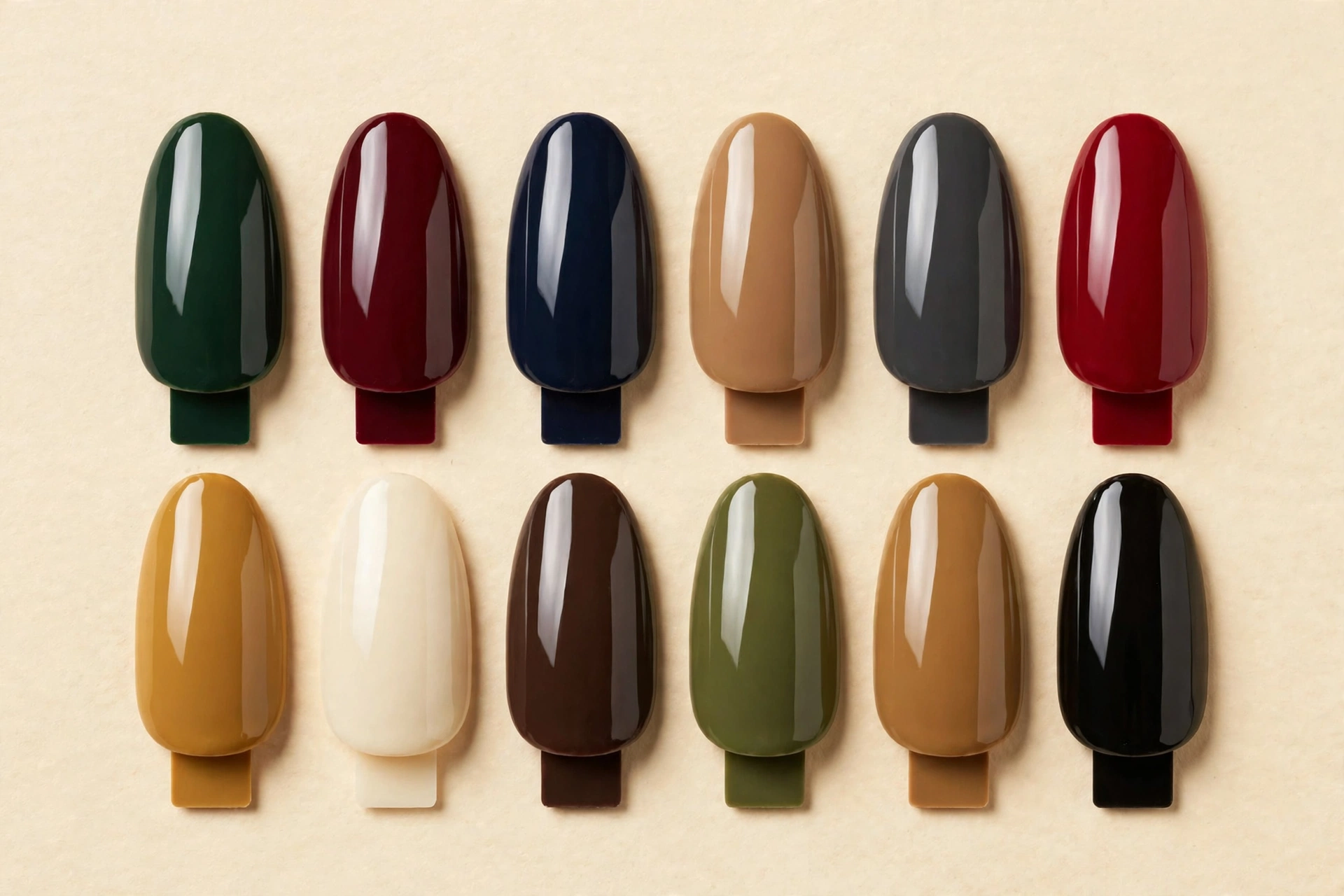
Tartan nails are the winter 2026 answer to everyone who loves the plaid-blanket season — the deep forest greens, burgundies, navies, and camels of classic tartan patterns, worn as rich solid manicure shades. These 12 colors pull the full pattern palette into polish form, from the dark grounds of a traditional sett to the thin cream and ochre lines that cross it.
How to Use This Tartan Palette
- Match to your undertone. Warm shades (camel, ochre, crimson, moss) flatter golden and olive skin; cool shades (navy, charcoal, black-green) suit pink and neutral undertones. When in doubt, forest green and burgundy work on almost everyone.
- Check opacity before committing. Deep cremes like Black Watch and Highlander Burgundy cover in two coats; the pale shades (Fair Isle Cream, Winter Line) may need three thin layers for full, even coverage.
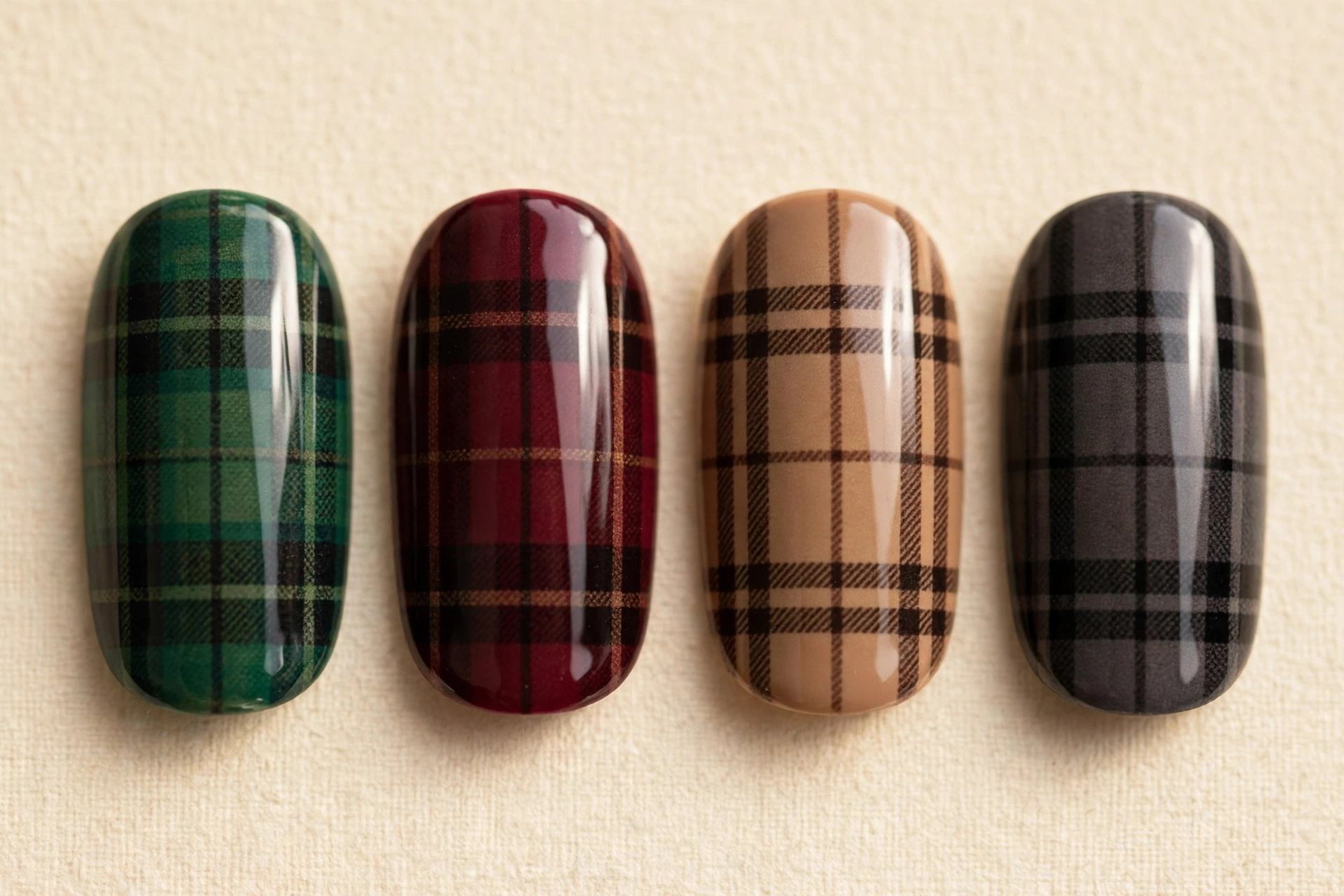
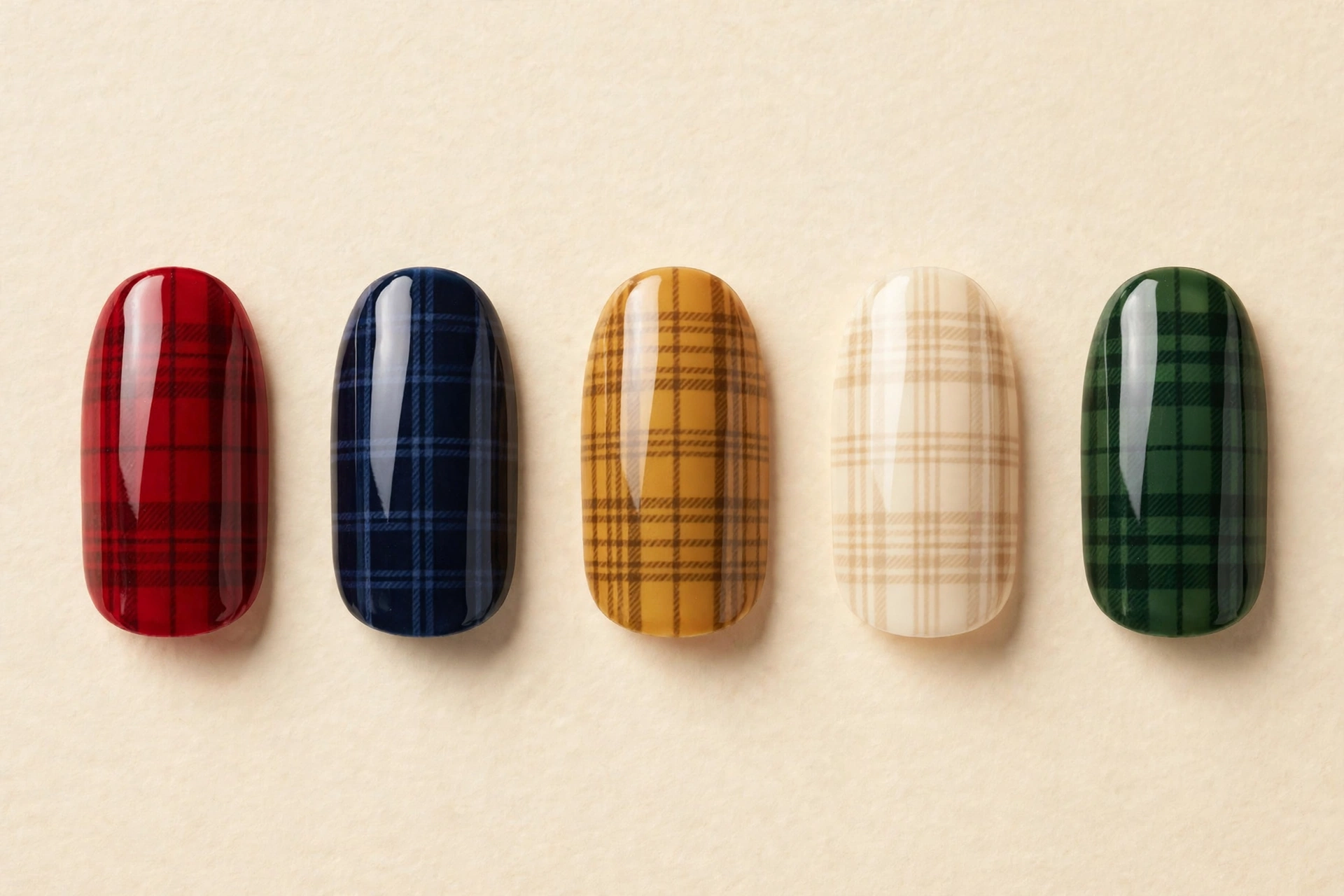
- Layer thin lines over dark grounds. Fair Isle Cream or Winter Line painted as a thin stripe over Forest Tartan or Loch Navy mimics the crossing lines of a real tartan without any actual pattern work.
- Pick the right nail shape. Dark, saturated shades look sharpest on almond and oval shapes; pale neutrals flatter short, square nails. Long coffin nails carry the deep cremes best.
- Seal with a glossy top coat. These are pattern-inspired shades, so a glass-like shine sells the woven-fabric richness and extends wear on the dark cremes by several days.
- Rotate through the season. Wear the dark grounds (forest, navy, charcoal) in December and January when the light is low, then lean into the warm mid-tones (camel, ochre, moss) for February and March when you want the same palette in a lighter mood.
- Pair across the palette. Most of these shades were chosen to work as duos — a deep base with a contrasting line or accent nail keeps the look interesting without clashing.
1. Forest Tartan — #1F3D2B
Forest Tartan is the deep green ground of the classic plaid — a rich, blackened pine green creme with cool undertones, like spruce boughs against dark wool. This is the workhorse of the palette: it flatters nearly every skin tone, reads elegant at the office and festive at holiday parties, and carries through February without feeling tied to Christmas. Two coats give full, even coverage. For a deeper dive into the family, our forest green nails chart maps twelve evergreen shades side by side. Compared to Moss Underlay (shade 11), Forest Tartan is darker, cooler, and more saturated; moss is the softer, warmer sibling. Compared to Loch Navy (shade 3), it is the warmer of the two dark grounds — choose forest when you want organic depth, navy when you want crisp contrast.
2. Highlander Burgundy — #5E1220
A deep, wine-dark burgundy creme with warm red undertones and a whisper of brown — the color of the red stripe in a dress tartan. Burgundy with this much depth suits every skin tone and is the safest pick in the palette when you need to look polished fast: dinners, office parties, holiday events, date nights. The warm undertone keeps it flattering on golden and olive skin, while the depth gives fair skin a striking, high-contrast look. Compared to Crimson Thread (shade 6), Highlander Burgundy is darker, browner, and moodier; crimson is brighter and more obviously red. Compared to Claret Stripe (shade 10), it is less purple and more classic — burgundy is the evening standard, claret the romantic alternative.
3. Loch Navy — #22334F
A deep, inky navy creme with a cool undertone — dark enough to read near-black in evening light, unmistakably blue in daylight. Navy is the tailored member of this palette: it looks intentional and crisp against winter knitwear, camel coats, and grey tailoring. It flatters cool and neutral undertones most, and on deep skin it reads as a rich, sophisticated dark. For a dedicated guide to the family, the navy nails collection charts twelve shades from midnight to denim. Compared to Charcoal Kilt (shade 5), Loch Navy is bluer and cooler; charcoal sits neutral and flatter. Compared to Forest Tartan (shade 1), it is the cooler, crisper dark — navy leans refined, forest leans organic.
4. Camel Overcoat — #BD9264
A warm, golden-tan creme — the color of the camel stripe that runs through so many winter tartans, and of the coat you will be wearing over it. Camel flatters warm and olive skin tones beautifully and reads as a soft neutral on fair skin, where the warmth stops it from looking washed out. This is the daytime shade of the palette: office days, weekend errands, casual lunches. Compared to Ochre Heather (shade 7), Camel Overcoat is softer, more neutral, and more wearable as a full manicure; ochre is spicier and more assertive. Compared to Fair Isle Cream (shade 8), it is the deeper, warmer sibling — cream is the accent, camel is the base.
5. Charcoal Kilt — #3A3A3C
A charcoal grey creme with a strictly neutral undertone — the dark ground stripe that anchors a heavyweight tartan. Charcoal is the modern dark neutral that goes with absolutely everything: it flatters cool and neutral skin, and on deep skin it reads as a soft, sophisticated dark rather than a harsh black. It suits short nails especially well, since the neutral tone does not demand length to look deliberate. Compared to Black Watch (shade 9), Charcoal Kilt is lighter, greyer, and more flexible; black-watch is the true near-black with a green soul. Compared to Loch Navy (shade 3), charcoal is less colorful and more utilitarian — navy has personality, charcoal has range.
6. Crimson Thread — #A52233
A bright, clear crimson creme with cool red undertones — the vivid red line that slashes across a dark tartan ground. This is the boldest shade in the palette and the one that photographs best: it glows against fair skin, sits jewel-like on medium skin, and pops dramatically on deep skin. Wear it full-strength for parties, holiday dinners, and New Year’s Eve, or use it as the accent nail that electrifies a dark base like Forest Tartan or Black Watch. Compared to Highlander Burgundy (shade 2), Crimson Thread is brighter, cooler, and far more attention-grabbing; burgundy whispers evening, crimson announces it. Compared to Claret Stripe (shade 10), it is cleaner and more classic — crimson is fire, claret is wine.
7. Ochre Heather — #C68A2D
A warm, spicy ochre creme with golden undertones — the mustard-yellow line woven through autumn and winter tartans. Ochre flatters warm and olive undertones best, and gives cool skin a deliberate, striking warmth that reads intentional rather than off. This is a weekend shade: markets, museum days, long lunches — anywhere the light is soft and warm. It also makes an excellent thin-line accent over the dark grounds, mimicking the gold thread in a real sett. Compared to Camel Overcoat (shade 4), Ochre Heather is deeper, yellower, and more saturated; camel is the safe neutral, ochre the personality pick. Compared to Winter Line (shade 12), it is the bold version of the pale stripe — same role in the pattern, completely different volume.
8. Fair Isle Cream — #EFE6D3
A warm, milky cream creme with a whisper of ivory — the pale line that crosses the dark tartan ground and makes the whole pattern legible. Cream is the most versatile accent in the palette: wear it alone for a clean, minimal winter manicure, paint it as thin stripes over Forest Tartan or Highlander Burgundy, or use it as the base for a full plaid look if you are feeling ambitious. It flatters fair through deep skin when the undertone is warm, and reads crisp and polished at short lengths. Compared to Winter Line (shade 12), Fair Isle Cream is warmer, milkier, and slightly softer; winter line is greyer and more modern. Compared to Camel Overcoat (shade 4), cream is the pale accent while camel is the wearable base.
9. Black Watch — #151A16
A near-black green creme with a deep forest undertone — named for the dark military tartan, the color of pine needles at midnight. Indoors it reads almost black; in daylight the green undertone surfaces, which keeps it from the flat harshness of a true black. This is the edgiest shade in the palette and a strong pick for medium to deep skin tones, where the depth reads as richness rather than severity. On fair skin, keep nails almond or oval so the dark color looks deliberate and sharp. Compared to Charcoal Kilt (shade 5), Black Watch is darker and moodier with a definite green soul; charcoal is lighter and more neutral. Compared to Forest Tartan (shade 1), it is the after-dark version of the same green story — forest by day, black-watch by night.
10. Claret Stripe — #6E1E2E
A dusky claret creme with purple-wine undertones — the plum-red stripe that gives a tartan its romantic depth. Claret sits between burgundy and plum: it has burgundy’s wearability with a hint of purple drama that reads sophisticated rather than sweet. This shade flatters cool and neutral undertones especially well, suits evening occasions from dinners to theater nights, and looks exceptional on almond and oval shapes. Compared to Highlander Burgundy (shade 2), Claret Stripe is purpler and softer; burgundy is the classic, claret the moodier cousin. Compared to Crimson Thread (shade 6), it is far quieter — crimson is a shout, claret is a murmur. If burgundy feels too expected and crimson too loud, claret is the answer.
11. Moss Underlay — #4A5D3A
A muted moss-green creme with warm, earthy undertones — the softened green that fills the background of a weathered tartan. Moss is the easiest green in this palette to wear: lighter and warmer than forest, it flatters warm and olive skin tones and reads friendly rather than severe on fair skin. This is the everyday green — office days, casual weekends, the whole of March — and it pairs beautifully with the neutrals (Camel Overcoat, Fair Isle Cream, Winter Line). Compared to Forest Tartan (shade 1), Moss Underlay is lighter, warmer, and far more casual; forest is the statement, moss the daily driver. Compared to Ochre Heather (shade 7), they share an earthy warmth — moss for the green days, ochre for the golden ones.
12. Winter Line — #D8C9AE
A pale, warm greige creme — the thin neutral line that edges a tartan’s color blocks. Winter Line is the quiet minimalist of the palette: a barely-there neutral that reads clean on every skin tone and flatters short, square nails especially well. Wear it alone for a polished, office-safe winter manicure, layer it as thin stripes over the dark grounds, or use it between two bold shades as a visual palate cleanser. Compared to Fair Isle Cream (shade 8), Winter Line is greyer, cooler, and more modern; cream is warmer and milkier. Compared to Camel Overcoat (shade 4), it is the pale echo of the same warm family — camel for depth, winter line for air.
How to Style This Palette
The easiest way to wear these shades is the way a tartan is built: dark ground plus contrasting line. A deep creme base — Forest Tartan, Loch Navy, Highlander Burgundy, Black Watch — with a thin stripe of Fair Isle Cream, Winter Line, or Ochre Heather gives a finished look with minimal effort. If you want to lean harder into the knit-and-fireplace mood, the sweater weather shades collection explores the cozy side of winter color in full.
Almond and oval shapes flatter the dark grounds best, since the tapered tip keeps deep color from looking heavy. Square nails suit the pale neutrals — Fair Isle Cream and Winter Line look crisp with a straight edge. If you wear your nails short, favor Charcoal Kilt, Moss Underlay, and Camel Overcoat; mid-tone neutrals read clean and deliberate at short lengths, where the near-blacks can look severe.
Best Occasions
Winter is the season of distinct social settings, and this palette was built to cover them. Holiday dinners and parties call for Highlander Burgundy, Forest Tartan, or Crimson Thread. New Year’s Eve belongs to the bolds: full Crimson Thread, Black Watch with a cream line, or Claret Stripe against anything dark. Daytime errands, office days, and casual weekends suit the quieter half of the chart: Camel Overcoat, Moss Underlay, Winter Line, Fair Isle Cream. The moody, bookish side of this palette pairs naturally with tweed and wool — if that is your lane, the dark academia nails collection leans into the same aesthetic.
Ski weekends and cabin trips are a real use case, not just a theme. Gloves come off for photos, hot drinks, and restaurant stops — and the dark grounds (Forest Tartan, Black Watch, Loch Navy) photograph well against snow and knitwear while hiding the small chips a day outdoors can cause. Save the pale accents for the evening half of the trip; Fair Isle Cream lines catch lodge lighting beautifully.
Application & Longevity Tips
Prep matters more in winter, when cold air dries out nails and cuticles. Push cuticles back, lightly buff, and wipe with rubbing alcohol before base coat — polish adheres far better to a dry, oil-free nail. Always use a base coat; the deep shades here (Black Watch, Forest Tartan, Highlander Burgundy, Loch Navy) can stain the nail plate without one. Apply thin coats rather than thick ones — three thin layers dry harder and chip less than two thick ones, especially with the pale cremes, which streak if laid on thick.
Cap the free edge by running the brush along the nail tip with each coat, including top coat; this single habit adds days to any manicure. If you are painting thin tartan-style lines, wait until the base color is fully dry, use a striping brush or a toothpick, and seal with two thin layers of top coat so the lines do not drag. Reapply top coat every two to three days, wear gloves for dishes and cleaning, and keep cuticle oil by the sink for nightly use. With proper prep, expect five to seven days of clean wear; the deep cremes tend to outlast the pale neutrals by a day or two.
Polish & Gel Picks
- OPI Malaga Wine (polish) / OPI GelColor in Malaga Wine
- Essie Wicked (polish) / Essie Gel Couture in Spiked With Style
- Sally Hansen Miracle Gel in Wine Not (polish) / Sally Hansen Salon Gel in Back to the Fuschia
- OPI Stay Off the Lawn! (polish) / OPI GelColor in Stay Off the Lawn!
- Essie After School Boy Blazer (polish) / Essie Gel Couture in Model Clicks
These twelve shades are a starting palette, not a fixed rule — mix brands, finishes, and dupes freely until the colors feel like yours.
tartan nails FAQs
What are tartan nails?
Tartan nails are winter manicure shades drawn from classic plaid patterns — deep forest greens, burgundies, navies, camels, charcoals, and crimsons that echo the grounds, stripes, and lines of a traditional tartan sett. The look is defined by rich, pattern-derived color rather than literal plaid nail art, though the shades can be combined into thin-line plaid designs.
When should you wear tartan nails?
December through March is the natural window, covering the holidays, the coldest weeks of winter, and the early-spring stretch when you still want depth. The dark grounds (forest, burgundy, navy, black-watch) peak in December and January, while the warm mid-tones (camel, ochre, moss) carry comfortably into February and March.
Which tartan nail shade suits warm skin tones best?
The warm-leaning shades are the strongest picks: Camel Overcoat, Ochre Heather, Moss Underlay, and Crimson Thread all sit beautifully against golden and olive skin. For fair warm skin, Fair Isle Cream is the cleanest pale option; for deep warm skin, Highlander Burgundy and Forest Tartan read rich and saturated.
Do tartan nails work on short nails?
Yes — the mid-tone neutrals (Charcoal Kilt, Camel Overcoat, Moss Underlay) and the pale shades (Fair Isle Cream, Winter Line) look clean and deliberate at short lengths. The near-blacks (Black Watch, Forest Tartan) work too, but keep them on almond or oval shapes so the dark color does not look heavy at a short length.