
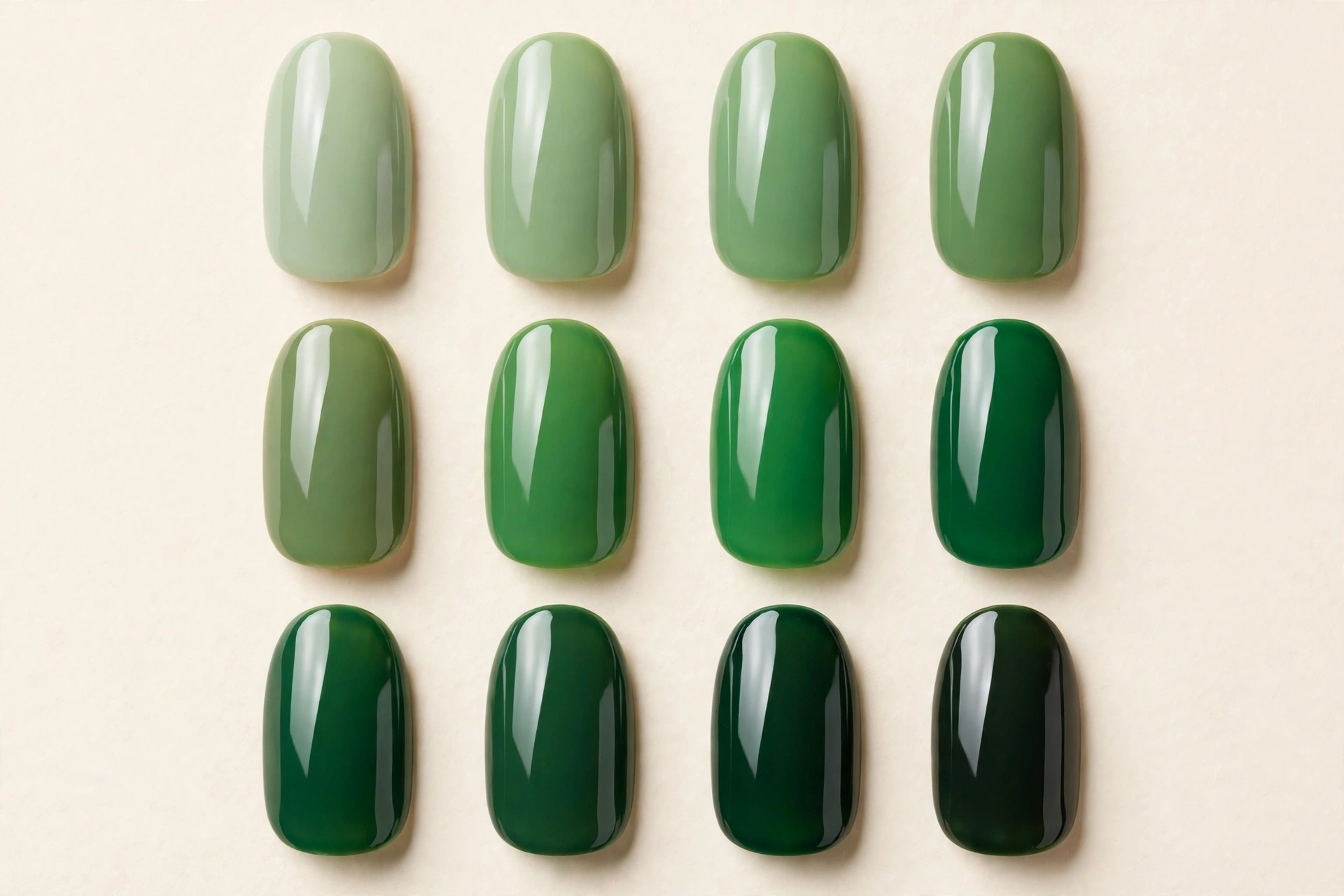
Forest green nails are having their longest-running moment yet. Not the bright, holiday-only greens of years past — the deeper, moodier family of shades that sit somewhere between a jewel tone and a neutral, looking sharp in a meeting and unreasonably good against wool coats and candlelight. Below are 12 forest green nail shades arranged from the softest sage to the darkest spruce, each with its undertone, finish, who it flatters, and where it belongs — plus a full swatch chart so you can compare them side by side.
How to Use This Forest Green Nails Palette
- Match the green to your undertone. Warm skin leans into the sage, moss and olive-leaning shades; cool skin leans into the blue-cast pines and teals; neutral skin can wear the whole chart. The deeper the green, the more it behaves like a neutral — depth forgives almost everything.
- Test in daylight, not under salon fluorescents. Dark greens shift dramatically between lighting: a forest that looks perfect indoors can read almost black outdoors. Hold the swatch against your fingertip by a window before committing.
- Shape changes the reading. Short and squoval makes dark greens look modern and tidy; long almond lets them go dramatic and jewel-like. If a shade feels too intense, try it shorter first.
- Two thin coats for depth. Dark greens are pigment-dense and love to pool at the cuticle. Thin, even layers give you that glassy forest depth; one thick coat gives you streaks.
- Keep the cuticles clean. Nothing frames a dark green like crisp edges — a cleanup brush with a little remover before top coat makes the difference between salon-clean and home-done.
- Plan the finish. Cream gloss is the classic winter look; a matte top coat turns any shade here into something smoky and editorial; one coat of shimmer topper over the deep shades gives you a Northern-lights effect without a second bottle.
1. Whispering Sage — #B9C7A4
The softest entry in the palette: a light, warm sage with a gentle grey-beige undertone and a soft, milky cream finish. It flatters warm and golden skin tones beautifully — sage loves warmth — and it’s the most office-friendly shade here, reading as a quiet neutral rather than a color statement. Best occasions: workdays, spring-adjacent winters, and anyone trying green nails for the first time. It’s the natural starting point of this chart: everything below it builds from here in depth, so if Whispering Sage feels right but a little pale, step down to Eucalyptus Air for the same family with more presence.
2. Eucalyptus Air — #A3BCAC
A cool, silvery light green with a distinct blue-grey undertone — think eucalyptus leaves in winter light — finished in a smooth, even gloss. It flatters cool and pink-undertoned skin especially well, and it’s one of the kindest shades in the palette to olive skin, because its coolness balances rather than amplifies olive warmth. Best occasions: minimalist looks, silver-jewelry days, and pairing with grey and charcoal wardrobes. Compared with Whispering Sage, the temperature difference is the whole story: Sage is warm and soft, Eucalyptus Air is cool and crisp — pick by your jewelry and your undertone, not by preference alone.
3. First Frost Pine — #8FAE9B
Named for the first frost on pine needles: a cool, slightly desaturated mid-light green with a pine-and-grey undertone and a fresh, clean gloss finish. It flatters fair to light-medium skin across undertones — the coolness brightens fair skin without the harshness that darker greens can bring, and it never turns grey the way some muted greens do on deep skin. Best occasions: December manicures, pairing with silver and white gold, and anyone who wants green nails that still read fresh rather than heavy. Next to Eucalyptus Air it’s a step deeper and greener; next to Meadow Mist it’s noticeably cooler — the bridge between the sage family and the true forest shades.
4. Meadow Mist — #7CA08A
A soft, mid-tone green with a balanced, neutral undertone — neither warm nor cool, like a meadow seen through morning haze — in a plush cream gloss finish. It’s the most universally flattering shade in the lighter half of the chart: neutral undertones let every skin tone wear it without the color tipping warm or cool against the skin. Best occasions: everyday winter wear, travel manicures, and as the gateway shade for people who love sage but want something with more nail presence. Compared with First Frost Pine, Meadow Mist is warmer and more grounded; compared with Garden Moss, it’s lighter and softer — the center of gravity for the lighter greens.
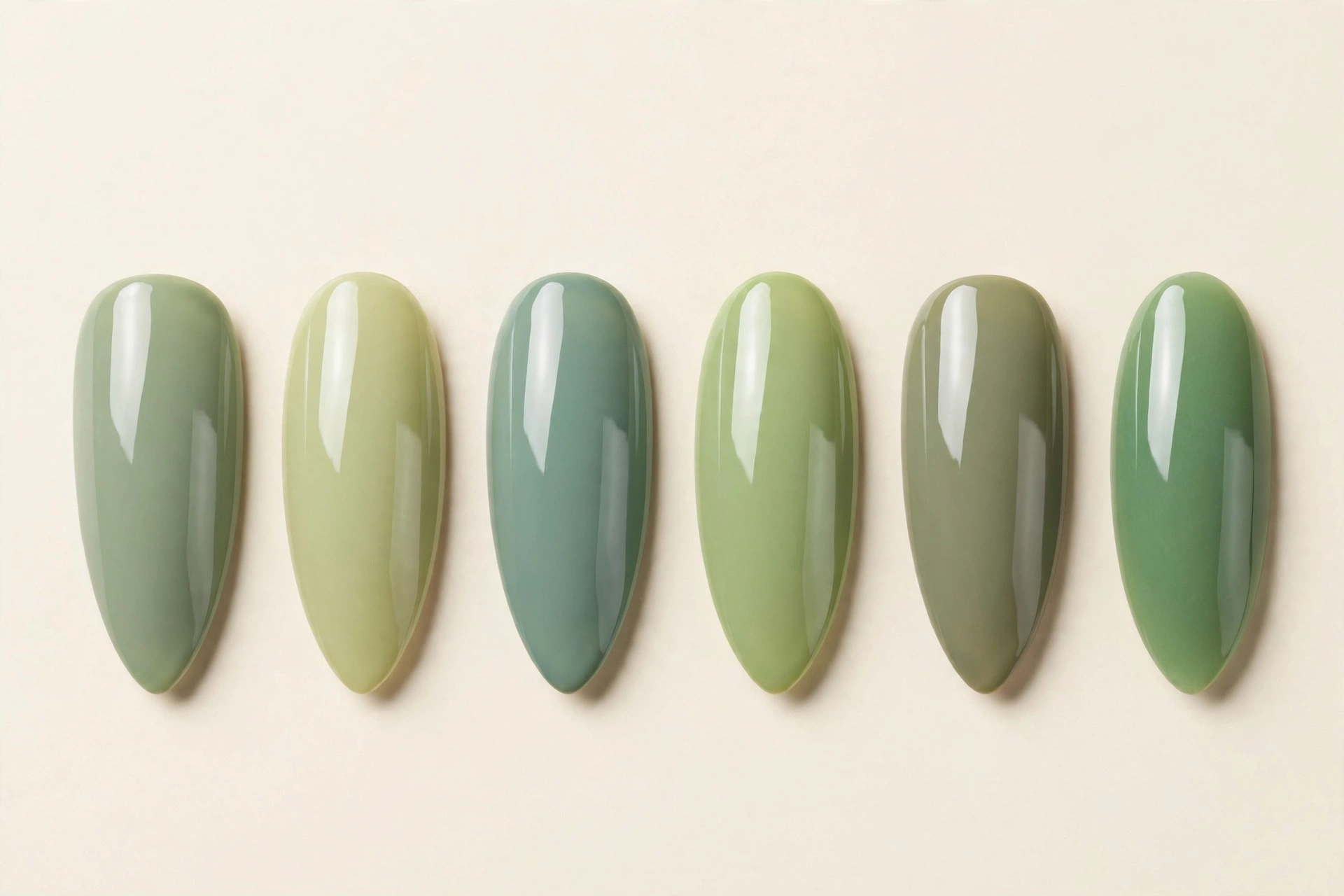
5. Garden Moss — #6B8F71
The first shade that reads unmistakably “green” rather than “neutral with green in it”: a medium moss green with a warm, earthy undertone and a rich cream finish. It flatters warm and olive skin tones gorgeously — warm greens and warm skin are a natural pair — and it does something useful on deep skin: it sits on the nail with enough contrast to look deliberate but enough warmth to look harmonious. Best occasions: autumn-to-winter transition, outdoor events, and pairing with brown boots and camel coats. Next to Meadow Mist, the depth jump is clear — Garden Moss has conviction where Meadow Mist has softness; next to Jade Canopy it’s earthier and more organic.
6. Jade Canopy — #4A7C59
A rich, saturated jade green with a balanced-to-cool undertone and a jewel-like gloss finish — the first shade in the chart that feels luxurious rather than natural. It flatters medium and deep skin tones especially well, where the saturation glows against the skin, and it’s kind to short nails: the color is rich enough to make a short nail look like a deliberate style choice. Best occasions: date nights, December parties, and anywhere you’d wear gold jewelry, since green and gold are a classic pairing. Compared with Garden Moss, Jade Canopy is cooler, deeper and more polished — moss becomes jewel at exactly this step.
7. Hunter’s Dawn — #3B5B43
A deep, smoky forest green with a warm, almost brown undertone — like a hunting jacket in dawn light — finished in a dense, high-gloss cream. It flatters warm and neutral skin tones and is a particular standout on deep skin, where its warmth and depth create a rich, tonal harmony rather than stark contrast. Best occasions: Thanksgiving week, cabin weekends, and any dark-academia wardrobe — this is the shade the whole mood was named after. Our dark academia nails palette charts 12 moody shades where Hunter’s Dawn would sit right at home. Next to Jade Canopy, it’s noticeably deeper and smokier; next to Deep Forest, it’s warmer and less blue — the earthy end of true forest green.
8. Deep Forest — #2E4A38
The namesake shade: a true, classic forest green with a balanced undertone — neither olive nor teal — and a deep, glassy cream finish that reads almost lacquered. It flatters every skin tone and is the safest recommendation on this page: if you can only pick one forest green, pick this one. Best occasions: winter weddings, office parties, and the whole holiday season — it’s festive without being costume-y, which is exactly why it works from November through February. Compared with Hunter’s Dawn, Deep Forest is cooler and more neutral; compared with Rich Emerald, it’s less jewel-like and more woodland — the literal center of the forest green spectrum.
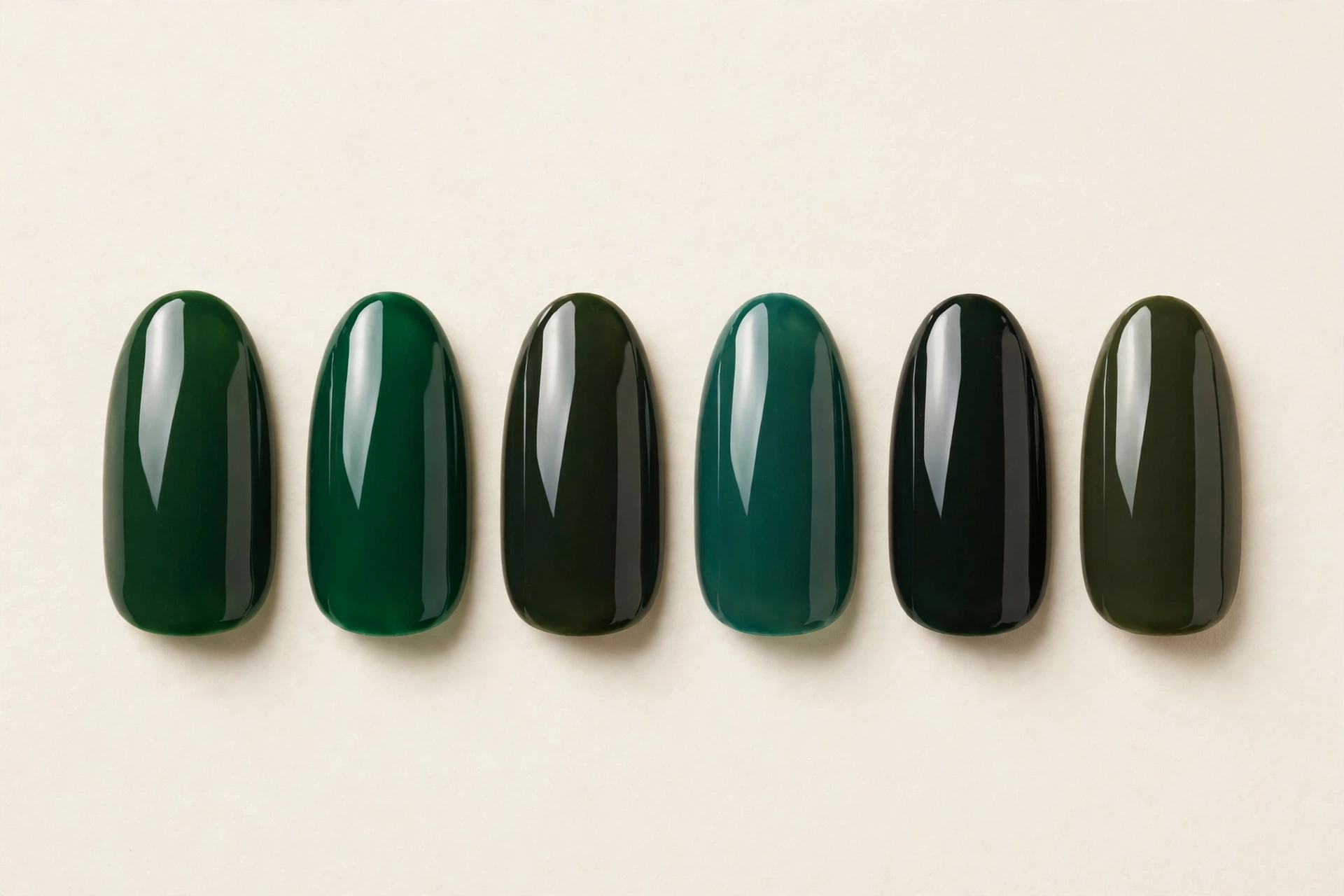
9. Rich Emerald — #146B47
A jewel-toned emerald with a clear, cool blue-green undertone and a luminous, high-shine finish — the glamour shade of the palette. It flatters cool and neutral skin tones most dramatically, and it’s the shade that photographs best: emerald catches camera light like nothing else here, making it the pick for any event where photos matter. Best occasions: New Year’s Eve, gala events, and holiday parties — this is green at its most celebratory, and the full jewel-green story is charted in our emerald nails guide. Compared with Deep Forest, Rich Emerald is brighter, cooler and more electric; compared with Pine Noir, it’s dramatically more vivid — the jewel against the woodland.
10. Pine Noir — #1E3B2E
A very deep, blue-leaning pine green — one step from black in most light, unmistakably green in daylight — with a smooth, inky gloss finish. It flatters fair and cool skin tones beautifully, where the depth creates elegant contrast, and it’s a surprisingly good choice for deep skin too, reading as a rich tonal extension rather than a contrast color. Best occasions: formal evenings, winter date nights, and anyone who loves near-black nails but wants something with more soul than plain black. Next to Rich Emerald, the difference is intensity: Emerald announces itself, Pine Noir keeps its secrets; next to Black Forest, Pine Noir is the bluer and more “colored” of the two — choose it when you want depth with a hint of green still visible.
11. Black Forest — #16281F
Near-black with a green heart: a deep, warm-leaning forest black with a dense, lacquered cream finish. Indoors it reads as an exceptionally rich black; in sunlight the green reveals itself, which is the entire appeal. It flatters deep and medium skin tones wonderfully and gives fair skin a striking, editorial contrast. Best occasions: evening events, concerts, and the whole dark-romantic winter aesthetic — it’s the moodiest shade on the chart, and proud of it. Compared with Pine Noir, Black Forest is warmer and darker, with the green less visible indoors; compared with Midnight Spruce, it’s a touch warmer and more brown-black than blue-black.
12. Midnight Spruce — #0F1F18
The darkest shade in the palette: an almost-black spruce with the faintest blue-green cast, finished in a deep, mirror-like gloss. It flatters everyone who loves dark nails — on fair skin it’s dramatic, on deep skin it’s tonal and sleek — and it’s the longest-wearing shade here in practice, because chips and tip wear hide in near-black better than in any other color. Best occasions: the darkest weeks of winter, formal events, and anyone transitioning from a black-nail phase who isn’t quite ready to give it up. Next to Black Forest, Midnight Spruce is cooler and bluer — the two sit side by side as the palette’s black-green bookends, with Spruce being the final, deepest note.
Forest Green Nails vs. Emerald Nails: What’s the Difference?
They’re related, not identical. Forest green is a woodland family: deeper, earthier, often warm- or neutral-leaning, spanning sage to near-black. Emerald is a jewel family: brighter, more saturated, cooler, always luminous — emerald has to glow, forest green has to sit still. Think of it this way: forest green belongs in the woods, emerald belongs in the jewelry box.
The overlap zone is real, though: shades like Jade Canopy and Rich Emerald sit right on the border, which makes them easy transition shades if you’re moving between the two families. For the full jewel side of the story, our emerald nails guide charts 12 jewel green shades with the same undertone-first approach.
How to Keep Dark Greens Streak-Free
Dark greens are among the most forgiving dark colors to apply — more forgiving than black, slightly more demanding than burgundy. A few rules that keep them looking expensive:
- A ridge-filling base is worth it. Dark green magnifies uneven nail surfaces the way any dark color does. One coat of ridge filler gives you the glassy, lacquered surface these shades are famous for.
- Two thin coats, full dry between. Dark greens are pigment-heavy and pool at the cuticle if you go thick. Load less polish than you think you need and let each coat set fully — about two minutes — before the next.
- Clean the edges before top coat. Wrap a flat brush in remover and trace the cuticle line and sidewalls while the color is still fresh. On dark greens, this cleanup step is the difference between a salon look and a home look.
- Cap the free edge. Dark greens chip visibly at the tip. Wrap the edge on both color coats and the top coat, and you’ll buy yourself several extra days of clean wear.
- Glossy top coat, always. The whole point of forest green is depth, and depth needs gloss. A high-shine top coat makes Deep Forest look like lacquered wood and Rich Emerald look like an actual jewel.
Gel wearers: cure thin layers fully — under-cured dark green gel wrinkles at the cuticle, and dark shades show it more than light ones. Matte top coats are the one exception to the gloss rule: a matte finish turns any shade here smoky and editorial, and it’s the easiest way to make a repeat shade feel new.
Styling Tips for Forest Green Nails
Forest green is the rare color that works like a neutral once you know how to dress it. The principle is simple: treat the deepest shades like black and the lightest shades like a soft neutral, and everything in between dresses itself.
- With gold jewelry, go deep. Rich Emerald, Deep Forest and Hunter’s Dawn against gold rings is one of the great winter combinations — the warmth of the metal and the depth of the green amplify each other. This is the pairing to choose for holiday parties and evening events.
- With silver jewelry, go cool. Eucalyptus Air, First Frost Pine and Pine Noir harmonize with silver, white gold and platinum the way warm greens harmonize with gold. If your everyday stack is silver, the cool half of this chart is your half.
- Camel, cream and brown are green’s best friends. The sage and moss shades (Whispering Sage through Garden Moss) were practically designed for camel coats, cream knits and brown leather — the whole warm-winter wardrobe. One shade of green against an all-neutral outfit is the easiest elevated look there is.
- Monochrome green outfits want tonal nails. If you’re wearing green clothing, don’t match the nail shade exactly — sit one or two steps lighter or darker on this chart. A deep forest coat with Jade Canopy nails, or a sage sweater with Deep Forest nails, looks intentional; an exact match looks like a uniform.
- Nail art that suits the family. Forest greens take gold foil, thin gold lines and tiny dot details beautifully — the contrast is rich without being loud. On the deep shades, a single gold accent nail reads festive for the whole season; on the sage shades, a thin darker-green French tip is quietly chic.
Best Occasions for Forest Green Nails
Forest green’s real strength is range: the light end works anywhere a neutral would, and the deep end works anywhere black would. Match the shade to the moment and it always looks deliberate:
- Workdays and offices: Whispering Sage, Eucalyptus Air or Meadow Mist — quiet, professional, and interesting without being distracting.
- Winter weddings (guest or bridal party): Deep Forest or Jade Canopy — formal, photogenic, and seasonally perfect without competing with the dress. For more winter-wedding shade ideas across color families, our winter solstice nails guide covers the darkest-night end of the season.
- Holiday parties: Rich Emerald, Deep Forest or Pine Noir — festive, jewel-like, and made for candlelight and camera flashes.
- Date nights: Jade Canopy or Hunter’s Dawn — rich but not loud, with the green-and-gold jewelry pairing doing the heavy lifting.
- Everyday winter: Garden Moss, Hunter’s Dawn or Deep Forest — the workhorse shades of the palette, good with everything from denim to wool.
- The January reset: after the holidays, the sage end of the chart (Whispering Sage, Eucalyptus Air) gives you green nails that feel fresh and light again — a good bridge into the new year, alongside our January nail colors 2027 picks for the season ahead.
Polish and Gel Picks
Regular polish picks: OPI Stay Off the Lawn. OPI Things I’ve Seen in Aber-green. Essie Off Tropic. Essie Win Me Over. Sally Hansen Miracle Gel Jealous Boyfriend. Zoya Hunter. Olive & June WKF.
Gel picks: OPI Stay Off the Lawn GelColor. Essie Gel Couture Forest Fantasy. Beetles Deep Forest Green Gel. Modelones Emerald Green Gel. DND Hunter Green Gel.
Inspiration-Palette Disclaimer
This post is an inspiration palette: the shades are charted as swatch art to show undertones and finishes, not exact product matches. Take the row to your nail tech and name the undertone you want — they’ll mix or match the closest real-world shade.
Frequently Asked Questions
What skin tones do forest green nails suit?
All of them — the trick is picking the right depth and undertone. Fair and cool skin shines in the cool, deep shades like Pine Noir and Eucalyptus Air; warm and golden skin loves the sage and moss family (Whispering Sage, Garden Moss, Hunter’s Dawn); deep skin wears the saturated mid-tones and deeps best, where shades like Jade Canopy, Deep Forest and Rich Emerald glow rather than contrast. Neutral undertones can genuinely wear the whole chart — when in doubt, hold the shade against your fingertip in daylight and pick the one that makes your skin look calm.
Are forest green nails good for winter?
They’re one of the best winter colors there is. Deep forest greens behave like a neutral — they pair with the whole winter wardrobe (wool, leather, knits, holiday dressing) the way black does, but with more character. The deeper shades (Deep Forest, Pine Noir, Black Forest) carry the holiday season beautifully, and the sage end of the palette keeps working into January and February when you want something lighter.
Which is better for short nails, forest green or emerald?
Both work, but they read differently. Forest green on short nails looks modern and tidy — especially the mid-depth shades like Garden Moss and Deep Forest, which don’t need length to show their character. Emerald on short nails reads bolder and more jewel-like, since the brightness does the work that length would. If your nails are short and you want subtle, pick the forest family; if you want short nails that still make a statement, pick the emerald side.
How do I stop dark green polish from staining my nails?
Dark greens can leave a faint stain, but it’s entirely preventable. Always wear a proper base coat — two thin layers if your nails stain easily. Remove polish promptly rather than letting it sit chipped for days, and if you do get a light stain, a gentle buff or a soak in warm soapy water with a little lemon juice lifts it. Gel wearers skip this problem almost entirely, since the gel layer sits between the color and the nail.