
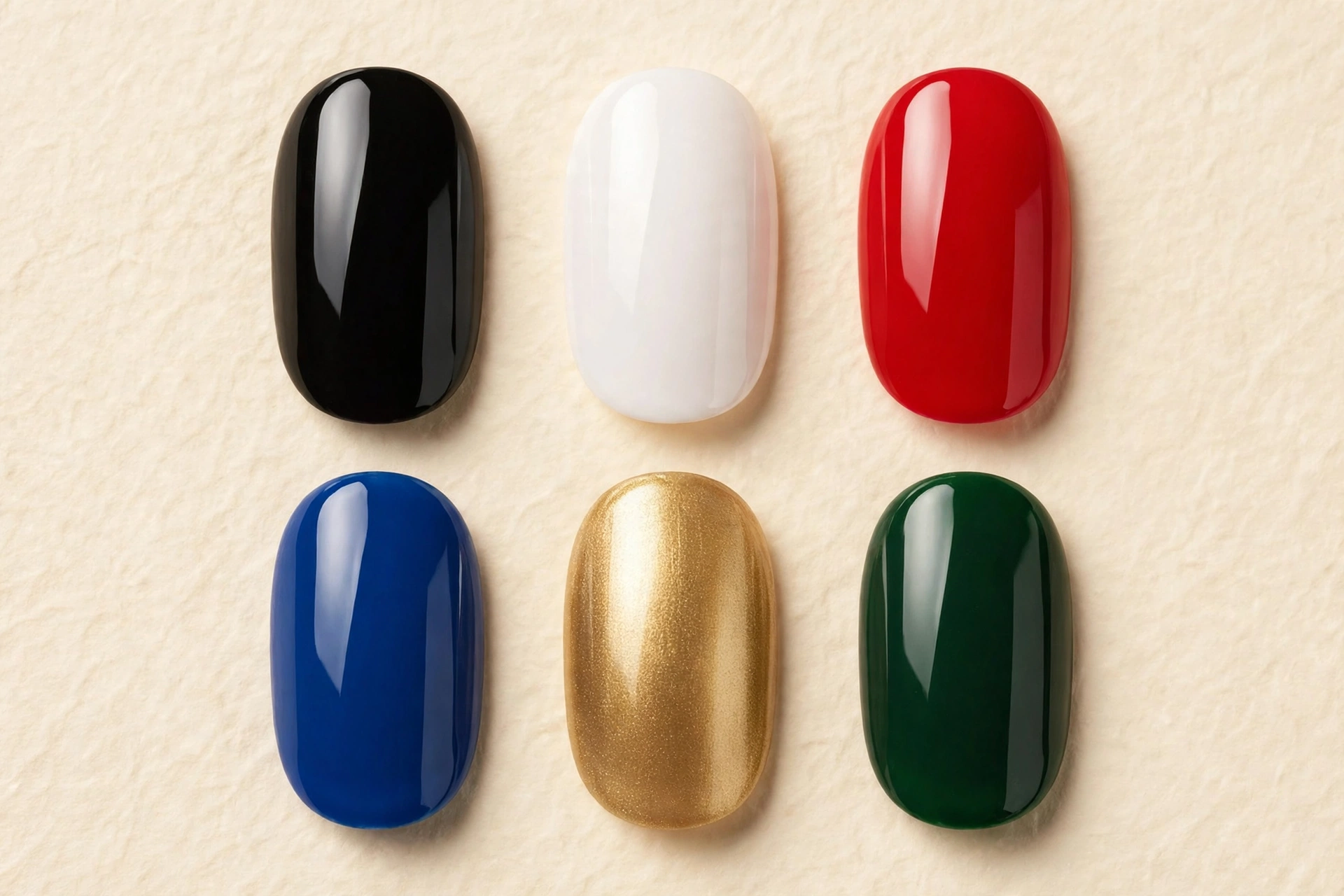
Striped nails are the rare nail art that looks deliberate without looking fussy: one clean line, repeated with confidence, turns an ordinary manicure into something graphic and modern. This palette keeps the idea simple on purpose, with six shades chosen to pair cleanly, stripe crisply and flatter a wide range of skin tones. Pick a dark base and a light stripe, or a light base and a bold stripe, and let the contrast do the work.
How to Use This Striped Nails Palette
- Start with contrast, not complexity. The strongest striped nails pair shades that sit far apart in lightness: black over white, white over cobalt, gold over racing green. If you can read the stripe from arm’s length, the pairing works.
- Choose your stripe width first. Thin pinstripes read elegant and office-friendly; medium stripes read modern and graphic; one wide statement stripe reads bold and fashion-led. Mixing all three widths on one hand usually looks messy, so commit to one width per manicure.
- Keep the base coats thin and even. Stripes show every ridge underneath them, so two thin base coats, fully dry, beat one thick coat every time. Let the base dry completely before you stripe, or the striping brush will drag the colour underneath.
- Stripe with the right tool. A long, thin striping brush gives the cleanest lines, but the edge of a piece of striping tape or a nail vinyl works just as well for a first attempt. Load the brush lightly: too much polish on the brush is what makes lines wobble and pool.
- Seal, then seal again. One coat of top coat locks the stripes in place; a second thin coat the next day refreshes the shine and smooths any slight ridge where the stripe meets the base. This is the step that makes hand-painted stripes look salon-finished.
- Limit the palette per hand. Two shades make the crispest striped nails, three shades make a lively set, and four or more start to compete. If you love all six shades here, rotate them across manicures rather than cramming them onto ten nails at once.
- Match the stripe to the nail shape. Vertical stripes lengthen short and wide nails; horizontal stripes suit long, narrow nails; a single diagonal stripe flatters almond and oval shapes beautifully. The same two shades can look completely different depending on direction alone.
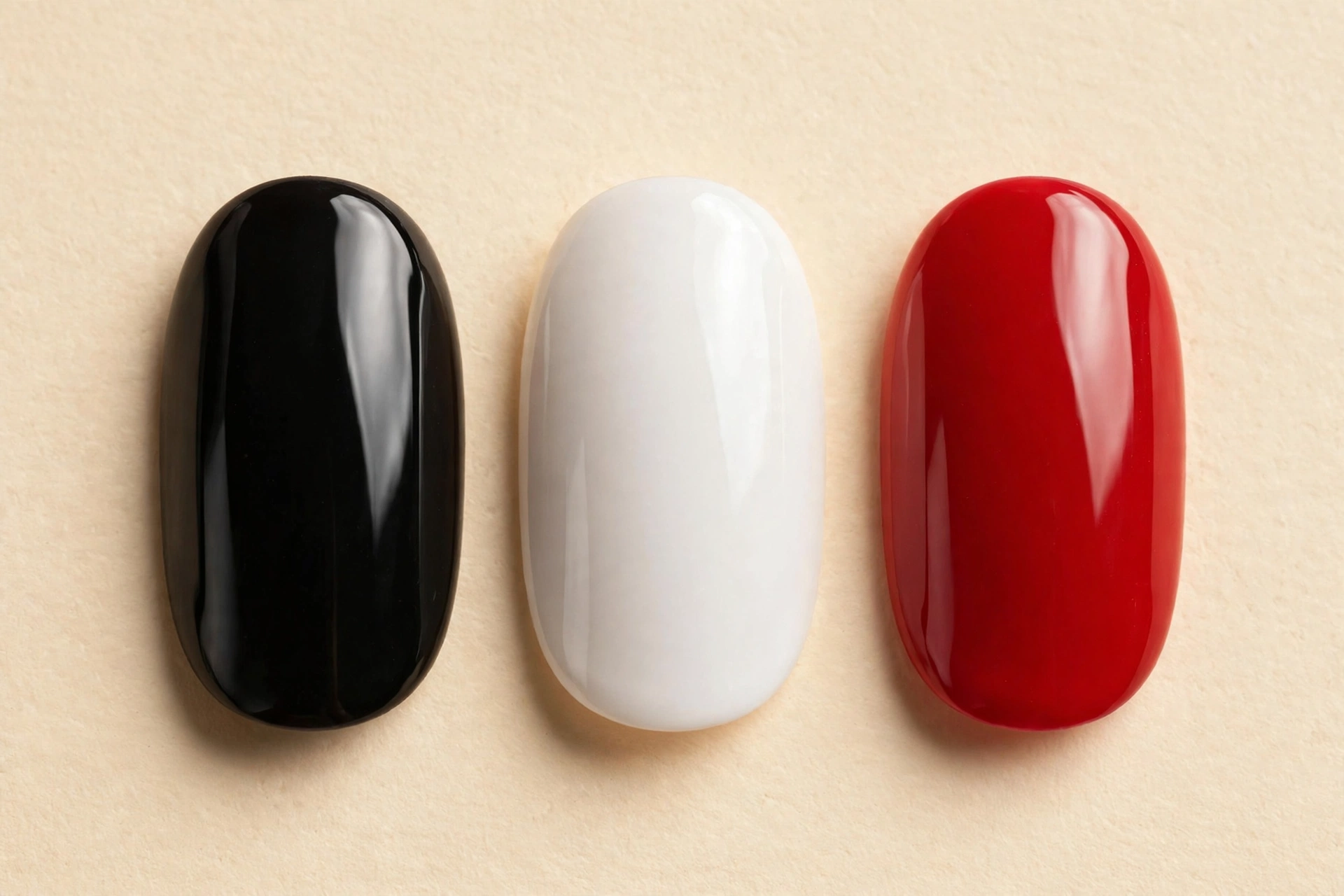
1. Ink Stripe Black — #171717
Ink Stripe Black is a true, neutral black creme with no obvious blue or brown pull, finished in a high-gloss shine that makes stripes look razor-sharp. It is the anchor of this palette and the shade you will reach for most: as a base it makes white, gold and scarlet stripes pop, and as a stripe itself over porcelain white or camel-adjacent neutrals it reads graphic and intentional rather than heavy. The neutral undertone is what makes it so forgiving — it flatters fair skin without looking harsh, sits richly on medium skin, and reads as a deep, polished dark on deep skin rather than disappearing into it. Wear it as thin pinstripes for work, as bold vertical stripes for evenings out, or as a single wide stripe down the centre of each nail when you want a look that photographs well. Coverage is full in two coats, and because it is a creme rather than a shimmer, the edge of each stripe stays clean and readable. Compared with Porcelain Line White, it is the opposite pole of the palette: black gives structure, white gives breathing room, and the two together are the classic striped pairing for a reason. Compared with Racing Green Stripe, black is the more versatile dark — green has personality, black has range, and when you are unsure which dark base to choose, black is the safe, sharp answer.
2. Porcelain Line White — #F4EEE3
Porcelain Line White is a soft, warm off-white creme with the faintest ivory warmth, which keeps it from the stark, clinical look of a pure bright white. That warmth matters for stripes: a pure white stripe over a dark base can look almost bluish under some lights, while this porcelain tone stays creamy and soft, like fresh paint on a gallery wall. It flatters fair skin beautifully, where it reads as a clean, bright accent, and it gives medium and deep skin tones a striking high-contrast stripe that still looks warm rather than cold. Wear it as the stripe over black, cobalt or racing green, or flip the pairing and use it as the base with a single scarlet or cobalt stripe for a lighter, daytime version of striped nails. It also works as a French-tip alternative: a white stripe across the tip, or a white line just above the tip, gives the structure of a French manicure with a modern, graphic edge. If you like this kind of clean-line look, the colored French tips chart shows how the same idea plays out in eighteen modern colour combinations. Compared with Ink Stripe Black, porcelain is the softer, lighter partner — black commands attention, porcelain gives it somewhere to land. Compared with Gilded Stripe Gold, it is the quieter light shade: gold sparkles, porcelain glows, and for a daytime striped manicure porcelain is usually the easier wear.
3. Scarlet Ribbon — #C8102E
Scarlet Ribbon is a vivid, true red creme with a slightly cool undertone and a glossy finish that keeps the colour looking freshly painted rather than flat. Red is the shade that turns striped nails from neat into memorable: a scarlet stripe over black reads classic and a little daring, a scarlet stripe over porcelain white reads crisp and almost nautical, and scarlet as the base with thin black or white stripes reads festive without needing any glitter at all. The cool undertone is flattering across the board — it brightens fair skin, sits jewel-like on medium skin, and pops dramatically on deep skin, where the contrast is at its most striking. This is the shade to reach for when the occasion calls for confidence: date nights, dinners out, parties, and any day you want your hands to be noticed. One practical note: vivid reds can stain the nail plate if worn without a base coat, so never skip that step with this shade, and give it a full two coats for the even, saturated colour that makes stripes look professional. Compared with Cobalt Line, scarlet is the warmer, louder accent — cobalt feels cool and tailored, scarlet feels warm and bold, and choosing between them is really choosing the mood of the manicure. Compared with Ink Stripe Black, it is the extrovert of the pair: black structures the look, scarlet gives it its pulse.
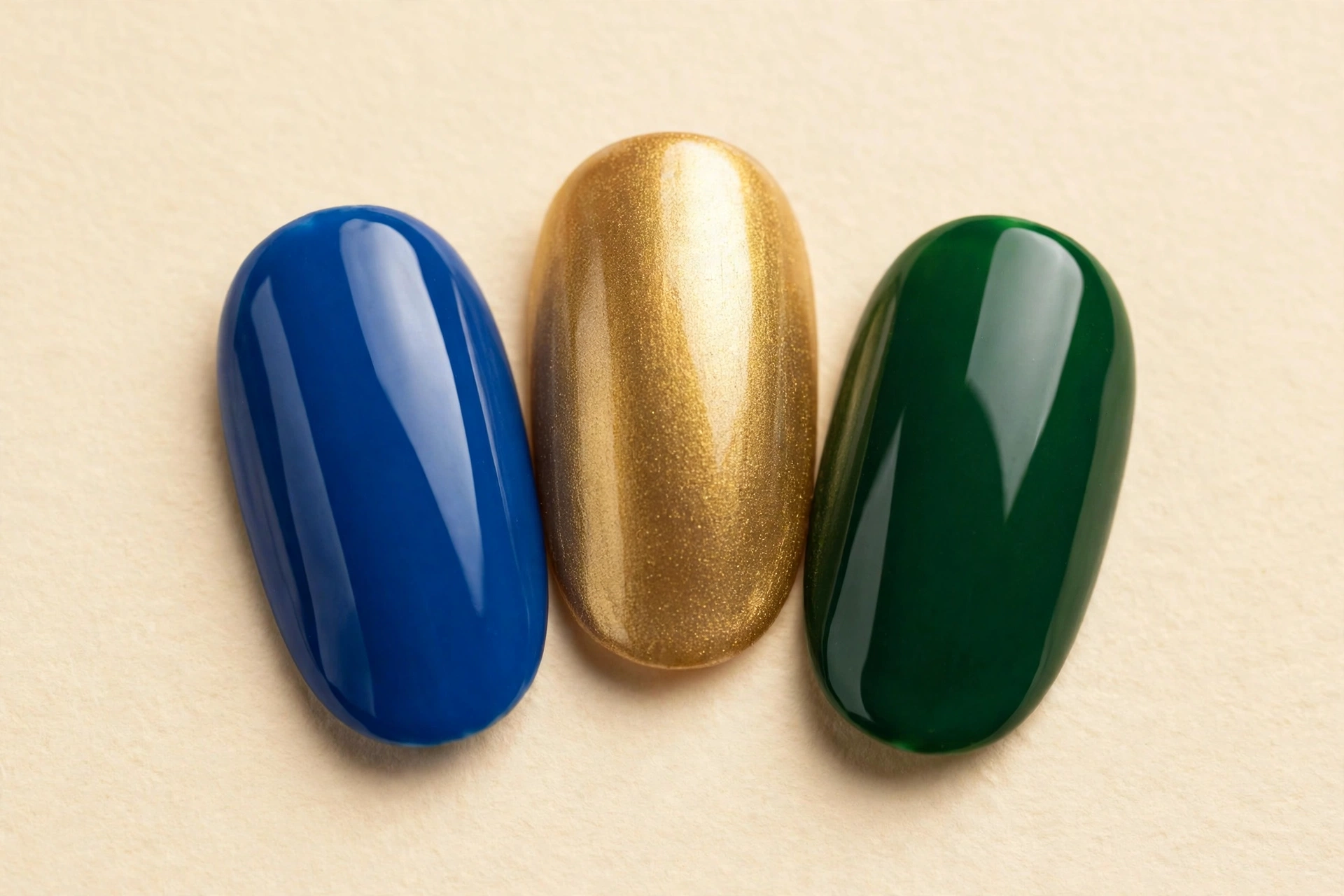
4. Cobalt Line — #1D4E9E
Cobalt Line is a rich, saturated blue creme with a cool undertone and a glossy finish, deep enough to read as a serious colour and bright enough to never look like navy. It is the tailored member of this palette: a cobalt stripe over porcelain white looks crisp and almost preppy, a cobalt stripe over black looks modern and graphic, and cobalt as a base with white stripes is one of the cleanest striped combinations you can wear to work. The cool undertone flatters cool and neutral skin especially well, and on warm and olive skin it provides a deliberate, striking contrast that reads intentional rather than clashing. Cobalt also pairs beautifully with gold, so a cobalt base with one thin gold stripe, or a cobalt stripe beside a gold one, gives you a polished, almost jewellery-like manicure without any actual embellishment. For wear, cobalt cremes tend to be well-pigmented, so two coats should give full, even coverage, and the colour holds its brightness well under a glossy top coat. If you enjoy pairing two shades rather than wearing one flat colour, the two-tone nail combos guide is a useful next stop, with twelve pairings that follow the same contrast-first logic as striped nails. Compared with Scarlet Ribbon, cobalt is the cooler, calmer accent — scarlet shouts, cobalt states, and for a workday striped manicure cobalt is often the smarter pick. Compared with Racing Green Stripe, it is the brighter, more vivid dark: green feels earthy and grounded, cobalt feels electric and precise.
5. Gilded Stripe Gold — #C99A2B
Gilded Stripe Gold is a warm, metallic gold with a rich yellow undertone and a fine, smooth shimmer that reads as polished metal rather than chunky glitter. Gold is the shade that lifts striped nails into occasion territory: a thin gold stripe over black looks instantly evening-ready, a gold stripe over racing green looks rich and almost festive, and a gold stripe over cobalt gives a regal, jewellery-box effect that needs nothing else. The warm undertone flatters warm and olive skin tones most naturally, where it glows rather than sits on the surface, but it also works beautifully as a thin accent on fair and deep skin, where a little gold goes a long way and a little is all you need. Because it is metallic, application needs a slightly lighter hand than the cremes in this palette: one confident, thin stroke gives a clean line, while going back over the same stripe repeatedly can drag the shimmer and make the line look patchy. Use it sparingly and let it be the accent, not the base — gold as a full base colour can look busy, but gold as a stripe always looks considered. It is also the most forgiving stripe shade for beginners, since the shimmer disguises tiny wobbles in a way that flat cremes do not. Compared with Porcelain Line White, gold is the warmer, more decorative light shade: porcelain is quiet and clean, gold is celebratory, and the choice between them is the choice between everyday polish and evening sparkle. Compared with Scarlet Ribbon, it is the softer accent: scarlet demands attention, gold earns it quietly.
6. Racing Green Stripe — #14532D
Racing Green Stripe is a deep, forest-leaning green creme with a cool undertone and a glossy finish, dark enough to function as a neutral and green enough to never be mistaken for black. It is the most quietly sophisticated shade in this palette and the one that surprises people most: a racing green base with thin porcelain or gold stripes looks expensive and understated, a green stripe over black adds depth without shouting, and green with white stripes gives a fresh, almost sporty graphic look that works far beyond any one season. The cool undertone flatters cool and neutral skin tones, and on warm skin it provides a rich, grounding contrast that pairs beautifully with gold jewellery and camel or cream clothing. Racing green is also a strong choice for shorter nails, where a dark, saturated colour can make the nail look longer and more deliberate, especially when the stripe runs vertically. Two coats give full coverage, and the colour deepens nicely under a glossy top coat, which brings out the green undertone in daylight. Compared with Ink Stripe Black, racing green is the more interesting dark: black is universal, green is personal, and when you want a dark striped manicure that does not look like everyone else’s, green is the answer. Compared with Cobalt Line, it is the earthier, calmer dark: cobalt is bright and precise, green is deep and grounded.
Striped Nails for Short Nails, Long Nails and Everything Between
Striped nails are unusually forgiving about length, because the stripe itself does the shaping work. On short nails, keep stripes vertical and thin: a single pinstripe down the centre, or two fine lines near the edges, lengthens the nail visually without needing any length at all. Avoid wide horizontal stripes on short nails, which can make the nail look shorter and wider. On medium nails, you have the most freedom — vertical, diagonal or horizontal stripes all work, and a mix of one accent nail with stripes and the rest in a solid base colour looks intentional rather than unfinished. On long nails, go bolder: wide stripes, chevron-style angled stripes, or a striped accent nail beside solid nails all carry well, because there is enough surface for the pattern to breathe. Almond and oval shapes suit diagonal stripes especially well, since the angle follows the taper of the nail. Square shapes suit clean vertical and horizontal lines, which echo the straight edge of the tip. Coffin shapes can carry the widest stripes, including a single bold centre stripe that would overwhelm a shorter nail. Whatever your length, the rule that matters most is consistency: stripes of the same width, spacing and direction across all ten nails look polished, while stripes that change width from nail to nail look accidental.
Best Occasions for Striped Nails
Black and white stripes are the workhorse pairing for everyday wear: polished enough for the office, neutral enough for weekends, and easy to dress up with a ring or a darker outfit. Scarlet and black stripes suit evenings, dinners and dates, where the red adds warmth and confidence without needing any extra decoration. Cobalt and white stripes work beautifully for daytime events, brunches and spring and summer gatherings, where the crisp blue-and-white contrast feels fresh and clean. Gold stripes, over black or racing green, are the occasion pick: holiday parties, weddings, New Year’s Eve, and any evening where you want your manicure to read as jewellery. Racing green and gold stripes suit autumn and winter events particularly well, pairing naturally with knitwear, camel coats and darker evening clothes. For weddings, keep it soft: porcelain white stripes over a sheer or neutral base, or a single thin gold stripe as an accent, reads bridal without competing with the rest of the look. For festivals and holidays, go bolder: scarlet and white, or cobalt and gold, with wider stripes and a glossy finish. The beauty of this palette is that you never need a new shade for a new occasion — you just change the pairing and the stripe width, and the same six colours cover the whole calendar.
Stripe Widths, Spacing and Placement That Actually Work
The difference between striped nails that look salon-made and ones that look homemade usually comes down to three decisions: width, spacing and placement. For width, thin pinstripes of about a millimetre suit work and formal occasions, medium stripes of two to three millimetres suit everyday graphic looks, and wide stripes of four millimetres or more suit statement manicures and long nails. For spacing, even gaps matter more than narrow gaps: two stripes with a consistent gap between them look better than three stripes squeezed together, and leaving a clear margin at the cuticle and the tip keeps the manicure looking clean as it grows out. For placement, centre stripes are the most flattering on most nail shapes, side stripes suit narrow nails, and a stripe across the tip — a graphic take on the French manicure — suits square and squoval shapes. A useful beginner approach is the accent-nail method: paint eight nails in a solid base colour and stripe only the ring fingers, or stripe all ten nails but keep the design identical on each hand. Symmetry between hands matters more than perfection on any single nail, so step back and compare both hands before you seal with top coat. If one stripe is noticeably off, it is easier to wipe that single nail and redo it than to live with it for a week.
Application and Longevity: Making Stripes Last
Striped nails last as long as any well-applied manicure, provided the layers are thin and fully dry between steps. Start with a base coat and let it dry completely, then apply two thin coats of your base colour, drying between coats. Wait until the base is fully dry — not just touch-dry — before striping, because a striping brush dragged across a soft base will pull colour and ruin the line. Stripe with light, confident strokes, and resist the urge to go over the same line twice. Seal with a top coat applied in one smooth pass, rather than scrubbing back and forth, which can smudge the stripes underneath. For longevity, reapply a thin top coat every two to three days, wear gloves for washing up and cleaning, and avoid using your nails as tools to open cans or scrape labels. Chips usually appear at the tip first, so a quick top-coat refresh at the tip can buy you several extra days. If a stripe does chip, a small touch-up with the stripe colour and a fresh top coat is usually invisible, which is another advantage of simple graphic designs over complex art. With this routine, a striped manicure should comfortably last a full week, and often longer on shorter nails that take less daily wear.
Shade-to-Shade Comparisons at a Glance
If you are choosing between two shades, think in pairs rather than in isolation. Black versus racing green: black is the universal dark, green is the interesting dark — choose black for maximum versatility, green for personality. White versus gold: white is the clean, everyday light, gold is the celebratory light — choose white for daytime, gold for evenings. Scarlet versus cobalt: scarlet is warm and bold, cobalt is cool and tailored — choose scarlet for confidence, cobalt for polish. Gold versus scarlet: gold whispers occasion, scarlet announces it — choose gold when you want sparkle without volume, scarlet when you want colour to lead. Cobalt versus racing green: cobalt is bright and precise, green is deep and grounded — choose cobalt for a fresh, graphic look, green for a rich, understated one. Black versus white: the foundational pairing — black structures, white lightens, and together they are the safest, sharpest striped combination in this palette. The most reliable two-shade manicures from this set are black with white, black with gold, cobalt with white, racing green with gold, and scarlet with black. The most reliable three-shade combinations keep one dark, one light and one accent: black, white and scarlet; cobalt, white and gold; or racing green, porcelain and gold. If you love pattern-led manicures generally, the tartan nails chart offers a plaid-inspired take on the same idea, with twelve pattern shades for winter.
Polish and Gel Picks
For striped nails, the finish matters as much as the colour, so look for an opaque true-black creme polish for the darkest base and the sharpest stripes. A warm porcelain off-white creme gives the softest light stripe without looking stark or chalky. A vivid true-red creme with a cool undertone covers the scarlet role and doubles as a classic full manicure on its own. A saturated cobalt blue creme with a glossy finish holds its brightness well under top coat. A smooth metallic gold polish with fine shimmer, rather than chunky glitter, gives the cleanest gold stripe. A deep forest-leaning green creme with a cool undertone covers the racing green role and wears well as a solid dark manicure too. For gel wearers, choose the same six colour families in a soak-off gel formula, and cure each layer fully before striping so the lines stay crisp. A long, thin striping brush, a bottle of striping tape for perfectly straight lines, and a fast-drying glossy top coat complete the kit — with those three tools, every shade in this palette becomes a stripe shade.
These shades are an inspiration palette for striped nails: use the names and hex codes as a starting point when matching colours at the salon or in the polish aisle, and expect small variations between brands and finishes.
Frequently Asked Questions
What colours work best for striped nails?
High-contrast pairs work best: black and white, navy or cobalt and white, black and gold, or a dark base with a bright accent like scarlet. The stripe needs to be clearly readable against the base, so avoid pairing two shades of similar lightness, such as two mid-tones, which blur together instead of striping cleanly.
How do you paint straight stripes at home?
Use a long, thin striping brush with a light load of polish, rest your painting hand on a steady surface, and draw each stripe in one confident stroke rather than several short ones. Striping tape or nail vinyls give perfectly straight lines if freehand feels tricky, and a glossy top coat smooths any tiny wobble once the stripes are dry.
Do striped nails work on short nails?
Yes, and they can be especially flattering on short nails. Keep stripes vertical and thin, which lengthens the nail visually, and consider striping only one or two accent nails if a full striped set feels busy at a shorter length. Avoid wide horizontal stripes on short nails, which tend to make nails look shorter.
How do you stop stripes from smudging under top coat?
Let the stripes dry fully before top coat, then apply the top coat in one smooth, light pass without scrubbing back and forth over the design. A fast-drying top coat helps, and floating the brush — letting the top coat flow over the stripes rather than pressing down — keeps the lines sharp and clean.