
Some of the most striking manicures never come from a single bottle. Two-tone nail combos — two colors worn together in one manicure, split across nails or split right down the middle of each nail — have quietly become one of the most wearable trends in the salon. They take two shades that already work on their own and make them work harder together, like a good duet. Below, twelve pairings are charted from the lightest duo to the deepest, each with exact hex codes, placement ideas and notes on who they flatter.
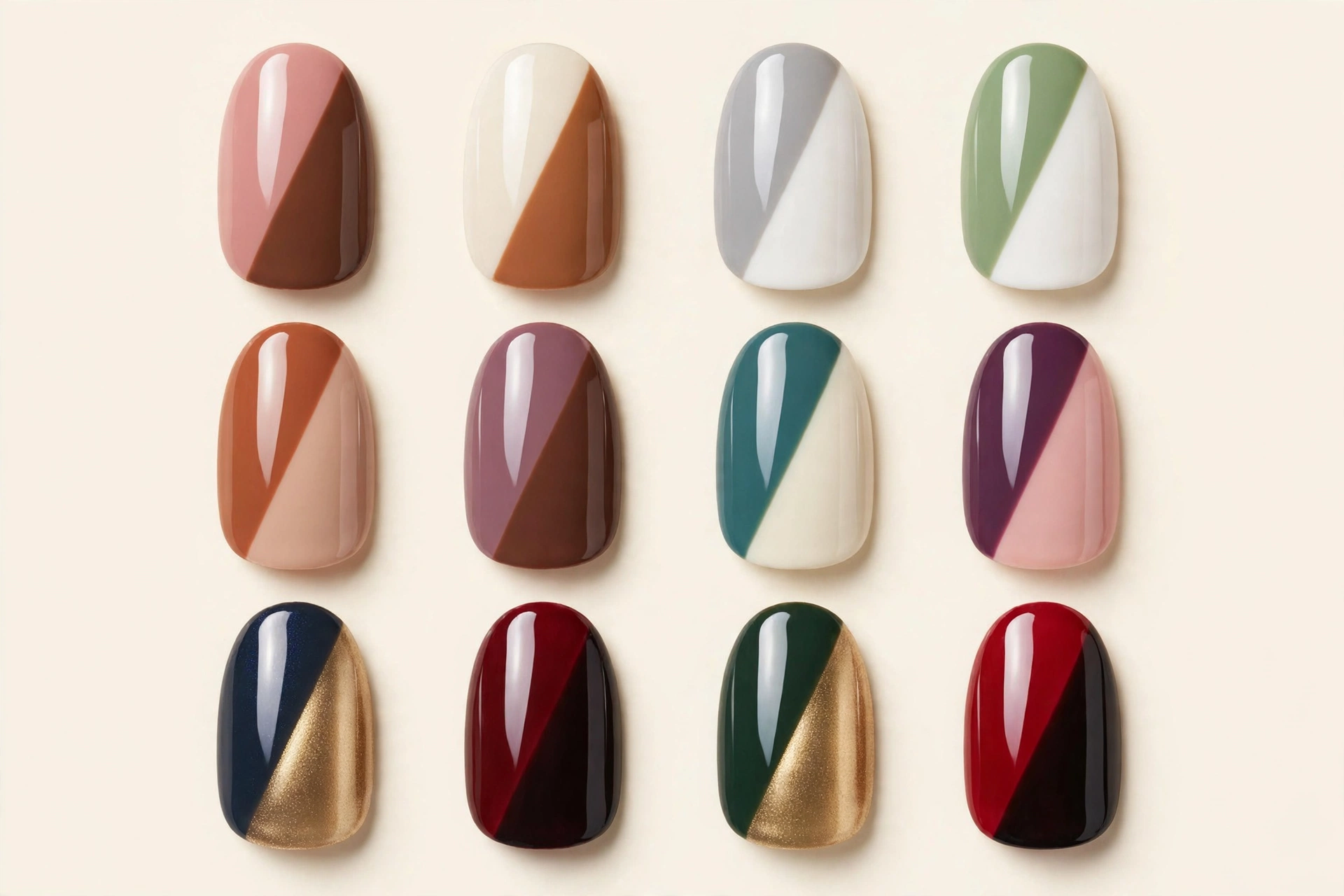
How to Use This Two-Tone Nail Combos Palette
- Decide how the two tones meet. There are three classic layouts: alternate the colors nail to nail, split each nail diagonally or vertically, or paint four nails one shade and keep one accent. Alternating is the most forgiving; the split-nail look needs a steady hand or a nail tech.
- Balance the contrast. A pairing works when one shade does the talking and the other supports it. If both colors are loud (cherry and black, say), keep the shape neat and the length moderate so the manicure reads intentional rather than busy.
- Test the pair on two fingers first. Colors that look perfect as separate bottles can surprise you once they sit side by side. Paint one hand’s middle and ring fingers with the combo and live with it for a day before committing to a full set.
- Mind your skin’s undertone. Warm duos (caramel and cream, terracotta and nude) flatter warm undertones; cool duos (navy and gold, dove grey and white) sit better on cool undertones. The pairing notes below call out which skin tones each one loves.
- Keep the rest of the look simple. Two-tone nails are already the statement. Skip the extra nail art, chunky charms and glitter toppers — let the pairing carry the manicure.
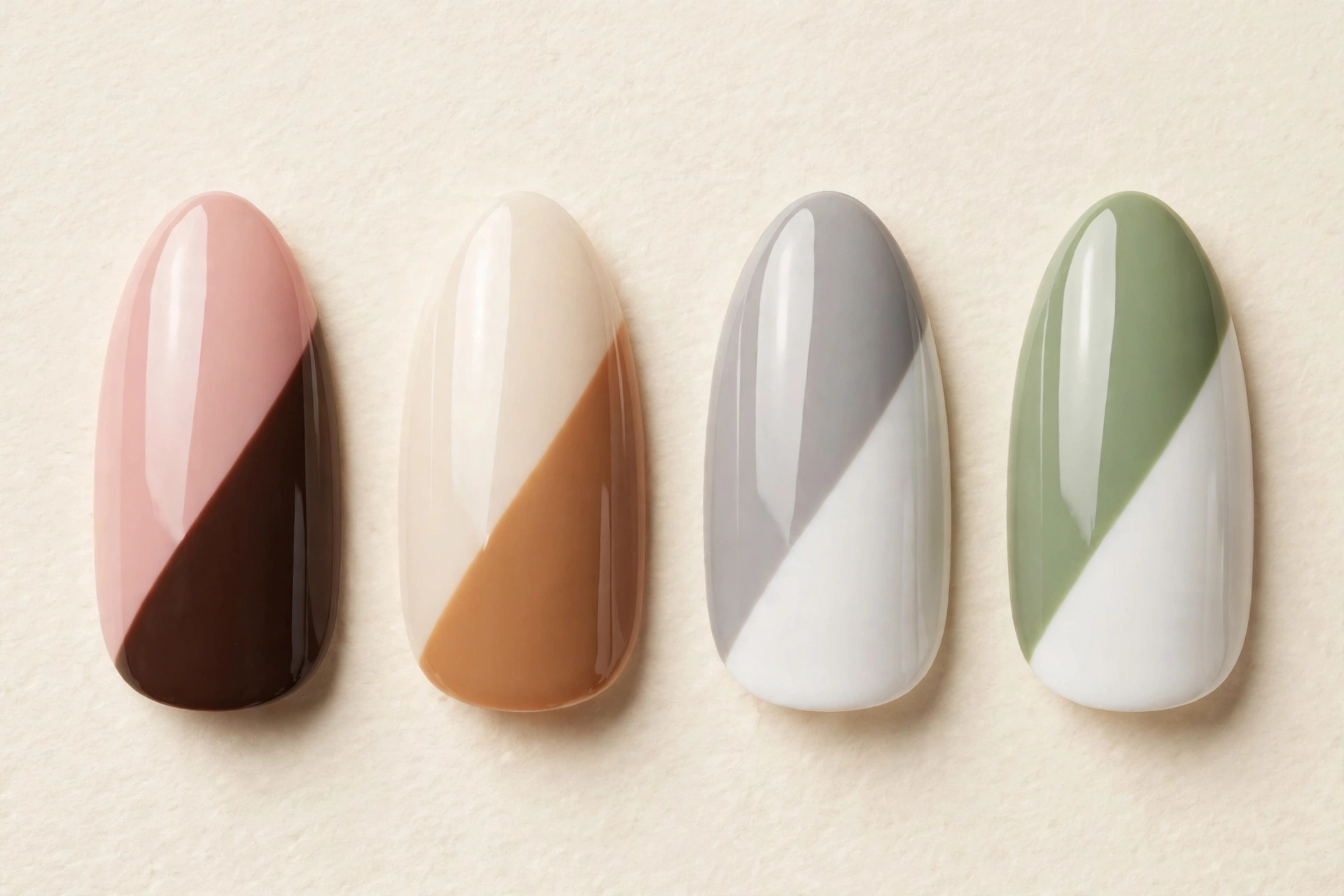
1. Blush & Espresso — #F2D4D8 + #4A2E2A
The gentlest way into two-tone nails: a soft milky blush pink paired with a deep espresso brown. Wear blush as the base color on most nails and reserve espresso for the ring finger and thumb — the contrast draws the eye without overwhelming a short nail. It flatters fair to medium skin beautifully, where the espresso grounds the sweetness of the pink. This is a bridal-shower and brunch manicure through and through, and it survives office dress codes because the overall impression stays neutral. Compared with pairing 2, it leans pink where that one leans beige, and it feels noticeably softer.
2. Cream & Caramel — #F5EDE3 + #C68B59
A warm, latte-inspired duo that reads expensive without trying. Cream works best as the dominant shade — full coverage on all ten — with caramel painted as a diagonal tip on the accent nail or as two accent nails on each hand. Medium and deep skin tones carry this pairing especially well, since the warmth of the caramel harmonizes instead of clashing. It’s a perfect fall transition manicure and pairs naturally with camel coats, knitwear and gold jewelry. Next to Blush & Espresso it is warmer and earthier; where that pairing is pink, this one is coffee.
3. Dove Grey & White — #B9BDC4 + #FFFFFF
Cool, clean and quietly modern. Paint dove grey across the set and give the ring finger a crisp white, or flip it for a white set with one grey accent. This pairing suits short nails beautifully — the palette is light enough that it never closes in the nail bed. Fair and light-medium skin with cool undertones gets the most from it; on deeper skin the dove grey shows up as a lovely smoky contrast. It reads professional and minimal, ideal for interviews, conferences and anyone whose style runs Scandinavian. Against Cream & Caramel it is a full temperature switch, from warm to cool.
4. Sage & Cream — #B7C4AD + #F7F3EA
Muted garden green meets soft cream — a pairing that feels fresh without going neon. The classic layout is sage on the thumbs, index and pinky with cream in the middle, or a sage-and-cream split down the center of each nail for a modern French effect. Sage flatters medium to olive skin particularly well and gives fair skin a natural, botanical feel. Wear it in spring and summer, or in winter when you want a break from burgundy without going bare. Compared with Dove Grey & White, it has actual color in it — it reads as a choice, not a neutral.
5. Terracotta & Nude — #D0785A + #E8CDB5
Sunset in a manicure: warm terracotta against a soft pink-nude base. This is one of the few duos that works best with terracotta as the dominant color — full terracotta coverage with nude tips, or a nude base and terracotta diagonal halves. Warm medium, tan and deep skin tones are this pairing’s natural home, though fair skin can wear it as a bold warm accent. It belongs at outdoor weddings, golden-hour photos and anywhere with good natural light to catch the terracotta. Next to Sage & Cream it is warmer, louder and far more autumnal.
6. Dusty Mauve & Chocolate — #B98A9E + #5A3A33
Dusky mauve pink meets rich chocolate brown — a romantic pairing with real depth. Paint mauve as the base shade and add chocolate as a half-moon at the cuticle or as full-coverage accent nails on the ring fingers. The chocolate grounds the mauve so it reads grown-up rather than girlish, and the duo flatters light through medium skin tones. It’s a strong date-night and evening-event manicure, and it pairs well with burgundy outfits and dark denim. Compared with Terracotta & Nude it is deeper, moodier and cooler in feel.
7. Teal & Cream — #2F6F6A + #F4EFE6
A deep jewel teal against warm cream is the kind of pairing that gets compliments from strangers. Try teal as the dominant shade with cream French-style tips, or alternate the two across the hand for a graphic look. Teal flatters medium to deep skin beautifully and gives fair skin a striking color pop. This is a winter standout and a great holiday-party option for anyone bored of red and green. Against Dusty Mauve & Chocolate it trades romance for drama — the contrast is crisper and the overall mood is bolder. If jewel tones in full metallic finishes are your lane, our Velvet Nail Colors post charts the magnetic-shimmer side of this family.
8. Plum & Blush — #6E3A54 + #F0CFCF
Deep mulled-wine plum softened by pale blush pink. The most flattering layout is plum on the outer fingers (thumb, index, pinky) with blush holding the middle — it creates a natural focal point. Medium and deep skin tones wear this duo effortlessly; fair skin gets a dramatic high-contrast moment that still reads feminine. It’s made for fall evenings, cocktail parties and anywhere the dress code leans dressy. Compared with Teal & Cream it is softer and more romantic, swapping cool drama for warm depth. If you’d rather blend your two tones into a seamless transition instead of a hard split, our Ombre Nail Colors post charts fifteen gradient blends that do exactly that.
9. Golden Hour & Midnight — #D9A441 + #1F1B16
Warm gold meets near-black — the highest drama in the light half of the chart. Paint midnight as the base and add golden-hour tips, or do a half-and-half split for a look that catches light every time you move. This pairing loves medium to deep skin, where the gold glows against the skin tone; on fair skin it becomes a bold editorial statement best worn on longer nails. It’s New Year’s Eve and formal-dinner territory. Next to Plum & Blush it is a gear shift from soft to striking, and the metallic warmth makes it the dressiest pairing so far.
10. Navy & Metallic Gold — #24344D + #C9A227
The classic: deep navy with true metallic gold. Navy works as the base color across the set with gold on one or two accent nails, or as a gold-tipped French over navy. Cool undertones get the most from navy, and every skin tone from light to deep can wear the pairing — the gold does the heavy lifting. This is the safest high-impact choice in the chart: wedding guest, gala, holiday party, job interview at a creative company. Compared with Golden Hour & Midnight it is cooler, more refined and more wearable day to day. Two-tone pairings love the French-tip format, and our Colored French Tips post charts eighteen modern takes on exactly that idea.
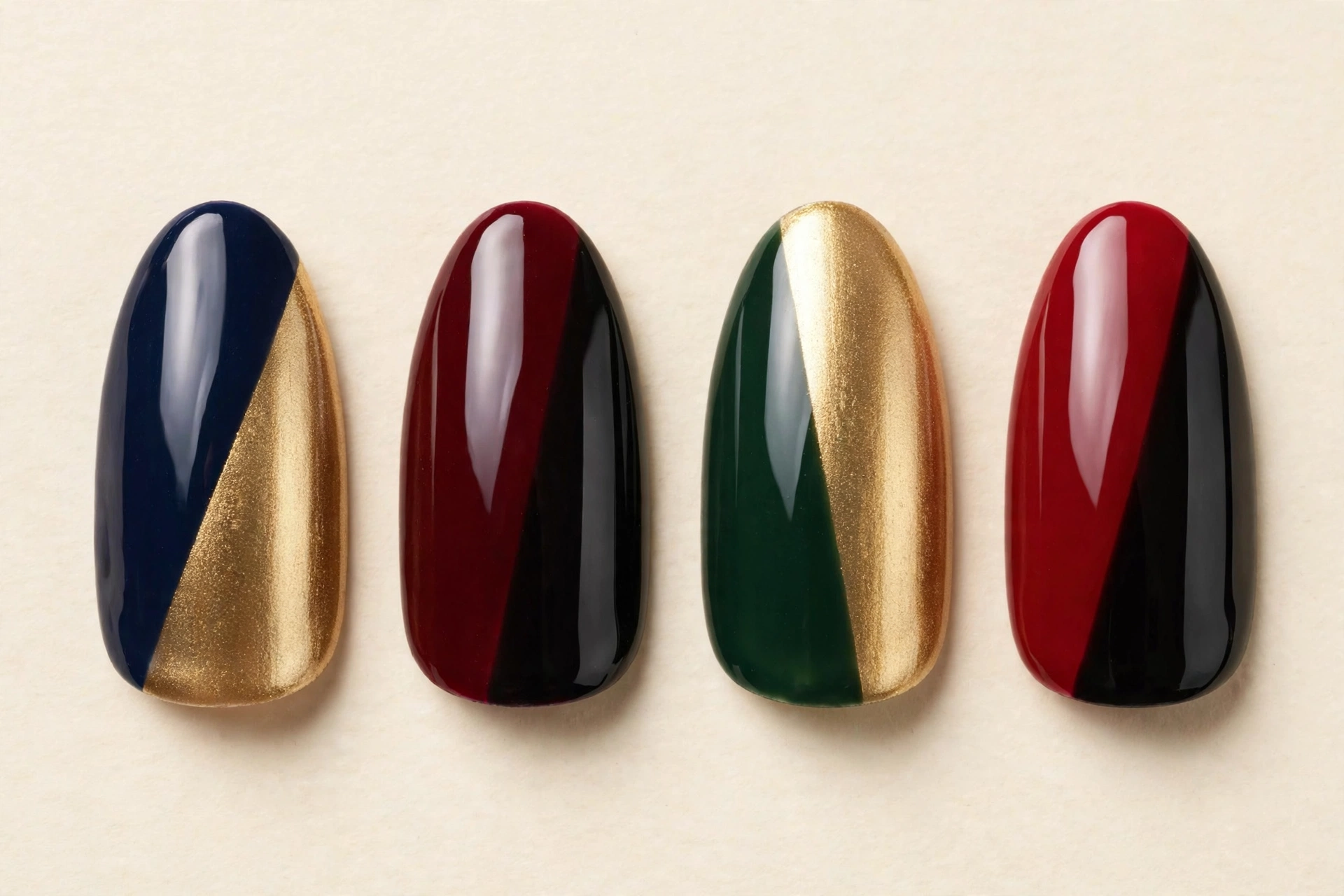
11. Burgundy & Onyx — #6E2233 + #171114
Dark wine red against true black — moody, rich and unapologetic. Wear burgundy as the dominant shade with onyx accent nails, or paint the tips onyx over a burgundy base for a dark French. Medium to deep skin tones carry the depth beautifully; fair skin gets a gothic-romantic look that works best with almond or coffin shapes. This is the pairing for fall nights, concerts and winter formals. Against Navy & Metallic Gold it is warmer and heavier, trading polish for atmosphere. If you want to push the two-tone idea further and wear a different shade on every finger, our Mismatched Nail Colors post charts twelve combos that actually work.
12. Cherry & Black — #8E1F2F + #14100E
Bright classic cherry red with a deep black — the boldest pairing in the chart. Alternate the colors nail to nail for maximum graphic impact, or keep cherry dominant with black on the ring fingers to stay closer to classic. This duo flatters every skin tone because cherry red is a near-universal shade, and the black keeps it from reading retro. It’s a party, birthday-dinner and night-out manicure, and it photographs dramatically. Compared with Burgundy & Onyx it is brighter and louder — where that pairing whispers, this one talks. Keep the shape tidy: this combo on chipped or ragged nails loses its power fast.
Shade inspiration palettes are a starting point — actual polish and gel colors vary by brand and salon, so always compare a swatch in natural light before committing.
How to Style Two-Tone Combos
Two-tone nails are already doing the styling work, so keep everything else calm. Let the pairing set the tone: with soft duos like Blush & Espresso or Cream & Caramel, wear them with tonal outfits — creams, camels, soft pinks — and delicate gold jewelry. With the deep duos (Navy & Gold, Burgundy & Onyx, Cherry & Black), the manicure becomes the accessory: dark denim, black blazers, leather and simple silver or gold pieces all let the nails lead. One practical rule: match your outfit’s undertone to the manicure’s undertone. A warm terracotta pairing fights a cool grey outfit; a navy-and-gold set fights nothing but looks best next to navy, white, grey and black.
Application & Longevity Tips
- Map the layout before you paint. Decide which nails get which shade and mark it on paper — with alternating layouts it’s easy to paint two same-shade neighbors by accident.
- Use a thin brush or striping tape for splits. A diagonal half-and-half needs a crisp line. Nail vinyls or striping tape give a cleaner edge than a freehand brush; peel the tape while the second color is still slightly wet.
- Top coat is non-negotiable. Two colors mean two chances for tip wear. A glossy top coat over the full design seals both shades and makes light and dark tones read as one manicure.
- Gel lasts longer for high-contrast duos. Dark-and-light pairings show chips more obviously than a single dark shade. If you want a two-tone set to survive two weeks, gel is the safer choice; regular polish holds about a week with careful top-coat maintenance.
- Removal tip for dark pairings. Burgundy & Onyx and Cherry & Black can stain the nail plate. Double up on base coat and give cuticles a little oil before you start — it makes the dark pigments lift off cleanly later.
Polish & Gel Picks
- A milky blush-pink creme with soft coverage (matches the Blush half of pairing 1)
- A deep espresso-brown creme with neutral undertones (matches the Espresso half of pairing 1)
- A warm cream-white creme, opaque in two coats (matches the Cream halves of pairings 2 and 7)
- A mid caramel-brown creme with golden warmth (matches the Caramel half of pairing 2)
- A smoky dove-grey creme (matches the Dove Grey half of pairing 3)
- A muted sage-green creme (matches the Sage half of pairing 4)
- A burnt terracotta creme (matches the Terracotta half of pairing 5)
- A rich chocolate-brown creme (matches the Chocolate half of pairing 6)
- A deep jewel-teal creme (matches the Teal half of pairing 7)
- A classic navy creme plus a true metallic gold foil polish (matches pairing 10)
- A dark wine-burgundy creme and a true black creme (matches pairing 11)
Frequently Asked Questions
What are the best two-tone nail combos for beginners?
Start with a light neutral and a mid-depth shade, like Cream & Caramel or Blush & Espresso, worn in an alternating layout — one shade per nail. Alternating is the easiest two-tone technique because it needs no tape, no steady line work and no salon visit. Save the diagonal half-and-half designs for once you’re comfortable with top coat and clean-up, or book a tech for the first one.
Which two-tone nail combos suit short nails?
Light-to-mid pairings flatter short nails best: Dove Grey & White, Cream & Caramel and Sage & Cream keep the nail bed looking open. Very dark duos (Cherry & Black, Burgundy & Onyx) can visually shorten the nail, so if you love them on short nails, wear the dark shade as an accent and keep the lighter tone dominant. Squoval and short-almond shapes handle two-tone layouts better than very square tips.
Do two-tone nails work for the office?
Yes, if you pick the right pairing. Soft duos like Blush & Espresso, Cream & Caramel and Dove Grey & White read as polished and neutral in a professional setting. Save the high-contrast pairings — Cherry & Black, Navy & Gold, Golden Hour & Midnight — for evenings and weekends, or wear them with the loud shade as a single accent nail if your workplace dress code is conservative.
How do I choose which shade goes on which nail?
Put the lighter shade on the middle fingers and the darker shade on the outer fingers (thumb, index, pinky) — this frames the hand and draws the eye inward, which is the most flattering default layout. For a single accent nail, the ring finger is the classic choice. If one of your two shades is metallic or shimmer, give it the accent role; shimmer across all ten nails is usually too much.