
Caramel nails are the fall manicure that never misses — warm, golden-brown tones that look rich in person and even richer in photos. This chart breaks down twelve caramel nail shades, from pale butterscotch to deep burnt caramel, with hex codes, skin-tone notes, and the finish advice that keeps each one from looking flat.
Caramel nails work because they sit in the sweet spot between nude and statement. They are colorful enough to read as intentional, warm enough to flatter nearly every skin tone, and neutral enough to pair with whatever you are wearing. A true nude can disappear on deeper skin tones and wash out fair ones, but caramel has pigment and warmth, so it shows up beautifully on all ten fingers regardless of your undertone. That is why this palette keeps resurfacing every fall: it is the brown-nail trend’s most wearable branch, familiar enough for the office and pretty enough for a night out.
If you have never worn a warm brown nail, do not start with Deep Caramel on all ten. Try Salted Caramel or Caramel Drizzle first — mid-tones that read as “polished neutral” rather than “bold brown.” Wear time matters here too: caramel creams show tip wear more than dark shades do, so your first test run tells you honestly whether you prefer a glossy crème, a sheer wash, or a shimmer finish before you commit to the full set.
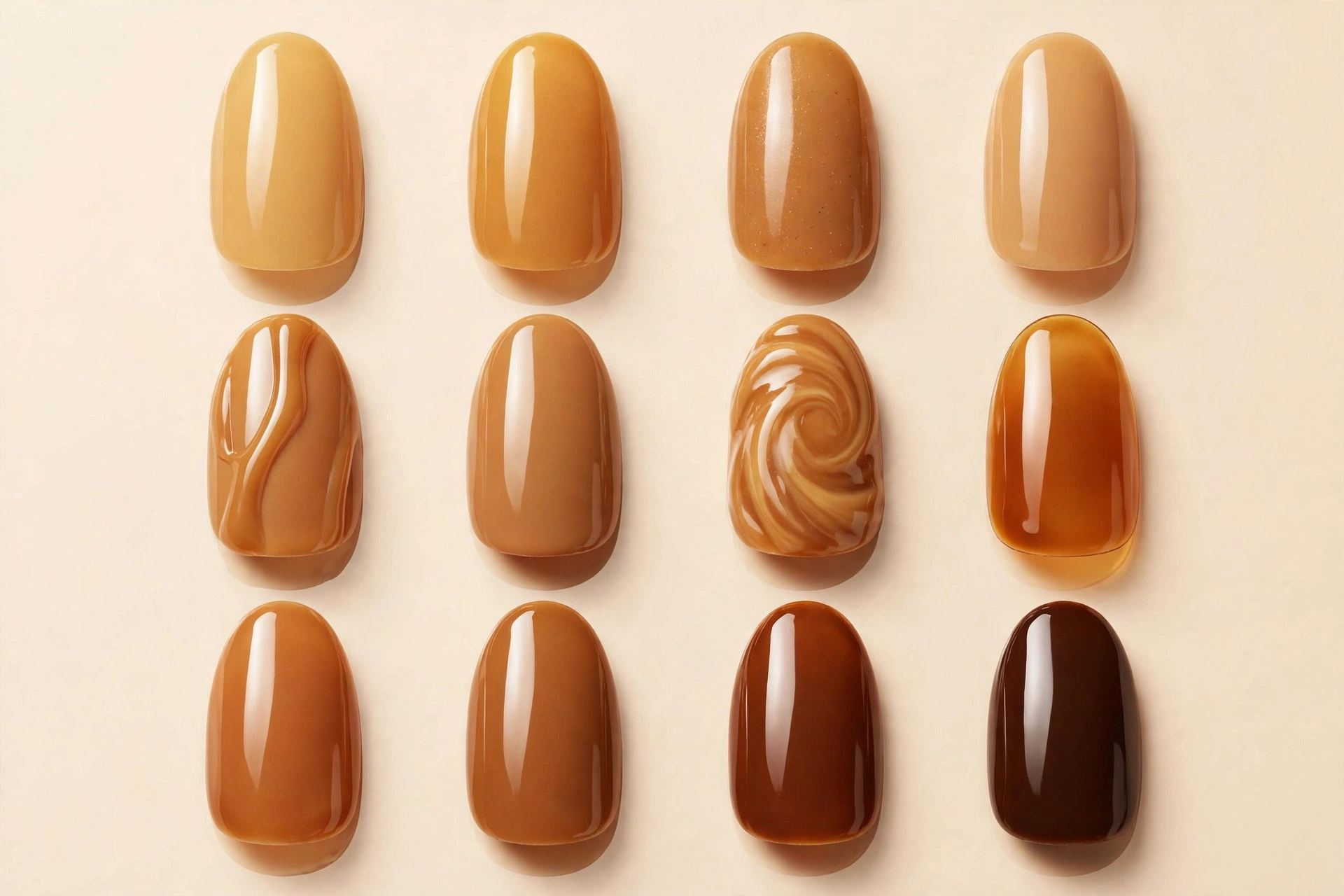
How to use this palette
- Screenshot this post and bring it to your appointment — pointing at a swatch is faster than describing “a warm brown, not too dark” from memory.
- Pick your depth by skin tone before your finish: fair skin pops against mid-tone caramels like Salted Caramel, medium skin glows in Golden Caramel and Amber Caramel, and deep skin carries Deep Caramel and Burnt Caramel with zero effort.
- Choose crème for a modern, clean look; a sheer wash makes caramel feel softer and more natural; shimmer or a glassy top coat adds the glow that makes these tones photograph so well, as our glazed donut nail finishes chart shows.
- Two thin coats beat one thick coat with every shade on this chart — caramel creams can streak if applied heavily, especially the lighter tones like Butterscotch and Light Caramel.
- Always seal with top coat, even in gel: the golden undertones in caramel shades can look muddy without a clear seal, and top coat keeps the warmth vivid for the full wear cycle.
One decision changes everything about how caramel nails wear: gel or regular polish. Gel is the practical default if you want two to three weeks out of a caramel manicure — the color stays even, the gloss holds, and the lighter shades are less likely to stain at the tips. Regular polish gives you about five to seven days, which suits anyone who changes colors weekly; just reapply top coat every couple of days, since caramel’s warmth fades visibly once the surface starts to dull.
Caramel nails: 12 golden-brown shades, charted
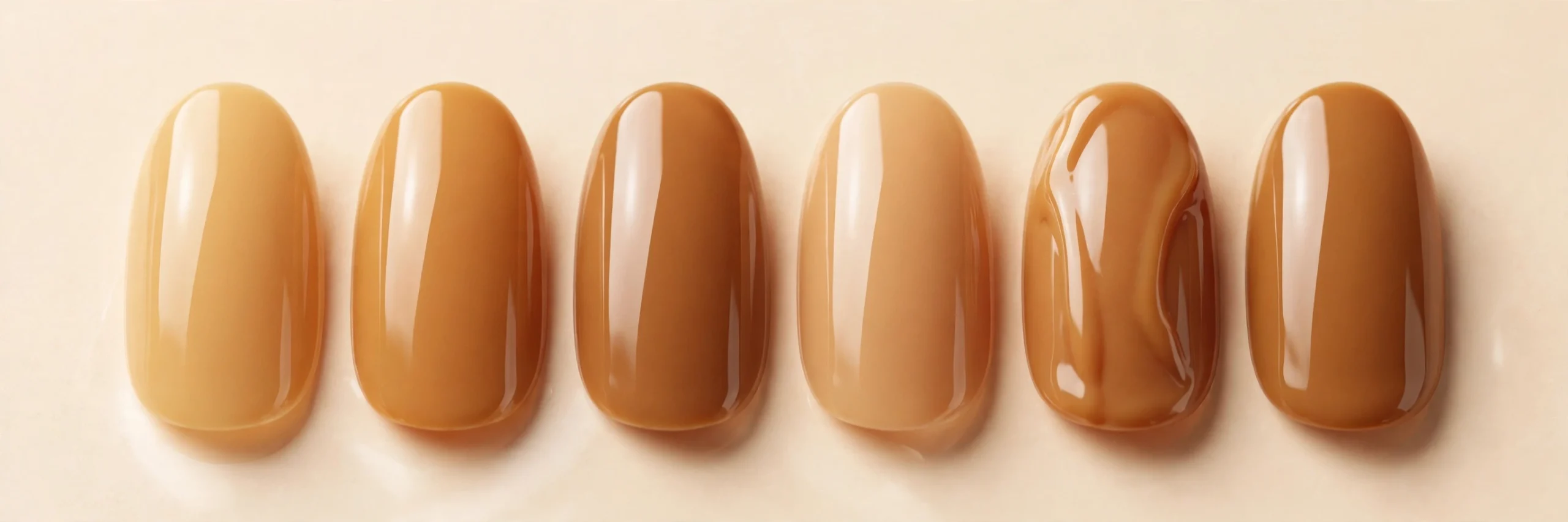
Light golden caramels — #D9A05B
The lightest end of the chart: sunlit golds and pale butterscotch tones that read almost like a warm nude. These are the entry-point shades — they flatter fair and light skin beautifully, giving warmth without heaviness, and they work as an elegant neutral on medium skin. On deep skin, wear Light Caramel as a sheer wash or a base for nail art rather than a full-coverage crème, so it reads as a deliberate light accent rather than a shade that disappears.
Comparing the light three: Golden Caramel is the most balanced gold here — warm but not orange, which is why it suits neutral undertones so well. Butterscotch runs slightly more yellow and buttery, a lovely pick for warm undertones and anyone who finds Golden Caramel a touch flat. Light Caramel is the palest of the group, closest to a true nude; it is forgiving for at-home application since uneven edges barely show, but it needs a careful top coat to keep from looking chalky by day four.
The three: Golden Caramel #D9A05B, Butterscotch #D8A75C, Light Caramel #E0B878
Polish pick: a buttery caramel crème polish.
Gel pick: a golden caramel gel with a high-shine top coat.
Classic mid-tone caramels — #C68B4A
The heart of the chart: the shades most people picture when they hear “caramel nails.” These mid-tones are the most versatile group — Salted Caramel and Caramel Drizzle flatter fair, medium, and deep skin with almost no effort, because the balanced warmth adapts to the hand wearing it. If you are buying exactly one caramel polish, it should come from this group.
Salted Caramel is the workhorse: a true mid caramel with just enough depth to read as color, forgiving for at-home application and office-safe in any dress code. Caramel Drizzle is a touch lighter and warmer, with a honeyed quality that looks especially good on medium and olive skin tones. Caramel Apple runs the most golden of the three, almost tipping toward a rich gold — it is the pick for anyone who wants their caramel to glow rather than smolder, and it pairs beautifully with gold jewelry.
The three: Salted Caramel #C68B4A, Caramel Drizzle #C79A5B, Caramel Apple #D9A44B
Polish pick: a classic salted-caramel crème polish.
Gel pick: a warm caramel gel finished with a glassy top coat.
Warm amber caramels — #BE8F52
The glow end of the chart: ambers and spiced caramels with extra warmth and depth. These shades suit medium and deep skin tones effortlessly — the amber undertones harmonize with golden and olive undertones — and on fair skin they make a bold, intentional statement, especially in fall and winter wardrobes. If your undertone runs warm, this group will look like it was mixed for you.
Dulce de Leche is the softest of the three, a milky caramel with a creamy, almost latte-like warmth; it is the most forgiving for imperfect application and the best pick for a natural-looking caramel. Caramel Swirl sits right in the middle — warm, glossy, and dimensional, the shade that photographs best under warm indoor light. Amber Caramel is the richest, with a deeper amber pull that edges toward jewel territory; it is the most dramatic of the group and the one to choose when you want caramel that reads as a statement.
The three: Dulce de Leche #BE8F52, Caramel Swirl #C99554, Amber Caramel #CB9242
Polish pick: an amber-toned caramel crème polish.
Gel pick: a warm caramel gel with a sheer amber shimmer layer.
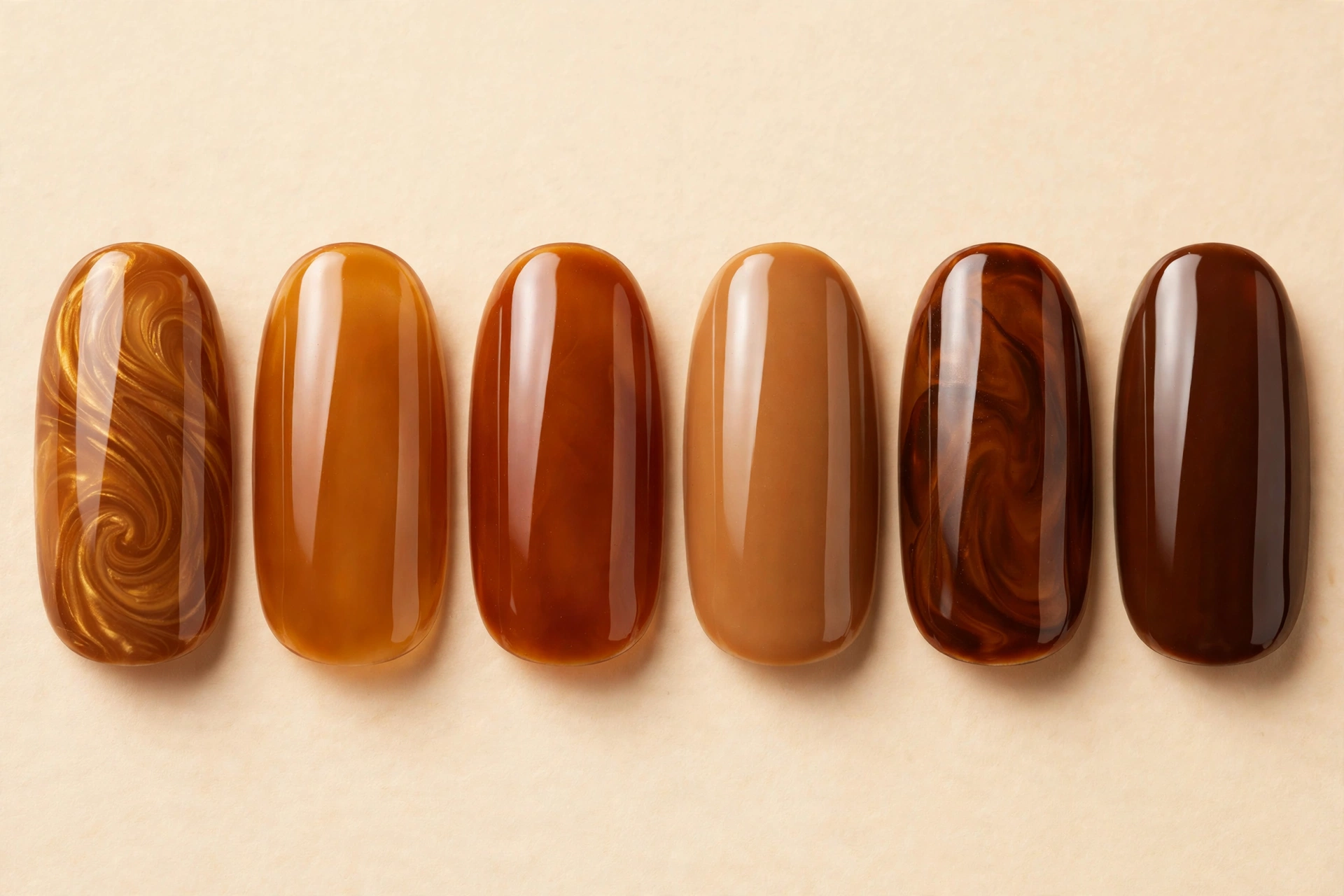
Deep dark caramels — #8A5526
The moody end of the chart: toffee, burnt, and deep caramels that behave like the brown-nail trend’s boldest branch. These shades are stunning on medium and deep skin, where the depth reads as rich rather than heavy, and on fair skin they make a high-contrast statement that works beautifully with fall layers and darker lipsticks. If the lighter caramels felt too safe, start here.
Toffee Caramel is the softest entry into the dark group — still clearly caramel rather than brown, with a warm pull that keeps it friendly. Burnt Caramel goes deeper and smokier, the shade that reads most “fall” on the whole chart; it suits long almond nails especially well, where the length shows off the color’s dimension. Deep Caramel is the boldest pick, a near-espresso caramel that flatters deep skin tones with almost no effort and gives fair skin a striking editorial contrast. Like all dark shades, it demands neat application — clean up the cuticle line, because every uneven edge shows against the deep color.
The three: Toffee Caramel #B07A38, Burnt Caramel #9A5F28, Deep Caramel #8A5526
Polish pick: a rich toffee-brown crème polish.
Gel pick: a deep caramel gel with a glossy seal.
Styling caramel nails for fall
Caramel nails earn their place in a fall wardrobe because they coordinate with the season’s actual color story — camel coats, cognac boots, gold jewelry, warm knits. The styling rule is simple: let the nails echo one warm tone you are already wearing. Salted Caramel against a camel sweater reads as deliberate and pulled-together; Burnt Caramel with cognac leather boots does the same work without trying.
For nail shape, almond and oval flatter caramel shades the most, because the elongated shape shows off the color’s warmth from base to tip. Short squoval nails suit the lighter caramels — Butterscotch and Light Caramel on short nails read as a fresh, modern neutral. If you wear your nails long, the deep group rewards you: Deep Caramel and Burnt Caramel on long almond nails look expensive with almost no extra effort.
Jewelry pairing is straightforward. Gold jewelry is caramel’s natural partner — the warm metals harmonize, which is why Caramel Apple and Amber Caramel look so good with gold rings. Silver works too, especially with the lighter group, where the cool metal creates a nice contrast against the warm polish. If you are planning a caramel ombré or a gradient fade between two shades on this chart, our ombre nail color combinations chart has pairing logic that applies directly to caramel fades.
One styling move worth trying: a single accent nail in Amber Caramel against nine nails of Salted Caramel. The tonal shift is subtle in daylight and catches the eye in photos, and it is the easiest way to wear a bolder shade without committing all ten fingers to it.
When to wear caramel nails
Caramel nails are an everyday shade with occasion range, which is rare. For the office, Salted Caramel, Caramel Drizzle, and Dulce de Leche are firmly in safe territory — warm, polished, and professional in any dress code. They read as intentional without drawing attention in a meeting, and they photograph well on video calls, where harsh webcam light tends to flatten cooler shades. If your workplace leans conservative, the lighter and mid-tone groups are your answer; save the deep group for after hours.
For evenings and dates, step one group deeper than your daytime shade. Amber Caramel and Toffee Caramel have a candlelight glow that flatters in warm restaurant lighting, and a glossy top coat makes them look lit from within. Caramel nails are a strong date-night choice — warm, inviting color that looks good holding a wine glass — and if you want more ideas in that lane, our date night nail colors chart covers the full romantic palette.
Fall is caramel’s home season, obviously — but these shades travel well into winter too. Burnt Caramel and Deep Caramel pair naturally with holiday dressing, and the whole chart works for Thanksgiving-week manicures where you want something seasonal that is not a costume color. Spring and summer are not off-limits either: Light Caramel and Golden Caramel read as sunlit neutrals in warmer months, especially on tanned skin.
Finish, application, and longevity tips
Finish choice changes how each caramel shade reads. A crème finish is the modern default — clean, even, and true to the swatch. A sheer wash (one thin coat or a jelly formula) makes caramel feel softer and more natural, and it is the best way to wear the lightest shades on deeper skin. Shimmer adds dimension: a fine golden shimmer over Salted Caramel or Amber Caramel catches light beautifully and hides minor application flaws. Matte is the wildcard — matte caramel looks velvety and fashion-forward, but it mutes the warmth that makes these shades special, so try it on one accent nail before committing all ten.
Application order matters with caramel creams. Start with a ridge-filling base coat, especially for the lighter shades — Butterscotch and Light Caramel show nail ridges more than darker colors do. Apply two thin coats, letting the first dry fully; caramel’s golden pigments can drag and streak if the second coat goes on too soon. Clean the cuticle line with a small brush before top coat, because the warm tones make even tiny smudges visible against skin.
For longevity, gel is the clear winner with this palette: two to three weeks of even, glossy wear, with the lighter shades holding their warmth the whole time. With regular polish, expect five to seven days; refresh the top coat around day three, since caramel’s golden undertones are the first thing to fade when the surface dulls. Cuticle oil nightly is non-negotiable — dry cuticles against a warm caramel nail draw the eye straight to the ragged edge, and oiled cuticles make the whole manicure read as fresh for days longer. One warning specific to the light group: Butterscotch and Light Caramel can stain slightly at the tips from things like turmeric or self-tanner, so a good base coat is doing real protective work here, not just smoothing.
A note on color matching
Screens shift warm tones, so treat this chart as inspiration rather than an exact product match. Compare any bottle against this chart in daylight to find your closest shade.
Frequently asked questions
What skin tone do caramel nails suit?
Nearly all of them. Fair skin pops against the mid-tones like Salted Caramel; medium and olive skin glow in Golden Caramel, Caramel Drizzle, and the amber group; deep skin carries the whole chart, with Deep Caramel and Burnt Caramel looking especially rich. If you are unsure, start with a mid-tone — they are the most forgiving across undertones.
Are caramel nails good for the office?
Yes — the lighter and mid-tone caramels are firmly office-friendly. Salted Caramel, Caramel Drizzle, and Dulce de Leche read as polished neutrals in any dress code. If you want more work-safe options, our office-friendly nail colors chart covers the full range of subtle shades.
Should I choose gel or regular polish for caramel nails?
Gel if you want two to three weeks of glossy, even wear — caramel’s warmth holds beautifully under a gel seal. Regular polish if you change colors weekly; plan on five to seven days and refresh the top coat mid-week to keep the golden tones vivid.
How do I stop light caramel shades from looking streaky?
Two thin coats with full dry time between them, over a ridge-filling base coat. The light shades — Butterscotch, Golden Caramel, Light Caramel — have less pigment to hide streaks, so patience in application matters more than brand or formula. A glassy top coat at the end evens out any remaining texture.