
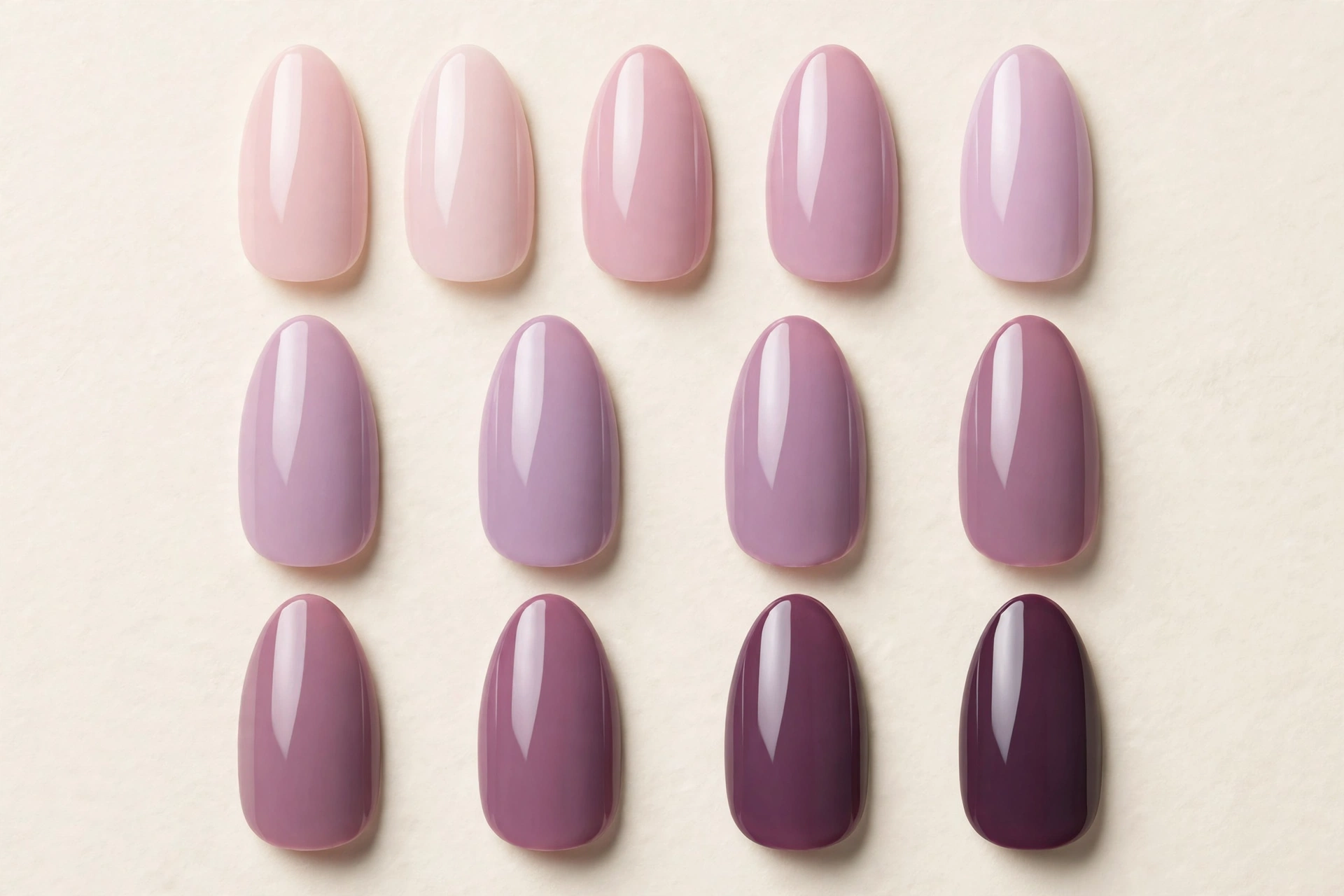
Foxglove pink nails are winter’s answer to the year’s loud pinks — soft, dusty, and just cool enough to feel seasonal. Named for the tall bell-shaped flowers that bloom in muted rose, lilac and mauve, this palette runs from pale blush-lilac to deep smoky mauve, and every shade in between carries that same powdered, frosty softness. Below, twelve shades are charted from lightest to darkest, each with a hex code, undertone notes and ideas for wearing it.
How to Use This Foxglove Pink Nails Palette
- Read the undertone before you commit. Every shade here sits somewhere between pink and lavender, but the balance shifts. The light end (shades 1–3) leans pink and reads warm against cool light; the middle (shades 4–7) is the true pink-lavender blend; the deep end (shades 8–12) leans plum and reads cool and moody. If your wardrobe is mostly black, grey and navy, start mid-chart or deeper. If you live in creams and camel, the light end will sit more naturally with your clothes.
- Compare swatches against your skin in daylight. Dusty pinks can look wildly different under salon LEDs — a shade that looks grey-purple under fluorescents often blooms back to rose by a window. Take a photo of the swatch strip on your own hand before you choose; the camera is more honest than salon lighting.
- Let the depth pick the nail shape. The palest shades (Frosted Foxglove, Petal Mist) look clean on short squoval nails, where their softness reads as intentional. The deeper mauves (Foxglove Velvet and darker) need a little length — almond or oval — so their depth shows as color rather than reading as flat and dark from a distance.
- Talk to your nail tech with a swatch, not a color name. “Dusty pink-lavender” could describe half the chart. Save the exact shade from this chart and show the photo — most techs will match the hex or mix toward it, and you’ll skip the whole game of verbal telephone.
- Decide on finish before polish. Nearly every shade here is charted in a glossy creme finish, but the palette transforms in other textures. A shimmer topper over the light shades gives a frosty winter effect; the deep shades in a satin or velvet finish turn genuinely moody. If you love pearly finishes, our Glazed Donut Nail Colors palette shows how chrome and pearl toppers change pale shades like these.
- One palette, two manicures. The light end and the deep end of this chart are far enough apart to read as different colors, which makes the palette ideal for a mix-and-match: wear shade 2 on most nails with shade 9 as the accent, or do a light-to-dark ombré across the hand using any five consecutive shades.
1. Frosted Foxglove — #E6CCD9
Frosted Foxglove is the palest shade in the chart — a blush-lilac with a cool pink undertone and a glossy creme finish. It flatters fair skin especially well, where it reads as a soft wash of color rather than disappearing, and it gives light-medium skin a delicate contrast. Wear it to daytime winter events, office parties and anywhere you want pink nails without committing to pink. It is the most neutral-adjacent shade here and the safest entry point into the palette.
2. Petal Mist — #DFBACB
A step deeper and warmer: Petal Mist is a soft blush pink with the faintest lavender cast, still firmly in creme finish. This is the shade for fair to medium skin tones — it sits between “barely there” and “clearly pink,” which makes it the most versatile work-appropriate shade in the chart. Try it for winter weddings as a guest, holiday brunches, or any week when you need a manicure that goes with everything you own. Against Frosted Foxglove it is noticeably pinker and about half a shade deeper, trading the lilac coolness for rose warmth.
3. Dawn Foxglove — #D7A8BE
The first true pink-lavender blend: Dawn Foxglove balances pink and lilac evenly, with a slightly dusty quality that keeps it from reading sugary. It flatters medium skin beautifully — the lavender in it harmonizes with cool undertones, while the pink keeps it from looking grey. This is a lovely everyday winter shade: pretty enough to notice, muted enough for the office. Next to Petal Mist it is cooler and deeper, with the lavender finally overtaking the rose.
4. Wild Foxglove — #CB94AE
Named for the flower at its most characteristic coloring, Wild Foxglove is a mid dusty rose-lavender — the shade most people would point to as “the” foxglove pink. The undertone is balanced, the finish a glossy creme, and it suits an unusually wide range of skin tones, from light-medium through deep, because its dustiness keeps it from overpowering anyone. Wear it to dinner dates, holiday parties and winter evenings out. Compared with Dawn Foxglove, it is a full shade deeper and richer, with more saturation and a touch more pink than lilac.
5. Foxglove Bloom — #BC7FA0
Richer and rosier: Foxglove Bloom pushes the pink side of the blend with a deep rose-lavender tone that reads feminine without being sweet. It is a strong pick for medium and deep skin, where its depth shows up clearly, and it gives fair skin a deliberate, romantic contrast. This is an evening shade — holiday dinners, cocktail hours, New Year’s Eve plans that don’t require glitter. If your taste runs dustier than this, our Mauve Nails palette charts the greyed-down end of the pink family in twelve more shades. Against Wild Foxglove it is deeper and warmer, trading some of the lilac coolness for rose richness.
6. Mauve Heather — #A96F93
The midpoint of the chart and its most wearable deep-dusty shade: Mauve Heather is a true dusty mauve-pink, muted but unmistakably colored, in glossy creme. It flatters every skin tone — light skin gets an elegant contrast, medium and deep skin get a tonal, sophisticated color. It is office-safe, holiday-ready and the one shade in the chart that could carry you from November through February without a change. Next to Foxglove Bloom it is deeper and cooler, with the greyed “heather” quality that gives it its name.
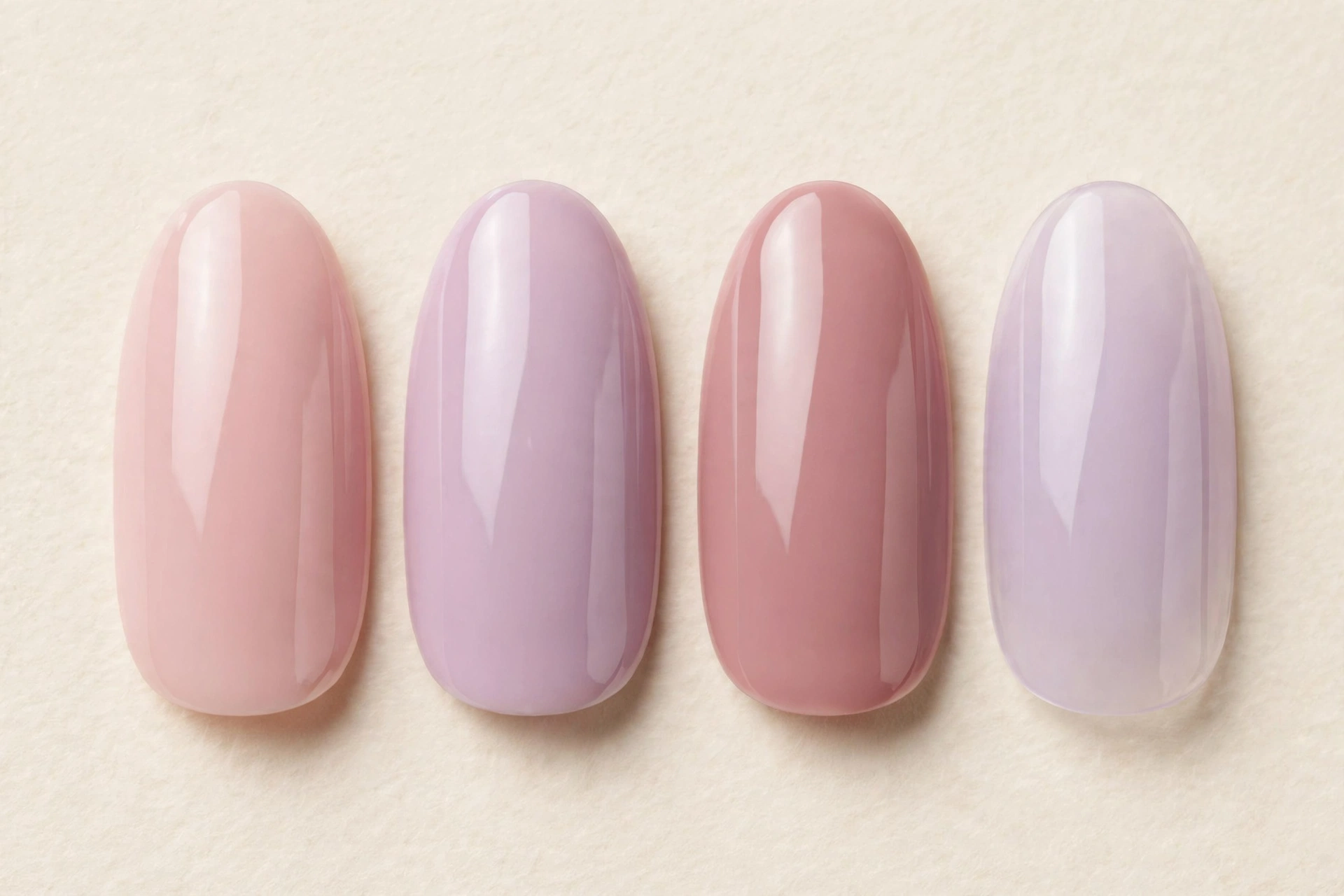
7. Smoky Lilac — #96728E
The first shade that reads more lilac than pink: Smoky Lilac is a muted grey-lavender with a soft pink undertone running underneath, and it is the coolest shade in the chart. It flatters cool undertones spectacularly and gives warm skin a deliberate, fashion-forward contrast. Try it as an accent nail against Dawn Foxglove for a cool-to-warm gradient, or wear it full-set with silver jewelry. Compared with Mauve Heather it is cooler and more greyed — the pink recedes and the lavender takes over.
8. Dusk Bell — #845D7D
A deeper, moodier take on the pink-lavender blend: Dusk Bell is a dusky plum-rose, rich but still soft, like the flower photographed at twilight. It suits medium to deep skin especially well, where it reads as a sophisticated tonal color, and it gives fair skin an intentional dark-rose statement. This is a dinner-party and evening-event shade — elegant without trying. Against Smoky Lilac it is deeper, pinker and warmer, trading the grey coolness for plummy richness.
9. Foxglove Velvet — #6F4A66
The name says it: Foxglove Velvet is a rich mauve-plum with a deep, soft saturation that looks expensive in a glossy creme finish. It is made for winter evenings — holiday parties, December weddings, anywhere the lighting is low and the dress code is up. On deep skin it is a seamless, glowing dark; on light and medium skin it is high-drama but still wearable because the mauve keeps it feminine. Next to Dusk Bell it is a full step darker and more plum, with the pink nearly absorbed into the purple.
10. Thimble Wine — #5B3A52
A deep berry-mauve, dark enough to read as a wine shade but soft enough to stay in the pink family — named for the foxglove’s old folk name, fairy thimbles. Thimble Wine flatters deep skin as a rich tonal color and gives light skin a striking editorial contrast; it needs a little nail length to show its berry warmth rather than reading as plain dark. Wear it to formal winter events and evening occasions. Compared with Foxglove Velvet it is deeper and redder, with a wine undertone the lighter shade doesn’t have.
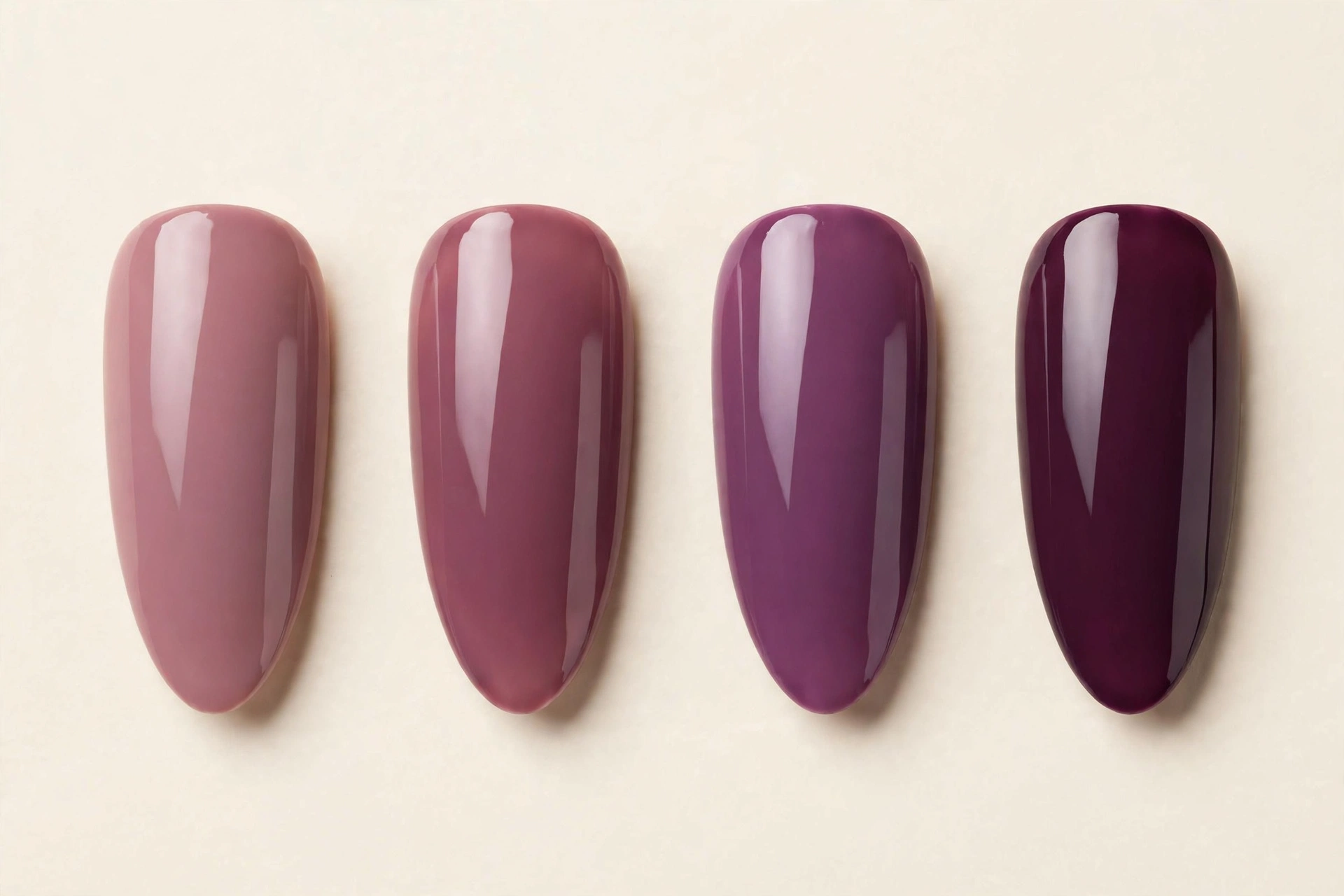
11. Winter Foxglove — #472A3F
Dark, smoky and unmistakably winter: Winter Foxglove is a deep plum-mauve that reads almost black indoors and reveals its purple-pink depth in natural light. It is the boldest wearable shade in the chart — dramatic on long almond nails, sophisticated on deep skin as a near-tonal dark, and a deliberate statement on fair skin. Save it for evening events, gallery openings and nights when the manicure should have presence. Against Thimble Wine it is darker and cooler, trading the berry warmth for smoky depth.
12. Midnight Bloom — #331F2E
The anchor of the palette: a near-black mauve with the faintest pink-purple warmth, like the darkest foxglove bloom held in shadow. Midnight Bloom is for long nails and short guest lists — formal winter events, New Year’s Eve, anywhere a manicure should whisper rather than announce. It flatters deep skin as an elegant dark and gives fair skin a sharp, editorial contrast. Keep the finish glossy; matte would swallow the subtle mauve undertone that separates it from plain dark polish. Next to Winter Foxglove it is one step darker and noticeably quieter, the still end of the loudest pink story.
How to Style Foxglove Pink Nails
Foxglove pink is a cool-leaning palette, so it pairs naturally with winter’s cool neutrals: charcoal, slate grey, navy, black and cream. Silver jewelry is the obvious match across the whole chart — it picks up the lavender in every shade — but don’t rule out rose gold with the pinker light end (shades 1–4), where the metals harmonize. For outfits, the palette loves texture: the dusty mid-tones sit beautifully against chunky knits, wool coats and suede, while the deep plums belong with velvet and leather. If you want a deliberate color contrast rather than a tonal look, icy blue is foxglove pink’s best partner — our Frosty Blue Nails palette charts twelve winter blues that sit across the color wheel from these shades and make a striking accent-nail pairing.
Best Occasions for Foxglove Pink Nails
This is a winter palette through and through. The light shades (1–4) carry daytime beautifully — office weeks, winter brunches, holiday shopping days — while the mid-chart mauves (5–7) are the versatile middle that works for both work and evening. The deep plums (8–12) are evening and event territory: holiday parties, December weddings, New Year’s Eve. If you’re attending a winter wedding — as a guest or in the bridal party — the soft pink-lavender tones photograph gently against winter florals and grey skies; our Winter Wedding Nails post charts eighteen more shades chosen specifically for cold-weather ceremonies. It’s also a natural Valentine’s-adjacent choice that doesn’t scream red: shades 3–5 give you the romance in a winter-appropriate register.
Application & Longevity Tips
- Dusty shades show streaks more than brights. The mid-chart mauves (5–7) are the most prone to visible brush strokes, so apply two thin coats rather than one thick one and let each coat level for a full minute.
- The pale end needs a ridge-filling base. Frosted Foxglove and Petal Mist are light enough to show every nail ridge — a ridge-filling base coat makes the difference between a clean wash of color and a streaky one.
- Deep shades stain. Thimble Wine and darker will tint the nail plate if worn for two weeks straight. Double up on base coat, and don’t skip cuticle oil during removal week — it helps lift staining.
- Cap the free edge. Pale pink-lavenders show tip wear faster than any other part of this palette; sealing the edge with each coat, including the top coat, buys you several extra days.
- Gel vs. regular: the light shades chip visibly at the tip in regular polish within a week — gel is worth it if you want Frosted Foxglove to survive two weeks. The deep plums hide wear far better and are perfectly fine in regular polish for seven to ten days.
Polish & Gel Picks
- A pale blush-lilac creme with cool pink undertones (matches Frosted Foxglove)
- A soft dusty rose-lavender creme (matches Wild Foxglove)
- A mid dusty mauve-pink creme (matches Mauve Heather)
- A muted grey-lavender creme with pink undertones (matches Smoky Lilac)
- A rich mauve-plum creme (matches Foxglove Velvet)
- A near-black plum-mauve creme with subtle warmth (matches Midnight Bloom)
Frequently Asked Questions
What color is foxglove pink?
Foxglove pink is a dusty pink-lavender — softer and cooler than true pink, warmer and pinker than true lavender. It’s named for foxglove flowers, which bloom in muted shades of rose, lilac and mauve with a characteristic powdered look. In nail shades, it covers the range from pale blush-lilac (like Frosted Foxglove, #E6CCD9) to deep smoky mauve (like Midnight Bloom, #331F2E), with the most recognizable “foxglove” tone sitting mid-chart around Wild Foxglove (#CB94AE).
Are pink-lavender nails good for winter?
Yes — they’re one of winter’s most natural pinks. Bright pinks can feel off-season once the light goes grey, but dusty pink-lavenders have a frosty, muted quality that matches winter clothing and winter light. The deeper end of the palette (Dusk Bell through Midnight Bloom) is especially seasonal, reading as moody and rich rather than summery, and the whole chart pairs effortlessly with the charcoal, navy and cream that dominate winter wardrobes.
Which foxglove pink shade suits my skin tone?
Fair skin: start at the light end (Frosted Foxglove, Petal Mist) for a soft wash, or go bold with the deep plums (Foxglove Velvet, Thimble Wine) for deliberate contrast — avoid the mid-chart mauves as a full set if they match your skin too closely and disappear. Medium skin: the whole chart works, with Dawn Foxglove and Wild Foxglove as the sweet spot. Deep skin: the mid-to-deep shades (Mauve Heather through Winter Foxglove) glow beautifully; the palest two work best as accent nails rather than full sets.
Can I wear foxglove pink nails to the office?
The light and mid-chart shades (1–7) are all office-appropriate — muted, professional, and polished without being loud. Petal Mist and Dawn Foxglove are the safest picks for conservative workplaces. The deep plums (9–12) read as evening and event shades, so save those for after hours unless your workplace is relaxed about dark manicures. If you’re unsure, Mauve Heather at shade 6 is the one shade that sits comfortably in both worlds.
Shade inspiration palettes are a starting point — actual polish and gel colors vary by brand and salon, so always compare a swatch in natural light before committing.