
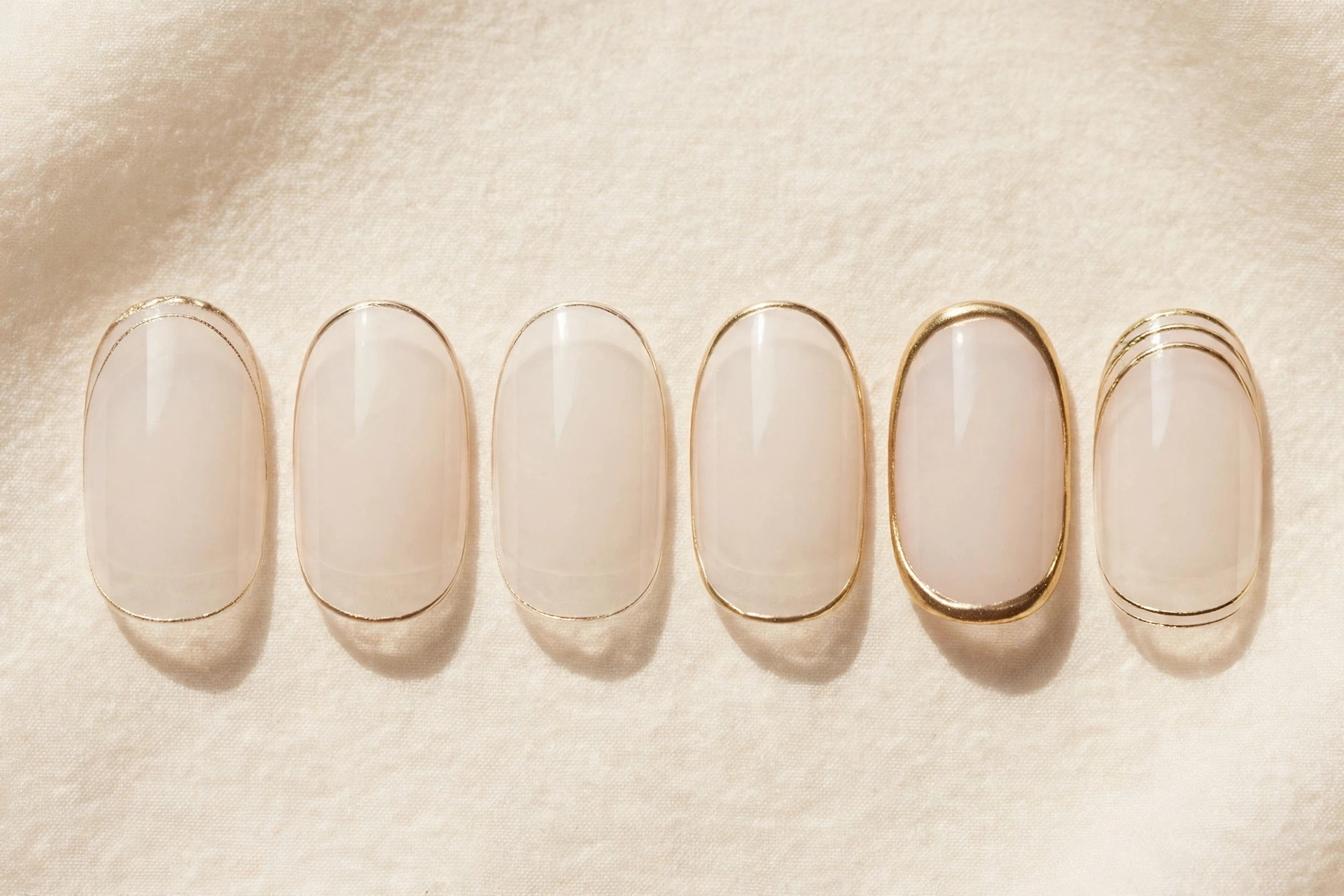
Golden French nails are the quietest way to wear gold on your hands. Instead of a solid metallic tip or a full gold nail, a thin gold line traces the curve of a classic French tip, so the look reads polished and expensive without shouting. For spring 2027, that restraint is exactly the point: sheer, skin-flattering bases, a clean smile line, and just enough shine to catch the light when you move your hands. This palette gives you six ways to do it, from barely-there champagne to a deeper antique gold that holds its own at evening events.
If you have ever loved the idea of a French manicure but found the classic white tip a little stark, the gold outline solves that problem neatly. White tips can look harsh against warm skin and a little flat in soft spring daylight. Gold, by contrast, warms the whole hand. It picks up the undertones in your skin, it pairs with the jewellery you already own, and it softens the contrast between the nail bed and the tip so the manicure looks intentional rather than stark. The six shades below are not six identical golds in different bottles. Each one changes the mood of the manicure: champagne is bridal and barely-there, classic yellow gold is the most versatile, rose gold leans romantic, and antique gold brings the drama for evenings out.
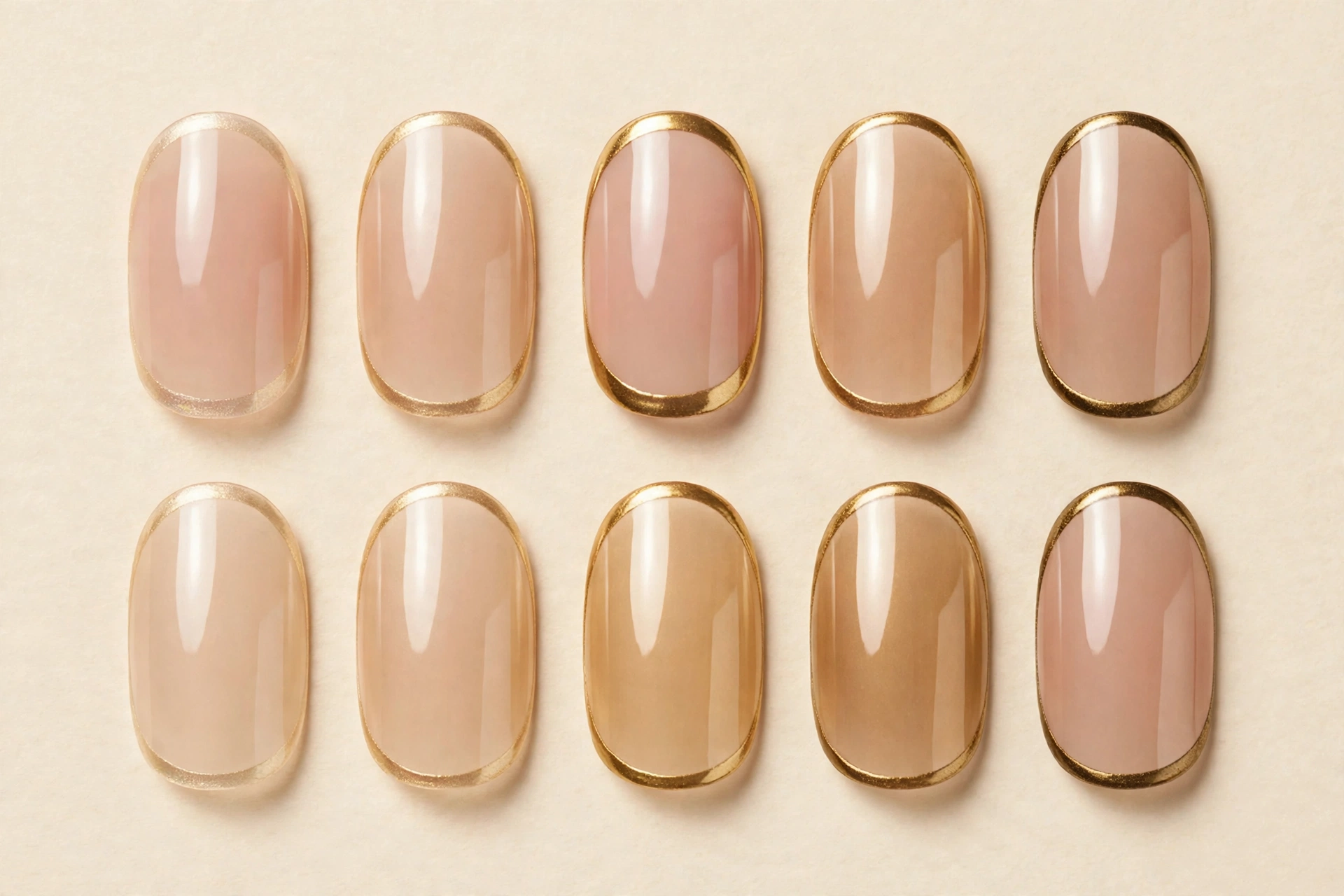
How to use this palette
- Start with a sheer base that is close to your natural nail-bed colour. The gold outline should be the star, not a rescue for a base that fights your skin tone.
- Keep the gold line thin, about the width of a fine liner brush. A thick gold band turns a French outline into a solid gold tip, which is a different look entirely.
- Match the gold to your jewellery most days. Yellow gold outlines sit happily with gold rings, while rose gold outlines pair better with rose-gold or mixed-metal pieces.
- Wear one shade across all ten nails for the cleanest result, or use the deeper shades as an accent on the ring fingers only.
- Always seal with a glossy top coat. Gold metallics look flat and chalky without shine, and a good top coat is what keeps the line from chipping at the free edge.
- If you are doing this at home, paint the base, let it dry fully, then draw the outline with a striping brush or a fine nail-art pen rather than the polish brush itself. Control matters more than speed here.
Golden French Nails: The 6 Shades
Each shade below is described the way it actually wears: its undertone, its finish, which skin tones it flatters most, where it works best, and how it compares with the others in the set. The hex codes are the closest digital match for the shade described, so you can hold them up against polishes you already own.
1. Pale Champagne Gold — #E8D5A8
Pale Champagne Gold is the softest gold in this palette, a light, creamy metallic with a warm yellow undertone and a fine, almost pearly shimmer rather than chunky glitter. On the nail it reads less like metal and more like light: the outline glows in daylight and nearly disappears in dim rooms, which makes it the most forgiving choice if you are new to gold French tips. It is the shade to reach for when you want the manicure to look expensive without anyone being able to say exactly why.
On fair and light skin, Champagne Gold blends beautifully because its lightness does not create a hard contrast against pale hands. It warms cool-toned fair skin without turning orange, and on warm-toned fair skin it simply looks like a brighter version of the natural nail. On medium skin it acts as a gentle highlight, outlining the tip without competing with the base, and on deep skin it offers a soft, luminous contrast that is elegant rather than dramatic. If your workplace leans conservative, this is the gold that passes every dress code while still feeling like a treat.
For occasions, Pale Champagne Gold is a natural for spring weddings, brunches, and daytime events, and it is the closest thing in this set to a bridal gold. Compared with Classic Yellow Gold below, it is quieter and cooler in effect, even though both are warm-toned; think of champagne as the morning version and classic gold as the afternoon one. Longevity is good because the fine shimmer hides tiny chips better than a flat metallic, but do cap the free edge with top coat, since pale metallics show tip wear first.
2. Classic Yellow Gold — #D4AF37
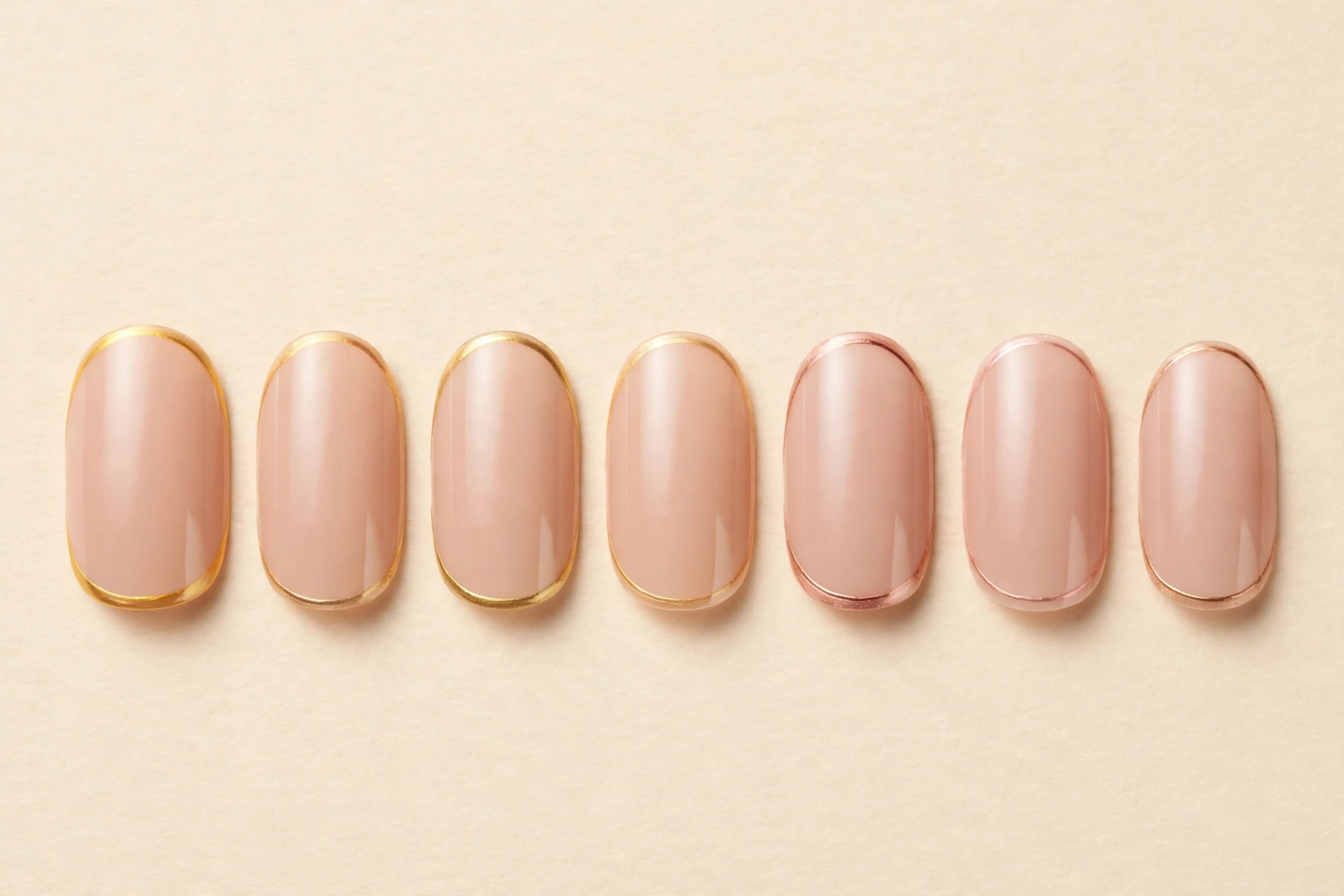
Classic Yellow Gold is the true, balanced gold most people picture when they hear the word: warm, sunny, and unmistakably metallic, with a smooth foil-like finish rather than glitter. It is the workhorse of this palette and the shade to choose if you only want one gold-outline French in your collection. It has enough presence to read as gold from across a room, but in a thin outline it never overwhelms the sheer base beneath it.
Skin-tone-wise, Classic Yellow Gold is the most universal shade here. On warm and olive skin it looks entirely natural, as though the gold were an extension of the skin’s own warmth. On neutral skin it adds a welcome touch of sunshine, and on cool skin it provides a deliberate contrast that feels stylish rather than clashing, especially when paired with a cool pink sheer base to balance the warmth. On deep skin, classic gold is striking in the best way: the contrast is clear and rich, and the outline looks like jewellery rather than polish.
This is the everyday gold, the one for work, weekends, dinners, and everything between. Compared with Pale Champagne Gold, it is bolder and more obviously metallic; compared with Deep Antique Gold, it is brighter and fresher, which is why it suits spring so well. For wear, yellow gold metallics can show scratches if you skip top coat, so a glossy seal and a top-coat refresh around day four will keep the line looking freshly painted for a full week or more.
3. Soft Rose Gold — #E0A899
Soft Rose Gold is the romantic of the set, a pink-leaning gold with a warm rose undertone and a satin metallic finish that sits between matte and high shine. It is less yellow than the other golds here, which gives the whole manicure a softer, rosier cast. If classic gold feels too sunny for you, or if your wardrobe and jewellery lean pink and blush, this is the shade that will feel like it was made for your hands.
On fair skin with pink undertones, Soft Rose Gold is especially flattering because it echoes the natural flush of the nail bed and makes hands look healthy and rested. On medium skin it reads as a warm blush-gold, pretty without being sweet, and on deep skin it offers a lovely muted contrast that is softer than yellow gold but still clearly metallic. Cool-toned skin generally loves rose gold, since the pink undertone harmonises rather than fights the skin, while warm-toned skin should look for a rose gold that leans more gold than pink to avoid the outline looking too coppery.
Rose gold outlines suit date nights, spring parties, and any occasion where you want the manicure to feel a little tender rather than purely polished. It pairs beautifully with a pale pink sheer base, and it is the best choice in this palette if you wear rose-gold jewellery daily. Next to Classic Yellow Gold, it is noticeably pinker and gentler; next to Honey Gold below, it is cooler and less amber. Rose metallics can fade slightly with heavy hand-washing, so gloves for cleaning and a top-coat refresh mid-week go a long way.
4. Deep Antique Gold — #B08D3E
Deep Antique Gold is the moodiest gold in the palette, a darkened, slightly bronze-leaning gold with a rich, burnished finish that looks almost like aged jewellery. It has less brightness than classic gold and more depth, so the outline reads as a deliberate design detail rather than a shimmer. This is the shade for evenings, and for anyone who finds bright gold a little too cheerful for their taste.
On medium and deep skin, Deep Antique Gold is superb: it sits close enough to the skin’s warmth to look sophisticated, while still standing out clearly against a sheer base. On olive skin it is particularly handsome, since the bronze undertone echoes olive warmth without turning green or muddy. On fair skin it creates the strongest contrast in this set, which can look dramatic and chic, but it is worth keeping the line extra thin on very pale hands so the outline frames the tip rather than dominating the whole nail.
Antique gold shines at evening weddings, dinners, and spring events that run into the night, and it is the best choice here if you wear vintage-style or bronze jewellery. Compared with Classic Yellow Gold, it is darker, quieter, and more grown-up; compared with Honey Gold, it is less amber and more bronze. Because the shade is dark, chips are more visible than on pale champagne, so a careful application and a thick glossy top coat matter. Done well, though, it is the longest-looking shade in the set, in the sense that it reads intentional for days.
5. Warm Honey Gold — #D9A441
Warm Honey Gold sits between classic gold and antique gold: a rich amber-gold with a warm, honeyed undertone and a smooth metallic finish that glows rather than glares. It is the sunniest shade after classic gold, but its amber depth makes it feel softer and more natural, like late-afternoon light. If you love gold but want something a touch less brassy than a pure yellow gold, honey is your shade.
On warm and golden skin tones, Honey Gold looks almost made to measure, blending with the skin’s warmth while still defining the tip clearly. On medium skin it is a beautiful everyday gold, warm enough to flatter but not so dark that it feels like an evening-only shade. On deep skin it glows warmly and pairs especially well with amber and tortoiseshell accessories, and on fair skin it adds a gentle warmth that can make pale hands look sun-kissed, particularly with a peach-tinted sheer base underneath.
Honey gold is a wonderful spring shade for outdoor events, garden parties, and holidays, where natural light brings out its amber depth. It also bridges the gap between the lighter golds and the deeper ones, so if you are torn between champagne and antique, honey is the comfortable middle. Against Classic Yellow Gold, honey is deeper and more amber; against Deep Antique Gold, it is brighter and fresher. Wear-wise it behaves like classic gold: seal it well, refresh the top coat mid-week, and it will carry a full seven to ten days without losing its glow.
6. Bright Foil Gold — #E6C200
Bright Foil Gold is the boldest shade in this palette, a vivid, high-shine gold with a clean yellow undertone and a true foil finish that reflects light like a mirror. Where champagne whispers and antique murmurs, foil gold speaks clearly. Used as a thin outline, though, it stays elegant: the brightness is confined to a fine line, so the manicure looks celebratory rather than flashy.
On deep skin, Bright Foil Gold is spectacular, the contrast is crisp and the shine reads as pure luxury. On medium and olive skin it is a confident, party-ready choice, and on fair skin it works best as a thin, precise line, where its brightness becomes a jewel-like detail rather than a broad block of colour. Cool-toned skin can absolutely wear foil gold; pairing it with a cool, milky sheer base keeps the overall effect balanced instead of letting the warmth run away with the look.
This is the celebration shade: birthdays, spring parties, and any event where you want your nails noticed. It is also the best accent shade in the set, perfect for outlining just the ring fingers while the other nails wear champagne or classic gold. Compared with every other shade here, foil gold is the brightest and most reflective, so it shows imperfections most readily; a smooth base, a steady hand, and a glassy top coat are non-negotiable. With that care, it is the shade that photographs best of all six, catching light in every picture.
How the golds compare at a glance
If you are choosing between shades, think about light first. Pale Champagne Gold and Soft Rose Gold are your daylight shades, soft and flattering in natural light. Classic Yellow Gold and Warm Honey Gold are your all-day shades, equally at home indoors and out. Deep Antique Gold and Bright Foil Gold are your evening and event shades, one burnished and one brilliant. Think about contrast second: the lighter the gold, the softer the outline looks against your skin, and the darker or brighter the gold, the more the outline becomes the design. There is no wrong answer here, only the amount of attention you want your nails to draw, and you can always wear a quieter gold on most nails with a bolder gold as an accent.
For readers who love French tips in general, a gold outline sits in a happy middle ground. It keeps the clean, lengthening shape of a French manicure while swapping the sometimes stark white tip for something warmer and more forgiving. If you have enjoyed pastel takes on the French tip, you will find the same gentle, spring-ready feeling here, only with metallic warmth instead of colour. Our guide to spring pastel French nail shades is a good next read if you want to compare the two approaches side by side before deciding which direction suits your spring wardrobe.
Styling golden French nails
Golden French nails are unusually easy to style because gold is already a neutral in most wardrobes. With denim and a white shirt, a champagne or classic gold outline looks clean and put-together without trying too hard. With spring dresses in sage, butter yellow, or soft blue, the gold outline adds warmth that stops the outfit feeling washed out. With evening wear, antique or foil gold picks up the jewellery and ties the whole look together, which is why this manicure is such a reliable wedding-guest choice.
Jewellery matching is simple: match the outline to the metal you wear most, and let the other metals be accents rather than competitors. If you wear mixed metals, classic yellow gold is the safest bridge, since it sits comfortably next to both silver and rose gold pieces. For rings, a gold outline makes even a simple band look intentional, and it flatters stacked rings because the nails echo the metal without competing with the stones. Keep other metallics in the outfit, such as a gold bag strap or gold shoes, to one or two pieces so the nails remain part of the look rather than one gold detail among many.
Nail shape matters too. A gold outline looks beautiful on almond and oval shapes, where the curved line follows the natural smile line of the nail, and it also works on squoval and short square nails, where a thin line keeps the French shape crisp. On very short nails, keep the line as thin as you can and the base as sheer as possible; the outline will still define the tip and make the nail look longer, which is one of the quiet advantages of this style over a solid gold tip.
Application tips for a clean gold outline
The difference between a gold French outline that looks salon-done and one that looks homemade is almost always preparation and patience. Start with clean, dry nails, push back the cuticles gently, and shape the free edge before you paint anything. Apply a ridge-filling base coat if your nails have ridges, since metallics show every bump underneath. Then apply your sheer base in one or two thin coats and let it dry completely; painting gold over a tacky base is how lines smudge and drag.
For the outline itself, a fine striping brush or a nail-art liner pen gives far more control than a standard polish brush. Load a small amount of gold, rest your painting hand on a steady surface, and draw the curve in two smooth strokes from each side toward the centre, rather than trying to complete the smile line in one pass. If you wobble, wait for the gold to dry and tidy the edge with a flat brush dipped in acetone, rather than wiping and starting over. Finish with a glossy top coat, capping the free edge, and let the manicure dry fully before reaching into bags or pockets, since gold metallics dent more easily than creams while still soft.
If you are booking this at a salon, bring a reference for the line thickness you want and say “thin gold outline” rather than just “gold French,” since salons often default to a thicker gold tip. Ask for a sheer base matched to your nail bed rather than a pink that is too opaque, and check the gold in natural light before the top coat goes on, because metallics can look quite different under salon lighting. A good technician will be happy to adjust the gold tone on one nail first so you can approve it.
For a bolder take on metallic French tips, the same thin-line technique works with other finishes too. If you like the structure of a French outline but want to explore beyond gold, our look at coloured French tip ideas shows how the same shape carries entirely different colours, which is useful if you ever want to pair a gold outline on some nails with a coloured tip on others.
Occasions for each gold
Spring is full of occasions that suit a gold outline, and matching the shade to the event takes the guesswork out of choosing. For work and everyday wear, Pale Champagne Gold and Classic Yellow Gold are the safest, most versatile picks. For weddings, whether you are the guest, the bridesmaid, or the bride, champagne is the classic choice, with classic gold close behind for outdoor ceremonies where the light is strong. For date nights and spring parties, Soft Rose Gold and Warm Honey Gold bring warmth and romance without feeling overdressed.
For evening events, Deep Antique Gold is the sophisticated pick, especially for dinners and formal gatherings, while Bright Foil Gold is the celebration pick for birthdays and parties where a little sparkle is exactly right. For holidays and travel, classic and honey gold travel best, since their mid-tone brightness hides minor wear and still looks polished in photographs. The beauty of the palette is that you do not need to commit to one shade for the whole season; you can wear champagne to work all week and switch to foil gold for Saturday night, using the same sheer base and simply changing the outline colour.
Longevity and care
Gold-outline French manicures last as well as any French manicure, provided the top coat does its job. On natural nails with regular polish, expect five to seven days of clean wear, stretching to ten days with a top-coat refresh around day four and gloves for cleaning. Gel versions last two to three weeks, and gold gel outlines hold their shine particularly well, since gel top coats stay glossier than regular top coats over time. The free edge is where wear shows first, so capping it during application and again during any top-coat refresh is the single most useful habit for this style.
Between manicures, cuticle oil keeps the base looking healthy and stops the sheer base from looking dry around the edges, which matters more with French styles than with opaque colours because the natural nail is visible. Avoid using your nails as tools, since prying and scraping chips gold lines faster than any other part of the manicure. When you remove the manicure, soak rather than peel, especially with gel, because peeling lifts layers of the natural nail and makes the next gold outline harder to paint smoothly.
If you love gold as a finish in its own right, not just as an outline, it is worth seeing how gold behaves across a whole nail. Our collection of gold leaf nail shades explores gilded finishes that go further than a thin line, which can help you decide whether you want to keep gold as an accent or let it take over the whole manicure for a special occasion.
Polish and gel picks
The following are plain polish and gel shade suggestions to ask for or look for, in the spirit of the six shades above. No links or prices are included here, so you can take these names to any brand you already trust.
- Pale champagne gold metallic polish or gel, fine shimmer finish, for the Pale Champagne Gold outline.
- Classic yellow gold foil-effect polish or gel, smooth metallic finish, for the Classic Yellow Gold outline.
- Soft rose gold metallic polish or gel, satin finish, for the Soft Rose Gold outline.
- Deep antique gold or bronze-gold metallic polish or gel, burnished finish, for the Deep Antique Gold outline.
- Warm honey gold or amber-gold metallic polish or gel, smooth finish, for the Warm Honey Gold outline.
- Bright foil gold polish or gel, high-shine mirror finish, for the Bright Foil Gold outline.
- A sheer nude-pink or milky nude base polish or gel, close to your natural nail-bed colour, to wear under any of the six outlines.
- A fine striping brush or gold nail-art liner pen, for drawing a thin, controlled outline at home.
- A high-gloss top coat, regular or gel, to seal the gold and keep it shining for the full wear period.
Frequently asked questions
Are golden French nails suitable for short nails?
Yes, and they can actually be more flattering on short nails than a classic white French tip. A thin gold outline defines the tip without taking up much nail length, so the nail still looks neat and elongated. Keep the line as thin as possible, choose a sheer base close to your natural nail colour, and favour champagne or classic gold over the brightest foil gold if you want the most lengthening effect.
What base colour works best under a gold French outline?
A sheer nude-pink or milky nude that is close to your natural nail-bed colour works best, because it lets the gold do the talking. Opaque white or very pink bases can fight with the gold and make the outline look pasted on. If your nail beds are naturally pink, choose a pink-leaning sheer; if they are more beige, choose a beige-leaning sheer. The goal is a base that looks like your nails, only better.
Do golden French nails work for weddings?
They are one of the most reliable wedding choices, for brides, bridesmaids, and guests alike. Pale Champagne Gold is the classic bridal pick, since it photographs softly and pairs with any dress colour, while Classic Yellow Gold suits outdoor and evening weddings where stronger light shows the metallic to its best. If you are a guest, any of the six shades works, but champagne and classic gold are the least likely to clash with the wedding’s colour scheme.
How do I stop a gold outline from chipping quickly?
The main defences are a fully dry base before you paint the gold, a glossy top coat that caps the free edge, and a top-coat refresh after three or four days. Gloves for washing up and cleaning protect the line from water and detergents, which are the fastest way to dull metallics. Gel versions last longer than regular polish, so if chipping is a recurring problem, a gel gold outline is worth trying before giving up on the style.
The shades in this palette are inspiration colours rather than exact matches for any single brand’s polish, so treat the hex codes as a guide when you shop or brief your nail technician. If a gold in the shop looks a touch lighter or darker than the swatch here, that is normal: metallics shift with the light, and the right gold for you is the one that flatters your skin and suits the occasion, not the one that matches a code exactly.
A final note for spring planning: golden French nails sit comfortably alongside the season’s softer metallics, so they pair well with champagne-toned accessories and pale spring colours. If you are building a spring nail wardrobe, start with champagne and classic gold as your everyday pair, add rose gold for romantic occasions, and keep antique or foil gold in reserve for evenings. For a broader champagne-toned direction to compare, our champagne nail shades cover the softer, milkier side of the same family, which is a useful contrast when you are deciding how much shine you want in your spring manicure.