
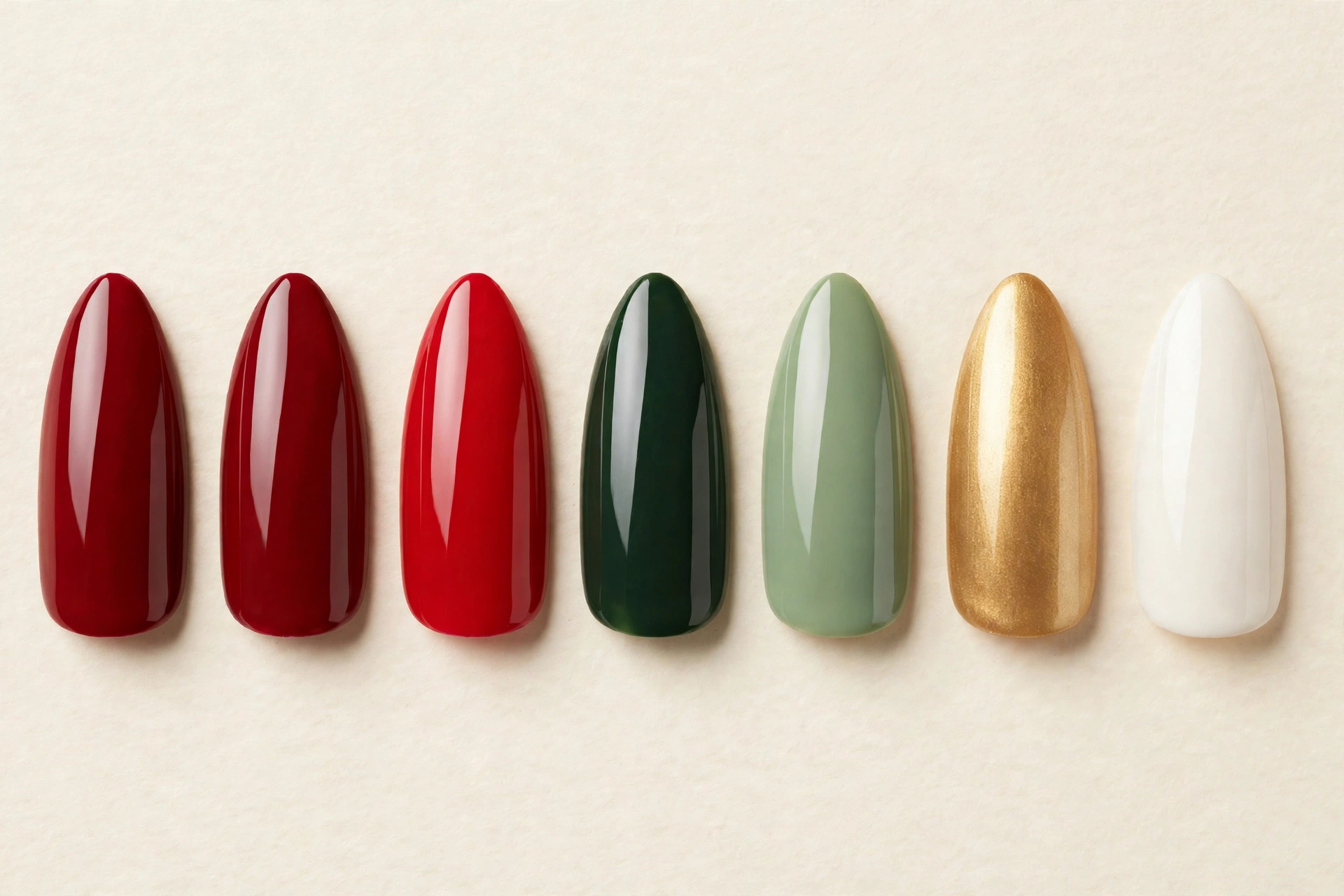
Poinsettia nails take their cue from the plant that shows up in every holiday doorway, window box and dinner-table centerpiece: deep red bracts, dark green leaves, and that touch of gold ribbon or candlelight that makes the whole arrangement glow. It is a familiar color story, which is exactly why it works so well as a manicure. You do not have to explain it or dress it up — red and green already read as Christmas, and when the shades are chosen carefully, they read as elegant rather than novelty. This palette gathers six shades that cover the whole poinsettia: two reds, two greens, a warm gold, and a creamy white, so you can wear the full flower on ten nails or pick a single shade and let it carry the season on its own.
What Are Poinsettia Nails?
Poinsettia nails are holiday manicures built around the poinsettia’s color palette rather than a literal painting of the flower on every nail. The classic version is a red-and-green combination — a deep red base with green accents, or alternating red and green nails — but the palette is wider than that, and the wider version is the more wearable one. A poinsettia in real life is not just red: the leaves range from dark pine to soft sage, the bracts range from a true holiday red to a brighter crimson, and the whole plant is usually set against cream tablecloths, gold ornaments and warm light. This post treats all of that as fair game, which is why the palette includes gold and cream alongside the reds and greens.
The other thing that defines poinsettia nails is balance. Red and green are complementary colors, which means they intensify each other — put them side by side and both look stronger. That is a gift and a risk. Used in equal, saturated amounts, red and green can look like a costume. Used with one shade dominant and the other as an accent, or with the colors softened by a cream or gold in between, they look like a considered holiday manicure. The guidance in each shade below is built around that idea: which shade should lead, which should accent, and how to combine them without tipping into novelty territory.
This palette also suits a range of skill levels, which matters in December when time is short. Every shade here works beautifully on its own as a solid manicure, so you do not need nail art at all to get the poinsettia effect — a deep red on all ten nails already says it. If you do want a little more, the simplest upgrades are the most effective: one gold accent nail, a green ring finger beside red nails, or a cream base with a single red nail. The flower itself can stay in the centerpiece; your nails just need its colors.
How to Use This Palette
- Let one color lead. Choose red or green as your main shade and use the other on one or two accent nails. A manicure that is mostly one color with a hint of the other reads as polished; a manicure split evenly down the middle reads as themed.
- Use gold as the bridge. When red and green feel too strong together, a gold accent nail or a thin gold line between them softens the contrast and ties the look to your jewelry.
- Keep cream in reserve for busy weeks. If you have a week full of different occasions, a cream base with a red or green accent is the most adaptable version of this palette — festive enough for a party, quiet enough for work.
- Match the finish to the shade. Deep reds and greens look best in a high-gloss finish, which gives them depth. Gold looks best with a little shimmer or metallic sheen. Cream looks best in a smooth crème finish without glitter.
- Mind the length. Deep shades flatter shorter nails beautifully because the color does the work. Bright crimson and gold suit medium to long nails, where there is more surface for the color to show.
- Seal dark shades well. Reds and greens show tip wear and chips faster than pale shades, so cap the free edge with base and top coat, and reapply top coat every two to three days.
1. Poinsettia Classic — #A61C2E
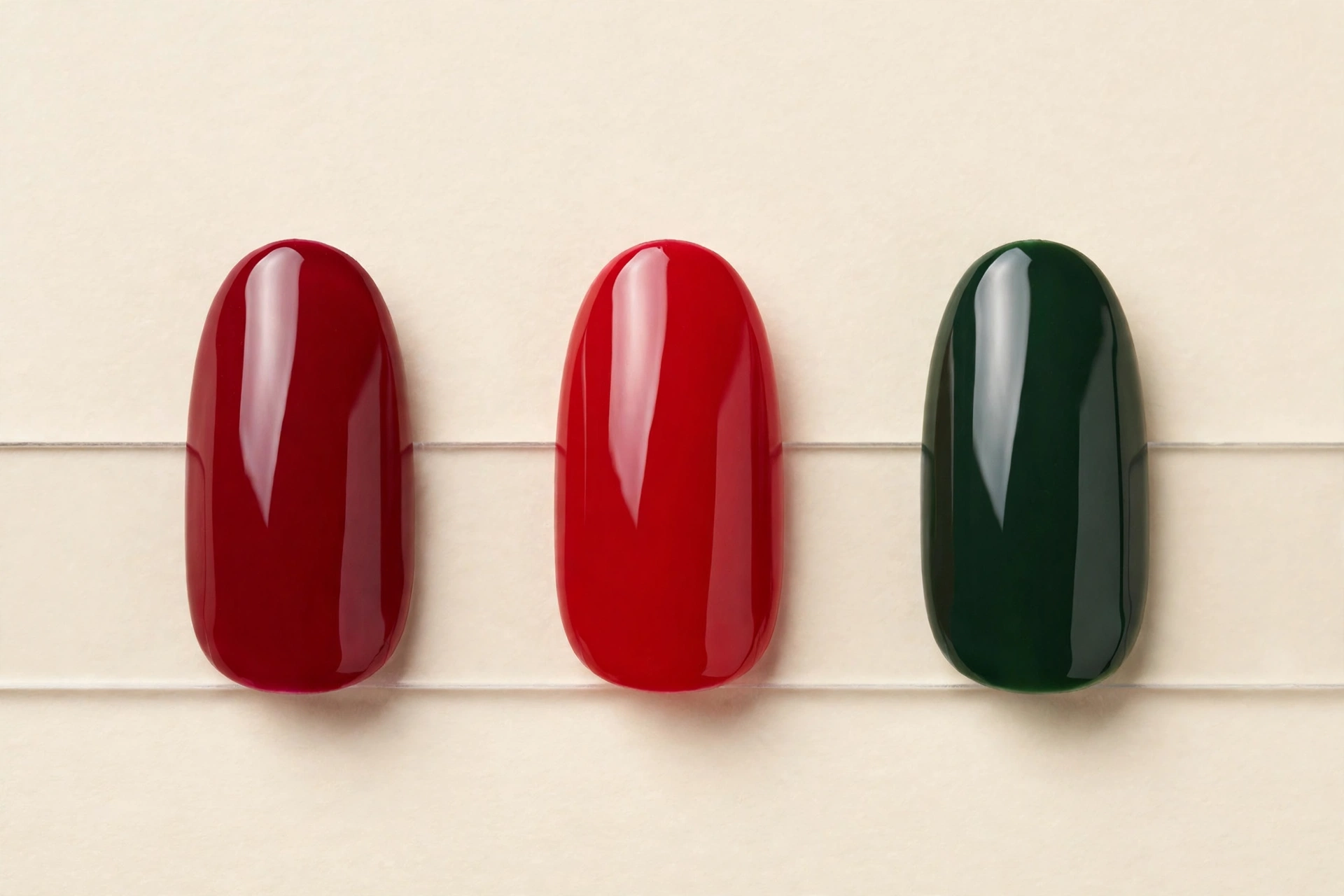
Poinsettia Classic is the shade the whole palette is named for: a deep, true poinsettia red with a slightly cool undertone, the color of the bracts at their richest, just before they turn fully bright in strong light. It is not an orange red and not a wine red — it sits in the middle, a full-bodied holiday red with enough depth to look expensive and enough brightness to read as festive from across a room. In a glossy crème finish it has a lacquered, almost velvety look, which is why it works as well on its own as it does as the lead shade in a red-and-green combination. This is the shade to choose when you want one bottle to carry the entire holiday season.
On skin, Poinsettia Classic is generous. Fair skin tones with cool undertones will find it gives a classic, high-contrast holiday look — red nails against pale hands are one of the great seasonal combinations, and the cool undertone of this red keeps it from pulling orange against fair skin. Warm and olive skin tones will see the red settle into a rich, flattering tone that brings warmth to the hands without clashing with golden undertones, especially when the nails are kept at a neat medium length. Deep skin tones get a beautiful tonal effect, where the deep red reads as a rich stain with real presence, and it pairs naturally with gold jewelry. If you have ever found bright reds too loud and burgundies too dark for daytime, this middle-depth poinsettia red is the shade that solves both problems at once.
Poinsettia Classic is made for the occasions that define the holiday season: Christmas dinners, family gatherings, office parties, and evenings out in December. It pairs with black, cream, navy, forest green, and gold, which covers most of a winter wardrobe, and it looks particularly good with a red lip in the same family — not necessarily the same shade, but in the same cool-red world. For the best result, apply two thin coats rather than one thick one, since deep reds pool at the cuticle if applied too heavily, and use a base coat to protect the nail plate from staining. A glossy top coat is essential: this red loses its poinsettia richness the moment it goes dull, so reapply top coat midweek to keep the lacquered look.
2. Crimson Bloom — #C1272D
Crimson Bloom is the brighter, livelier red in the palette: a vivid crimson with a warm undertone, the color of poinsettia bracts in bright daylight or under party lights. Where Poinsettia Classic is deep and measured, Crimson Bloom is joyful and confident, and it is the shade to reach for when the occasion is a celebration rather than a quiet gathering. It has more orange warmth than the first shade, which makes it glow against the skin rather than sitting quietly on it, and in a glossy finish it practically looks lit from within. If Poinsettia Classic is the red you wear to dinner, Crimson Bloom is the red you wear to the party after dinner.
Skin-tone wise, Crimson Bloom flatters warm undertones most naturally, because its warmth echoes golden and olive skin and makes the hands look sun-kissed even in midwinter. Fair warm skin will find it gives a cheerful, healthy contrast without washing the hands out, especially on medium-length nails in an oval or almond shape. Cool undertones can wear it too, but the effect is bolder: the warm crimson becomes a deliberate pop against cool skin, which works beautifully for evenings and photographs strikingly. Deep skin tones will see Crimson Bloom as a bright, joyful red with real energy, and it pairs gorgeously with gold jewelry and jewel-toned outfits. For readers who love deep reds in general, our burgundy nails palette explores the darker wine side of the red family if you want a moodier alternative to this bright crimson.
Crimson Bloom shines at occasions that call for energy: New Year’s gatherings, holiday parties, nights out with friends, and any event where you want your manicure to be noticed. It pairs with black velvet, sequins, satin, and deep jewel tones, and it is a natural partner for a matching red lip. Because it is a bright shade, neat cuticles matter more than usual — bright red draws the eye to the whole nail area, so push cuticles back gently and moisturize daily. It also benefits from a long-wear or gel formula if you want it to survive a week of celebrations without tip wear, since bright shades show chips more clearly than dark ones. Keep the rest of the look simple when you wear Crimson Bloom: one bright shade, clean nails, and gold or silver jewelry is all it needs.
3. Pine Bough — #1F3D2B
Pine Bough is the palette’s deep green anchor: a dark, forest pine green with a cool undertone, the color of the leaves beneath the poinsettia’s red bracts and of a real Christmas tree in low light. It is calm, rich, and quietly luxurious, and it is the shade that stops this palette from being only about red. A deep pine green is one of the most underused holiday colors, perhaps because people associate green nails with bright or neon shades, but a dark pine is something else entirely — it reads as elegant, grown-up, and seasonally right without ever looking like a costume. In a glossy finish it has the depth of a jewel tone, which makes it a genuine alternative to burgundy or navy for anyone who wants a dark holiday manicure that is not red.
This shade is particularly flattering on cool and neutral undertones, because the deep green base and its cool undertone echo cool skin rather than fighting it. Fair cool skin tones will find it gives a chic, editorial contrast without the harshness of a true black manicure, and it is an excellent choice for anyone who wants a dark holiday shade that is not red or black. Warm skin tones can wear it beautifully too, especially in a glossy finish, which brings out the richness of the green and stops it from reading too dark or flat. On deep skin tones, Pine Bough looks like a deep, jewel-toned stain with real presence, which is gorgeous for evenings and photographs strikingly. If you like the idea of a green holiday manicure, our pine nails palette shows the wider pine family in full.
Pine Bough suits occasions that lean elegant rather than loud: a winter wedding, a formal dinner, a holiday concert, or a family gathering where you want to look considered rather than costumed. It pairs beautifully with silver jewelry, black outfits, cream knitwear, and deep navy, and it is a natural partner for a red lip if you want the classic holiday contrast — green nails and a red lip are a festive combination that never looks accidental. Because it is a dark shade, use a base coat to prevent any green pigment from staining the nail plate, and apply two thin coats for full, even opacity. It also makes a superb accent shade beside Poinsettia Classic: paint eight nails red and two nails — the ring fingers, say — in Pine Bough, and you have the poinsettia in miniature.
4. Sage Leaf — #9CAF88
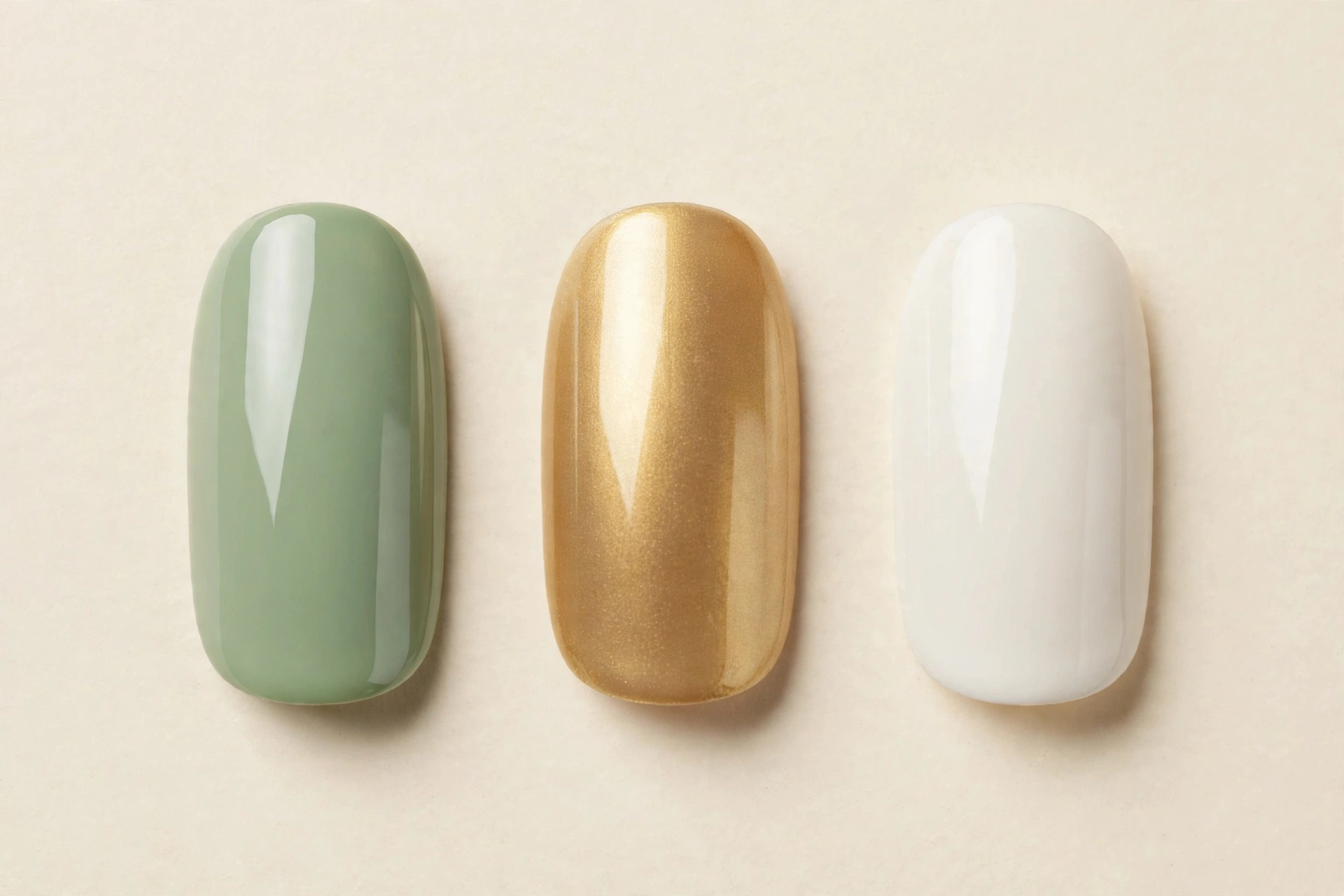
Sage Leaf is the palette’s soft green: a muted, grey-green sage with a cool, dusty undertone, the color of younger poinsettia leaves and of the frosted greenery that shows up in holiday arrangements. It is the quietest shade here, and that quietness is its strength. Where Pine Bough is dramatic, Sage Leaf is gentle, and it gives the palette a daytime option for people who love the green side of the holidays but do not want a dark manicure. In a crème finish it looks soft and modern, almost like a neutral with a green soul, which means it pairs with far more of a wardrobe than a saturated green ever could.
On skin, Sage Leaf is kind to cool and neutral undertones in particular, because its grey-green softness echoes cool skin without draining it, and it gives fair skin a fresh, modern look that is unusual for December. Medium and olive skin tones will find it reads as a soft, earthy neutral that never turns muddy, especially when the nails are kept neat and the finish is glossy rather than matte. Deep skin tones get a beautiful contrast effect, where the pale sage stands out gently against the skin, and it pairs naturally with silver jewelry and with cream or camel clothing. If you have ever wanted to wear green nails to work in December but felt a dark pine was too much for the office, Sage Leaf is the version that solves that problem.
Sage Leaf is made for daytime holiday occasions: office days, brunch gatherings, gift exchanges, family lunches, and any event where you want a hint of the season without a full festive statement. It pairs with cream knitwear, camel coats, grey, oatmeal, and soft white, and it looks particularly good with silver jewelry, which echoes its cool undertone. It also works as a base for the rest of the palette: a sage manicure with one Poinsettia Classic accent nail is a subtle, stylish nod to the flower, and a sage base with a thin gold line is an elegant evening upgrade. Apply it in two thin coats, since muted shades can look streaky in a single thick coat, and finish with a glossy top coat to keep the soft green from looking flat.
5. Golden Bract — #C9A227
Golden Bract is the palette’s warm metallic: a rich, golden yellow-gold with a soft shimmer, the color of the ribbon, the ornaments and the candlelight that surround a poinsettia at the holidays. It is not a brash, mirror-like gold, and it is not a pale champagne either — it sits in the middle, a true holiday gold with enough depth to read as a color in its own right rather than just a sparkle. That depth is what makes it so useful: it works as a full manicure for a party, as an accent nail beside red or green, and as a thin line or tip detail over any other shade in this palette. Gold is the shade that turns a red-and-green combination from a theme into a celebration.
This shade flatters warm undertones most naturally, because gold echoes the warmth already present in warm and olive skin and makes the hands look glowing. Fair warm skin will find it gives a festive, luminous effect, especially on medium-length nails where there is enough surface for the shimmer to show. Cool undertones can wear it too, particularly as an accent nail rather than a full manicure, where the gold becomes a bright detail against a cooler base like Pine Bough or Sage Leaf. Deep skin tones get a particularly beautiful result: gold against deep skin glows, and a full Golden Bract manicure on deep skin is one of the most striking holiday looks in this palette. If you mostly wear gold jewelry, this shade will feel like a natural extension of what you already own.
Golden Bract is a party, New Year’s and celebration shade through and through, but it is also the most versatile accent in the palette. One gold nail beside nine red nails, a gold ring finger beside green nails, or a thin gold line down the center of a deep red nail all use gold the way it is used in holiday decorating: as the highlight, not the whole room. It pairs with black, cream, red, green, navy and burgundy, which is to say with almost everything you will wear in December. For application, metallic and shimmer shades benefit from a smooth base coat and two thin coats, since shimmer can look patchy if applied thickly, and a glossy top coat keeps the gold looking rich rather than dusty. Keep the surrounding nails simple when gold is the accent, so the gold stays the star.
6. Winter White Petal — #F5F0E6
Winter White Petal is the palette’s cream: a warm, soft white with a hint of ivory, the color of the tablecloth under the poinsettia, the candle wax beside it, and the pale underside of the bracts. It is not a stark, blue-white, which can look harsh in winter light, and it is not a beige either — it is a true creamy white that reads as soft, clean and festive. Cream is the shade that makes this whole palette wearable for a full month, because it gives you a quiet base that still belongs to the season, and it gives the reds and greens somewhere to rest. A cream manicure with a single red accent nail is festive without trying, and a cream base is the most forgiving canvas for any nail art you want to add.
Every skin tone can wear Winter White Petal, which is part of its appeal. On fair skin it creates a soft, tonal look that lengthens the appearance of the nails, especially in an oval or almond shape, and it photographs beautifully because it does not compete with the rest of the outfit. On medium and olive skin it reads as a clean, creamy contrast that brightens the hands, and it pairs naturally with both gold and silver jewelry. On deep skin it becomes a striking light-versus-dark contrast, a pale cream that stands out elegantly, and it is one of the few pale shades that looks as good on deep skin as it does on fair skin, because its warm ivory undertone keeps it from looking chalky. If you have ever found pure white polish too stark, this warm cream is the version worth trying.
Winter White Petal suits the quieter occasions of the season as well as the louder ones: family lunches, office days, winter weddings, and evenings where you want to look polished rather than decorated. It pairs with every color in this palette and with every color in a winter wardrobe, from cream knitwear and camel coats to black velvet and jewel tones. It also hides regrowth better than saturated shades, since a millimeter of growth at the cuticle is far less visible against a pale base, which makes it a practical choice for a busy December. Apply it in two thin coats over a ridge-filling base coat, since pale shades show nail texture more than dark ones, and finish with a glossy top coat to keep the cream looking fresh rather than flat. Reapply top coat every few days, as pale shades lose their impact the moment they go dull.
Poinsettia Nails Polish and Gel Picks
You do not need a specific brand to get this palette right; you need the right tones and the right finishes. For polish, look for creamy, well-pigmented base polishes in your chosen depths — a deep poinsettia-red crème, a bright crimson crème, a dark pine-green crème, a muted sage crème, a warm ivory crème — and one warm gold shimmer or metallic polish for accents. Crème finishes are the backbone of this palette, because they give the reds and greens their lacquered depth, while the gold provides the only shimmer you need. A ridge-filling base coat is worth using under the cream and sage shades, since pale and muted colors show nail texture more than dark ones do.
For gel, choose a soak-off gel polish in your preferred shades and seal everything under a gel top coat. Gel is the better choice for the two reds and the pine green, because it keeps the shine that makes dark shades look expensive and resists the chips that show up fastest on saturated colors. It is also a good choice for the gold accent, since a gel metallic holds its shine longer than a regular shimmer polish. Whichever route you take, finish with cuticle oil daily: red-and-green manicures draw the eye to the whole nail area, and neat, moisturized cuticles make the difference between a good holiday manicure and a great one. One practical tip: buy your red and green from brands whose brushes you trust, because deep shades show every uneven edge, and a brush that splays will undo an otherwise perfect base.
Styling Poinsettia Nails for the Holidays
Poinsettia nails are easy to style because the colors already belong to the season — the work is in choosing which shade leads and letting the outfit follow. The simplest rule is to match the lead nail shade to something you are already wearing, not to the whole outfit. A deep red manicure with a black dress and gold jewelry is a complete holiday look on its own. A pine green manicure with a cream sweater and silver jewelry is quieter but just as considered. A cream manicure goes with literally everything, which makes it the safest choice for a week when you do not know what you will be wearing from one day to the next.
With outfits, the deep shades in this palette create contrast that keeps a dark outfit from looking flat, while the pale shades create a soft tonal story alongside cream, camel, oatmeal and blush clothing. If you are wearing a red dress, consider the contrast version rather than the matching version: pine green nails with a red dress create a festive tension that looks intentional, while red nails with a red dress can disappear into the outfit. If you are wearing sequins or a lot of sparkle already, choose a cream or sage shade, so the manicure calms the outfit rather than competing with it. And if you are wearing a jewel-toned dress, gold nails are the natural partner, because gold sits happily beside emerald, sapphire, burgundy and navy alike. For a broader view of the season’s colors, our Christmas nail colors palette gathers thirty festive shades in one place.
Jewelry follows the same rule as the gold shade in this palette: match the metal to the accent, not to the base. Gold jewelry goes with the gold accent nails and with the warm reds. Silver jewelry goes with the pine and sage greens, which both have cool undertones. If you mix metals, the cream shade is your friend, because cream sits happily beside both. For readers who want to add a little more nail art, keep it minimal so the poinsettia colors stay the hero: a single gold dot at the base of a red nail, a green ring finger beside red nails, or a cream base with one red nail all add interest without breaking the palette’s character. Avoid pairing this palette with heavy glitter, large rhinestones or bold patterns, which fight the classic, botanical feeling of the look.
Poinsettia Reds vs. Burgundy and Cherry
It helps to know where poinsettia reds sit among the other holiday reds, because December offers a lot of red and not all of it suits every person or occasion. Compared with burgundy, which leans wine-dark and brown, poinsettia red is brighter and truer — it reads as a flower, not as a glass of wine, which makes it better for daytime and for people who find burgundy too heavy. Compared with cherry red, which leans bright and sometimes pink, poinsettia red is deeper and more measured, which makes it better for evenings and for people who find cherry too sweet. Compared with a classic pillar-box red, poinsettia red has a touch more depth, which keeps it from looking flat in winter light.
The practical differences matter too. Burgundy hides tip wear slightly better than a true red, because it is darker, but it can look almost black in dim light, while poinsettia red stays visibly red. Cherry red photographs very brightly and can dominate an outfit, while poinsettia red photographs as a rich, balanced red that sits well beside other colors. If you already own a burgundy you love, Poinsettia Classic is the shade to reach for when you want something a little brighter for a party; if you already own a bright cherry, Crimson Bloom is the version with a touch more warmth for candlelit evenings. The greens in this palette play the same role on the other side: pine is the deep, elegant green, sage is the soft, daytime green, and together they give you the same range of choice that the two reds give you.
The shades in this post are an inspiration palette to help you find your perfect poinsettia combination; exact colors may vary slightly by brand, finish and lighting.
Frequently Asked Questions
Do poinsettia nails have to be red and green together?
No. The poinsettia palette is wider than just red and green, and every shade in this post works on its own as a solid manicure. A deep red on all ten nails already reads as poinsettia, and a pine green or cream manicure carries the season just as well. Red and green together are the classic combination, but they work best when one color leads and the other appears on just one or two accent nails, rather than split evenly across the hands.
Which poinsettia shade suits my skin tone best?
Deep poinsettia red suits almost everyone, because its middle depth flatters fair, medium and deep skin alike. Bright crimson flatters warm undertones most naturally, while deep pine green flatters cool and neutral undertones. Sage and cream are the most adaptable pale options: sage suits cool and neutral skin, and warm cream suits every skin tone because its ivory undertone never looks chalky. If you are unsure, start with Poinsettia Classic or Winter White Petal, which are the two most forgiving shades in the palette.
How do I wear red and green nails without looking costumey?
Keep one color dominant and the other as an accent, and use gold or cream as a bridge between them. Eight red nails with two green ring fingers, or a green manicure with one gold accent nail, reads as polished rather than themed. Keep the rest of the look simple too: clean nail shapes, neat cuticles, and jewelry in one metal family. Avoid adding glitter, rhinestones or painted flower designs on top of the red-and-green combination, since the colors themselves already carry the festive message.
How long do poinsettia nails last?
With good prep, a base coat and a glossy top coat, a poinsettia manicure lasts about as long as a regular manicure — typically one to two weeks for polish and two to three weeks for gel. Dark reds and greens show chips more clearly than pale shades, so capping the free edge and reapplying top coat every few days is what protects them. If one nail does chip, you can usually repaint just that nail, since solid shades are far easier to repair than detailed nail art.