
Thanksgiving plaid nails are the easiest way to make a holiday manicure feel dressed up without making it fussy. Plaid reads instantly as autumn — the same checked pattern as a flannel shirt, a wool scarf, or a tablecloth at a family dinner — and it works in the exact colours the season already gives you: cranberry, burnt orange, mustard, forest green, chocolate brown, and cream. This palette takes those six shades and turns them into a set you can wear as full plaid, as an accent nail, or as a mix of solids and checks across ten nails. Nothing here needs nail art skills beyond a steady hand and a striping brush, and every shade is chosen to look good next to the others, so the whole set holds together even if your plaid lines are not perfectly straight.
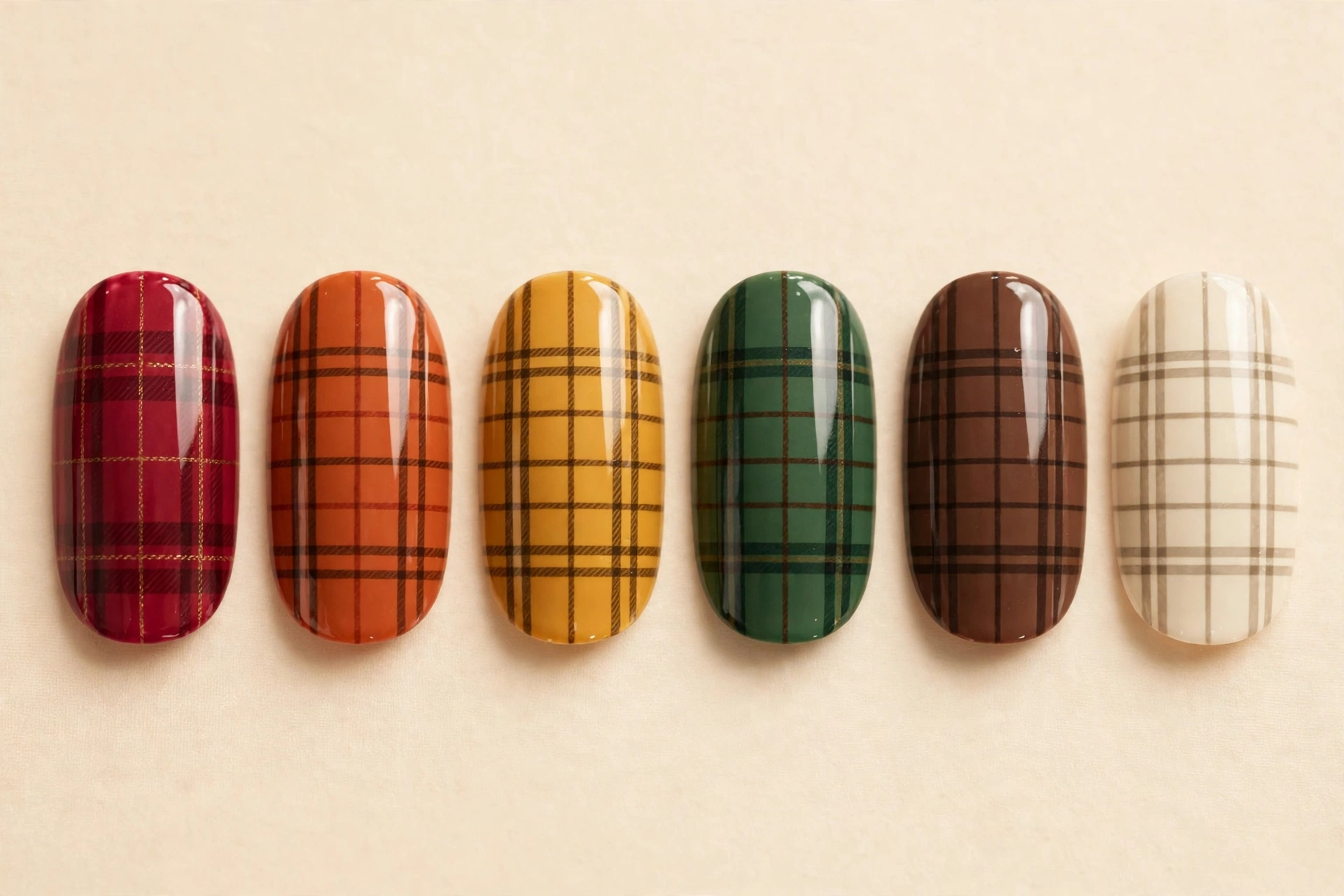
How to use this palette
- Pick one base shade for most nails and use plaid on one or two accent nails per hand — the ring finger and thumb are the classic spots.
- Build plaid in layers: paint the base colour, let it dry fully, then add the widest stripes first, the narrow cross-lines second, and a thin cream line last to sharpen the check.
- Keep the plaid to two or three colours per nail. A check made from cranberry, cream, and one thin gold line looks cleaner than a check that tries to use every shade at once.
- Use the solid shades on the remaining nails so the set reads as a palette rather than a pattern overload.
- Short to medium nails suit plaid best, because the check stays readable. On very long nails, keep the lines thin so the pattern does not stretch out.
- Seal every plaid nail with two thin coats of top coat. The first locks the lines in place; the second smooths the edges so the stripes do not catch on fabric.
Thanksgiving Plaid Nails: What Makes the Pattern Work
Plaid works on nails for the same reason it works on fabric: it is a grid, and a grid is forgiving. A floral design falls apart if one petal is off, but a plaid check still reads as plaid when a line wobbles slightly, because the eye fills in the pattern. That forgiveness is what makes thanksgiving plaid nails such a good holiday choice — you can do them at home the night before Thanksgiving, in regular polish or gel, and they look deliberate rather than handmade.
The other reason plaid suits Thanksgiving so well is colour. The holiday table is already a plaid palette: cranberry sauce, roasted squash, golden pie crust, green beans, brown gravy, cream mashed potatoes. The six shades in this set are pulled straight from that table, so your nails match the day without matching any one dish too literally. The trick is balance. Warm shades — cranberry, burnt orange, mustard, chocolate — carry the set, while forest green adds contrast and cream keeps everything from getting too dark. If you wear all six as solids, the set feels rich and autumnal. If you wear plaid over one or two of them, the set feels designed.
There is also a practical side. Thanksgiving is a long day of cooking, serving, washing up, and holding a wine glass in photos. Dark, warm cremes hide small chips better than pale shades, and a plaid accent nail hides a chip in the pattern even better. A glossy top coat is worth it here: it makes the colours look deeper and the lines sharper, and it buys you an extra day or two of wear before the edges start to show.
If you want a broader plaid wardrobe beyond this one palette, our tartan nails chart covers twelve plaid shades for the whole winter, and it pairs well with this Thanksgiving set if you like the checked look enough to keep wearing it into December.
The 6 Shades
1. Cranberry Harvest — #8E2A3C
Cranberry Harvest is a deep, blue-leaning cranberry red with a creme finish — the colour of cranberry sauce in the dish, not the bright red of the berry itself. It is the anchor of this palette and the shade to reach for first, whether you want a full plaid base or a single bold accent nail. The undertone matters here: this cranberry leans cool, with a hint of wine underneath, which stops it from looking orange in warm indoor light and keeps it elegant next to gold jewellery and warm wood tones.
On fair skin, Cranberry Harvest looks striking because the contrast is high — it reads as a true holiday red with depth. On medium skin, it warms up and looks like a classic berry, flattering without washing out the hand. On deep skin, it is at its richest: the cool wine undertone sits beautifully against warm undertones in the skin, and the colour looks almost velvety in a glossy finish. If you have cool undertones yourself, this is your shade from this set; if you are warm-toned, it still works, especially as a plaid base with cream and gold lines cutting through it.
Wear it as a full manicure for Thanksgiving dinner itself, or as the base of a plaid check with cream and thin gold stripes. It pairs naturally with the mustard and chocolate in this palette, and it is the shade most likely to get asked about at the table. For longevity, cranberry cremes are forgiving: two coats give full opacity, and small chips at the tip are less visible than they are on lighter shades. A glossy top coat deepens it further, while a matte top coat turns it into something softer and more modern — try matte on the solids and glossy on the plaid accent for contrast within one manicure.
2. Burnt Orange Ember — #C65D21
Burnt Orange Ember is the warmth of this palette — a true burnt orange with a browned, roasted edge, like sweet potato or the skin of a roasted squash. It is vivid without being neon, and that restraint is what makes it wearable. Straight orange can fight with skin; burnt orange, with its brown undertone, sits comfortably on almost everyone and reads as autumn rather than summer.
On fair skin, Burnt Orange Ember brings warmth to the hand and looks especially good with gold rings. On medium skin, it is the most natural-looking shade in the set, almost like a deeper version of a warm nude with an orange cast. On deep skin, it glows — the orange picks up the warmth in the skin and the colour looks luminous rather than loud. Warm undertones will love this shade immediately; cool undertones can still wear it, best as an accent nail or as the thin stripe inside a plaid check over chocolate or cream, where the orange reads as a highlight rather than the main event.
This is the shade to use when you want the manicure to feel like November rather than December. It is less formal than cranberry, more relaxed, and it suits the cooking-and-hosting part of the day as much as the dinner itself. As a plaid colour, burnt orange makes a beautiful wide stripe over a cream base, or a thin cross-line over chocolate. On its own, two coats are enough for full coverage, and it holds up well in gel, where the colour stays bright for a full week without fading. If you usually avoid orange, try it on one accent nail first — most people are surprised by how wearable a burnt orange creme is once it is on the nail rather than in the bottle.
3. Mustard Gold — #D9A441
Mustard Gold is a warm, golden mustard with a soft honey undertone and a creme finish. It is the lightest of the warm shades in this set, and it does the job of a neutral here: it brightens the palette, gives the plaid its glow, and keeps the darker shades from feeling heavy. Mustard is also the shade that makes plaid look like plaid — a thin mustard line crossing cranberry or forest green is the detail that turns stripes into a check.
On fair skin, Mustard Gold reads as a soft golden yellow and looks best with the plaid pattern rather than as a full solid, where it can sometimes blend into the skin. On medium skin, it is a confident solid on its own, warm and golden without looking yellow. On deep skin, it is striking — the gold pops against the skin and looks almost metallic in a glossy finish, even though it is a plain creme. Warm undertones will find this shade effortless; cool undertones should use it as a stripe or an accent, where its warmth is a feature of the pattern rather than the dominant colour of the hand.
Mustard Gold is the shade to use sparingly and deliberately. One mustard accent nail, or mustard lines inside a plaid check, gives the whole manicure its autumn light. Too much of it, on all ten nails, can feel flat — but as a supporting shade it is essential. It also pairs beautifully with the forest green in this palette: mustard and green is the classic harvest combination, and it looks particularly good on short nails where the two colours sit close together. In terms of wear, lighter cremes like this one show tip wear sooner than dark shades, so a good base coat and a top coat refreshed on day three will keep it looking fresh through the holiday weekend.
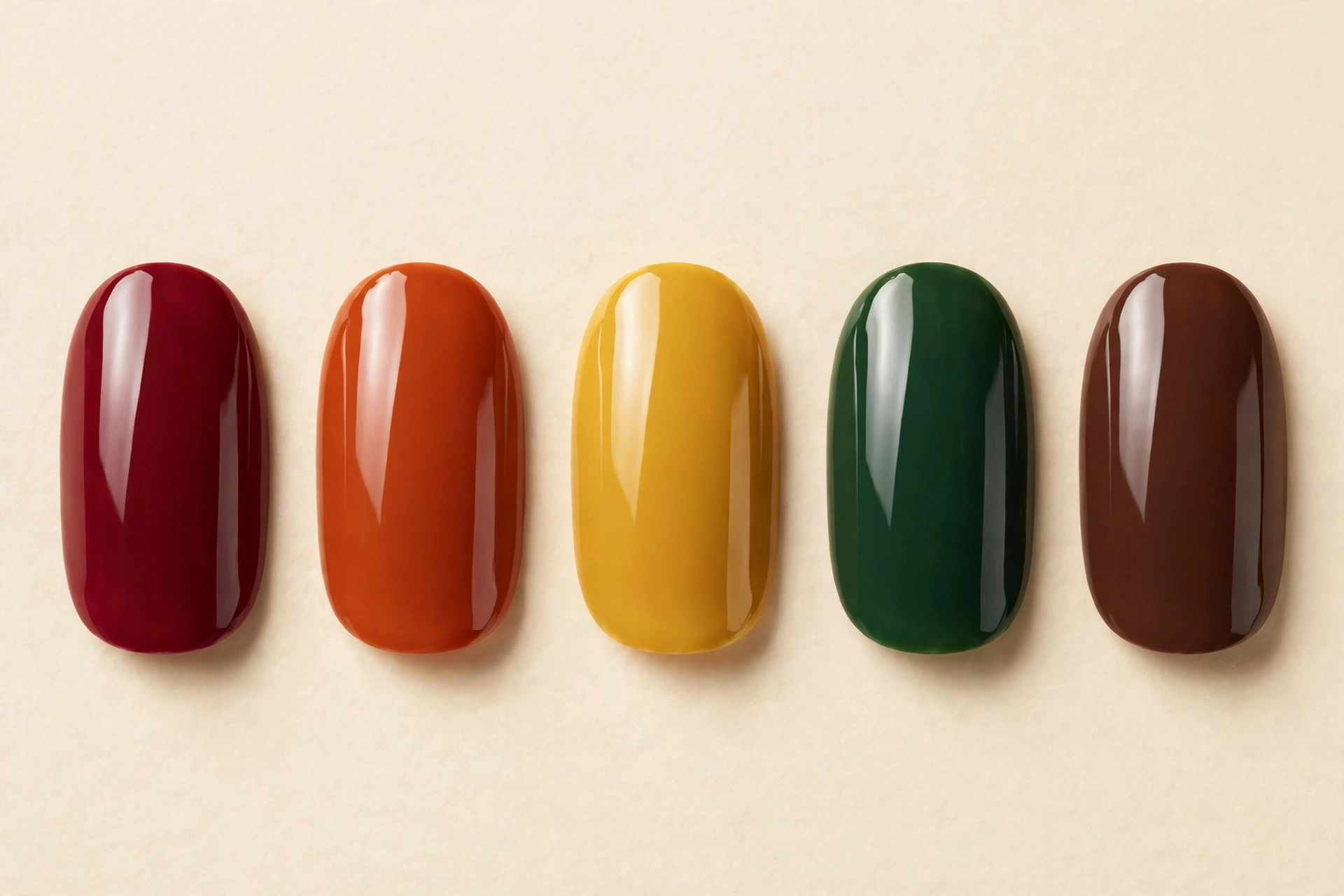
4. Forest Pine — #2F4A38
Forest Pine is a deep, muted forest green with a creme finish — the colour of pine branches and green beans, dark enough to read as a neutral and green enough to add real contrast to the warm shades around it. Green is the shade people hesitate over in a Thanksgiving palette, and it is the one that makes the whole set work, because without it the palette would be all red, orange, and brown. Forest Pine gives the eye somewhere cool to rest.
On fair skin, Forest Pine looks refined and a little preppy, especially as a plaid base with cream lines — think of a green wool scarf rather than a Christmas tree. On medium skin, it is deep and elegant, and it flatters gold jewellery beautifully. On deep skin, it is rich and saturated, one of the most flattering shades in the set, because the depth of the green matches the depth of the skin tone. Cool undertones will love this shade as a solid; warm undertones will love it as a plaid base with mustard and cream lines, where the green is warmed up by the pattern around it.
As a plaid base, Forest Pine is the most traditional choice in this set — a green check with cream and mustard lines is the classic Thanksgiving plaid. As a solid, it is the quietest shade here, which makes it the best choice for the nails you want to disappear a little: wear it on the pinky and index finger, and let cranberry and mustard do the talking on the middle nails. It is also the most forgiving shade for at-home application — dark greens hide uneven coats well, and two thin coats give full, even coverage. In gel, Forest Pine keeps its depth for a full two weeks; in regular polish, expect a solid week with a good top coat.
5. Chocolate Truffle — #5C3A28
Chocolate Truffle is a warm, medium-dark chocolate brown with a creme finish — the colour of a chocolate truffle or a well-baked pie crust. Brown is the quiet workhorse of autumn manicures: it goes with everything, it suits every skin tone, and it makes every other colour in the palette look more expensive. In this set, Chocolate Truffle is the shade that grounds the plaid, giving the brighter colours something solid to sit on.
On fair skin, Chocolate Truffle reads as a rich, warm brown that is softer than black and more interesting than nude — it is a good choice if you want a dark manicure that still feels seasonal. On medium skin, it is the most natural dark shade in the set, warm and flattering, and it looks particularly good with the mustard and burnt orange. On deep skin, it is elegant and understated, a tone-on-tone brown that looks polished without trying too hard. Every undertone can wear this shade; warm undertones will find it the easiest dark in the palette, and cool undertones can lean on its red-brown warmth to keep it from looking flat.
Wear Chocolate Truffle as the base for a plaid check in cream and cranberry — the brown keeps the pattern grounded and the check looks like a real flannel. Or wear it as a solid on most nails with a single plaid accent, which is the most wearable version of this whole palette and the one most likely to survive the long weekend intact. Brown cremes are among the longest-wearing shades in regular polish, because chips blend into the colour, and Chocolate Truffle is no exception. It also layers well: a thin coat of a gold shimmer topper over it turns it into a festive evening shade without changing the base colour underneath.
6. Cream Parchment — #F2E6CF
Cream Parchment is a warm, soft cream with a faint golden undertone — the colour of parchment, mashed potatoes, or the cream in a pie. It is the lightest shade in this set and the one that makes the plaid possible: every check in this palette needs a light line to define it, and Cream Parchment is that line. It is also the shade that keeps the set from feeling too dark, which matters on a day when your hands are in photos all afternoon.
On fair skin, Cream Parchment is a soft, barely-there neutral that looks best as a plaid line or an accent nail rather than a full solid, where it can disappear into the skin. On medium skin, it is a clean, warm cream that works as a solid on short nails and looks fresh next to the cranberry and forest green. On deep skin, it is the boldest shade in the set — a bright cream that pops against the skin and makes a beautiful plaid base with cranberry and chocolate lines. Cool undertones should look for the warmest cream they can find and keep it to lines and accents; warm undertones can wear it as a full solid with confidence.
Cream is the hardest shade in this palette to apply well, because light cremes show every streak. Use three thin coats rather than two thick ones, let each coat dry fully, and finish with a glossy top coat to even out the surface. As a plaid line, though, cream is easy: a thin striping brush and a steady hand are all you need, and small wobbles disappear into the pattern. If you only buy one shade from this set to use as a plaid tool, make it this one — it turns any dark solid into a check.
Shade-to-Shade Comparisons
Choosing between shades in this palette is mostly a question of how much contrast you want. Cranberry Harvest and Forest Pine are the two deepest statement shades, and they sit on opposite sides of the warm-cool line: cranberry is cool-leaning and wine-like, forest pine is cool-leaning and woodsy, so the two together feel balanced rather than clashing. Burnt Orange Ember and Mustard Gold are the warm pair — orange is the bolder of the two, mustard the lighter — and they work best when one of them leads and the other supports. Chocolate Truffle and Cream Parchment are the neutrals: chocolate grounds the set, cream lifts it, and the two together are the simplest plaid base you can make.
If you want the most classic Thanksgiving look, pair Cranberry Harvest with Cream Parchment and a thin Mustard Gold line. If you want something moodier, pair Forest Pine with Chocolate Truffle and cream lines. If you want the brightest version of the set, put Burnt Orange Ember on the accent nails and keep the rest in chocolate and cream. And if you are choosing just one shade to wear as a full manicure, pick Cranberry Harvest for dinner, Chocolate Truffle for the whole weekend, or Forest Pine if you want something a little different from the usual holiday reds.
For a wider harvest-colour wardrobe, our Thanksgiving nail colors 2026 chart has twenty-four shades to mix with these six, and it is a useful next stop if you like this palette and want more options in the same family.
Plaid Patterns to Try With These Shades
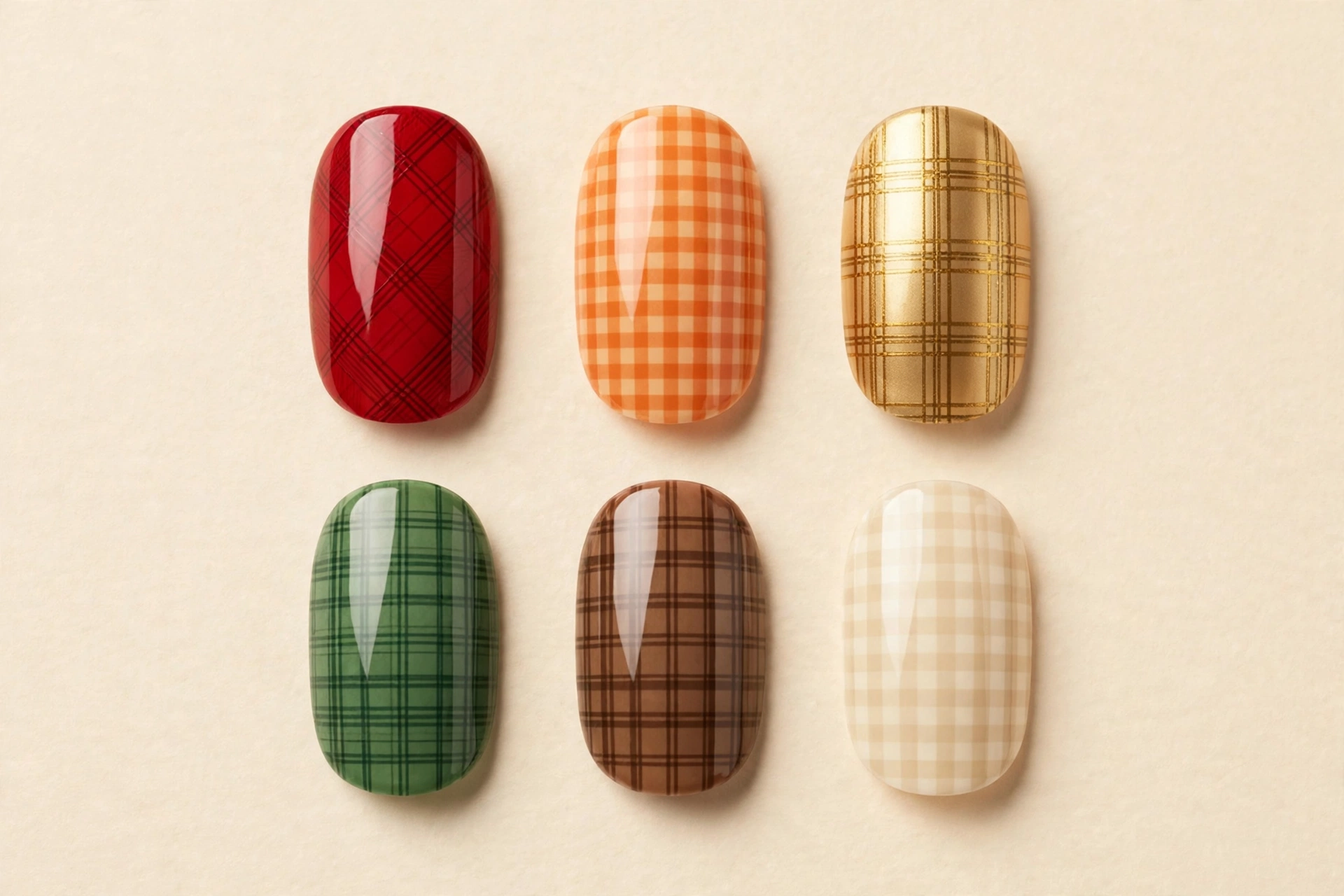
There are three plaid styles that work well with this palette, and each one suits a different skill level. The simplest is the two-line check: paint a solid base, add two wide vertical stripes and two wide horizontal stripes in a second colour, then add one thin cream line through the middle of each wide stripe. That is the whole pattern, and it reads as plaid from across the room.
The second style is the classic tartan: a dark base — cranberry, forest, or chocolate — with wide stripes in a second dark shade, thin lines in cream, and one thin line in mustard or gold. The layering is what makes it look like real fabric, so take your time and let each layer dry before adding the next. A striping brush, or even a thin eyeliner brush you keep for nails, makes the thin lines much easier.
The third style is the accent-only plaid: solids on eight nails, plaid on the ring fingers. This is the best option if you are short on time or doing your nails the night before, because you only have to paint the pattern twice. It is also the most wearable version of the look — the plaid reads as a detail rather than a theme, and it suits every outfit from an apron to a dinner dress.
Whichever style you choose, keep the lines thin on short nails and slightly wider on longer ones, so the scale of the check matches the size of the nail. And remember that plaid looks better slightly imperfect than overworked: if a line wobbles, leave it. The next layer will cover most of it, and the top coat will smooth the rest.
Styling Your Thanksgiving Plaid Nails
Thanksgiving plaid nails sit naturally with the textures of the day: chunky knits, wool scarves, denim, corduroy, and leather boots. The palette is warm and matte-friendly, so it looks good with a cream sweater and jeans, and it looks equally good dressed up with a burgundy dress and gold jewellery. The cranberry and mustard in the set pick up gold tones, so gold rings and bracelets are the natural jewellery choice; silver works too, especially with the forest green, but gold is the warmer match.
For the table itself, these shades look good holding a wine glass, a coffee mug, or a serving spoon — which is to say, they look good in the photos you will actually take. If you are hosting, the chocolate and cream shades are the most practical, because they do not show stains from cooking. If you are a guest, the cranberry and forest shades are the most polished, because they read as a deliberate holiday choice.
One styling note worth making: plaid nails are a pattern, so keep the rest of your look simple. A patterned dress plus plaid nails can feel busy; a solid-coloured outfit lets the nails be the pattern. The same applies to rings — one or two simple rings are enough, and a busy stack can fight with the check.
Finish and Longevity: Gel vs Regular Polish
Both gel and regular polish work well with this palette, but they suit different plans. Gel is the better choice if you want the manicure to last from the week before Thanksgiving through the weekend, because the plaid lines will not smudge and the dark shades will not chip at the tips. Gel also keeps the colours at full depth — cranberry and forest green look richer in gel than in regular polish, and the glossy finish lasts the full wear time without dulling.
Regular polish is the better choice if you are doing your nails the night before and want the freedom to change your mind, or if you only want the plaid for the day itself. The trade-off is wear: dark shades will start to show tip wear after three or four days, and the cream lines in a plaid check are the first thing to look tired. Two thin coats of top coat, plus a fresh top coat on the morning of Thanksgiving, will get regular polish through the day in good shape.
For either finish, a matte top coat is worth trying on at least one version of this look. Matte turns the plaid into something that looks like flannel, and it is a nice change from the usual holiday gloss. If you go matte, use it on the solid nails and keep the plaid accent glossy, or the other way around — the contrast between the two finishes is what makes the combination interesting.
A practical note on removal and aftercare: dark shades like cranberry and forest green can stain the nail slightly if worn for a full week without a base coat, so always use a base coat, and keep it on for the full wear time. After removing the manicure, a little cuticle oil and a day of rest before the next set will keep your nails in good condition through the holiday season.
If you like the idea of a metallic Thanksgiving look alongside this plaid set, our Thanksgiving chrome nails chart covers six warm metallic shades that pair well with these colours as an accent.
How to Make the Plaid Last Through Thanksgiving Weekend
Thanksgiving is hard on a manicure in a specific way: cooking means water, washing up means detergent, and serving means handling hot dishes. A few habits will keep the plaid looking good. Wear gloves for washing up — it is the single most effective thing you can do for any manicure. Apply cuticle oil once a day, morning and night, because hydrated cuticles make the whole manicure look fresher and help prevent lifting at the edges. Carry a small bottle of top coat in your bag and add a thin coat on the morning of Thanksgiving and again on Saturday if you are still wearing the set.
If a chip does appear, it is easier to fix on a plaid nail than on a solid one: dab a little of the base colour over the chip, redraw the line that crossed it, and seal with top coat. On a solid nail, the same fix is a small dot of colour and top coat. Either way, a five-minute repair beats removing the whole set.
For the weekend after Thanksgiving, this palette transitions well into the rest of the season. The cranberry and forest shades work for early December, the chocolate and cream work as neutrals all winter, and the mustard and burnt orange can be retired until next autumn or kept as accent shades. If you want a rust-toned companion palette for the days after Thanksgiving, our Thanksgiving rust nails chart has six warm harvest shades in the same family.
Polish and Gel Picks
- Cranberry Harvest: look for a deep wine-cranberry creme in regular polish or gel — a classic cranberry or oxblood shade from any major polish brand will match this colour closely.
- Burnt Orange Ember: look for a burnt orange creme with a browned undertone, often sold as a rust or terracotta orange in autumn collections.
- Mustard Gold: look for a golden mustard creme, sometimes labelled as honey mustard or golden ochre in fall polish ranges.
- Forest Pine: look for a deep forest or pine green creme — a dark evergreen from a winter or holiday collection is the closest match.
- Chocolate Truffle: look for a warm chocolate brown creme, often sold as a truffle, espresso, or cocoa brown in neutral and autumn ranges.
- Cream Parchment: look for a warm cream creme with a soft golden undertone, sold as a parchment, ivory, or warm cream in most polish lines.
- For the plaid lines: a thin striping brush, or a fine nail art brush, in a size made for detail work — the brush matters more than the polish brand for clean lines.
- For the finish: a glossy quick-dry top coat for the plaid accents, and a matte top coat if you want to try the flannel effect on the solid nails.
- For the base: a ridge-filling base coat, which helps the dark shades go on evenly and prevents staining on the nail.
The shades in this palette are inspiration colours rather than exact product matches, so use the names and hex codes as a guide when choosing polishes and gels. Colours can look slightly different between brands and between regular polish and gel, and that is fine — the palette works as a family of shades, not as a set of exact matches, so choose the closest version you can find and trust the combination.
FAQ
What colours work best for Thanksgiving plaid nails?
The best colours for Thanksgiving plaid nails are the harvest shades: cranberry, burnt orange, mustard, forest green, chocolate brown, and cream. They are the colours of the holiday table, they look good together, and they give the plaid enough contrast to read clearly on the nail. The key is to use two or three colours per nail rather than all six — a cranberry base with cream and mustard lines, or a forest green base with cream and chocolate lines, will look cleaner and more deliberate than a check that tries to include everything at once.
Can I wear plaid nails if I am not good at nail art?
Yes. Plaid is one of the most forgiving nail art patterns, because it is a grid and the eye fills in small wobbles. Start with the accent-only version — solids on eight nails and plaid on the ring fingers — and build the check in layers, letting each layer dry before adding the next. Use a striping brush for the thin lines, and remember that the top coat smooths out small imperfections. If you can paint a straight-ish line, you can paint plaid.
Which Thanksgiving plaid nail shade suits my skin tone?
Warm skin tones suit the burnt orange, mustard, and chocolate shades best, because those colours share the warmth in the skin. Cool skin tones suit the cranberry and forest green best, because their cool undertones sit comfortably against cool skin. Deep skin tones can wear all six shades well, with the mustard and cranberry looking particularly striking. Fair skin tones look best with the cranberry, forest green, and chocolate as solids, and the mustard and cream as lines and accents rather than full solids.
When should I do my Thanksgiving plaid nails?
Do them the day before Thanksgiving if you are using regular polish, so the manicure is fresh for the day itself, or up to a week before if you are using gel. If you are hosting and cooking, gel is the safer choice because it will survive washing up and serving better. Either way, add a fresh coat of top coat on the morning of Thanksgiving — it takes two minutes and makes the whole manicure look newly done in photos.