
Winter has a way of washing the color out of everything. The light turns grey, the coats turn dark, and suddenly the bright pinks of summer feel a little out of place. Winter blush nails solve that problem beautifully. They keep the softness of pink but ground it in the warmth and depth the season calls for, so your manicure looks intentional rather than leftover from July.
This palette is built around six rosy shades that move from the palest frost-kissed blush to a deep cranberry rose. Every shade here works on its own as a full manicure, and they also layer together beautifully if you like a tonal gradient or a mismatched set. Whether you wear short natural nails or long almond extensions, there is a blush in this chart that will flatter your hands and fit the winter calendar, from office days to holiday dinners.
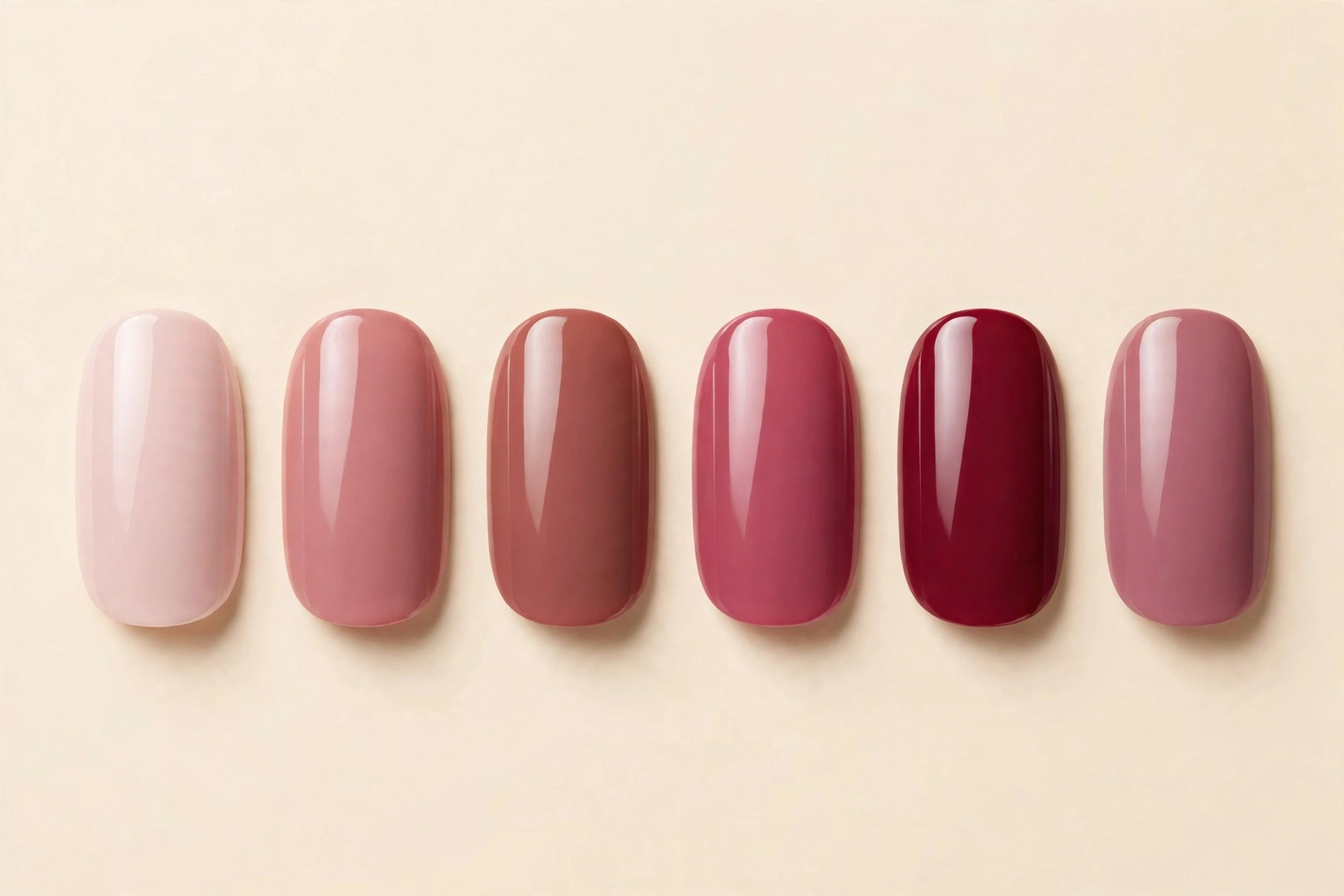
How to Use This Winter Blush Nails Palette
- Start with the lightest shade if you are new to rosy nails. Frosted Blush is forgiving, office-safe, and lets you test the family before committing to a deeper berry.
- Match depth to the occasion. Pale and dusty roses suit workdays and daytime events; berry and cranberry roses carry evening looks and holiday gatherings.
- Try a tonal gradient. Paint each nail a different shade from this chart, lightest on the thumb to deepest on the pinky, for a winter ombre that needs no extra tools.
- Keep the finish consistent. These shades look best in a high-gloss or soft satin finish. Mixing one matte accent nail into a glossy set adds texture without breaking the palette.
- Pair with gold or silver jewelry. Warm gold flatters the deeper rosewood and cranberry tones; cool silver brightens the pale blush and mauve shades.
- Refresh the top coat every few days. Winter air and hand washing wear down shine faster, and a fresh top coat keeps rosy shades looking newly done.
1. Frosted Blush — #F3D3D8
Frosted Blush is the palest shade in this winter blush nails palette, a cool-leaning blush pink with just enough white in it to read as frosty rather than bubblegum. On the nail it looks like the color your cheeks turn after a few minutes in cold air: soft, fresh, and quietly pretty. The finish is best kept glossy, because a high shine stops the pale tone from looking flat or chalky, and it catches winter light in a way that makes short nails look longer and neater.
This is the shade that flatters almost everyone, and it is especially kind to fair and light skin tones, where it reads as a polished version of the natural nail. On medium skin it gives a clean, barely-there effect that works beautifully for work, and on deep skin it appears as a delicate milky pink that contrasts softly without washing out. If your hands tend to look red in winter, the cool undertone in Frosted Blush actually calms that down rather than competing with it.
Frosted Blush is the workhorse of the palette. It suits job interviews, everyday office wear, brunches, and low-key winter weddings, and it is one of the easiest shades to maintain because chips and regrowth are far less visible in a pale color. For a little extra interest, wear it with a single gold ring or a thin silver band, and keep the nail shape rounded or squoval so the softness of the color carries through the whole look. If you love sheer, clean manicures, this shade sits in the same family as the wider range of pink nail polish shades, and it makes an excellent base if you ever want to add a subtle French tip or a tiny crystal accent on the ring finger.
2. Dusty Rose — #C48A92
Dusty Rose is where the palette starts to feel grown-up. It is a muted, grey-kissed rose that sits between pink and mauve, with a softness that makes it endlessly wearable. Unlike brighter pinks that can feel summery, Dusty Rose has a powdery depth that belongs to cold weather, wool coats, and candlelit rooms. In a cream finish it looks velvety and expensive; in a gloss finish it gains a gentle glow that keeps it from looking dull.
Undertone matters here, and Dusty Rose leans slightly warm-neutral, which is why it works across such a wide range of skin tones. On fair skin it reads as a true dusty pink with a hint of mauve. On medium skin it becomes a refined everyday rose that pairs with both gold and rose-gold jewelry. On deep skin it shows up as a soft, muted rose that looks polished without demanding attention. It is also a forgiving choice if your nails are short, because mid-tone shades like this make the nail bed look even and well-shaped.
Wear Dusty Rose anywhere you want to look put-together without trying too hard: the office, a dinner with friends, a winter market, or a family gathering. It is the shade to reach for when you cannot decide between pink and nude, because it quietly does the job of both. For longevity, apply two thin coats rather than one thick one, and seal the free edge with top coat so the muted tone does not chip at the tips. If you want to extend the look into a full winter wardrobe of color, the broader winter nail colors chart shows how dusty roses sit alongside the season’s deeper moody shades.
3. Rosewood Glow — #9E5A63
Rosewood Glow is the heart of this palette: a warm, medium-deep rose with a brownish undertone that gives it the richness of polished wood. It is deeper than Dusty Rose but stops short of berry, which makes it the most versatile of the darker shades here. Indoors it reads as a warm rose; in daylight a little more of its red-brown warmth comes forward, so it never looks the same twice, and that shift is part of its appeal.
This shade is particularly flattering on medium and deep skin tones, where its warmth harmonizes with golden and warm undertones and creates a rich, tonal effect. On fair skin it provides a lovely contrast, reading as a statement rose that still feels wearable for daytime. It suits almond and oval shapes especially well, because the elongated shape lets the depth of the color show fully, but it is equally striking on short square nails when you want a bolder winter manicure without going fully dark.
Rosewood Glow shines at evening occasions: date nights, holiday parties, winter weddings, and any dinner where you want your hands to look intentional. It pairs beautifully with gold jewelry, burgundy or camel coats, and a soft berry lip. For application, this depth of color rewards careful prep: push back cuticles, apply a ridge-filling base coat if your nails have ridges, and use two even coats so the warm tone stays uniform. Because it is a mid-dark shade, chips will show more than they do on the paler blushes, so a top coat refresh midway through the week is worth the minute it takes.
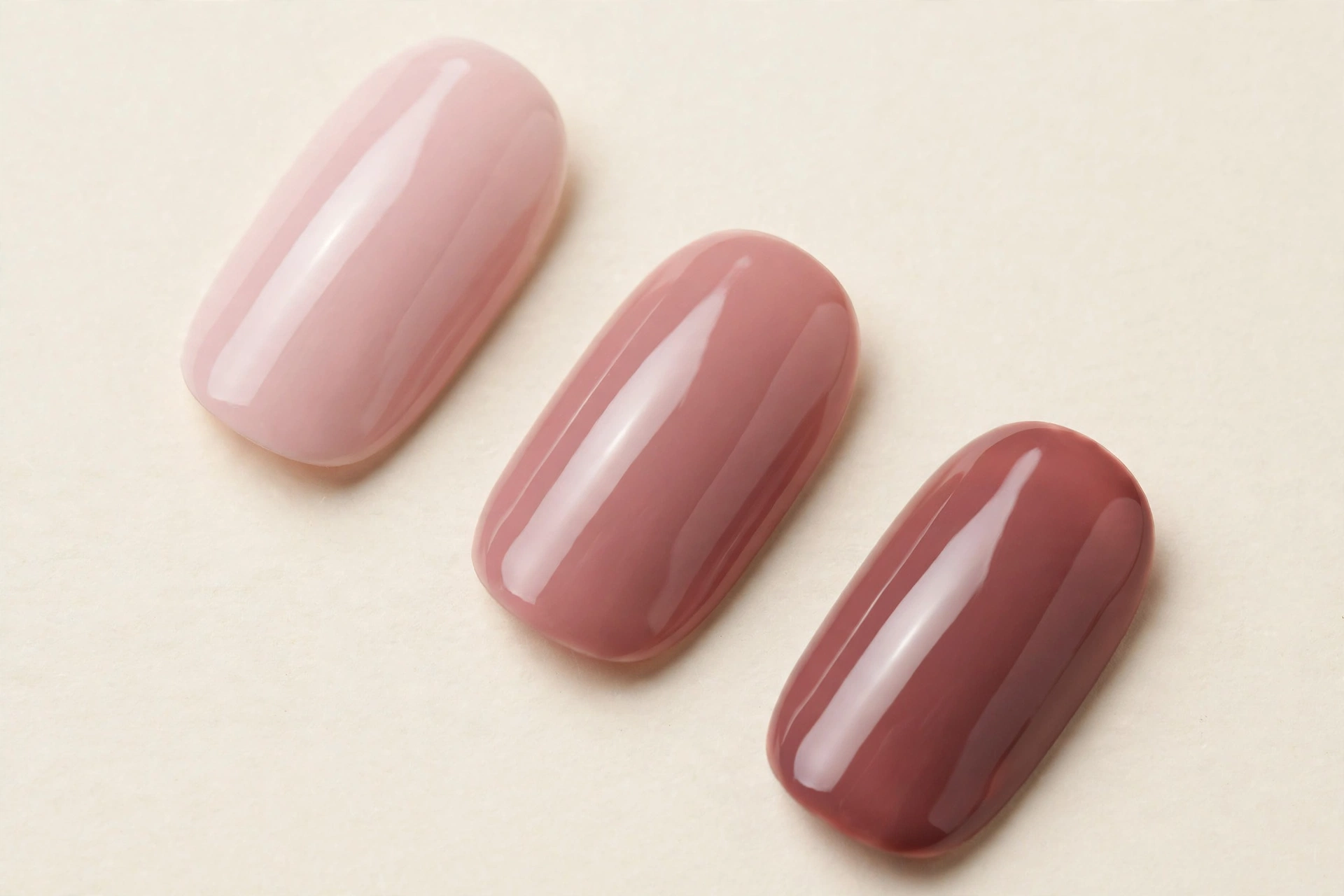
4. Berry Blush — #A63A54
Berry Blush turns the palette toward fruit and festivity. It is a vivid rose-berry, brighter than Rosewood Glow and cooler than a true red, with a juicy quality that makes it the most eye-catching shade in the chart. On the nail it looks like crushed winter berries: rich, slightly pink, and full of life. A high-gloss finish is the best choice here, because shine amplifies the berry tone and keeps it looking fresh rather than heavy.
Cool and neutral undertones will love Berry Blush most, since its cool-leaning berry base brightens fair and light skin without clashing. On medium skin it reads as a confident rosy red that works for both day and night, and on deep skin it appears as a luminous berry pink that pops beautifully against darker tones. If you usually wear red but find classic reds too harsh in winter, Berry Blush is the softer landing spot: all of the energy, none of the severity.
This is a party shade, and it earns its place at holiday gatherings, New Year celebrations, and nights out. It also works surprisingly well for daytime if you keep the rest of your look simple, since one bold element is often all an outfit needs. Berry Blush pairs with silver and diamond-style jewelry, black and charcoal outfits, and a matching berry lip for a coordinated finish. Because berry tones can stain the nail plate slightly, always wear a base coat, and give nails a day of rest with cuticle oil between manicures if you wear this shade back to back.
5. Cranberry Rose — #7E2E42
Cranberry Rose is the deepest shade in the palette, a dark rose with the tart richness of cranberry sauce and just enough pink to keep it from reading as plain burgundy. It is the shade that anchors the whole chart: dramatic without being gothic, festive without being glittery, and elegant in a way that suits the darkest weeks of winter. In a glossy finish it looks almost lacquered, and the depth gives shorter nails a long, polished appearance.
This shade flatters deep skin tones gorgeously, where it reads as a rich tonal berry, and it gives medium skin a luxurious contrast that suits evening wear. On fair skin it becomes a true statement color, best worn when you want your manicure to be part of the outfit rather than a background detail. Cranberry Rose is also a smart pick if your nails are prone to visible staining or ridges, because darker shades even out the appearance of the nail plate better than pale ones do.
Cranberry Rose belongs at the dressiest end of the winter calendar: holiday dinners, New Year’s Eve, formal winter weddings, and festive evenings out. It pairs with gold jewelry, velvet and satin fabrics, and deep-toned outfits in black, forest green, or navy. If the full dark look feels like a lot, try it as an accent: paint four nails in Dusty Rose and the ring fingers in Cranberry Rose for a manicure that nods to the holidays without committing every nail. For removal, use a gentle, acetone-free remover and hold the soaked pad on each nail for a few seconds first, since deep berry pigments need a moment to dissolve.
6. Mauve Frost — #B08A96
Mauve Frost closes the palette with a cool, grey-lavender rose that feels like winter light itself. It is lighter than Rosewood Glow but cooler than Dusty Rose, sitting in that soft mauve space that reads as modern and understated. The frost in the name comes from its slightly muted, almost powdered finish, which looks beautiful in both gloss and satin. In gloss it gains a gentle sheen; in satin it looks like velvet, which suits the season’s textures perfectly.
Cool undertones will find Mauve Frost especially flattering, and it is a lovely choice for fair and light skin, where it reads as a refined mauve-pink. On medium skin it becomes a soft, smoky rose that works well with silver jewelry and grey or plum outfits, and on deep skin it shows as a delicate muted mauve that adds polish without competing with bolder clothing. It is also one of the best shades in this chart for nail art, because its muted base lets a thin gold stripe, a tiny dot, or a subtle shimmer top coat stand out cleanly.
Wear Mauve Frost when you want something quieter than berry but more interesting than a plain nude: workdays, winter brunches, gallery visits, and any occasion where the rest of your outfit is doing the talking. It is a natural partner to knitwear in cream, grey, and soft plum, and it bridges the gap between this rosy palette and the frostier side of winter color. If you like the icy end of the season’s shades, the frosted nails chart explores how frost finishes play across other winter colors.
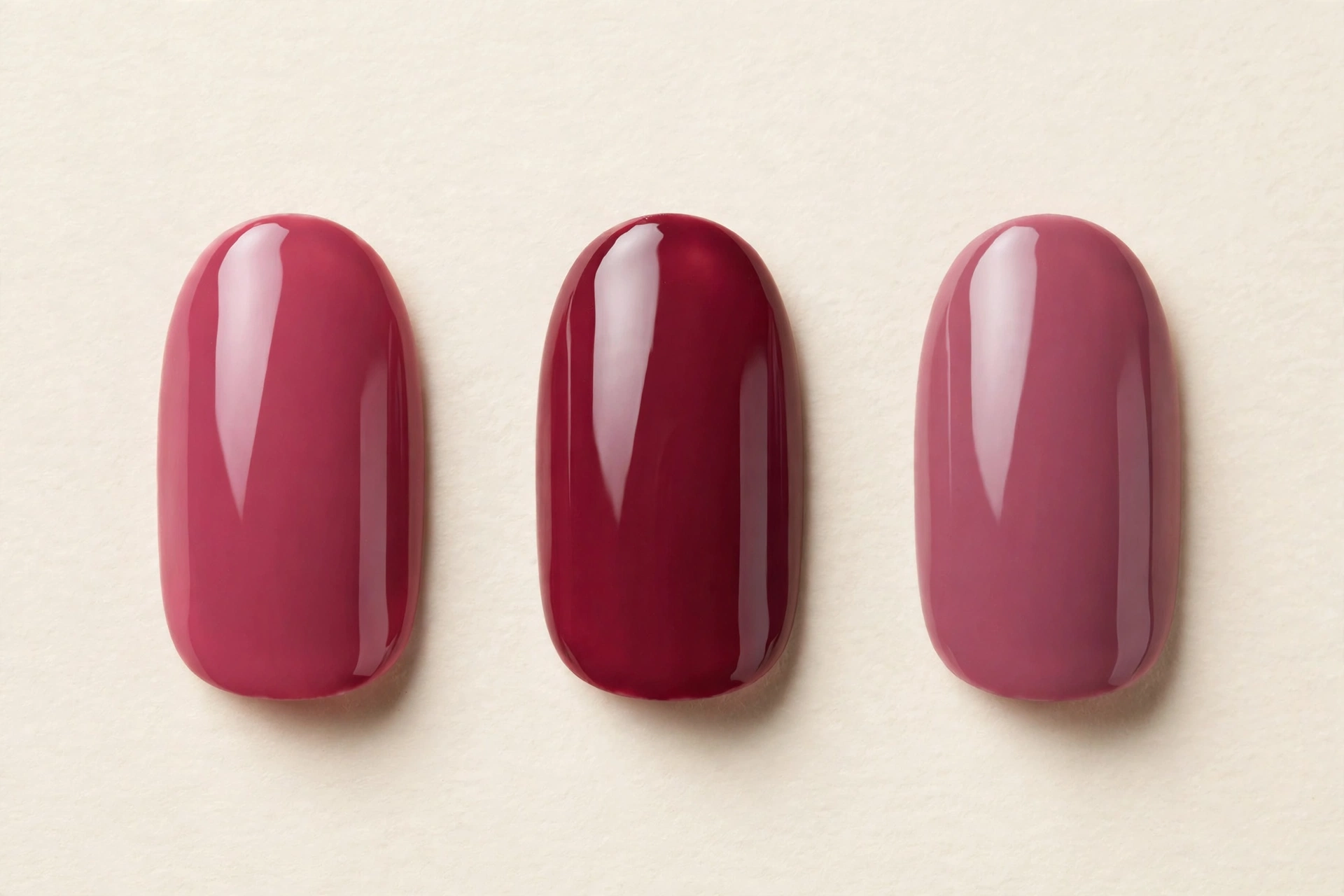
Polish and Gel Picks
For a salon-quality winter blush nails manicure at home, look for polishes described as a sheer-to-opaque blush pink for Frosted Blush, a muted dusty rose cream for Dusty Rose, and a warm rosewood cream for Rosewood Glow. Berry Blush is best found as a glossy berry-rose cream, Cranberry Rose as a deep cranberry cream, and Mauve Frost as a muted mauve cream or satin finish. Gel lovers should ask for the same shade families in a soak-off gel formula, which holds its shine through winter hand washing far longer than regular polish. Whatever formula you choose, a ridge-filling base coat, two thin color coats, and a high-shine top coat are the three steps that make rosy shades look professionally done.
Styling Your Winter Blush Nails
Rosy winter shades are easy to style because they sit between pink and neutral, so they rarely clash. With a camel or cream coat, the paler blushes look soft and expensive. With black, charcoal, or navy, the deeper berry and cranberry shades create a classic winter contrast. Gold jewelry warms the whole palette, while silver sharpens the cooler mauve and frosted tones. If you wear a lot of prints, keep the manicure to a single shade from this chart so your hands do not compete with the pattern. If your outfits are mostly solid colors, a tonal gradient across all six shades becomes a quiet statement of its own.
Winter Blush Nails for Different Occasions
For the office, Frosted Blush, Dusty Rose, and Mauve Frost are the safest trio: polished, understated, and appropriate with any dress code. For dates and evenings out, Rosewood Glow and Berry Blush add warmth and confidence without going over the top. For holiday parties and formal events, Cranberry Rose is the natural headliner, especially paired with gold accents. For weddings, Frosted Blush suits a guest who wants to look elegant without upstaging the occasion, while Rosewood Glow suits a winter bridesmaid look. And for everyday winter life, errands, coffee runs, and cozy weekends, Dusty Rose is the shade you will reach for again and again, because it goes with everything and chips gracefully.
Application and Longevity Tips for Winter
Winter is hard on manicures. Cold air dries the cuticles, hot water strips moisture, and gloves create friction at the nail tips. Start every manicure with cuticle oil, even before base coat, and wipe the nail plate clean so polish grips properly. Apply thin coats and let each one dry fully, since thick coats are the main cause of bubbling and early chipping in cold weather. Wear gloves for washing up and for outdoor chores, and reapply cuticle oil nightly; it takes ten seconds and it is the single biggest difference between a manicure that lasts three days and one that lasts ten. If a tip chips, do not peel the rest off. File the edge smooth, dab on a little color, seal with top coat, and the manicure is good for several more days.
How These Shades Compare
If you are choosing just one shade, think about the effect you want. Frosted Blush is the most natural and the most forgiving. Dusty Rose is the most versatile everyday choice. Rosewood Glow is the warmest and most autumn-to-winter transitional. Berry Blush is the brightest and most festive. Cranberry Rose is the deepest and most formal. Mauve Frost is the coolest and most modern. For a full set, the lightest-to-deepest gradient across all six gives the most visual interest, while pairing one pale and one deep shade as alternating nails gives a simpler two-tone look that is easier to maintain. Either way, staying inside one rosy family keeps the result cohesive, which is why a curated palette like this one works better than picking six unrelated pinks.
Frequently Asked Questions
What are winter blush nails?
Winter blush nails are manicures built around soft rosy pink shades that have been deepened, muted, or cooled for cold weather. Instead of bright summer pinks, the palette uses frosted blush, dusty rose, rosewood, berry, cranberry, and mauve tones that flatter winter skin, pair with heavier fabrics, and suit the season’s occasions.
Which winter blush shade is best for short nails?
Frosted Blush and Cranberry Rose are both excellent on short nails. Frosted Blush makes the nail bed look neat and elongated because pale shades blur the edges, while Cranberry Rose gives short nails a polished, lacquered look that draws the eye to the color rather than the length. Keep the shape rounded or squoval for the most flattering result.
Do rosy winter nails suit warm skin tones?
Yes, especially the warmer shades in this palette. Rosewood Glow and Berry Blush harmonize beautifully with warm undertones, and Dusty Rose works as a neutral bridge shade. If your skin is warm, lean toward the rosewood and berry end of the chart and pair them with gold jewelry for the most flattering combination.
When should I wear winter blush nails?
Anytime from late autumn through early spring, but they feel most at home from December through February. The paler shades suit everyday wear all season, while the deeper berry and cranberry tones are ideal for holiday parties, winter weddings, and New Year’s celebrations.
These six shades are an inspiration palette to help you find your perfect rosy winter manicure; exact polish names and availability vary by brand, so use the shade descriptions and hex codes as your guide when shopping or showing your nail technician.