
A winter wedding asks a lot of a bridesmaid’s nails. The shade has to photograph well against the bouquet, stay elegant through a full day of hugs and champagne toasts, and — the unwritten rule — never outshine the bride. Winter bridesmaid nails solve this with a palette that reads classic from the first photo to the last dance: soft blush, glowing champagne, antique gold and a dramatic navy for the bridesmaid who wants depth without drama. Below, twelve shades are charted from lightest to darkest, each with a hex code, undertone notes and advice on wearing it.
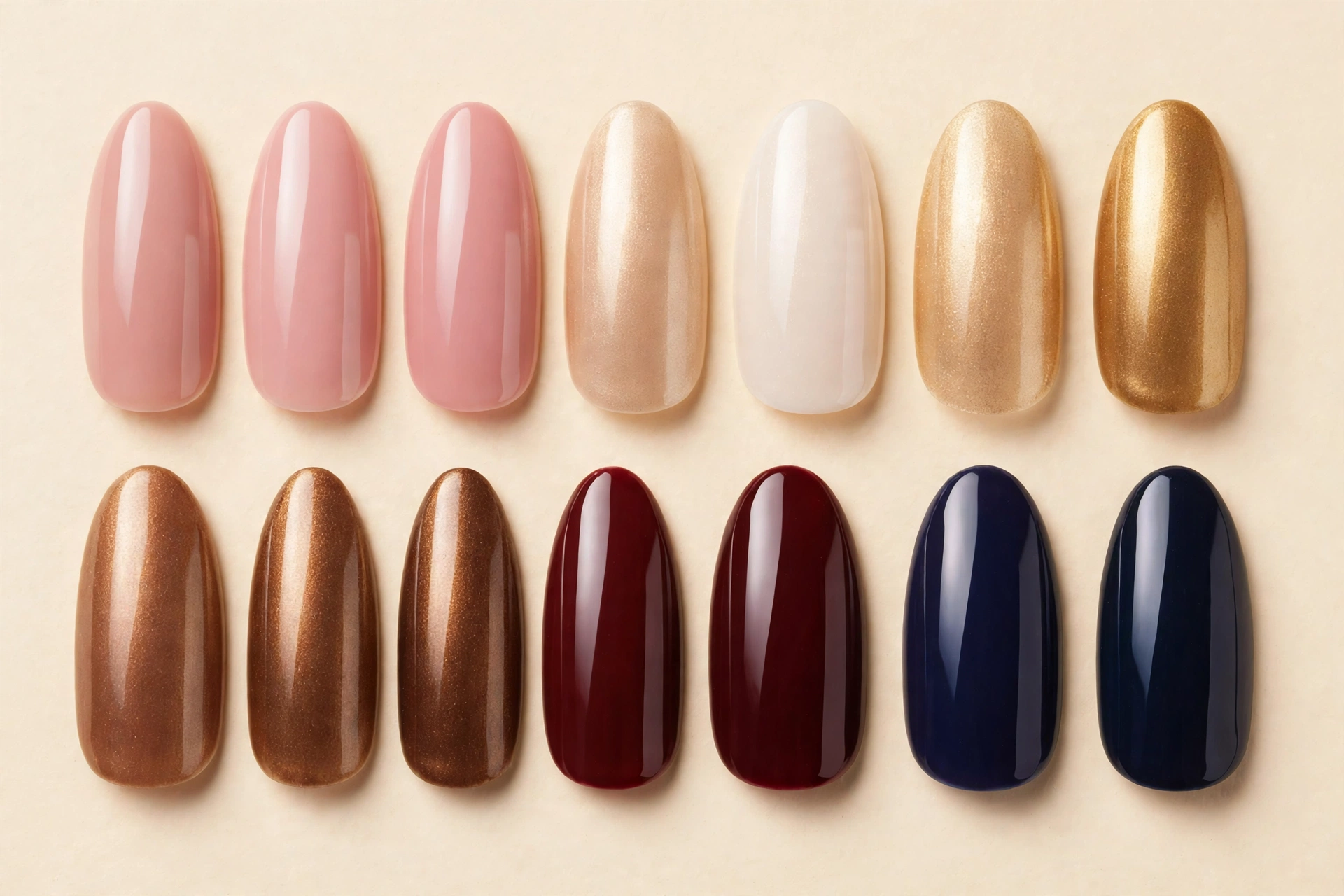
How to Use This Winter Bridesmaid Nails Palette
- Coordinate without matching. The wedding party looks best when nails harmonize rather than duplicate — pick shades from the same depth family (the blushes 1–4, or the metallics 5–7) and let each bridesmaid choose the one that flatters her skin. Identical nails on everyone photographs flatter than a range; a range photographs richer.
- Check the shade against the dress. Hold the polish bottle next to the bridesmaid dress fabric, not just against your skin. Blush nails can clash with a blush dress that has a different undertone — if the dress is cool blush, pick the navy or champagne family instead of the pink family.
- Test in the wedding lighting. Winter weddings run from daylight ceremonies to candlelit receptions, and metallics shift dramatically between the two. Photograph your test swatch in warm indoor light before committing; gold that glows at noon can read brassy under chandeliers.
- Plan the timeline. Gel is the bridesmaid’s best friend — book the manicure 1–2 days before the wedding so the shine is fresh and you have buffer for a repair. Regular polish needs a full 24 hours before the dress goes on to avoid sheet marks from sleep.
- Photograph with the flowers. The bouquet will be in half your photos, so hold the swatch next to a photo of the arrangements. Navy and burgundy sing against white blooms; blush and champagne disappear beautifully into greenery-heavy bouquets.
- Talk to your nail tech with swatches, not words. “Navy” covers five depths and “champagne” means something different in every salon. Save the shade from this chart closest to what you want and show the photo — most techs will match the hex or mix to it on the spot.
1. Ivory Whisper — #F5EEE3
The lightest shade in the chart: a soft ivory cream with a warm undertone and a creme finish, one step away from pure white. Ivory Whisper flatters every skin tone — on fair skin it reads as a polished neutral, on deep skin it becomes a striking contrast shade that looks intentional rather than accidental. It is the safest pick in the palette for conservative dress codes and for bridesmaids who want their nails to disappear into the day’s photos rather than feature in them. Wear it to winter ceremonies where the bride has asked for an understated bridal-party look. Keep the finish glossy; matte ivory can read chalky in flash photography.
2. Champagne Mist — #EFD9B4
A pale champagne gold, lighter and more luminous than any true gold — the shade that catches candlelight without ever looking metallic. Champagne Mist has a warm yellow undertone with a creme finish and a subtle translucency that flatters short nails especially well. It suits fair to medium skin best, where it glows against the skin, though on deep skin it makes a gorgeous light-accent nail paired with a deeper shade from the bottom of the chart. This is the rehearsal-dinner shade: festive but quiet. If champagne is your whole direction, our Champagne Nails palette charts the fuller winter and New Year’s story. Next to Ivory Whisper it is warmer and one full step deeper, reading gold rather than cream.
3. Blush Pearl — #F2D6D0
Soft blush pink with a pearly shimmer — the romantic of the palette. Blush Pearl has a cool-pink undertone softened by the shimmer finish, which keeps it from ever looking like a standard pink manicure. It flatters fair and light skin beautifully, where the pink harmonizes with natural skin warmth, and on medium skin it reads as a polished neutral. Wear it with the bridesmaid dress it was made for: any pink, blush or mauve fabric. Against Champagne Mist it is pinker and cooler, trading gold warmth for a soft rose glow.
4. Rosewater — #E7B8AE
Deeper than Blush Pearl and warmer too — Rosewater is a mid rose-blush with a creme finish that sits right between pink and nude. This is the most universally flattering blush in the chart: it works on light through deep skin because the warmth balances the pink, never going too cool or too bubblegum. It photographs beautifully against winter skin, where paler pinks can wash out, and it pairs with gold jewelry better than any other blush here. A perfect all-occasion bridesmaid shade — ceremony, reception, and the morning-after brunch. Compared with Blush Pearl it is one step deeper with the shimmer replaced by a clean creme finish.
5. Gilded Nude — #D8B98A
Where the golds begin: a warm gold-nude creme that bridges the blush family and the metallic family. Gilded Nude has a golden-beige undertone that reads nude on warm medium skin and reads softly golden on fair and deep skin. It is the shade for bridesmaids who find true nudes too flat but true golds too bold — the best of both. Wear it with satin dresses in champagne or taupe, where it picks up the fabric’s sheen. If nudes are your territory, our Nude Nails for Dark Skin post charts shades specifically chosen to flatter deeper complexions. Against Rosewater it is browner and warmer, moving the palette from pink toward gold.
6. Toasted Champagne — #CDA66B
The midpoint of the chart and its most wearable gold: a mid toasted champagne with a warm undertone and a satin-leaning creme finish. Toasted Champagne flatters every skin tone from light to deep because its gold is balanced with enough brown to ground it — no brassy surprises. It is the workhorse of the palette: daytime ceremony, golden-hour photos, candlelit dinner all covered. On almond nails it looks quietly expensive; on short squoval nails it reads modern and clean. Next to Gilded Nude it is deeper and more saturated, trading nude subtlety for honest gold warmth.
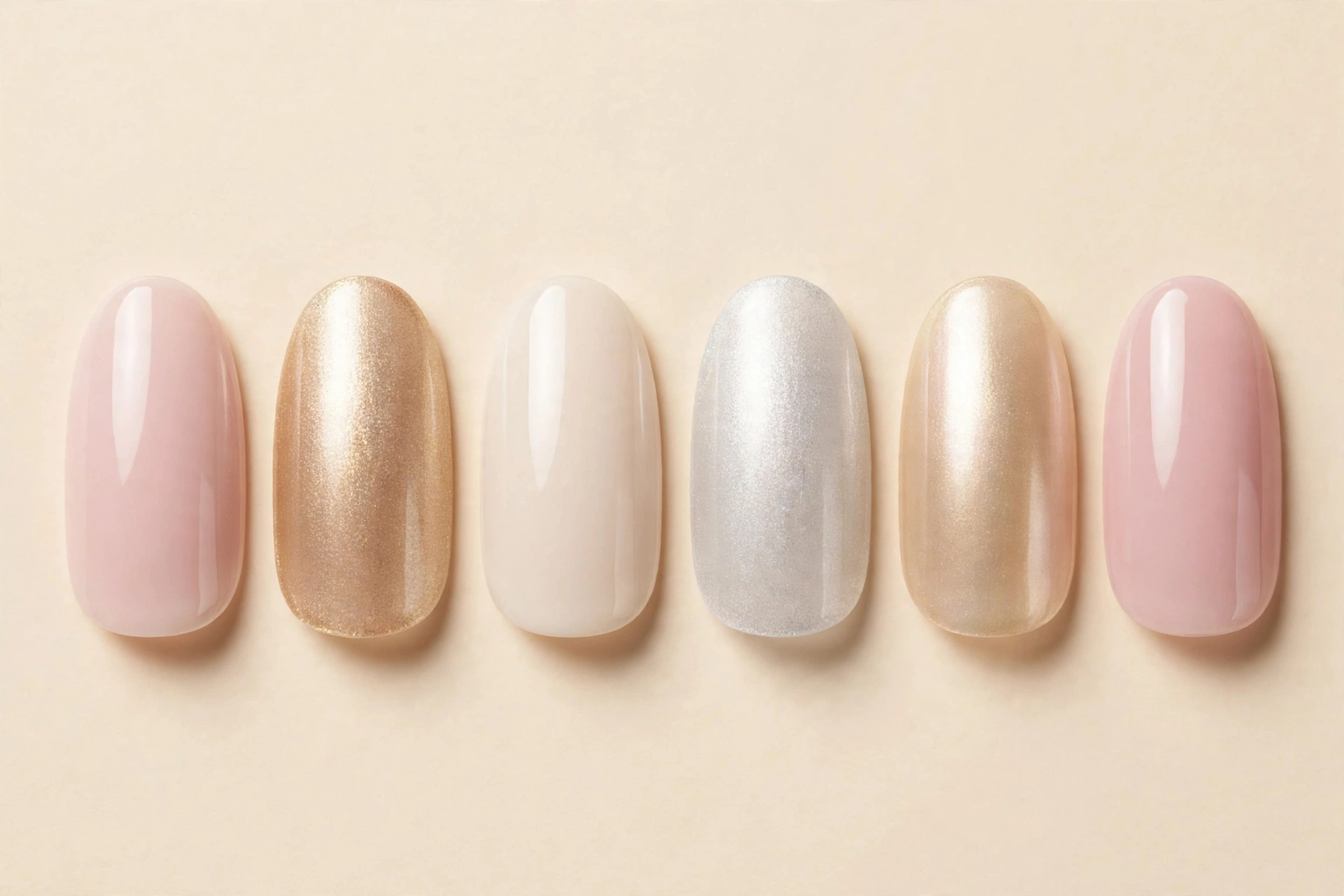
7. Antique Gold — #B8915A
The deepest gold before the chart turns dark: a bronze-toned antique gold with a creme finish and a slightly muted warmth that keeps it vintage rather than glittery. Antique Gold flatters medium to deep skin spectacularly, where it creates a tone-on-tone glow, and gives fair skin a rich, deliberate warmth. This is the bridesmaid shade for evening receptions and New Year’s-adjacent winter weddings — it photographs like jewelry. Pair it with actual gold jewelry for a cohesive metallic story. Compared with Toasted Champagne it is deeper and browner, with the brightness dialed down into something more old-world.
8. Mulled Burgundy — #8C3B4A
The chart’s first true dark: a wine burgundy with warm red-brown undertones and a glossy creme finish — like mulled wine in a glass. Mulled Burgundy is made for winter: it flatters light through deep skin, looks striking against navy and black dresses, and photographs with incredible richness in flash photography. It is the pick for the bridesmaid who wants a statement that stays inside wedding etiquette. Wear it to evening ceremonies and black-tie receptions. Next to Antique Gold it is a complete lane change — red instead of gold, moody instead of glowing — which makes it a beautiful contrast pick within the same wedding party.
9. Midnight Navy — #233150
Deep navy with a blue-black depth and a glossy creme finish — the drama shade of the palette. Midnight Navy reads almost black indoors and reveals its blue depth in natural light, which is exactly what you want from a winter wedding manicure: sophisticated at the table, interesting in the photos. It flatters every skin tone and looks especially striking on fair skin, where the contrast is editorial. This is the shade for modern, minimalist winter weddings. Against Mulled Burgundy it is cooler and deeper, swapping wine warmth for icy blue-black drama.
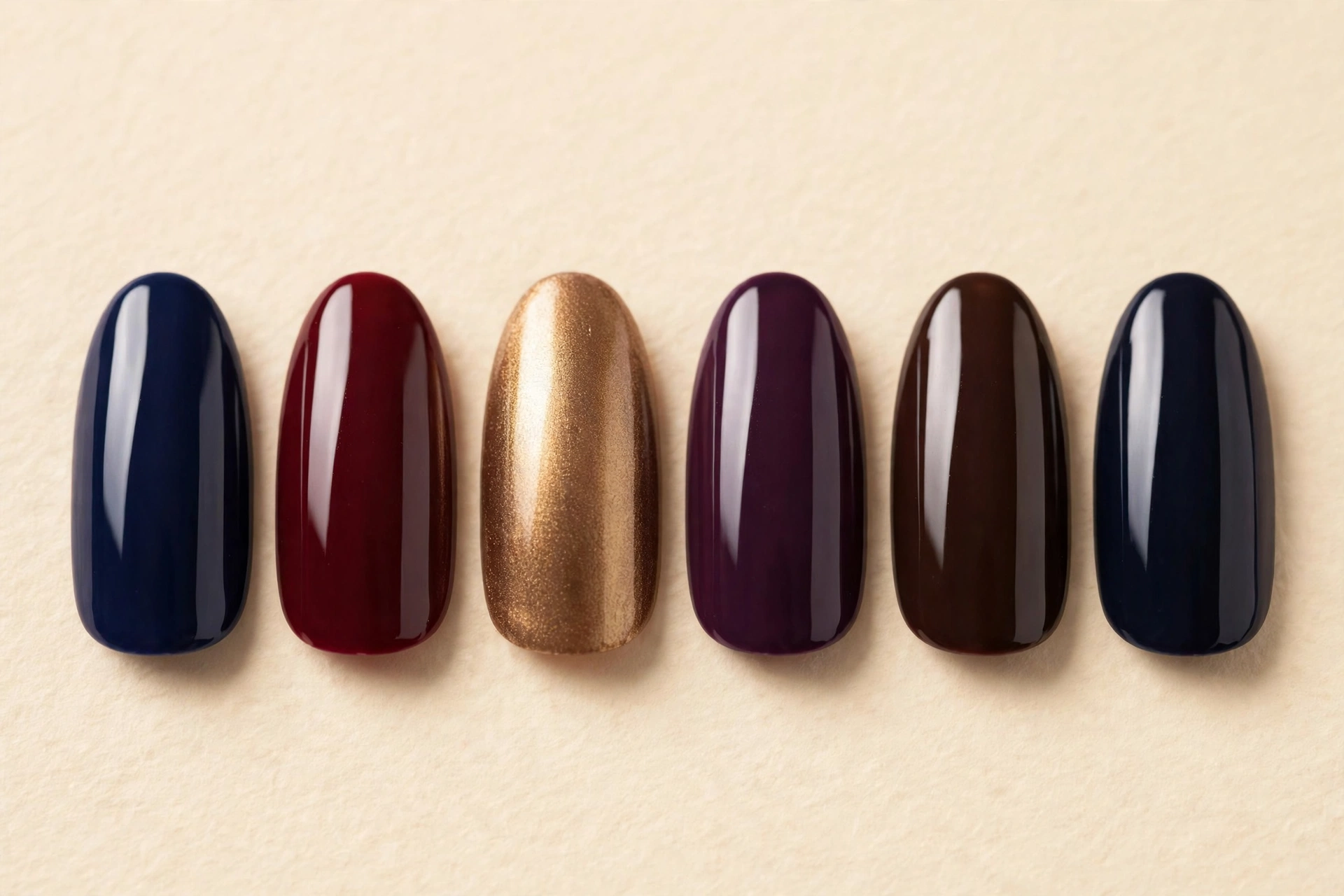
10. Sapphire Hour — #1C2440
The anchor of the blue family: a near-black sapphire, deeper and cooler than Midnight Navy, with a glossy creme finish. Sapphire Hour is for the bridesmaid who wears dark manicures year-round but wants something wedding-appropriate — it is formal, sleek, and pairs with silver jewelry better than any other shade here. On deep skin it is a seamless tonal dark; on light skin it is high drama. Keep the finish glossy; matte would read as plain black and lose the blue depth that makes it special. Compared with Midnight Navy it is one step darker and noticeably cooler, the quiet end of the navy story.
11. Plum Noir — #4A2740
A deep plum with brown undertones — the bridge between the burgundy and the near-blacks. Plum Noir has a creme finish and a warmth that keeps it from reading gothic, landing instead in elegant, evening territory. It flatters medium and deep skin tones beautifully, where cooler plums can look grey, and gives fair skin a rich, deliberate dark. Wear it to candlelit ceremonies and late receptions; it glows subtly under warm light. If you love this depth of plum, our Winter Wedding Nails palette charts more dark romantic shades in the same lane. Next to Sapphire Hour it is warmer and redder, trading blue drama for wine-plum richness.
12. Winter Espresso — #2E2118
The anchor of the palette: a near-black espresso brown with the faintest warm depth, like dark chocolate held in winter shadow. Winter Espresso is the most formal shade here — black-tie formal, gallery-opening formal. It flatters deep skin as a tonal dark and gives fair skin a striking editorial contrast. This is a long-nails shade; on very short nails it can read as a simple dark manicure rather than a choice. Wear it to the evening reception rather than the daytime ceremony, and keep it glossy. Compared with Plum Noir it is deeper, darker and browner — the difference between “wine-dark” and “chocolate-dark.”
Styling the Wedding Party’s Nails
The strongest bridesmaid-nail looks come from a plan, not a pick. Start with the dresses: blush and champagne fabrics pair best with shades 1–6, which echo the fabric without matching it; navy, emerald or burgundy dresses open the door to the deeper half of the chart. For jewelry, warm metals (gold, rose gold) harmonize with the champagne and gold shades, while silver and platinum sing against the navies and Sapphire Hour. If the wedding party is mixing shades, anchor the range: have the maid of honor wear the lightest (Ivory Whisper or Champagne Mist) and the bridesmaids graduate toward slightly deeper picks — the photos get depth without looking scattered. And confirm the bride’s own shade first; the unwritten rule stands — bridesmaids complement, never compete.
Best Occasions Beyond the Wedding
This palette was built for winter weddings, but the shades are too good to shelve after one day. The blushes (3 and 4) carry through Valentine’s season and spring events; the champagnes and golds (2, 5, 6, 7) are made for New Year’s Eve, holiday parties and any evening with candlelight; the deep end (8–12) belongs to the full winter calendar — formal dinners, office holiday events, and New Year’s parties. If your winter wedding is on New Year’s Eve itself, the metallics double as party nails, and the navy shades photograph beautifully against evening city light. For a fuller seasonal picture, our Winter Nail Colors 2027 post charts thirty shades for the whole season.
Application & Longevity Tips
- Two thin coats beat one thick one, especially for the dark shades — Sapphire Hour, Plum Noir and Winter Espresso will streak and drag if you flood the brush.
- The light shades show every imperfection. Ivory Whisper and Champagne Mist need a smooth base — buff gently and use a ridge-filling base coat, or tiny ridges will show through the pale creme.
- Cap the free edge. Bridesmaids spend the day handling flowers, glassware and dresses; sealing the edge with each coat adds real days of wear.
- Gel vs. regular: for a wedding, gel is worth it — the pale shades chip visibly in regular polish, and the dark shades show tip wear as a light line. If you only gel one part, make it the wedding set.
- Removal note for dark shades: Midnight Navy, Sapphire Hour and Winter Espresso can stain the nail plate. Use a peel-off base or double up on base coat, and don’t skip the cuticle oil afterward.
- Book the manicure 1–2 days out. Fresh gel shines best on day two, and the buffer covers a broken nail or a smudged repair without panic.
Polish & Gel Picks
- A soft ivory-cream creme with warm undertones (matches Ivory Whisper)
- A pale champagne-gold creme with subtle translucency (matches Champagne Mist)
- A blush-pink shimmer with a pearly finish (matches Blush Pearl)
- A warm rose-blush creme (matches Rosewater)
- A mid toasted-champagne creme with warm gold undertones (matches Toasted Champagne)
- A deep navy creme with blue-black depth (matches Midnight Navy)
- A near-black espresso-brown creme with warm depth (matches Winter Espresso)
Frequently Asked Questions
Should bridesmaid nails match the bride’s nails?
Complement, don’t copy. If the bride wears ivory or a pale neutral, bridesmaids in champagne, blush or the softer golds from this chart photograph as a coordinated set without anyone looking identical. Matching the bride’s exact shade is fine if she asks for it, but a tonal range usually looks richer in photos.
What nail color photographs best at a winter wedding?
Champagnes and mid golds photograph the most reliably — they catch light without blowing out and read elegant in both daylight and flash. Very pale ivories can wash out in bright flash, and near-blacks can lose detail in dark reception shots, so if the venue is dimly lit, lean toward shades 2–8 rather than the extremes.
Can bridesmaids wear dark nails to a wedding?
Yes, within reason. Deep burgundy, navy and plum are wedding-appropriate when the dress code leans formal or the wedding is an evening event — they read elegant, not rebellious. Near-black espresso is best reserved for black-tie weddings; for a daytime garden ceremony, stick to the lighter half of this chart.
How far in advance should bridesmaids get their manicures?
Book 1–2 days before the wedding. Day-one gel looks its best on day two, the shine is fresh, and you have a buffer for repairs. Regular polish needs the full 24 hours before the dress goes on, and avoid water and steam for several hours after application so the polish fully cures.
Shade inspiration palettes are a starting point — actual polish and gel colors vary by brand and salon, so always compare a swatch in natural light before committing.