
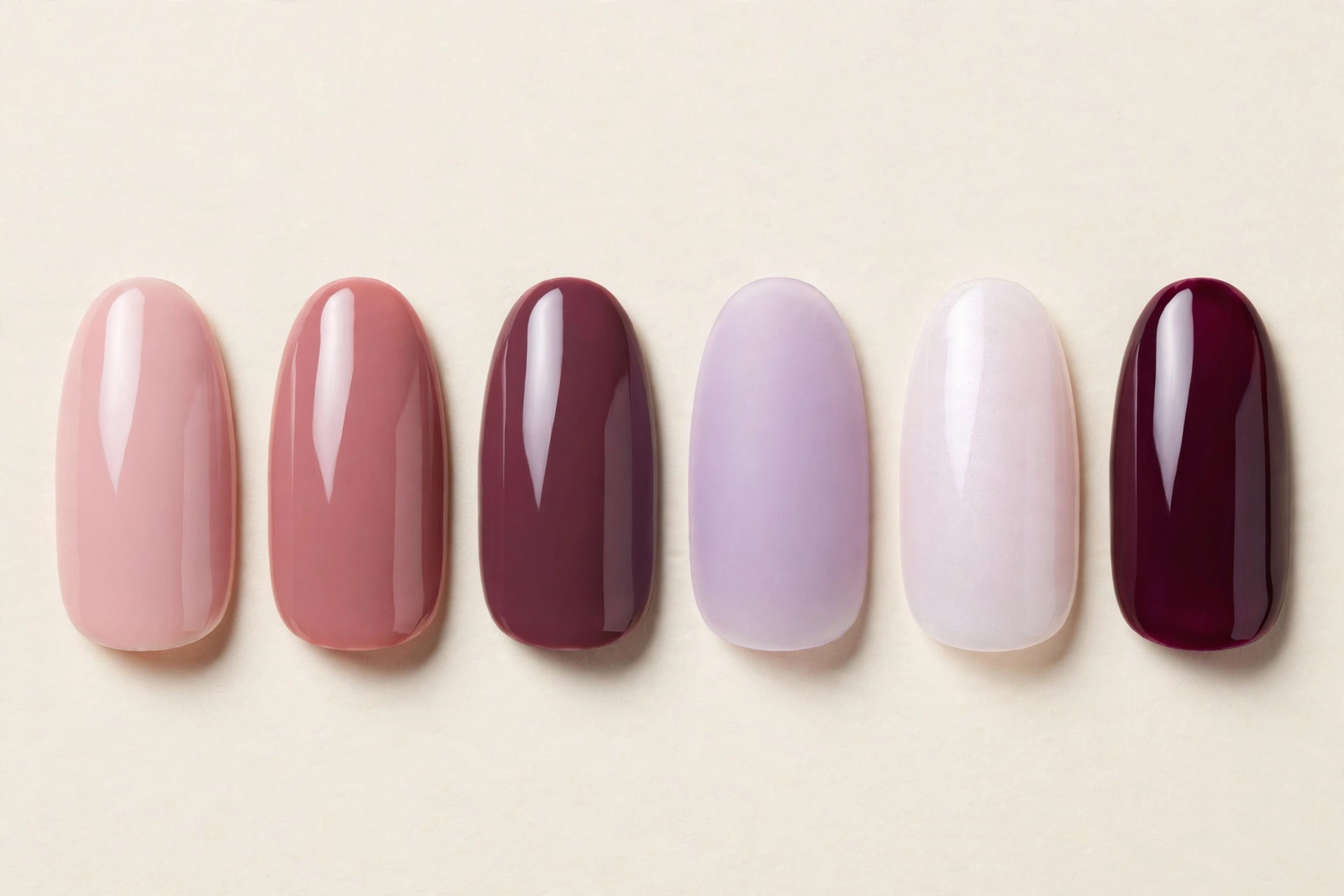
Flowers in winter sound like a contradiction, and that is exactly why winter floral nails work so well. When everything outside is bare branches and grey skies, a soft bloom on your nails feels deliberate rather than seasonal, like wearing a silk scarf with a wool coat. This palette gathers six shades inspired by the flowers that actually belong to winter: pale camellias, dusty roses, frosted lilacs and deep winter berries, each one cooled just enough to feel right in cold weather rather than borrowed from spring.
How to Use This Winter Floral Nails Palette
- Start with the season, not the flower. These are winter florals, so the shades are muted, frosted or deepened. If a shade looks like a spring pastel in the bottle, it is not the right one for this palette.
- Wear one shade, or wear the bouquet. All six shades belong to the same floral family, so painting each nail a different shade from lightest to darkest (a skittle manicure) looks like a deliberate gradient of blooms.
- Keep the finish glossy for depth. A high-shine top coat makes floral shades look like fresh petals rather than flat color, which matters most for the palest and darkest shades in this palette.
- Match your undertone, not the bottle. Cool undertones should lean toward the lilac and plum shades; warm undertones glow in the rose and berry shades in the middle and at the deep end.
- Let one accent do the talking. If you want floral nail art, keep it to one or two accent nails. A full set of painted flowers over a full set of floral shades is too much of a good thing.
1. First Frost Blossom — #F3C6D3
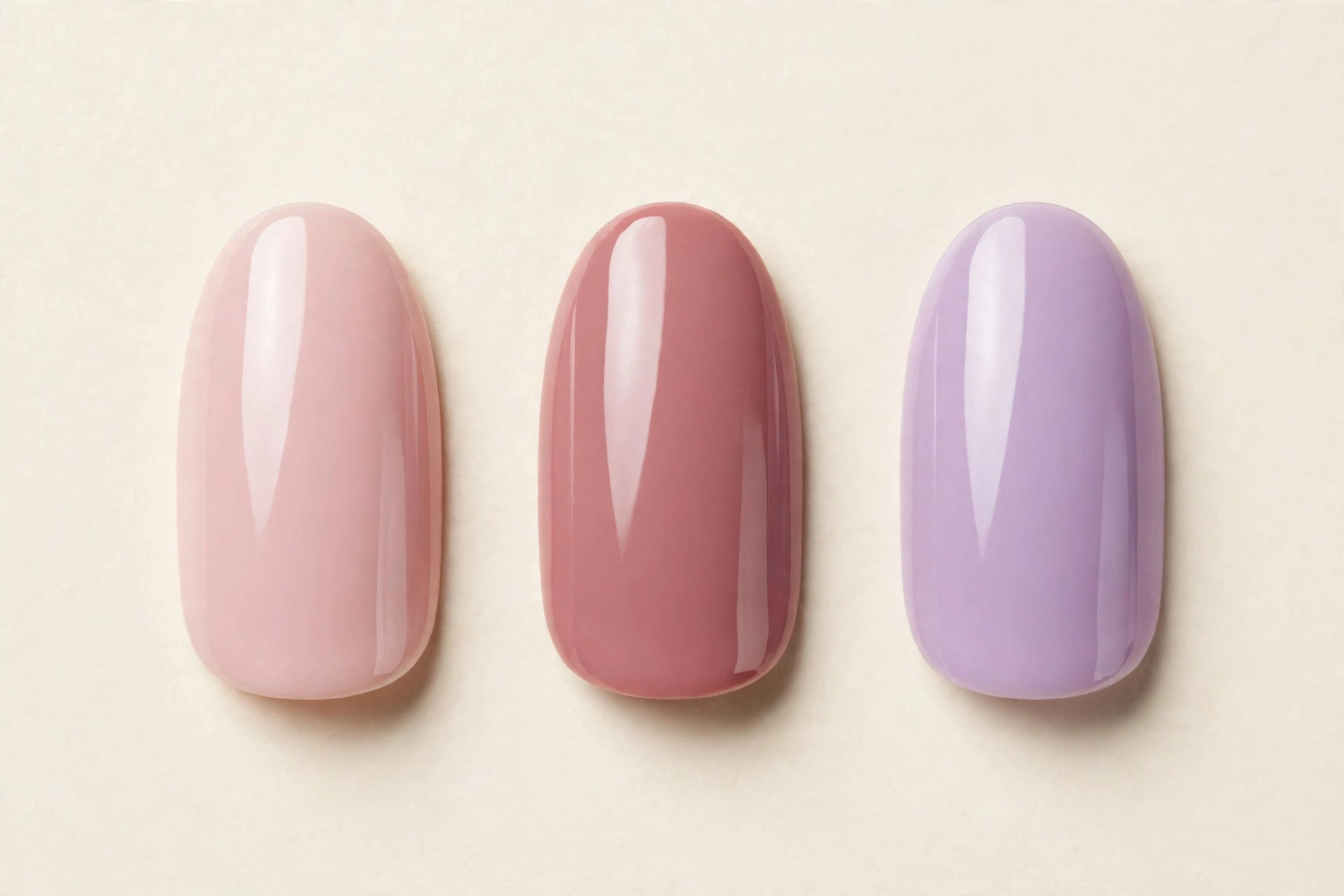
First Frost Blossom is the palest shade in this palette, a soft blush pink with a cool, frosted edge, like the first camellia to open after a cold night. It is not a bubblegum pink and not a nude: it has enough pink to read as a flower color, but the frosted undertone keeps it quiet and wintry. On the nail it looks clean and fresh, almost like a sheer wash of color in one coat and a soft, milky blush in two. This is the shade to choose when you want your manicure to look polished without looking like you tried hard, and it is one of the most forgiving pale shades for winter because the cool undertone stops it from turning warm or yellow against winter skin.
This shade flatters fair and light skin tones beautifully, giving a healthy, even look to the hands without washing them out. The trick is the frost: on very fair skin, a warm pale pink can disappear into the skin, but this cooler blush holds its own and creates a gentle contrast. Medium skin tones will find it settles into a soft, pretty pink that looks lovely on short, neatly shaped nails, especially with a glossy finish that keeps it from looking chalky. On deep skin tones, First Frost Blossom works best as a sheer or jelly-style layer, where it reads as a luminous pink tint rather than a stark pale color, or as a base for a French tip or a floral accent nail. If your hands tend to look red in cold weather, this cool blush is a kind choice, since it does not add more warmth to the picture.
First Frost Blossom is made for everyday winter wear: workdays, weekends, winter weddings as a guest, and any occasion where you want to look put-together without a bold manicure. It pairs beautifully with cream knitwear, grey wool, camel coats and silver jewelry, and it is an excellent bridesmaid shade for a winter wedding because it photographs softly and never competes with the bride. For the best result, apply two thin coats rather than one thick one, since pale frosted shades can go streaky if they are flooded on. A glossy top coat is essential here; a matte finish can make this lightest shade look dry, while shine keeps it looking like a fresh petal.
2. Dusty Rose Petal — #C98A96
Dusty Rose Petal is the romantic heart of this palette, a muted rose pink with a touch of brown that keeps it grounded and grown-up. It is the color of a dried rose rather than a fresh one: softer, dustier and more wearable than a bright rose, with enough depth to hold up under winter lighting. Indoors it looks like a warm, muted rose, and in daylight the pink tones open up and give it a gentle glow. This is the shade to choose if you love pink but find bright pinks too loud for winter, and it is the most versatile shade in the palette, working for the office, for evenings out and for the whole stretch of the cold season.
On skin, Dusty Rose Petal is remarkably democratic. Fair skin tones get a refined contrast that makes the hands look elegant, especially when the nails are kept at a medium length in an oval or almond shape. Medium and olive skin tones will find it harmonizes beautifully, since the muted rose echoes warm undertones without turning orange. Deep skin tones get a beautiful soft contrast from it, especially in a glossy crème finish, where the shade reads as a muted rose stain rather than a pale pink. If you already love muted rose manicures, this shade sits in familiar territory; for a fuller tour of the muted rose family, see our dusty rose nails palette.
Dusty Rose Petal is the workhorse of winter occasions: it suits office days, dinner parties, family gatherings and winter weddings without ever feeling underdressed or overdressed. It pairs especially well with burgundy, navy, charcoal and cream, and it is one of the few floral shades that looks equally good with gold and silver jewelry. Wear it in a crème finish for the most classic result, or add a subtle shimmer top coat for evenings if you want a little extra light. Because it is a mid-depth shade, it also grows out gracefully, which makes it a practical pick if you stretch your manicures to two weeks.
3. Frosted Lilac Bloom — #C3AED1
Frosted Lilac Bloom takes this palette in a cooler, dreamier direction: a soft lilac with a frosted, slightly greyed finish, like lavender seen through a frosted window. It is the shade in this palette that reads most like a winter flower rather than a spring one, because the frost mutes the sweetness of the lilac and gives it a calm, almost silvery quality. On the nail it looks serene and modern, and it is a wonderful choice if you want a floral manicure that does not look like everyone else’s rose-pink set. Lilac is also one of the easiest floral shades to wear with winter’s grey, silver and navy wardrobe, since it echoes those cool tones rather than fighting them.
This shade is particularly flattering on cool and neutral undertones, because the frosted lilac base echoes cool skin rather than competing with it. Fair cool skin tones will find it gives a chic, icy contrast without the harshness of a true blue or purple, and it is an excellent alternative to grey when you want something softer. Warm skin tones should wear it in a glossy finish, which brings out the lilac warmth and stops the frost from reading grey. On deep skin tones, Frosted Lilac Bloom looks striking as a statement shade, especially on short square or squoval nails where the shape keeps it modern, though it reads bolder there than the rose shades do, so try one nail first if you are unsure. If your skin has visible redness, this cool shade is also a kind choice, since lilac tones down pink in the hands rather than amplifying it.
Frosted Lilac Bloom shines at occasions that call for quiet polish with a twist: work events, winter brunches, gallery visits and any gathering where you want your manicure noticed but not loud. It is also a superb everyday shade for people who find the rose shades too familiar but are not ready for the darkest shades in this palette. Styling-wise, it loves silver jewelry, grey wool, navy coats and white knitwear, and it looks striking with a single silver ring or a simple bracelet. Apply it over a ridge-filling base coat for the smoothest result, since frosted shades show every ridge and imperfection if the nail surface is uneven.
4. Winter Camellia — #A85D74
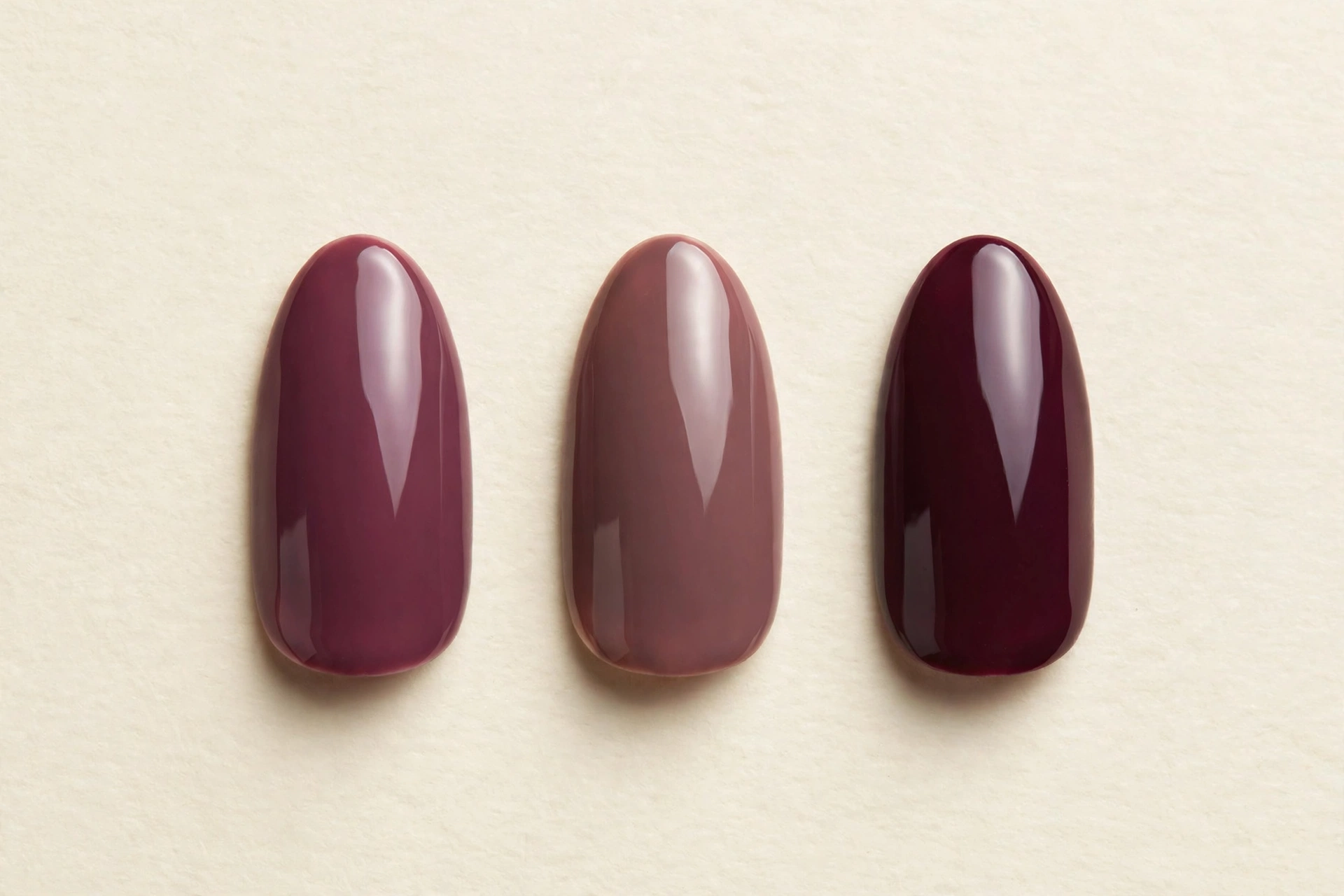
Winter Camellia is where this palette turns unmistakably rich: a deep rose with a warm, velvety depth, named for the camellia that blooms while the rest of the garden sleeps. It keeps the pink heart of the lighter shades but deepens it into a true winter color, like a rose held up to lamplight. On the nail it looks darker than it does in the bottle, which is typical of deep rose shades, so expect a lush, glossy color that still shows its floral character in bright light. This is the shade to reach for when a regular rose feels too quiet for the occasion but a full burgundy feels too heavy.
Winter Camellia flatters a wide range of skin tones, but it is especially beautiful on medium and deep skin, where the depth creates a luxurious, tonal effect that looks like it was made for the hands. Fair skin tones get a dramatic contrast that makes the manicure the focal point, which works beautifully for evenings and parties, though it can feel bold for a first-time deep shade wearer. Warm undertones will see the rose base warm it up nicely, while cool undertones will pull out the berry and plum notes hiding underneath. If you love deep rose manicures and want to explore the family further, our winter rose nails palette goes deeper into that rose territory.
This is a holiday-party, date-night and celebration shade through and through. It pairs with black velvet, satin, deep jewel tones and winter whites, and it is one of the best shades in this palette for a winter wedding guest or a New Year’s Eve manicure that is not glitter. For longevity, deep rose shades benefit from a gel finish or a long-wear top coat, because chips show more clearly on dark colors than on light ones. Keep your cuticles moisturized too: dark shades draw the eye to the whole nail area, and neat cuticles make the difference between a good manicure and a great one.
5. Plum Frost — #7A4A63
Plum Frost is the most purple-leaning shade in the palette, a deep plum-rose pulled toward berry, with a cool frosted edge that keeps it wintry. It is still unmistakably floral, because the rose base keeps it soft, but the plum influence gives it a mysterious, evening-ready quality that the lighter shades do not have. In low light it can read almost like a dark plum, while in daylight the rose warmth comes back, so it shifts with the light in a way that makes it interesting to wear for days. This is the shade for people who love deep plum manicures but want something softer and more floral than a straight purple.
Cool undertones will love Plum Frost immediately, since plum is one of the most flattering deep families for cool skin. Fair cool skin gets a striking, elegant contrast, and the shade looks particularly refined on longer nails where the color has room to show its depth. Neutral skin tones can wear it easily too, especially with a glossy finish that keeps the plum from reading too dark. Warm and olive skin tones should try it before committing to a full manicure, because plum can occasionally pull grey on very warm skin; if it does, layering it over a warm base or choosing the camellia shade instead will solve the problem. On deep skin tones it reads as a rich, dark berry-plum that is gorgeous for evenings.
Plum Frost is made for winter evenings, formal events and any occasion where you want a manicure with presence. It pairs beautifully with silver jewelry, black outfits, deep navy and charcoal, and it is a natural partner for a smoky eye or a berry lip. Because it is a cool-leaning dark shade, it also works well as an accent: paint nine nails in Winter Camellia and one accent nail in Plum Frost, or reverse the combination, for a tonal look that stays within the floral family. Two coats are usually enough for full opacity, but a third thin coat will deepen the plum even further if you prefer an almost-black result.
6. Midnight Berry Bloom — #4E2A3A
Midnight Berry Bloom is the darkest shade in the palette, a near-black berry-plum that only reveals its floral character in direct light. At first glance it looks like a very dark berry, almost black, but hold your hand up to the light and the deep rose and plum undertones glow through. This is the shade that gives you the drama of a black manicure without the flatness of one, and the richness of a berry manicure without the brightness. It is the boldest choice here, and also, paradoxically, one of the easiest to wear, because dark neutrals go with everything.
Every skin tone can wear Midnight Berry Bloom, which is part of its appeal. On fair skin it creates a high-contrast, editorial look that is striking on short nails and elegant on long ones. On medium and olive skin it reads as a deep, glossy neutral that lengthens the look of the fingers. On deep skin it becomes a tonal, almost-black stain with a warm berry glow in the light, which is softer and more flattering than a true black polish. If you have been curious about dark winter nails but found black too stark and burgundy too red, Midnight Berry Bloom is the middle path that solves both problems.
Midnight Berry Bloom is the ultimate winter-evening shade: holiday parties, New Year’s Eve, formal dinners and nights out all suit it perfectly. It is also surprisingly practical for everyday wear, because it hides tip wear better than mid-tone shades and pairs with every color in a winter wardrobe, from cream knitwear to black coats. For the most polished result, use a high-gloss top coat and reapply it every two to three days to keep the shine, since dark shades lose their impact the moment they go dull. Short, neatly shaped nails keep this darkest shade looking chic rather than severe, which makes it an excellent pick if you keep your nails short in winter.
Winter Floral Nails Polish and Gel Picks
You do not need a specific brand to get this palette right; you need the right tone and finish. For polish, look for a creamy blush pink crème for shade 1, a muted dusty rose crème for shades 2 and 4, a frosted lilac crème for shade 3, and a richly pigmented plum-berry crème for shades 5 and 6. A ridge-filling base coat is worth using under the frosted and deeper shades, since they show nail texture more than mid-tone colors do. For gel, choose a soak-off floral gel polish in your preferred depth and pair it with a high-gloss gel top coat; gel is the better choice for the darkest two shades, because it keeps the shine that makes them look expensive and resists the chips that show up fastest on dark colors. Whichever route you take, finish with cuticle oil daily: floral shades look their best when the skin around the nail is as cared for as the color itself.
Styling Winter Floral Nails for Winter
Winter floral nails are one of the easiest floral looks to style because the palette is already muted for the season. With cream, oatmeal and camel knitwear, the lighter shades create a soft tonal story, while the darker shades provide contrast that keeps a pale outfit from looking washed out. With black, charcoal and navy, the whole palette works, but the camellia and plum shades are the stars, adding warmth to cool dark outfits without clashing. With leather, denim and suede, the rose and berry shades feel right at home, echoing the natural warmth of the materials. For jewelry, gold warms up the rose shades beautifully, while silver suits the lilac and plum shades best.
If you want contrast rather than harmony, pair this palette with a deep green. A pine-green coat, scarf or bag next to a camellia or plum manicure gives you the classic winter garden combination of bloom and foliage, and it works because both sides are deepened for winter. Our pine nails palette explores that deep green side if you want to build a full foliage-and-bloom rotation. For a softer contrast, wear the frosted lilac or blush shades alongside a milky neutral; our frosted almond nails palette shows how those milky shimmer neutrals work as a quiet partner to a floral set.
Floral Nail Art Ideas That Suit Winter
The simplest way to add flowers to this palette is to let the shade be the flower and add only a small detail. A single tiny white or gold dot at the base of the ring finger, a thin gold line near the cuticle, or a small five-petal daisy on one accent nail all add interest without breaking the palette’s soft winter mood. If you want more detail, paint a small sprig — a thin stem with two or three tiny petals — on the ring finger over First Frost Blossom or Dusty Rose Petal, and keep the other nails plain. The contrast between one painted nail and nine plain ones is what makes the art look intentional rather than busy.
For a frosted effect, try a matte top coat on one accent nail only. Matte over Frosted Lilac Bloom gives a true frost-on-glass look, while the other nails stay glossy, and the difference in finish reads as a design choice rather than a mistake. A French tip in Midnight Berry Bloom over a sheer blush base is another elegant option that uses the darkest shade as an accent rather than a full color. Avoid pairing this palette with bright neon art, heavy glitter or large spring-style flower decals, which fight the muted, frosted character of the colors; if you want sparkle for the holidays, a fine gold shimmer top coat over Winter Camellia gives you festivity without losing the floral feeling.
Winter Floral Nails vs. Similar Winter Shades
It helps to know where winter florals end and their neighbors begin, especially since winter is full of similar rose and berry shades. Compared with a straight burgundy, winter floral nails are softer and more varied: burgundy leans wine and red, while this palette moves from blush to berry with lilac and plum stops along the way. Compared with dusty rose, which stays in one muted rose lane, winter florals are a wider bouquet, adding lilac coolness and berry depth to the rose. Compared with a spring floral manicure, which is bright, pastel and sunny, winter florals are frosted, muted or deepened, which is what makes them wearable with wool coats and dark denim. If you like the softness of dusty rose but want more range for winter, this palette is the natural next step.
For readers building a full winter rotation, winter florals also pair well with other seasonal palettes. Wear them alongside deep rose shades for a tonal rose story, or contrast them with icy and frosted shades when you want a warm-versus-cool balance across a manicure. The gradient approach works here too: start the week in First Frost Blossom, move through Dusty Rose Petal and Winter Camellia, and end the month in Midnight Berry Bloom, letting the palette darken as winter deepens.
Application and Longevity Tips for Floral Shades
Floral shades reward good prep, and the pale and dark ends of this palette reward it most. Start with clean, dry nails, push back cuticles gently and buff lightly so the surface is smooth. Always use a base coat: it prevents the deeper berry and plum shades from staining the nail plate, which matters because berry pigments are among the most likely to leave a tint behind, and it gives the pale frosted shades a smooth surface that stops streaking. Apply two thin coats, letting the first dry fully before the second, and cap the free edge with each coat to slow down tip wear. Finish with a glossy top coat, and reapply a thin layer of top coat every two to three days to keep the shine and protect against chips.
Removal deserves the same care. Soak a cotton pad in remover, hold it on the nail for ten seconds before wiping, and wipe in one direction rather than scrubbing, which keeps dark pigment from staining the surrounding skin. Follow with hand cream and cuticle oil, and give your nails a day or two bare between dark manicures if you wear them back to back all winter. Stored properly, with bottles kept upright and tightly closed, floral polishes last well, though the frosted shades can thicken over time; a few drops of polish thinner, never remover, will bring them back.
The shades in this post are an inspiration palette to help you find your perfect winter floral tone; exact colors may vary slightly by brand, finish and lighting.
Frequently Asked Questions
What are winter floral nails?
Winter floral nails are manicures inspired by winter-blooming flowers — camellias, dusty roses, frosted lilacs and deep winter berries — in shades that are muted, frosted or deepened for cold weather. Unlike spring florals, which are bright and pastel, winter florals use softer, cooler or darker tones that work with a winter wardrobe of wool, leather and dark denim.
Are floral nails good for winter?
Yes, floral nails work beautifully in winter when the shades are chosen for the season. Pale blush and frosted lilac give a fresh contrast to heavy winter clothing, while deep rose, plum and berry shades suit holiday parties and evenings. The key is avoiding bright spring pastels and choosing frosted, muted or deep floral tones instead, which is exactly what this palette does.
Which winter floral shade suits my skin tone?
Fair skin tones look beautiful in the full range, but the lighter blush and lilac shades give a softer everyday effect while the darkest berry shade creates striking contrast. Medium and olive skin tones glow in the dusty rose and camellia shades, where the warm rose base harmonizes with warm undertones. Deep skin tones can wear all six shades, with the camellia, plum and midnight berry shades giving a particularly rich, tonal result. If you are unsure, start with Dusty Rose Petal, the most universally flattering shade in the palette.
How do I add flower nail art without it looking too busy?
Keep the art to one or two accent nails and keep the other nails plain. A tiny five-petal flower, a small sprig or a single gold dot on the ring finger is enough, especially when the base shade is already floral in tone. Choose art colors that echo the palette — white, gold or a deeper shade from the same family — rather than introducing bright new colors, and finish with a glossy top coat to tie the whole set together.