
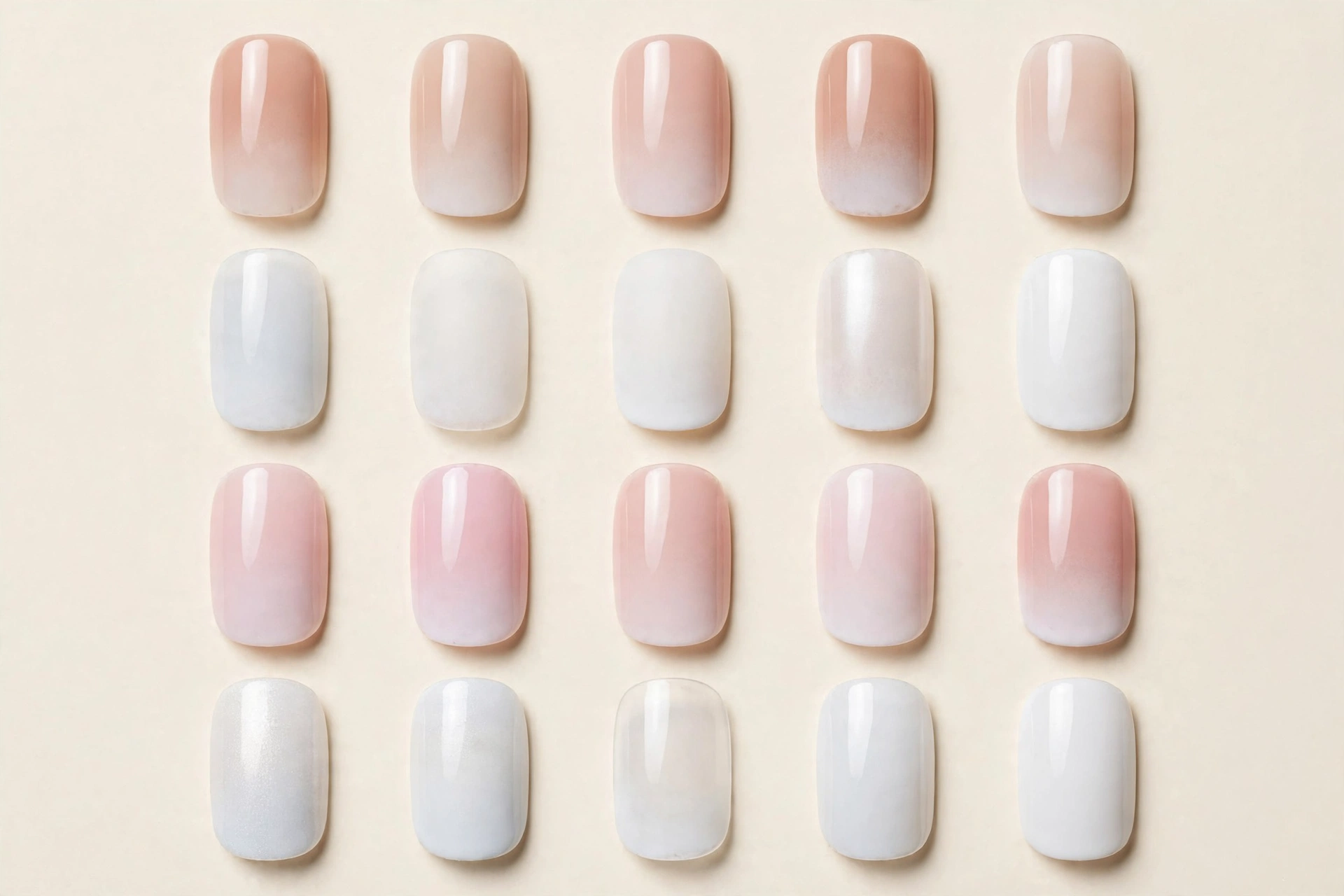
Winter french ombre nails take the clean, familiar French tip and soften its hard edge into a gradient, so the white melts into the base instead of stopping in a sharp line. The result is quieter than a classic French manicure and more finished than a plain nude, which is exactly why it suits winter so well: it looks polished in cold light, it goes with heavy knits and dark coats, and it never fights with the rest of an outfit. This palette gathers six versions of that idea, from a true frosty white fade to a warm nude and a pale pink, so you can pick the gradient that suits your skin tone and your week rather than settling for a single shade of white.
What Are Winter French Ombre Nails?
Winter french ombre nails are French manicures in which the tip colour is blended, not painted on as a separate band. In a traditional French manicure, a white tip sits on a pink or nude base with a clear line between the two. In an ombre version, that line disappears: the white is sponged, airbrushed or brushed out so it fades gradually into the base colour, giving the nail a soft, misty look from cuticle to tip. The winter version of the idea leans colder and paler than a summer ombre, with frosty whites, icy pale pinks and cool nudes replacing brighter or warmer gradients.
The reason the winter version works so well is that it borrows from the season without turning into a themed manicure. A frosty gradient reads as winter because it looks like the first light on a cold morning — pale, clean and a little luminous — but it does not rely on snowflakes, glitter or holiday colours to make its point. That makes it wearable for a long stretch, from the first cold weeks through the holidays and into the quieter part of January, when a bright festive manicure would start to feel out of place but a bare nail would feel unfinished. It is also forgiving in a way that a sharp French tip is not: a gradient hides small imperfections in the blend, and regrowth at the cuticle is far less obvious against a soft base than it is against a stark white tip.
The other thing that defines this palette is range. Not every winter ombre should be the same white over the same pink. Some people want a bright, almost snowy tip that stands out against a pale base, while others want a barely-there fade that reads as a clean, healthy nail from a normal distance. Skin tone, nail length and the rest of your wardrobe all change which version looks best, and the six shades below cover that range deliberately: two whites, two pinks and two nudes, each with a different undertone and a different level of contrast. If you already enjoy gradient manicures in other colours, our ombre nail color combos palette shows how the same blending idea plays out across bolder shades, from pastels to deep jewel tones.
How to Use This Palette
- Keep the fade high and soft. The most flattering winter ombre places the densest white right at the free edge and lets it dissolve by about halfway down the nail. A fade that stops too low looks like a half-finished French tip; a fade that starts too high looks like a white nail.
- Match the base to your skin, not to the tip. The white tip is the same in most versions, so the base is where the shade should do its work. Cool skin suits a pink or icy base, warm skin suits a nude or peach-leaning base, and neutral skin can wear either.
- Choose contrast by occasion. A high-contrast white fade is the dressier version, good for weddings, parties and photographs. A low-contrast, barely-there fade is the everyday version, good for work, school runs and weeks when you do not want your nails to be a talking point.
- Mind the shape. Ombre gradients look cleanest on oval, almond and soft squoval shapes, where the fade can follow the curve of the tip. Very square nails can still work, but keep the fade gentle so the corners do not look heavy.
- Seal the tip well. White and pale shades show tip wear faster than dark shades, so cap the free edge with base and top coat, and reapply a thin top coat every two to three days.
- Keep cuticles neat. Pale gradients draw the eye to the whole nail area, including the cuticle, so push cuticles back gently and use cuticle oil daily. A tidy cuticle line makes a soft gradient look intentional rather than unfinished.
1. First Frost — #FDFBF7
First Frost is the palette’s classic winter ombre: a clean, soft white tip fading into a sheer, warm-white base, the colour of fresh snow in morning light before the sun gets strong. It is not a stark, blue-white, which can look harsh against the skin in winter, and it is not a cream either — it sits just on the warm side of true white, which keeps it looking soft rather than clinical. In a glossy finish it has a smooth, almost glassy look, and because the base is sheer rather than opaque, the natural nail shows through faintly at the cuticle, which keeps the whole manicure from looking like a set of press-ons. This is the shade to choose when you want the most recognisable version of a winter French ombre, the one that reads as polished from across a room and photographs cleanly.
On skin, First Frost is generous, but it rewards a little care with the base. Fair skin tones will find the warm-white base keeps the manicure from washing the hands out, especially if the nails are kept at a neat medium length in an oval or almond shape. Medium and olive skin tones get a gentle contrast effect, where the pale fade brightens the hands without the harshness of a pure white tip, and the warm undertone of the base stops the white from looking grey against golden skin. Deep skin tones will see the strongest contrast, which can be beautiful if that is what you want — a crisp, luminous tip against deep skin is striking for evenings — but if you prefer a softer effect, ask for the fade to start lower and the base to be a touch more opaque, which tones the contrast down. If you have ever found a classic French tip too severe, this softened, warm-white version is the fix.
First Frost suits the occasions that call for a clean, put-together manicure without a colour statement: winter weddings, work events, family gatherings, and any week when you need one manicure to suit several different outfits. It pairs with cream knitwear, camel coats, black, navy and grey, which covers most of a winter wardrobe, and it sits happily beside both gold and silver jewellery. For the best result, build the gradient in thin layers rather than one heavy application, since pale shades pool at the cuticle if applied too thickly, and finish with a glossy top coat — this white loses its frosty freshness the moment it goes dull. It also makes a good starting point if you are new to ombre: the contrast is clear enough to see what you are doing, but the blend is forgiving enough to hide a less-than-perfect fade.
2. Barely Pink Dawn — #F6DDE0
Barely Pink Dawn is the palette’s softest pink: a pale, cool pink base fading into a milky white tip, the colour of a winter sunrise reflected in snow. It is pink enough to read as pink, but pale enough to behave like a neutral, which is a useful combination in winter when a stronger pink can feel out of season. The pink here is cool rather than peachy, with no orange warmth, so it stays fresh in cold light and does not turn salmon against the skin. In a glossy finish it looks like a healthy, polished nail rather than a coloured one, which is why it is often the shade people reach for when they want their nails to look cared for without looking decorated.
Skin-tone wise, Barely Pink Dawn flatters cool and neutral undertones most naturally, because its cool pink base echoes cool skin rather than fighting it. Fair cool skin will find it gives a fresh, clean look that lengthens the appearance of the nails, especially in an oval shape, and it is one of the few pale pinks that does not disappear entirely on fair skin. Medium skin tones will see it as a soft, brightening pink that sits gently against the skin, and it pairs naturally with silver jewellery and with cream, grey and soft blue clothing. Deep skin tones get a delicate contrast effect, where the pale pink reads as a light, luminous wash, and it works best when the tip is kept soft rather than bright white, so the gradient stays gentle. If you love a frosty pink but want it in a solid, non-ombre form, our icy pink nails palette gathers six soft frosty pinks in full.
Barely Pink Dawn is made for daytime winter occasions: office days, brunch gatherings, shopping trips, and weeks when you want a manicure that looks good in every setting without drawing attention to itself. It pairs with pastels, soft neutrals and pale winter colours, and it is a natural partner for a light pink lip or a bare, moisturised lip rather than a bold one. Because it is so pale, neat application matters: two thin coats of the base, a gentle sponge or brush fade for the tip, and a glossy top coat to keep the pink from looking flat. It also hides regrowth well, since a millimetre of growth at the cuticle is far less visible against a pale pink base than against a dark or saturated shade, which makes it a practical choice for a busy winter.
3. Icy Porcelain — #EEF2F5
Icy Porcelain is the palette’s coldest shade: a pale, blue-white tip fading into a sheer, cool-toned base, the colour of ice on a windowpane. Where First Frost leans warm and Barely Pink Dawn leans pink, Icy Porcelain leans deliberately cool, with a faint blue-grey undertone that gives it a crisp, winter-morning clarity. It is the shade that looks most like winter itself, and it is the one to choose when you want the ombre to feel frosty rather than soft. In a glossy finish it has a clean, almost glass-like shine, and because the base is cool and sheer, the gradient reads as light itself fading across the nail rather than as a colour sitting on top of it.
This shade is particularly flattering on cool and neutral undertones, because its cool base echoes cool skin and makes the hands look bright and fresh. Fair cool skin tones will find it gives a chic, editorial effect without the harshness of a pure white manicure, and it is an excellent choice for anyone who wants a winter nail that is pale but not pink. Warm skin tones can wear it too, but the effect is bolder: the cool white becomes a deliberate contrast against warm skin, which works beautifully for evenings and photographs strikingly. On deep skin tones, Icy Porcelain is the most dramatic shade in the palette, a bright frost against deep skin that reads as a statement, so it suits occasions where you want the manicure to be noticed. If you prefer your cool tones a little softer, First Frost is the warmer alternative in this same palette.
Icy Porcelain suits occasions that lean crisp and modern: a winter wedding, a formal dinner, a holiday party where the outfit is already sleek, or a photo-heavy event where you want the nails to look clean and bright. It pairs beautifully with silver jewellery, black outfits, white and cream clothing, and cool jewel tones like sapphire and icy blue, and it is a natural partner for a cool-toned red lip if you want a classic contrast — frosty nails and a red lip are a winter combination that never looks accidental. Because it is a pale, cool shade, use a base coat to protect the nail plate and to give the sheer base something even to grip, and apply the gradient in thin layers so the blue undertone stays icy rather than turning grey. It also makes a superb accent beside the warmer shades in this palette: a full Icy Porcelain manicure with one warm nude accent nail, or the reverse, gives you a winter gradient with a little more personality.
4. Warm Cashmere Nude — #D9B8A6
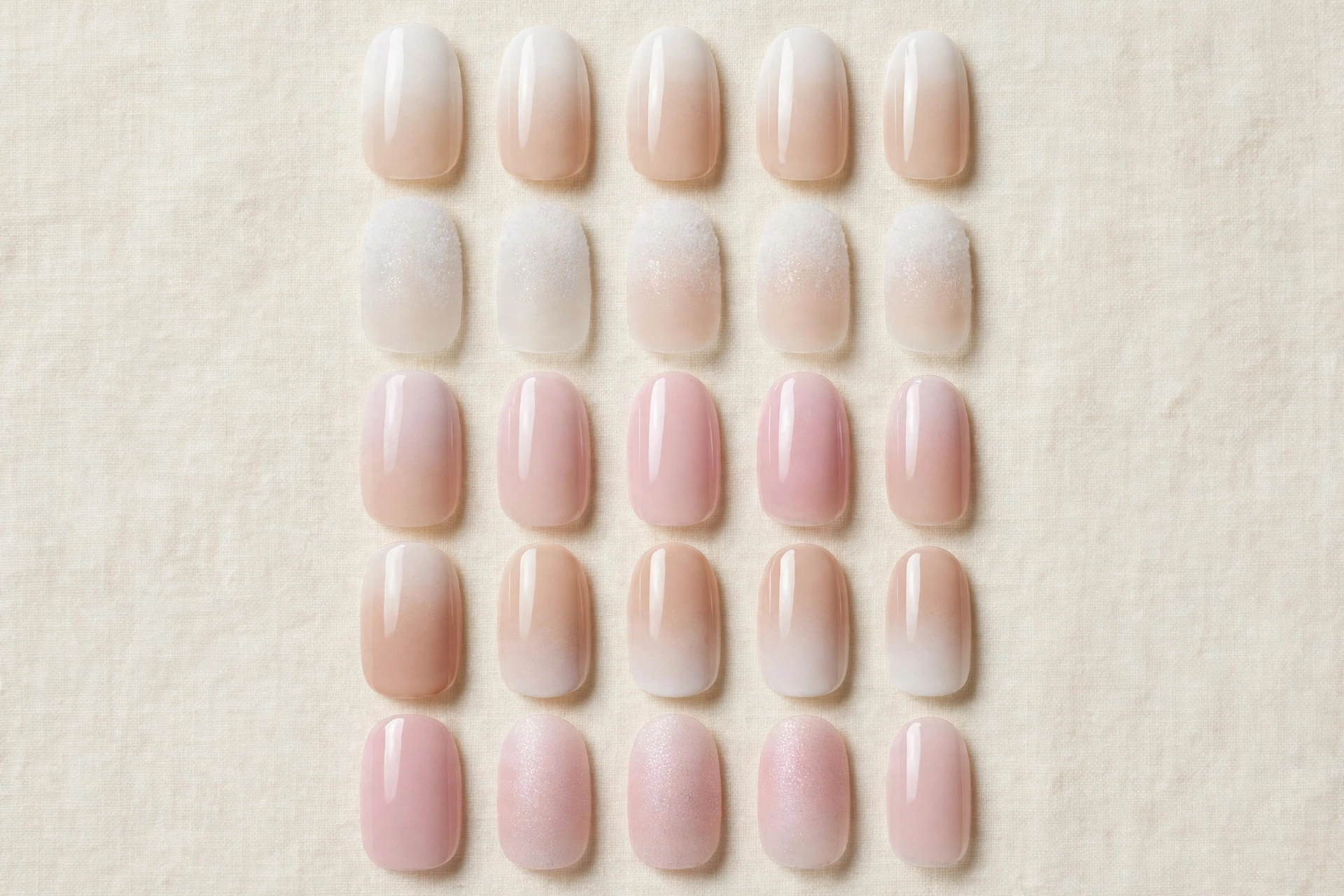
Warm Cashmere Nude is the palette’s warm anchor: a soft, warm nude base fading into a creamy white tip, the colour of a cashmere sweater in winter light. It is the least frosty shade here, and that warmth is its strength. Where the first three shades lean cool and pale, Warm Cashmere Nude leans cosy, with a gentle peach-beige undertone that makes the hands look warm even on a cold day. In a glossy finish it looks like a well-cared-for natural nail with a little extra polish, which means it pairs with far more of a wardrobe than a stark white ombre ever could, from camel and chocolate to rust and olive.
On skin, Warm Cashmere Nude is kind to warm and neutral undertones in particular, because its peach-beige base echoes warm skin without turning orange, and it gives medium and olive skin a soft, tonal look that lengthens the nails. Fair warm skin will find it gives a healthy, natural effect that never looks like a colour statement, especially on short to medium nails in a soft squoval shape. Deep skin tones will see it as a gentle, warm contrast that brightens the hands, and it pairs naturally with gold jewellery and with warm-toned clothing. Cool undertones can wear it too, but the effect is softer and more neutral than the cool shades in this palette — if you have cool skin and want this warmth, keep the tip creamy rather than bright white, so the gradient stays in the same warm family.
Warm Cashmere Nude is made for the everyday side of winter: work weeks, errands, cosy weekends, and any stretch when you want a manicure that looks good without thinking about it. It pairs with camel coats, brown leather, cream knitwear, denim and warm neutrals, and it looks particularly good with gold jewellery, which echoes its warm undertone. It also works as the base for the rest of the palette: a cashmere nude manicure with one frosty white accent nail is a subtle nod to the ombre idea, and a cashmere base with a slightly brighter tip is an easy evening upgrade. Apply it in two thin coats, since warm nudes can look streaky in a single thick coat, and finish with a glossy top coat to keep the nude from looking flat. It is also the most forgiving shade in this palette for regrowth, since the base is close to a natural nail tone.
5. Frosted Rosewater — #EFC9CD
Frosted Rosewater is the palette’s romantic pink: a muted rose-pink base fading into a soft white tip, deeper and warmer than Barely Pink Dawn but still pale enough to read as a winter shade. It has a gentle rose undertone, not a bright or bubblegum pink, so it looks like a flushed cheek in cold air rather than a summer pink carried into winter. That muted quality is what makes it so wearable: it gives you colour without brightness, warmth without orange, and a gradient that looks intentional from a normal distance. In a glossy finish it has a soft, dewy look, and it is the shade in this palette that most people describe as pretty rather than merely neat.
This shade flatters a wide range of skin tones because its rose undertone sits in the middle of the pink family. Fair skin tones will find it gives a healthy, rosy effect that brightens the hands, especially on medium-length nails where there is enough surface for the gradient to show. Medium and olive skin tones will see it settle into a soft, flattering rose that never turns muddy, particularly when the nails are kept neat and the finish is glossy rather than matte. Deep skin tones get a beautiful contrast effect, where the muted rose stands out gently against the skin, and it pairs naturally with both gold and rose-gold jewellery. If you have ever wanted to wear pink nails in winter but felt a bright pink was too summery, Frosted Rosewater is the version that solves that problem.
Frosted Rosewater suits occasions that lean soft and celebratory: winter dates, holiday lunches, bridal showers, and evenings where you want to look polished rather than dramatic. It pairs with blush, cream, dusty rose, grey and soft white, and it looks particularly good with rose-gold jewellery, which echoes its undertone. It also works well as a bridge shade: a Frosted Rosewater manicure sits happily beside both the cool whites and the warm nudes in this palette, so if you are choosing ombre shades for two hands or for a group, it is the shade that ties the others together. For application, build the rose base in two thin coats and keep the white tip soft, since a bright white tip over a rose base can look like a classic French tip rather than an ombre — the fade is what makes this shade winter rather than simply French.
6. Snowcap Pearl — #F2EDE8
Snowcap Pearl is the palette’s luminous finish: a pale, pearly base with a fine shimmer fading into a soft white tip, the colour of snow under a low winter sun. It is not a glitter shade, and it is not a chrome either — the shimmer is fine and even, more like a pearl than a sparkle, which gives the nail a gentle glow rather than a flash. That glow is what sets it apart from the other whites in this palette: First Frost is clean, Icy Porcelain is crisp, and Snowcap Pearl is luminous, as if the nail itself were catching light. In a glossy finish the pearl effect deepens, and the gradient becomes a slow shift from glow to white rather than a simple fade.
Every skin tone can wear Snowcap Pearl, which is part of its appeal. On fair skin it creates a soft, tonal look that lengthens the appearance of the nails, especially in an oval or almond shape, and it photographs beautifully because the pearl catches light without competing with the rest of the outfit. On medium and olive skin it reads as a clean, luminous contrast that brightens the hands, and it pairs naturally with both gold and silver jewellery. On deep skin it becomes a striking light-versus-dark contrast, a pale pearl that stands out elegantly, and it is one of the few pale shades that looks as good on deep skin as it does on fair skin, because its warm pearly undertone keeps it from looking chalky. If you have ever found pure white polish too stark, this pearly version is worth trying.
Snowcap Pearl suits the dressier occasions of the season as well as the quieter ones: winter weddings, holiday parties, New Year gatherings, and evenings where you want a little light in the manicure without glitter. It pairs with every colour in this palette and with every colour in a winter wardrobe, from cream knitwear and silver jewellery to black velvet and jewel tones. It also hides small imperfections well, since the fine shimmer diffuses the eye across the nail rather than focusing it on one spot, which makes it a practical choice if your nails have ridges or uneven texture. Apply it over a ridge-filling base coat, since pale pearly shades show nail texture more than opaque ones, and finish with a glossy top coat to keep the pearl looking fresh rather than flat. Reapply top coat every few days, as pale shades lose their impact the moment they go dull.
Winter French Ombre Nails Polish and Gel Picks
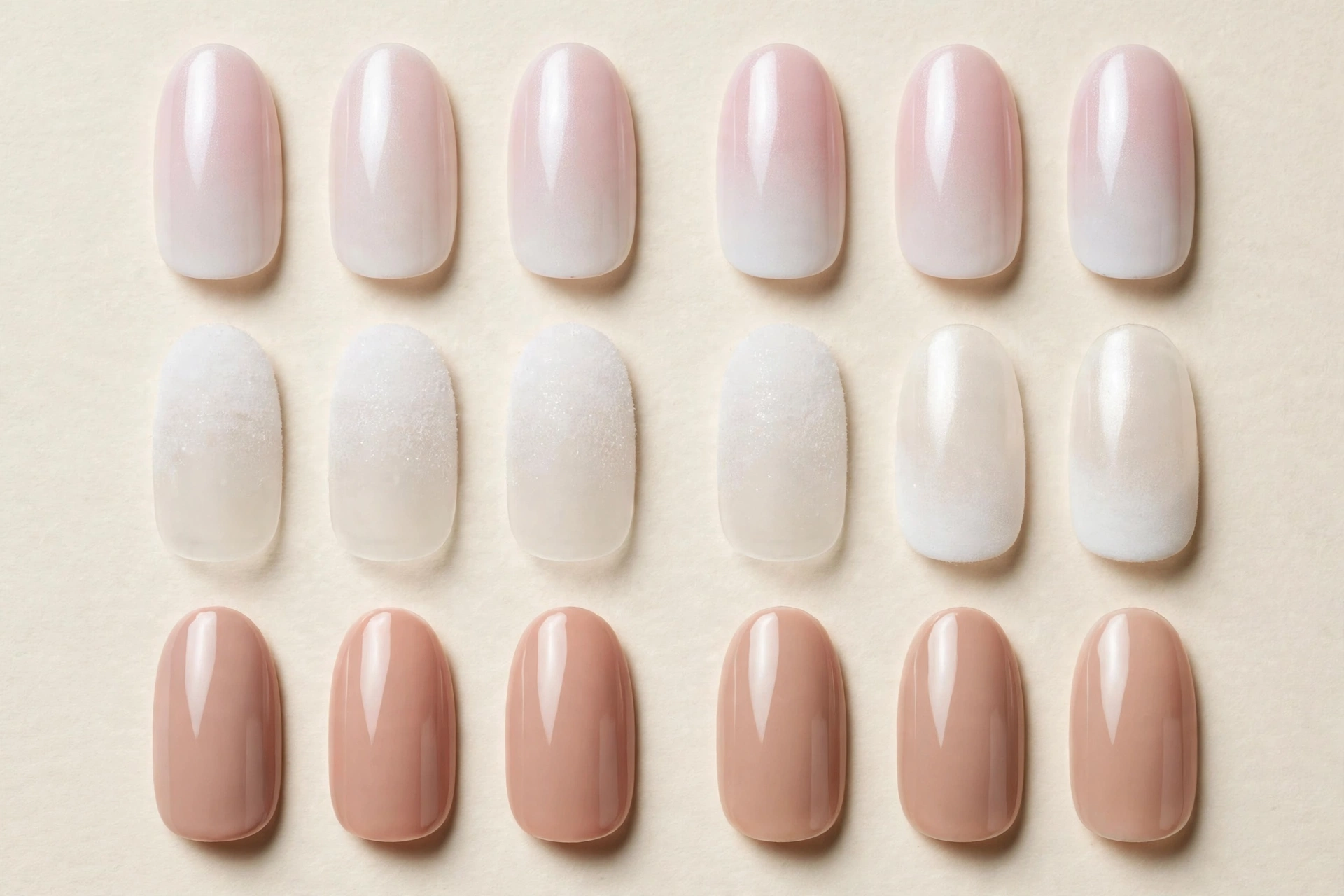
You do not need a specific brand to get this palette right; you need the right tones and the right tools for blending. For polish, look for sheer, well-pigmented base polishes in your chosen tones — a sheer warm white, a pale cool pink, a sheer icy base, a warm nude, a muted rose and a fine pearl shimmer — plus one soft white polish for the tip fade. Sheer and jelly finishes are the backbone of this palette, because they let the gradient build gradually, while an opaque white would give you a hard French line instead of a fade. A makeup sponge, a small ombre brush or a soft eyeshadow sponge is worth having on hand, since sponging the white onto the tip in thin layers is what creates the melt.
For gel, choose a soak-off gel polish in your preferred shades and seal everything under a gel top coat. Gel is the better choice for ombre work if you want the gradient to survive a full two to three weeks, because it holds the blend without the tip wear that can break a polish fade after a few days. It is also a good choice for the pearl shade, since a gel pearl holds its glow longer than a regular shimmer polish. Whichever route you take, finish with cuticle oil daily: pale gradients draw the eye to the whole nail area, and neat, moisturised cuticles make the difference between a good ombre and a great one. One practical tip: work on one nail at a time when sponging, and clean up the cuticle area before the polish sets, because pale shades show every stray mark.
Styling Winter French Ombre Nails
Winter french ombre nails are easy to style because the colours already belong to the season — the work is in choosing which gradient leads and letting the outfit follow. The simplest rule is to let the nails be the quiet part of the look. A frosty ombre with a cream sweater and silver jewellery is a complete winter look on its own. A warm nude ombre with a camel coat and gold jewellery is quieter but just as considered. A pearly ombre goes with literally everything, which makes it the safest choice for a week when you do not know what you will be wearing from one day to the next.
With outfits, the pale shades in this palette create a soft tonal story alongside cream, camel, oatmeal, grey and blush clothing, while the cooler shades create contrast that keeps a dark outfit from looking flat. If you are wearing a bright or patterned outfit, choose a low-contrast ombre like Warm Cashmere Nude or Barely Pink Dawn, so the manicure calms the outfit rather than competing with it. If you are wearing black velvet or a jewel-toned dress, a brighter frost like Icy Porcelain or Snowcap Pearl is the natural partner, because the pale tip stands out against dark fabric. For a broader view of pale winter looks, our winter wonderland nails palette gathers six snowy white and silver shades in one place.
Jewellery follows the same rule as the base shade: match the metal to the undertone, not to the tip. Gold jewellery goes with the warm nude and the pearly shades. Silver jewellery goes with the icy and cool pink shades, which both have cool undertones. If you mix metals, Snowcap Pearl is your friend, because pearl sits happily beside both. For readers who want to add a little more detail, keep it minimal so the gradient stays the hero: a single tiny crystal at the base of one nail, a thin silver line on the ring finger, or a matte top coat on one accent nail all add interest without breaking the palette’s character. Avoid pairing this palette with heavy glitter, large rhinestones or bold patterns, which fight the soft, frosty feeling of the look.
Winter French Ombre vs. Classic French Tips
It helps to know where a winter ombre sits against a classic French tip, because both use white and nude, but they give very different results. A classic French tip has a sharp, defined smile line: the white is a separate band, clearly painted, and the contrast is the point. A winter ombre has no line at all: the white dissolves into the base, and the softness is the point. That single difference changes who each style suits and when each one works best.
The practical differences matter too. A classic French tip shows regrowth and chips more clearly, because the sharp line makes any gap at the cuticle or any wear at the tip obvious. An ombre hides both better, since there is no line to break and the base is close to a natural nail tone. A classic tip also demands a steadier hand or a guide, while an ombre can be sponged and blended, which makes it more forgiving for doing your own nails at home. On the other hand, a classic tip reads as more formal and more graphic, which suits occasions where you want a crisp, defined manicure, while an ombre reads as softer and more modern, which suits everyday winter wear. If you want the full classic version for comparison, our winter french tips palette covers twelve seasonal takes on the traditional tip.
Length and shape play a role as well. Classic French tips tend to look best on medium to long nails, where there is enough tip to paint a clear band. Ombre gradients look good on shorter nails too, because the fade does not need a long tip to show — even a short nail can carry a soft white fade. That makes the ombre the more practical choice for people who keep their nails short in winter, whether for work, for typing, or simply because short nails chip less in cold weather. If you already love French tips but want something softer for winter, start with First Frost or Barely Pink Dawn: both keep the French feeling while removing the hard edge that makes a classic tip feel severe in cold light.
The shades in this post are an inspiration palette to help you find your perfect winter french ombre combination; exact colors may vary slightly by brand, finish and lighting.
Frequently Asked Questions
What is the difference between winter french ombre nails and baby boomer nails?
They are closely related, and the names are often used for the same idea: a white tip fading into a pink or nude base. Baby boomer nails are the general name for that gradient, while winter french ombre nails are the seasonal version, with colder, frostier whites, paler pinks and cooler nudes suited to winter light and winter wardrobes. If you like baby boomer nails in summer, the winter version is the same technique with a paler, frostier colour story.
Which winter french ombre shade suits my skin tone best?
A warm-white or warm nude base suits warm undertones best, because it echoes the warmth already present in the skin. A cool pink or icy base suits cool undertones best, because it echoes cool skin rather than fighting it. Neutral undertones can wear either family, and the safest starting points are First Frost for a classic white fade and Frosted Rosewater for a soft pink fade, since both sit in the middle of their families and flatter a wide range of skin tones. If you are unsure, choose the lower-contrast version first — a softer fade is more forgiving than a bright one.
How do I do a french ombre at home without an airbrush?
You do not need an airbrush. The simplest home method is sponging: paint the base colour, let it dry, then dab a small makeup sponge loaded with white polish onto the tip, building the fade in thin layers and letting each layer dry before the next. A soft brush can also work if you paint the white near the tip and gently drag it down while it is still wet. Keep the layers thin, clean up the cuticle area before the polish sets, and finish with a glossy top coat, which smooths the sponge texture and makes the gradient look seamless.
How long do winter french ombre nails last?
With good prep, a base coat and a glossy top coat, a winter french ombre manicure lasts about as long as a regular manicure — typically one to two weeks for polish and two to three weeks for gel. Pale shades show tip wear more clearly than dark shades, so capping the free edge and reapplying top coat every few days is what protects them. If one nail does chip, you can usually repaint just that nail, since a soft gradient is far easier to repair than a sharp French line or detailed nail art.