
Pine nails are the winter manicure for anyone who loves green but wants something deeper, calmer and more wearable than a bright jewel tone. Think of the colour of pine branches in cold air: dark, a little blue, a little warm, and rich enough to look polished without trying too hard. This palette stays close to that tree-green idea, so every shade here reads as pine first, whether it leans dark, frosty, mossy or almost black. If you have been circling green polishes and never quite committing, this is a good place to start, because pine green suits short nails, long nails, glossy finishes and matte finishes alike.
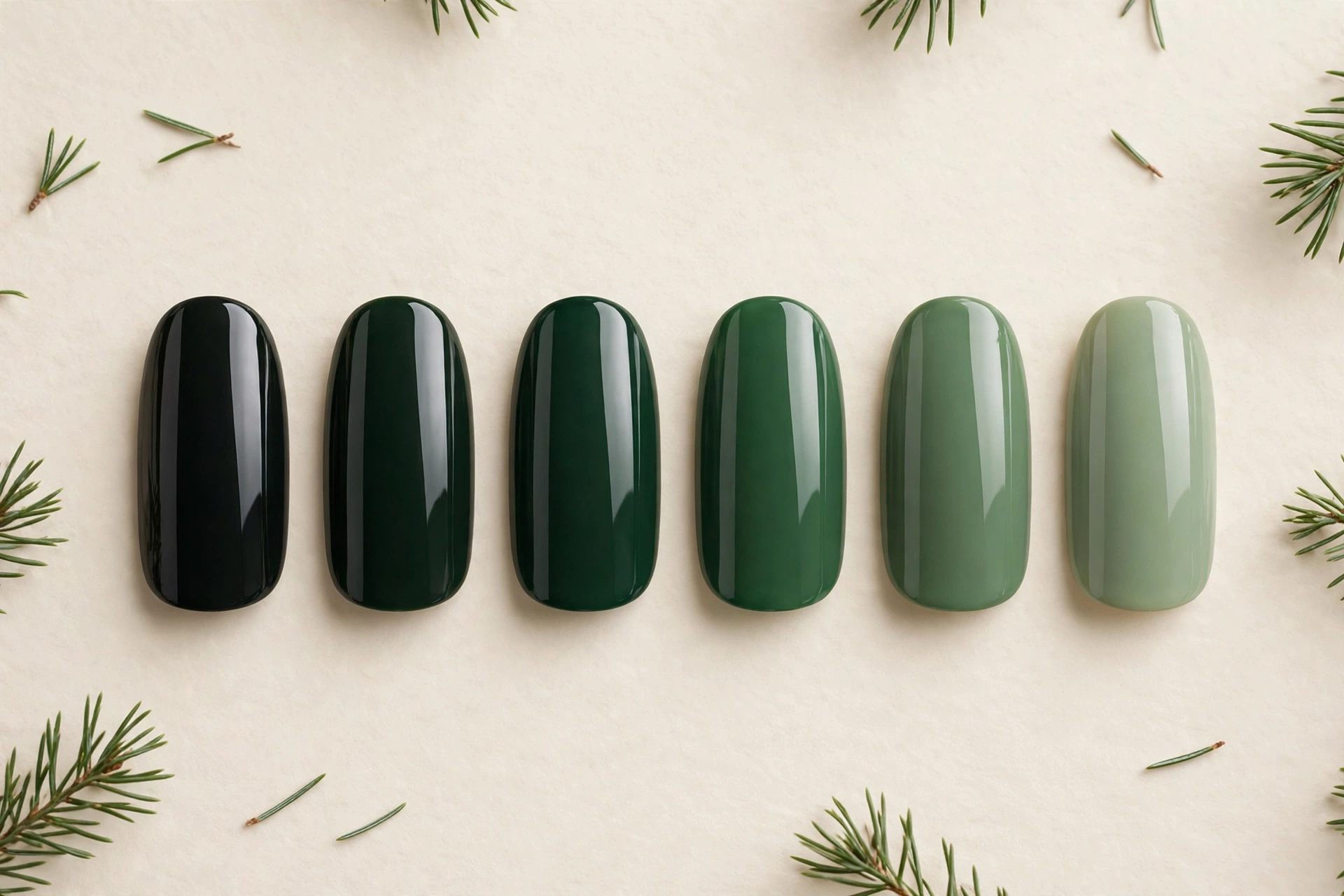
How to Use This Pine Nails Palette
- Start with the darkest shade if you want the most polished, evening-ready result, and save the lighter frosted pine for daytime or for an accent nail.
- Wear one shade on all ten nails for the cleanest winter look, or pair a dark pine with a frosted pine on the ring finger for a quiet contrast that still reads as one palette.
- Keep your base coat, colour coats and top coat from the same system where possible, since dark greens show chips and uneven layers more readily than pale neutrals.
- Use two thin coats rather than one thick coat, and let each coat dry fully before the next, because deep green pigment can drag and streak if it is rushed.
- Finish with a glossy top coat for a fresh, pine-needle shine, or a matte top coat if you want a softer, velvety winter finish.
- Match your cuticle oil and hand cream to the season rather than the shade: well-moisturised hands make dark green look intentional instead of harsh.
1. Classic Pine — #1E4634
Classic Pine is the shade the whole palette is built around, and it is the one to choose if you only want a single pine green in your collection. It is a true deep pine-tree green, balanced between blue and yellow so that it does not turn teal on the nail and does not turn olive either. In daylight it looks like a shaded pine branch, and indoors it deepens into a rich, almost-black green that still clearly reads as green. That balance is what makes it so easy to wear: it has enough depth for evening, enough colour for daytime, and enough neutrality to sit comfortably next to black, camel, cream, grey and denim.
On fair skin, Classic Pine creates a striking contrast without washing the hands out, especially when nails are kept neat and at a short to medium length. The darkness of the shade frames the nail and draws the eye, which is flattering when the rest of an outfit is pale or muted. On medium skin tones, the green warms up slightly and looks especially good with gold jewellery, camel coats and warm brown accessories. On deep skin tones, Classic Pine is rich and luminous rather than flat, and a glossy finish brings out its depth beautifully. It is one of those rare dark shades that does not disappear on deeper skin, because the green undertone keeps it visible and vivid.
Classic Pine suits almost every occasion in winter, from the office to a dinner out, because it behaves like a neutral with personality. It is dark enough to look professional, yet interesting enough to feel like a deliberate choice rather than a default. Wear it on its own for a clean, confident manicure, or use it as the base for a simple gold accent, a thin metallic line, or a single glitter nail. If you like brighter jewel greens, compare it with emerald nails before you decide, since emerald leans brighter and more jewel-like while Classic Pine stays closer to the tree.
Polish pick: a deep pine creme polish in a glossy finish. Gel pick: a pine green gel polish with a high-shine top coat.
2. Midnight Pine — #102A22
Midnight Pine is the darkest shade in this palette, a green so deep that it can look black in low light and then reveal its pine character near a window or under bright indoor lighting. That shift is part of its appeal. It gives you the drama of a near-black manicure without the flatness that true black can sometimes have, because the green undertone keeps the colour alive. On the nail it looks dense, glossy and expensive, and it pairs beautifully with silver jewellery, dark wool coats and evening outfits.
This shade is particularly flattering on fair skin, where the contrast is bold and graphic, and on deep skin, where the depth reads as luxurious rather than heavy. On medium skin tones, Midnight Pine looks best with a glossy finish, since shine stops the shade from blending into the skin and keeps the green visible. It is also a strong choice for shorter nails, because a very dark shade on a short, well-shaped nail looks tidy and intentional, while on very long nails it can feel more dramatic and evening-focused. Either way, neat cuticles matter more than length here, since dark polish draws attention to the nail edge.
Midnight Pine is made for evenings, winter parties, formal dinners and any occasion where you want your manicure to look polished without adding another colour to the outfit. It also works as a base for nail art that needs a dark background, such as a fine gold line, a small star, or a dusting of glitter at the cuticle. For daytime wear, keep the rest of the look simple: a cream sweater, dark jeans and this shade are enough. If a near-black manicure feels too severe on its own, try Midnight Pine on all nails except one frosted accent, which softens the whole look without breaking the palette.
Polish pick: a near-black pine creme polish with a glossy finish. Gel pick: a dark pine green gel polish sealed with a high-shine top coat.
3. Frosted Pine — #6A9183
Frosted Pine is the lightest and softest shade in this palette, a muted pine green with a cool, frosty finish that feels like pine branches touched by cold air. It is not a pastel and it is not a sage, exactly: it keeps a clear pine-green base, but the lighter tone and soft shimmer make it gentler than the darker shades here. That softness makes it the most daytime-friendly option in the collection, and the best choice if you love green but usually reach for neutrals because dark shades feel too bold.
On fair skin, Frosted Pine looks fresh and cool, and it is especially pretty on short, rounded nails where the soft colour can carry the whole manicure without any extra decoration. On medium skin tones, the frost finish adds a subtle glow and stops the shade from looking grey, which is worth checking in natural light before committing to a full manicure. On deep skin tones, Frosted Pine reads as a soft, muted green with a lovely contrast, and it looks particularly good with silver jewellery and cool-toned outfits. If you have cool undertones in your skin, this is likely to be your favourite of the six, while warm undertones may prefer it as an accent next to a darker pine.
Frosted Pine suits everyday winter wear, workdays, brunch, and any occasion where you want colour without contrast. It is also the shade to reach for when you want to try pine green for the first time, because it is forgiving: small chips are less visible than on the darkest shades, and the soft finish is easy to live with for a full week. Pair it with cream knitwear, grey coats and silver rings for a calm winter look, or use it as the accent nail in a Classic Pine manicure to add light without adding a new colour family.
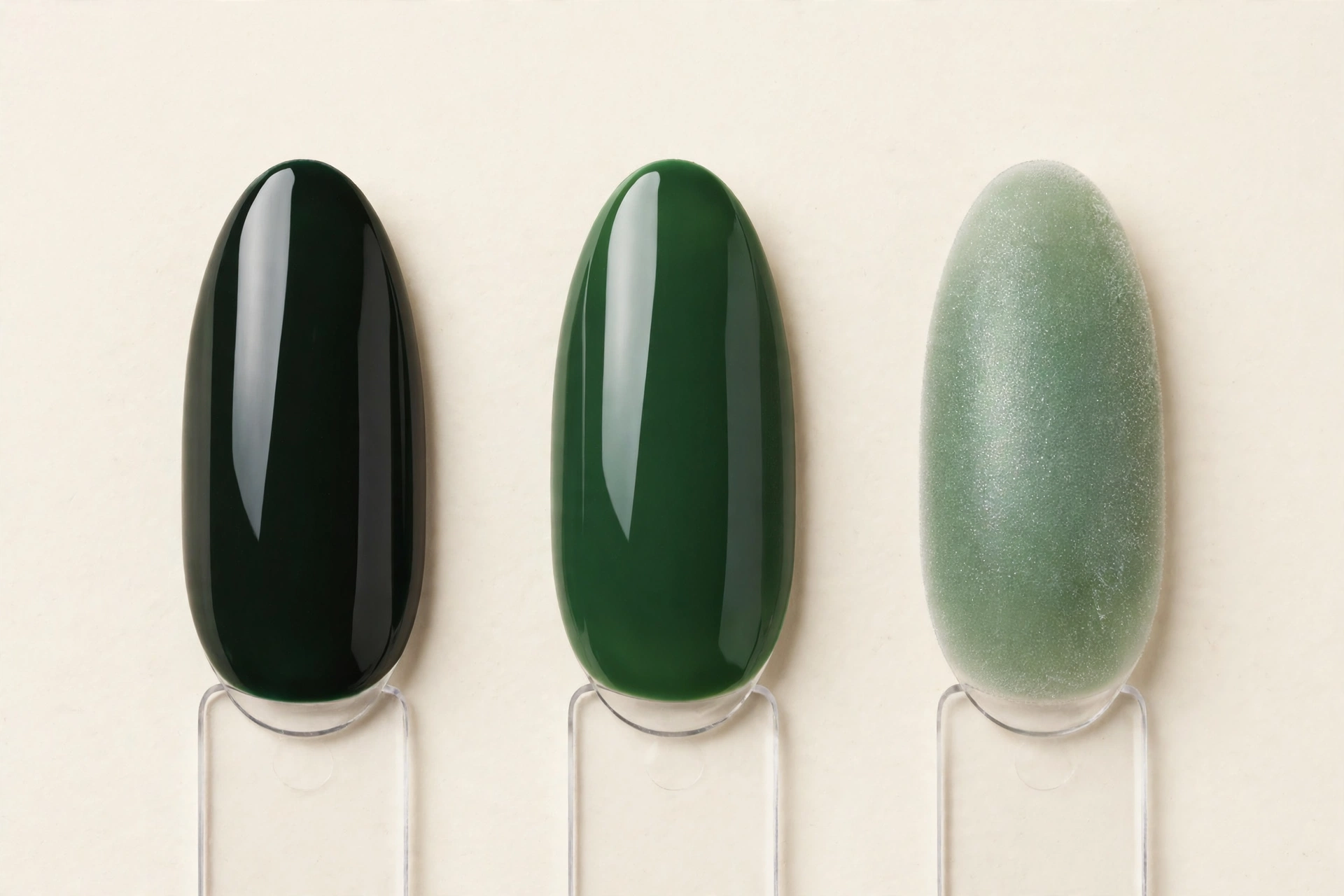
Polish pick: a frosted pine polish with a soft shimmer finish. Gel pick: a muted pine gel polish with a pearl or frost top coat.
4. Mossy Pine — #4A5D3A
Mossy Pine leans warmer and softer than the other shades here, with a touch of yellow-green that recalls moss growing at the base of a pine tree rather than the needles themselves. It is still unmistakably a pine-family green, but it feels earthier and more relaxed, which makes it a good bridge between a strict pine palette and the warmer greens many people already own. In bright light it looks like a deep moss green, and in softer light it settles into a muted, woodland tone that pairs easily with browns, creams and olive clothing.
This warmth makes Mossy Pine especially flattering on warm and neutral skin tones, where cooler greens can sometimes look too blue. On fair warm skin, it adds a gentle earthiness without overwhelming the hand, and it looks lovely with gold jewellery and camel or tan accessories. On medium skin tones, Mossy Pine is a natural, easy winter shade that works with both casual and smarter outfits. On deep skin tones, it reads as a soft, muted green with real depth, and a glossy finish keeps it from looking flat. If your wardrobe leans towards earth tones, browns and warm neutrals, Mossy Pine will fit more naturally than a blue-leaning pine.
Mossy Pine is ideal for daytime winter wear, weekend outfits, and cosy occasions where a strict, dark manicure would feel too formal. It suits cabin weekends, winter walks, casual dinners and workdays in a relaxed dress code, and it pairs beautifully with chunky knitwear, leather boots and wooden or gold jewellery. It also makes a good pedicure shade in winter, since the muted green is interesting without being loud. Wear it alone for a calm, woodland look, or pair it with Classic Pine on alternating nails for a tonal manicure that stays within the pine family.
Polish pick: a mossy pine creme polish in a glossy or satin finish. Gel pick: a warm moss-green gel polish with a glossy top coat.
5. Blue Pine — #1D4A44
Blue Pine is the coolest shade in this palette, a deep pine green pulled towards blue-green so that it sits between pine and teal without becoming a bright teal. It has the depth of pine and the cool clarity of a winter lake, which makes it feel crisp and modern. On the nail it looks like pine in shadow on a cold, bright day, and it is the shade to choose if you like green but usually find pure greens too warm or too yellow on your skin.
On cool skin tones, Blue Pine is often the most flattering shade in the palette, because its blue undertone harmonises with cool undertones rather than fighting them. On fair cool skin, it creates a clean, elegant contrast, especially with silver jewellery and grey or navy clothing. On medium skin tones, Blue Pine looks refined and a little more fashion-forward than Classic Pine, and it works well for evenings as well as workdays. On deep skin tones, the blue-green depth is striking and luminous, and a glossy finish brings out the cool shimmer in the shade. If you already wear teal or navy often, Blue Pine will feel familiar while still reading as pine.
Blue Pine suits smart occasions, winter evenings, and outfits built around navy, grey, black or silver, where its cool tone can tie the whole look together. It is also a strong choice for a winter manicure that needs to work across several outfits, since cool greens pair with more of a cold-weather wardrobe than warm greens do. Try it with a silver ring, a grey coat and dark denim for an easy, polished combination, or use it as the main shade with a single Midnight Pine accent nail for a tonal dark manicure with subtle variation.
Polish pick: a deep blue-green pine creme polish with a glossy finish. Gel pick: a blue-toned pine gel polish sealed with a high-shine top coat.
6. Winter Pinecone — #2E4030
Winter Pinecone is the warmest dark shade in this palette, a deep pine green with a brownish, woody warmth that recalls pinecones and bark rather than needles. It is darker than Mossy Pine and warmer than Classic Pine, which gives it a grounded, almost neutral quality. On the nail it looks like a very dark, warm green that can pass as a neutral from a distance and reveal its green character up close, and that quiet quality makes it one of the most versatile shades here.
This warmth makes Winter Pinecone flattering across skin tones, because it does not lean hard in either a blue or a yellow direction. On fair skin, it is softer than Midnight Pine and easier to wear every day, while still giving the polished look of a dark manicure. On medium skin tones, the woody warmth blends beautifully with warm neutrals, browns and gold jewellery. On deep skin tones, Winter Pinecone is rich and understated, and it looks particularly good with gold accents and warm winter fabrics such as wool, suede and leather. If you want a dark green that behaves almost like a neutral, this is the shade to try first.
Winter Pinecone suits the widest range of occasions in this palette, from the office to a winter wedding guest outfit, because its warmth keeps it from feeling severe. It pairs with cream, camel, brown, black and burgundy, which covers most of a winter wardrobe, and it works on short nails, almond nails and square nails alike. Wear it on its own for a quiet, expensive-looking manicure, or add a thin gold line at the cuticle for a festive touch that stays tasteful. For a holiday-leaning version of this palette, see holly nails, which pairs deep green with berry red for a more festive result.
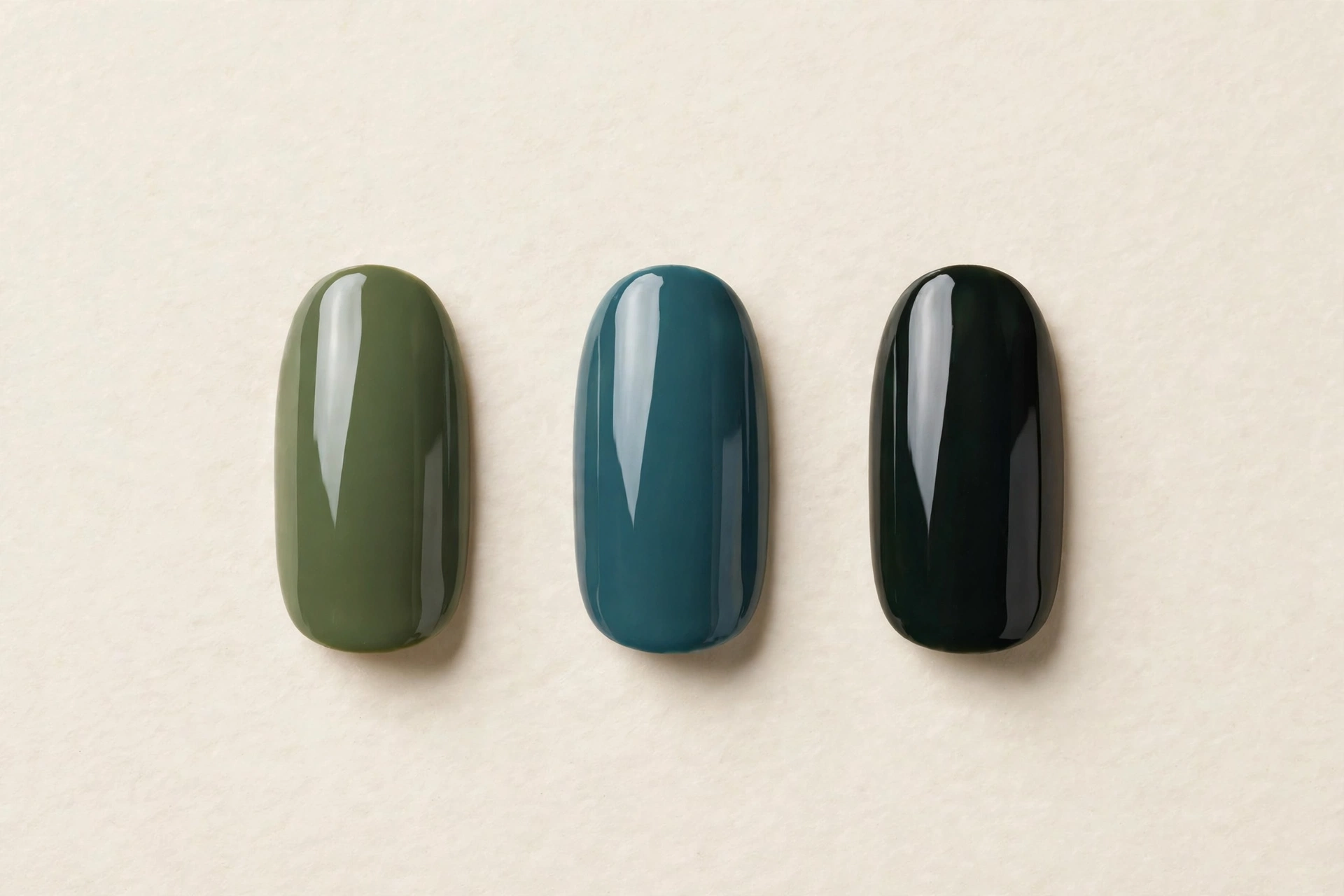
Polish pick: a warm dark pine creme polish in a glossy finish. Gel pick: a deep warm pine gel polish with a glossy top coat.
Pine Nails Styling Ideas for Winter
Pine green is easier to style than many people expect, because it functions like a dark neutral with a distinct colour identity. The simplest rule is to let the nails be the colour in an outfit built from neutrals: cream, camel, grey, black and brown all let pine green stand out without competing with it. A cream sweater with Classic Pine nails, a camel coat with Mossy Pine, or a grey knit with Blue Pine are all combinations that look considered without any effort. Gold jewellery warms the palette up, while silver jewellery cools it down, so you can shift the whole feel of the manicure just by changing your rings.
For a more festive winter look, pair pine green with gold rather than red, since gold keeps the palette elegant and avoids a costume-like Christmas effect. A thin gold line, a single gold accent nail, or gold rings alongside a full pine manicure are enough to make the look feel seasonal. If you want a bolder festive combination, pine with deep berry or burgundy works well, but keep one of the two colours as the accent so the manicure does not become busy. For everyday wear, pine green also sits happily next to denim, leather boots and dark scarves, which makes it a practical choice for a full week of different outfits.
Nail shape matters less than finish with this palette, but a few pairings work particularly well. Short, rounded nails keep the darkest pines looking tidy and modern, while almond nails soften the drama of Midnight Pine and Blue Pine. Square nails give Classic Pine and Winter Pinecone a clean, graphic edge that suits smarter outfits. Whatever shape you choose, keep the length consistent across all ten nails, since dark green makes uneven lengths more noticeable than pale polish does.
When to Wear Pine Nails
Pine nails suit the whole winter season, but they come into their own from late autumn through the coldest months, when dark greens feel at home alongside wool, leather and heavy coats. They are a natural choice for December gatherings, winter weddings, office parties and New Year evenings, especially when you want colour without sparkle. They also work well for January and February, when festive reds start to feel tired but a dark, rich manicure still feels right for the weather.
For work, Classic Pine, Winter Pinecone and Mossy Pine are the safest choices, since they read as polished and understated. For evenings and parties, Midnight Pine and Blue Pine add more drama, while Frosted Pine is the best option for daytime events, family gatherings and occasions where a softer manicure feels more appropriate. If you are choosing one shade for a holiday trip or a week with several different events, Classic Pine is the most flexible, because it moves from day to evening without needing a change of outfit. For a broader view of the season, browse winter nail colors for 2027 alongside this palette to see how pine green fits with the other winter shades.
Pine Nails vs Forest Green Nails
Pine nails and forest green nails are often confused, because both are deep greens, but they are not quite the same idea. Forest green tends to be a broader category: it can lean brighter, bluer or more saturated, and it often includes shades that feel like dense woodland in summer. Pine green is narrower and more specific, tied to the colour of pine needles in winter, which means it is usually deeper, cooler and a little more muted. If you picture a pine branch against snow, you have the right reference: dark, calm and slightly blue, rather than lush and leafy.
In practice, that difference shows up on the nail. A forest green manicure can feel rich and summery-dark, while a pine green manicure feels wintry and restrained. If you already love forest green, pine is an easy next step, and the two families sit well together in a tonal manicure. For a direct comparison, look at forest green nails next to this palette: you will see the forest shades lean a little more varied and vivid, while the pine shades here stay closer to the tree and to winter styling. Choosing between them comes down to mood rather than rules, so pick forest green for a lusher, bolder green and pine green for a deeper, calmer winter green.
Application and Longevity Tips for Dark Pine Polish
Dark green polish rewards careful preparation more than pale shades do, because every ridge, chip and uneven edge shows. Start with clean, dry nails, push cuticles back gently, and shape the free edge before you apply anything. A ridge-filling base coat helps dark pigment go on smoothly, and it also protects the nail from staining, which matters with deep greens. Apply the base coat in a thin layer, let it dry, then apply the colour in two thin coats, capping the free edge with each coat to reduce chipping at the tips.
Let each coat dry fully before adding the next, and avoid loading the brush with too much polish, since thick layers of dark green take longer to dry and are more likely to dent or bubble. A glossy top coat applied the same day seals the colour and adds the shine that makes pine green look fresh, and a second thin top coat after two or three days can extend the wear noticeably. For gel, the same principles apply: thin layers, full curing between coats, and a top coat that is sealed at the free edge. With careful application, a pine manicure should wear well for a week or more, and the darker shades tend to hide tip wear slightly better than the frosted shade, which shows chips a little sooner.
Between manicures, cuticle oil used daily keeps the skin around dark polish looking neat, and gloves for washing up and cold-weather chores protect both the polish and the hands. If a chip does appear, a small touch-up with the same shade and a fresh top coat can carry the manicure for another day or two, especially on the darker shades where a careful touch-up blends in well. Removing dark green polish takes a little patience: hold a remover-soaked cotton pad on the nail for a few seconds before wiping, rather than scrubbing, to avoid staining the skin around the nail.
Frequently Asked Questions
What are pine nails?
Pine nails are manicures in deep pine-tree green shades, from classic pine and midnight pine to frosted and mossy pine. The colour is inspired by pine branches in winter: dark, a little cool, and richer than a bright green, which makes it a flattering winter shade for most skin tones.
When should you wear pine nails?
Pine nails work best in late autumn and winter, when dark greens suit heavier fabrics and colder light. They are a good choice for work, winter weddings, holiday gatherings and New Year evenings, and they carry well into January and February when festive reds start to feel out of season.
Which pine nails shade suits fair skin best?
Classic Pine and Midnight Pine both suit fair skin well, because the contrast is bold without being harsh. If you prefer a softer result, Frosted Pine is the gentlest option in this palette, while Blue Pine suits fair skin with cool undertones particularly well.
Do pine nails suit short nails?
Yes, pine nails suit short nails very well, and the darker shades can actually look tidier on short nails than on very long ones. Keep the shape neat and consistent, use a glossy top coat for a polished finish, and choose Classic Pine or Winter Pinecone if you want a dark shade that still feels easy for everyday wear.
This palette is an inspiration guide: use the shade names and hex codes as a starting point, and choose the closest polish or gel shade you can find, since exact matches vary by brand and finish.