
Kwanzaa nail colors are the perfect way to carry the holiday’s spirit onto your fingertips. Kwanzaa is a week-long celebration of African heritage and culture, observed from December 26 through January 1, and its colors carry real meaning: red for the struggle, black for the people, green for the future and hope, and gold for the richness of heritage. This palette takes those four colors — red, green, black and gold — and turns them into 12 wearable, thoughtfully built nail shades, from vivid reds and deep forest greens to warm blacks and luminous golds. Each shade below includes its undertone, finish, who it flatters, and where it fits into your celebration, plus a full swatch chart so you can compare them side by side.
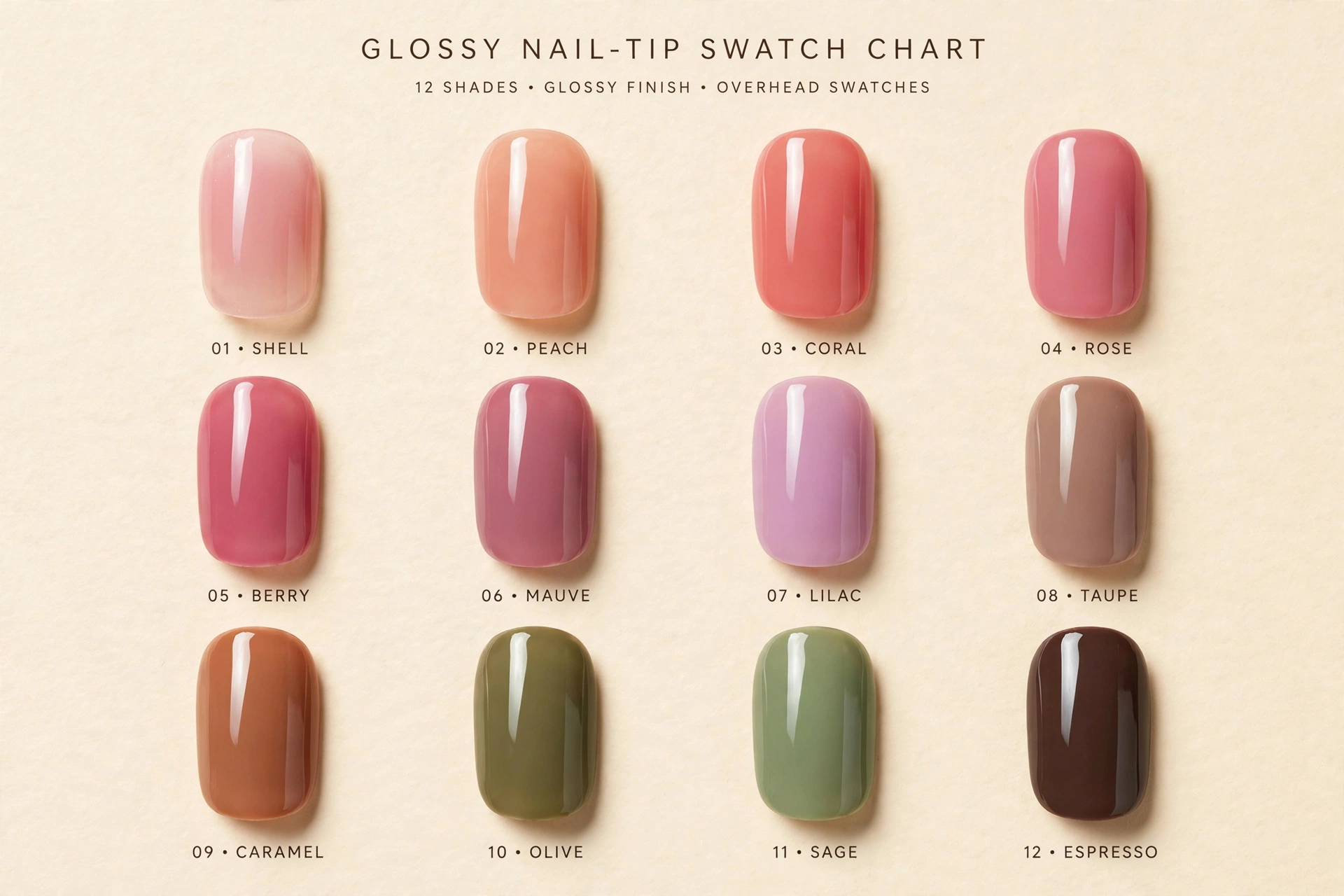
How to Use This Kwanzaa Nail Colors Palette
- Match by undertone, not just by color family. The reds here range from blue-based wine to orange-based brick, and the wrong undertone against your skin can make a manicure look tired instead of rich. Hold the swatch chart next to the back of your hand in natural light — shades that blend harmoniously will flatter you more than shades that fight your undertones.
- Compare in daylight before you commit. Reds and greens shift dramatically between warm indoor lighting and daylight. A deep green that reads almost black under salon bulbs can reveal beautiful pine notes outside, and golds look their truest near a window. Step outside or into daylight before your appointment settles.
- Pick your nail length for your finishes. Deep cremes like the reds and blacks here look elegant at any length, but metallic golds and shimmers show ridges more easily on very long nails — they reward a smooth, short-to-medium almond or squoval shape with clean prep.
- Tell your nail tech what you mean by each shade. “Red” at a salon can mean anything from coral to burgundy. Bring this chart on your phone, point to the swatch, and name the finish you want — creme, shimmer, metallic — so you and your tech are speaking the same language.
- Plan around the week, not just one day. Kwanzaa runs seven days, December 26 to January 1. That is a natural excuse for two manicures: deeper reds and blacks for the opening nights, then greens and golds for the karamu feast and New Year’s Eve.
1. Kinara Flame — #A41E22
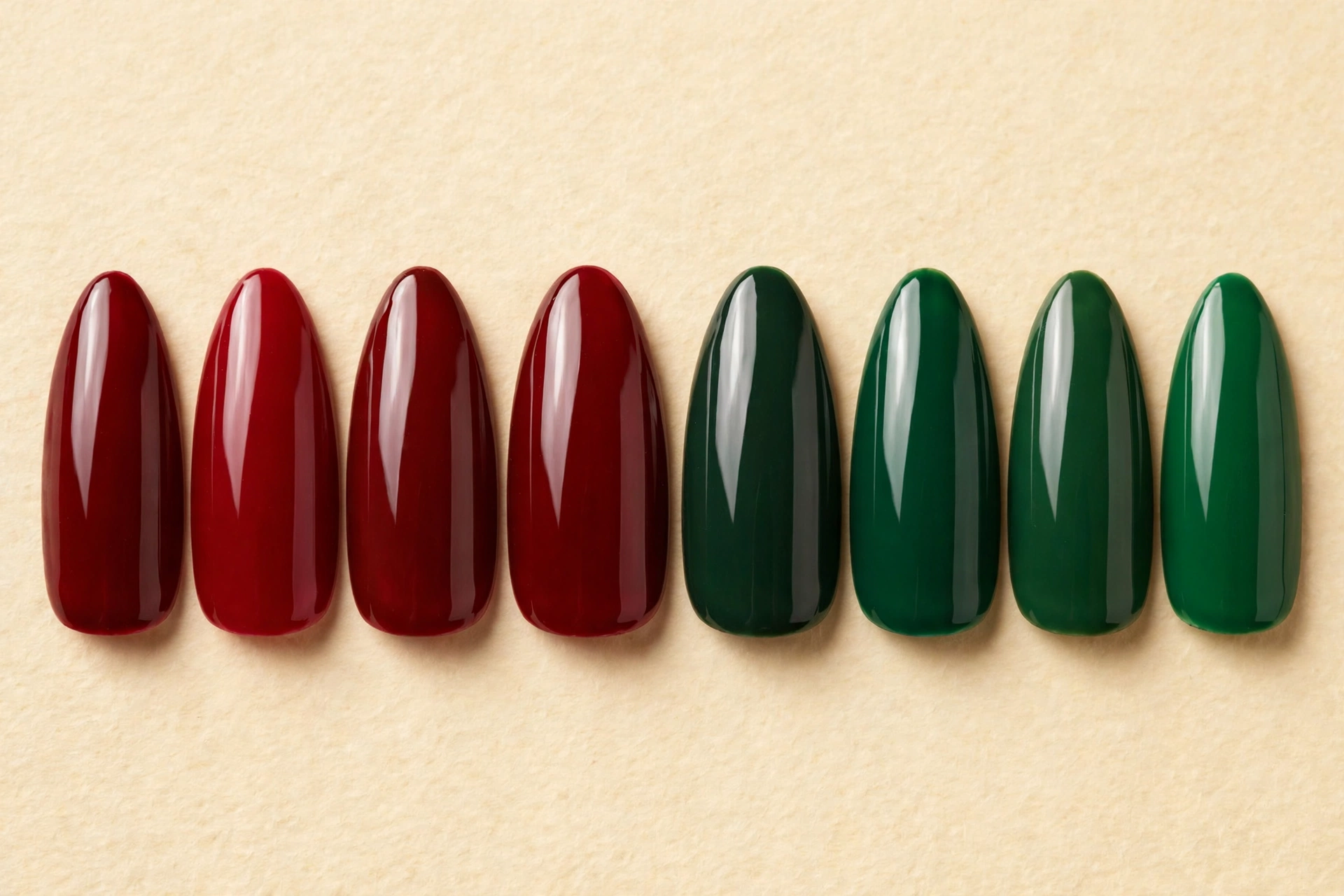
Kinara Flame is the anchor red of this kwanzaa nail colors palette: a true, vivid red creme with a neutral undertone that sits right between blue-based and orange-based. That neutrality is exactly why it works across so many skin tones — it neither pulls pink on deep skin nor clashes with warm undertones the way an orange-red would. The creme finish keeps it classic and celebration-ready, flattering on short natural nails and long coffins alike, and it is the natural choice for the first nights of Kwanzaa when red leads the symbolism. Compared to Zawadi Wine below, Kinara Flame is brighter, truer and more energetic — pick Flame when you want red to be the headline, not the whisper.
2. Zawadi Wine — #7B1E2B
Zawadi Wine is a deep oxblood red with a blue-based undertone and a glossy creme finish — the kind of red that reads almost burgundy indoors and reveals its wine depth in daylight. Blue-based reds are famously flattering on deep and rich skin tones, but this one is dark enough to work beautifully on fair skin too, especially with a short squoval shape that keeps it from feeling heavy. It belongs anywhere the celebration gets dressed up: the karamu feast, evening gatherings, and New Year’s Eve. If you love this family, our rich cranberry red shades go even deeper into wine territory. Next to Kinara Flame, Zawadi Wine is moodier and more formal — the difference between a toast and a quiet, confident statement.
3. Imani Brick — #93351F
Imani Brick takes the red family somewhere warmer: a burnt brick red with a clear orange-brown undertone, finished as a creme. Orange-based reds are the friendliest reds for warm and golden undertones, and they have a special talent on medium and tan skin, where they look sun-warmed rather than stark. This is the most casual of the reds here — beautiful for daytime celebrations, gift exchanges and family visits, and on short nails it reads modern rather than retro. Against the two cooler reds above it, Imani Brick is the earthy sibling: choose it when you want warmth and approachability instead of drama. If your skin pulls warm and cool reds usually wash you out, start here.
4. Ujima Evergreen — #1F5C3D
Ujima Evergreen is a rich pine green creme with a slightly cool, blue-green undertone — the green that most directly carries the Kwanzaa symbolism of hope and the future. Greens with a true pine base are remarkably flattering on deep skin tones, where they glow instead of blending in, and on fair skin they give that crisp, holiday contrast that photographs beautifully. Wear it as a full manicure for the nights when green takes the lead, or as an accent against the reds and golds. Compared to the deeper Nia Forest below, Ujima Evergreen is livelier and more saturated — it is green you can actually see across the room, not green that hides.
5. Kuumba Olive — #4C5B2E
Kuumba Olive is a muted olive green creme with a yellow-brown undertone — the most understated green in this palette and, for many people, the most wearable. Muted greens with warm undertones are kind to olive and warm skin, where brighter greens can look neon, and they pair beautifully with the golds in this chart for a celebration look that feels earthy and grounded. This is your everyday-of-the-week green: sophisticated enough for work events during the holiday week, interesting enough for the feast. If you prefer your greens bold and jewel-like, our emerald green holiday shades push the saturation up. Next to Ujima Evergreen, Kuumba Olive is quieter and dustier — choose olive for subtlety, pine for presence.
6. Nia Forest — #16382B
Nia Forest is a deep, near-black forest green creme with a cool undertone — dramatic, elegant and unmistakably green once the light catches it. Very dark greens are a gift for long nails, where the length gives the color room to reveal its depth, and they are striking on deep skin tones in particular. This shade belongs to evenings: candlelit dinners, the lighting of the kinara, and any night you want your nails to feel as rich as the celebration itself. Beside Ujima Evergreen, Nia Forest is the shadow to its light — same family, twice the mystery. If you find it reads too dark for daytime, try it as an accent nail paired with one of the golds.
7. Mkeka Espresso — #2B1D16
Mkeka Espresso is a warm near-black brown creme — dark enough to read as black at a glance, but with a chocolate warmth that keeps it from feeling harsh. Warm blacks are the most forgiving darks: they flatter every skin tone because the brown undertone softens the contrast that can make true black look severe on very fair skin. This is a beautiful base for gold nail art, and on its own it carries the Kwanzaa symbolism of the people with quiet dignity. For more shades in this almost-black territory, browse our near-black nail shades. Compared to Kikombe Onyx below, Mkeka Espresso is warmer and softer — pick espresso for warmth, onyx for edge.
8. Kikombe Onyx — #14100D
Kikombe Onyx is a soft true black creme with a neutral undertone — the boldest, most graphic shade in this kwanzaa nail colors collection. Black cremes look sharpest on clean, well-prepped nails at any length, and they are striking on both very fair skin (maximum contrast) and very deep skin (a glossy, lacquered richness). This is the shade for the nights you want polish to act as an accessory in itself, and it makes every gold in this palette look more expensive when worn as an accent. Next to Mkeka Espresso, Kikombe Onyx is cooler, harder and more modern. If true black feels like a lot for a full manicure, a black French tip over a gold base keeps the symbolism with half the commitment.
9. Zawadi Gold — #C9A227
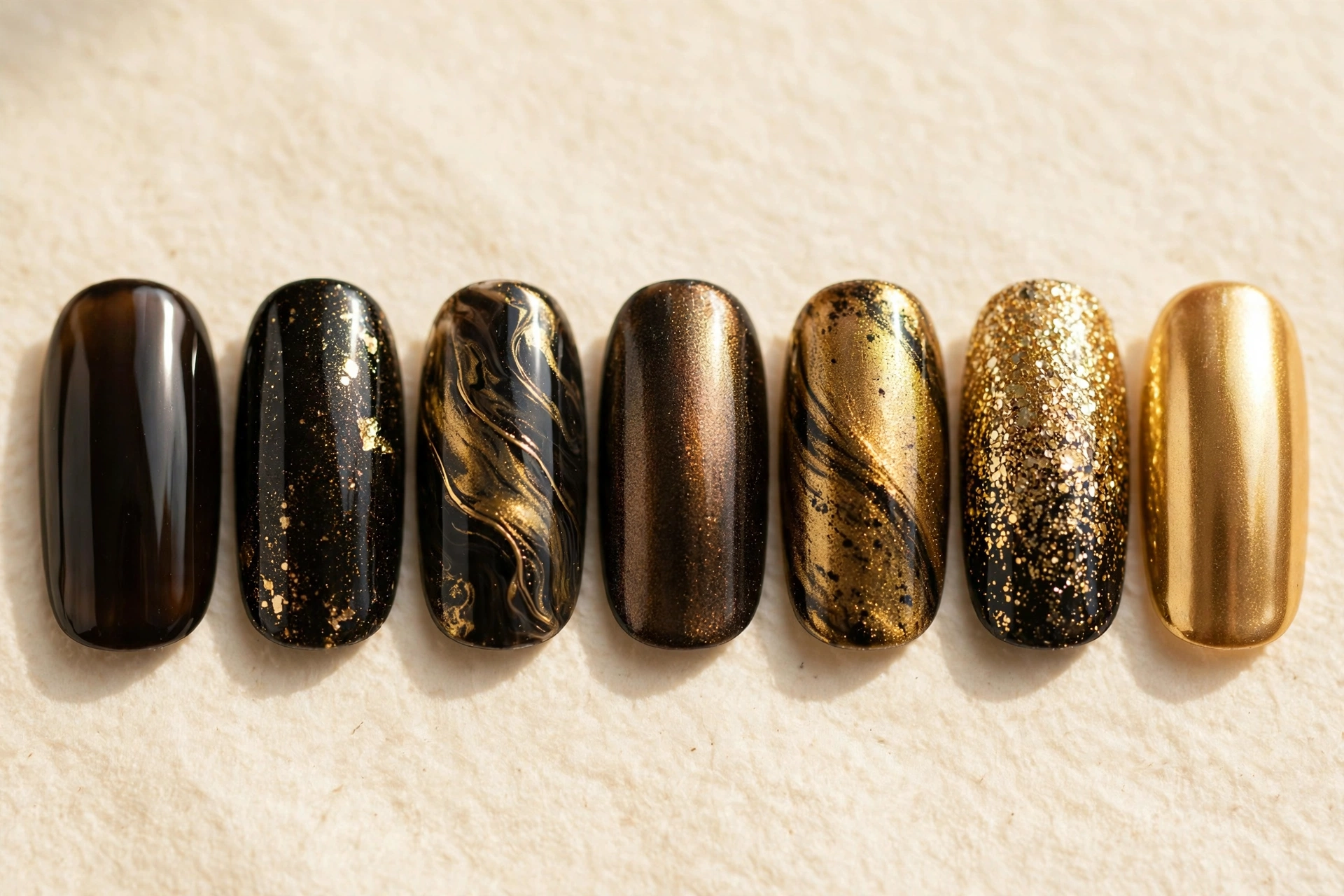
Zawadi Gold is a classic metallic gold with a warm yellow undertone — the celebration metal of this palette, and the shade that ties reds, greens and blacks together. True metallic golds flatter warm and deep skin tones most naturally, but a short almond shape and a smooth base coat make them work on everyone; the key is prep, because metallics show every ridge. Wear it for the karamu feast, New Year’s Eve, or any night the candles are lit — gold and candlelight were made for each other. Against the deeper Ujamaa Bronze below, Zawadi Gold is brighter and more festive: this is the gold that announces itself.
10. Ujamaa Bronze — #8C5A2B
Ujamaa Bronze is a warm metallic bronze with a copper-brown undertone — gold’s earthier, more understated sibling. Bronze metallics are exceptionally flattering on medium, tan and deep skin, where they read as an extension of the skin’s own warmth rather than a contrast to it, and they are the most office-friendly metal in this palette. This shade carries the richness-of-heritage symbolism with a quieter voice than bright gold, which makes it perfect for the full seven days rather than just the big nights. If you love this family, our metallic copper, bronze and gold shades explore it further. Next to Zawadi Gold, Ujamaa Bronze is deeper, duskier and more wearable day to day — gold for the feast, bronze for the week.
11. Mazao Champagne — #E3C878
Mazao Champagne is a soft champagne gold shimmer — pale, luminous and the gentlest metallic in this collection. Shimmer finishes in the champagne family are universally flattering because the fine sparkle reflects light without the mirror demands of a true metallic, which makes this the easiest gold here for beginners and for longer nail lengths. It works as a full manicure for daytime celebrations, as an accent against the deep reds and greens, and as a bridal-adjacent neutral if your Kwanzaa week includes a wedding. Compared to the bolder golds above, Mazao Champagne whispers instead of sings. It also layers beautifully: one coat over any of the deep cremes here gives a candlelit glow that feels made for this holiday.
12. Karamu Glitter — #B76E2C
Karamu Glitter is a copper-gold glitter topper with a warm amber base — the party shade of this kwanzaa nail colors palette, designed to be layered rather than worn alone. Glitter toppers are the most forgiving finish in any collection: they hide imperfections, add dimension over any creme, and let you turn a daytime manicure into an evening one with a single coat. Try it over Kinara Flame for a fireworks effect, over Nia Forest for candlelit depth, or over Kikombe Onyx for the most dramatic combination here. On its own over bare nails it gives a sheer amber sparkle that suits short nails and minimal prep. This is the shade for New Year’s Eve itself — the final night of Kwanzaa and the biggest excuse for glitter on the calendar.
How to Style This Palette
The four Kwanzaa colors were designed to be seen together, and your nails can honor that with simple combinations. The easiest approach is the accent nail: a full set in one of the deep cremes — Kinara Flame, Nia Forest or Kikombe Onyx — with the ring finger in Zawadi Gold or Karamu Glitter. A more symbolic option is the color-block French: a nude or sheer base with tips alternating red, green, black and gold across the five nails, so the whole hand tells the story. For a softer take, pair Mazao Champagne with Ujamaa Bronze in a gradient or ombre — two golds fading into each other reads luxurious without any single color shouting. And if you love a classic, a deep red like Zawadi Wine with a thin gold line at the cuticle is the kind of detail that looks expensive in person. However you combine them, keep finishes in the same family on one hand — all cremes, or cremes with one metallic — so the look feels intentional rather than scattered.
Best Occasions for Kwanzaa Nails
Kwanzaa’s seven nights give you more styling room than a single-day holiday, and different shades suit different moments. The opening nights, December 26 and 27, belong to the symbolic core: reds and blacks like Kinara Flame and Mkeka Espresso feel right when the first candles are lit and the principles are being discussed. Midweek family gatherings and gift exchanges are the moment for the wearable shades — Imani Brick, Kuumba Olive and Ujamaa Bronze — colors that feel festive without demanding attention across a dinner table. The karamu feast, traditionally held on December 31, is the celebration’s centerpiece and the night for your boldest combination: think Nia Forest with gold accents, or a full metallic moment with Zawadi Gold. And New Year’s Eve into January 1 closes both Kwanzaa and the calendar year, which makes it the natural home for Karamu Glitter and Mazao Champagne. One practical tip: if you are getting two manicures for the week, book the second for the 30th so it is fresh for the feast and New Year’s Eve both.
Application & Longevity Tips
Dark cremes and metallics are the least forgiving finishes, so prep decides how this palette wears. Always use a ridge-filling base coat under the metallics and shimmers — Zawadi Gold, Ujamaa Bronze and Mazao Champagne will show every imperfection in the nail plate without one, and a smooth base is what separates a salon look from a streaky one. The deep shades — Zawadi Wine, Nia Forest, Mkeka Espresso and Kikombe Onyx — deserve two thin coats rather than one thick one; thin coats cure evenly, resist chipping at the tip and give you that glassy depth instead of a muddy finish. If you are wearing black or deep green for the full week, a fresh layer of top coat on day three or four will bring back the shine that daily wear dulls, and it takes ninety seconds. For glitter toppers like Karamu Glitter, press rather than brush: dab the glitter on with a light patting motion so the particles sit densely instead of dragging thin. And whenever you wear the darkest shades, protect light-colored fabrics for the first few hours — deep pigments can transfer before they are fully set, especially with traditional polish.
Polish & Gel Picks
- A true neutral-red creme in the Kinara Flame family for the classic celebration red
- A blue-based oxblood creme in the Zawadi Wine family for formal evenings
- A deep pine-green creme in the Ujima Evergreen family for the symbolic green
- A warm near-black brown creme in the Mkeka Espresso family for a soft, wearable dark
- A warm yellow-gold metallic in the Zawadi Gold family for feast-night shine
- A copper-gold glitter topper in the Karamu Glitter family for layering over the deep shades
These shades are inspiration — actual salon and product colors vary, so use the swatch chart and hex codes as your reference when matching at the counter.
Frequently Asked Questions
What colors are used for Kwanzaa nails?
Kwanzaa nails use the holiday’s four symbolic colors: red for the struggle, black for the people, green for the future and hope, and gold for the richness of heritage. This palette builds 12 shades from those four families — deep reds like Kinara Flame and Zawadi Wine, rich greens like Ujima Evergreen and Nia Forest, warm blacks like Mkeka Espresso and Kikombe Onyx, and golds like Zawadi Gold and Mazao Champagne — so you can wear the symbolism literally or as inspiration.
When should I get my Kwanzaa manicure done?
Kwanzaa runs December 26 through January 1, so one manicure on the 26th will carry you through most of the week, but the karamu feast on December 31 is worth a fresh set. If you plan two manicures, book the first for the 26th in reds or blacks and the second for the 30th in greens and golds, so your nails are at their best for both the feast and New Year’s Eve.
Which Kwanzaa nail colors suit deep skin tones?
Almost all of them, but a few are standouts. Ujima Evergreen and Nia Forest glow against deep skin instead of blending in, Zawadi Wine’s blue base is famously flattering, and the golds — Zawadi Gold and Ujamaa Bronze — read as an extension of the skin’s own warmth. Kikombe Onyx gives a lacquered richness on deep skin that lighter tones cannot quite replicate.
Can I wear Kwanzaa nail colors if I don’t celebrate Kwanzaa?
Yes — the reds, greens, blacks and golds here are also simply beautiful holiday shades that work for any December celebration. That said, it is worth knowing what the colors mean: they represent the struggle, the people, hope for the future, and the richness of African heritage. Wearing them with that understanding is part of what makes the manicure meaningful rather than just decorative.