
There is a very specific kind of cool in carrying a cocktail on your nails, and dirty martini nails might be the chicest version of it. This shade family takes its cue from the drink itself — olive green in every briny, mossy, grey-green and near-black mood — and it lands right in fall’s comfort zone, edgy enough to feel current but muted enough to wear everywhere.
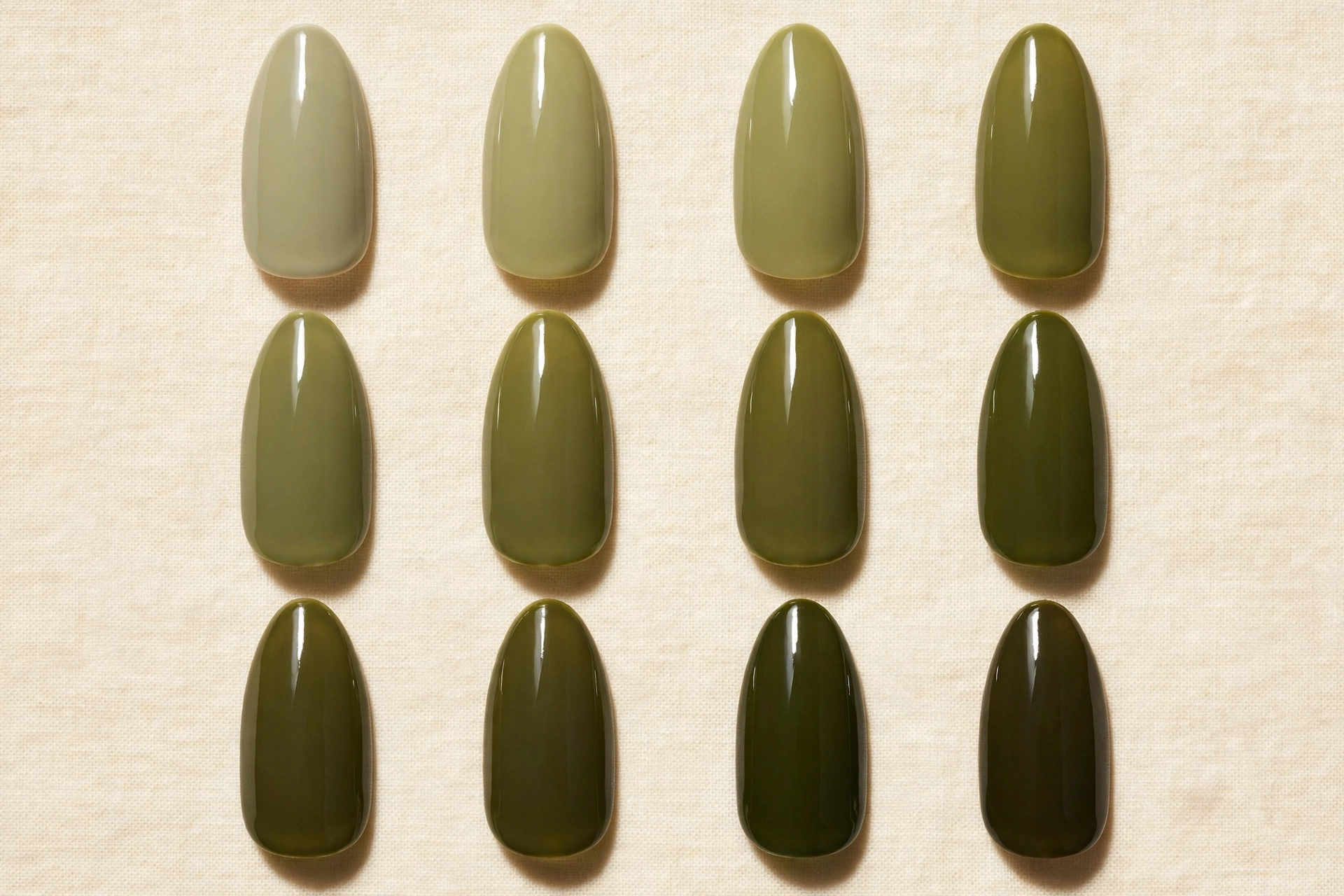
How to Use This Dirty Martini Nails Palette
- Match undertones before you commit. Olive greens lean warm (khaki, bronze) or cool (grey-green, moss). Hold a shade next to your wrist veins in natural light — if the green looks harmonious and doesn’t pull grey or muddy, it is a match for you.
- Compare shades in daylight, not salon lighting. Olive is notoriously chameleon-like; a warm yellow bulb can make a grey-green read swampy. Step near a window with your swatch hand before choosing between two close neighbors like Dry Vermouth and Olive Brine.
- Let length and shape guide the finish. Deeper olives such as Midnight Martini look most striking on medium to long almond or coffin shapes where the color has room to show its depth. The paler khakis flatter short, neat squoval nails beautifully.
- Talk to your nail tech in color families, not just names. Say “a briny olive creme, about two tones lighter than your typical army green” and point at the chart — olive is one of those colors where a tech’s idea of “olive” can differ from yours by a lot.
- Think about where you’re wearing them. The lighter khakis read office-friendly and low-key, the deep olive-blacks lean evening and statement. This palette is arranged light to deep so you can pick your mood along the way.
1. Dry Vermouth — #B3B08E
Dry Vermouth is the palest entry in this palette, a khaki with a grey-green cast that reads almost neutral in indoor light. It suits cool and neutral undertones especially well, and it flatters fair skin by adding gentle contrast without harshness — think of it as the olive equivalent of a greige. Wear it to the office, to weekend brunch, anywhere you want the dirty martini vibe without announcing it. Next to Olive Brine, which sits just below, Dry Vermouth is noticeably greyer and cooler, so pick Brine if your skin leans warm.
2. Olive Brine — #97A066
If the drink had a color, this would be it — a pale, briny sage-olive that looks like the liquid at the bottom of the glass. Olive Brine works across skin tones because its muted saturation doesn’t fight with anyone’s undertone; it is a forgiving first olive if you’ve never worn green on your nails. It shines on short to medium nails and pairs well with gold jewelry. Compared to Dry Vermouth above, it carries more obvious green pigment, so it photographs truer to the olive family. If you like this pale green but want something sheerer, take a look at our milky matcha green shades for a similar mood in translucent finishes.
3. Shaken Grey — #7D8471
Shaken Grey is where olive meets grey in a smoky, stormy finish that feels very fall 2026. It is the coolest-toned creme in this chart, which makes it a standout for cool undertones and for anyone whose skin has pink in it — the grey tempers any redness nearby. This is a great evening shade, moody under restaurant lighting but perfectly readable in daylight. It is less yellow than Castelvetrano and deeper than Olive Brine, sitting in that in-between space that reads sophisticated rather than trendy. On long almond nails it gives a quietly dramatic, editorial effect.
4. Castelvetrano — #7B8C47
Named for the bright green cocktail olive, Castelvetrano is the liveliest creme here — a clear, juicy olive that refuses to go murky. It is the most attention-getting shade in the lighter half of the palette, which makes it the pick for anyone who wants olive nails that people actually notice and ask about. Warm and medium skin tones wear it especially well, since its yellow undertone echoes golden skin. Next to Shaken Grey it looks downright cheerful; next to Manzanilla below it reads a touch fresher and less earthy. Save this one for occasions where you want your manicure to be part of the conversation.
5. Manzanilla — #6E7F4A
Manzanilla is a grounded, earthy olive that sits right at the center of the family — not too bright, not too deep, the shade most people picture when they hear “olive green nails.” It is a true neutral in the green world: warm enough for golden skin, muted enough for cool skin, and easy to wear with both silver and gold jewelry. This is the most versatile everyday olive in the chart and the safest pick if you can only choose one. Compared to Castelvetrano above, Manzanilla trades brightness for depth, which makes it read more fall-appropriate and less summery. It also makes a beautiful base if you ever add olive-toned nail art.
6. The Original Dirty — #5C6B3E
This is the namesake — a briny, medium-deep olive that captures the whole dirty martini concept in one bottle. The Original Dirty has enough saturation to look intentional and rich, but its brown-green base keeps it from ever reading neon or costume-y. Medium to deep skin tones get gorgeous contrast here; on fair skin it becomes a deliberate statement, so wear it with confidence. It is darker and more complex than Manzanilla, with a hint of brown that makes it feel like it belongs next to leather boots and wool coats. If this is your first dark olive, you’ll wonder why you waited.
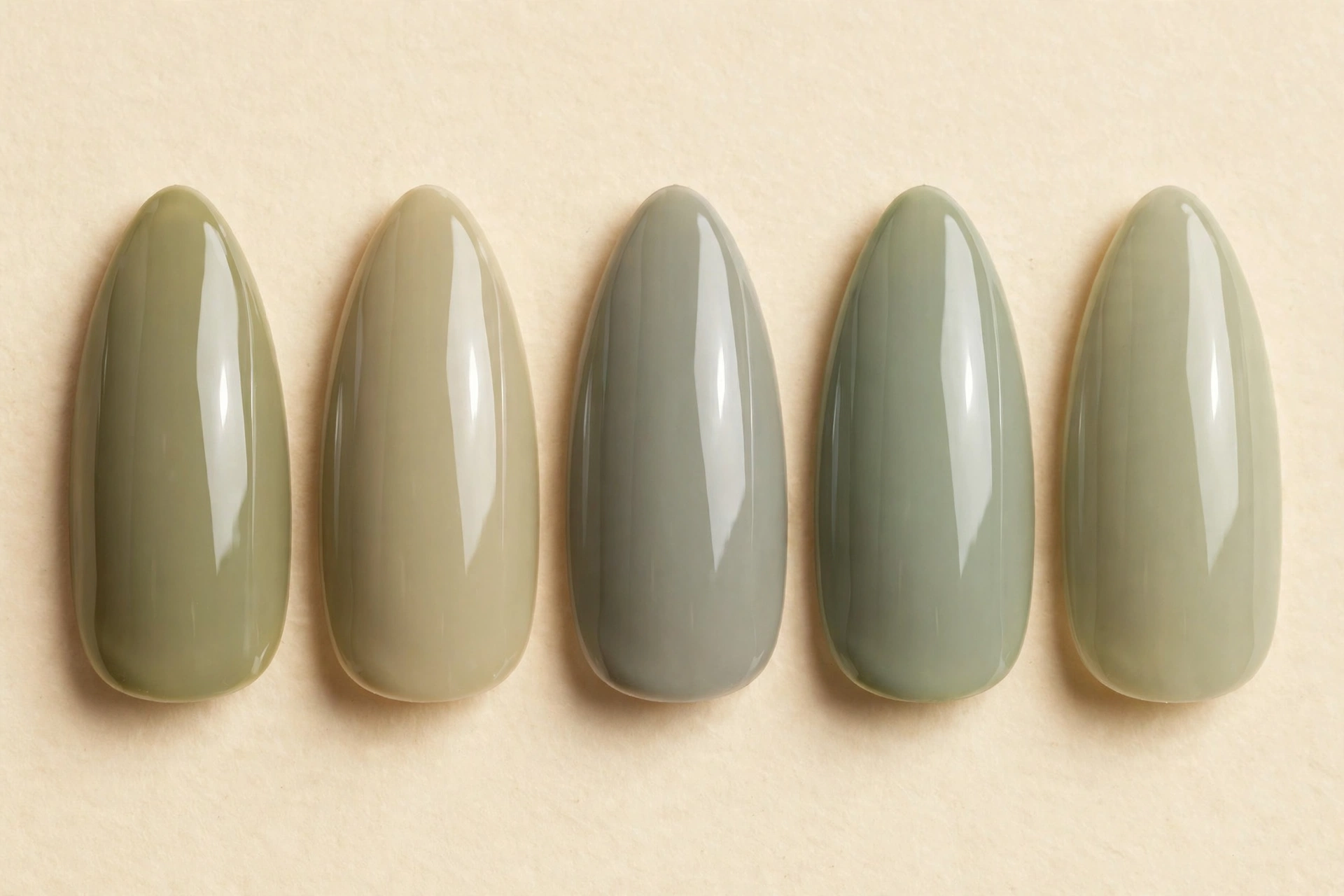
7. Olive Leaf — #5E7039
Olive Leaf sits close to The Original Dirty in depth but carries a fresher, more botanical green cast — less brine, more garden. That distinction matters: if The Original Dirty feels a little too murky for your taste, Olive Leaf gives you the same richness with clearer green pigment. It flatters warm undertones beautifully and looks fantastic on medium skin. On longer nail shapes it shows off a lovely dimensional quality, shifting between green and bronze depending on the light. Put it next to The Original Dirty and you’ll see the difference — one leans cocktail, the other leans foliage, and your undertone will tell you which is yours.
8. Olive Oil Gold — #8C7B3C
The only metallic in this chart, Olive Oil Gold is an antique gold-olive shimmer that catches light like the surface of olive oil in a sunlit bottle. It is the festive wildcard of the palette — dressy enough for holiday season, wearable enough for a night out, and a natural bridge to metallic season in general. Warm and deep skin tones glow against it. Worn next to flat cremes like The Original Dirty, it reads noticeably richer and more luminous, which makes it perfect as an accent nail if a full metallic manicure feels like too much. For more shine in the same seasonal spirit, our metallic fall shades pair beautifully with this family.
9. Gin & Juniper — #44502B
Gin & Juniper takes the palette into true depth — a dark juniper olive that looks nearly black in dim light and reveals its green character in sunshine. This is a power shade: it elongates the look of the nail bed, flatters every skin tone by sheer contrast, and carries the kind of quiet luxury that pairs with everything from a blazer to an evening dress. Compared to Smoked Olive below, Gin & Juniper is cleaner and more green, while Smoked Olive is greyer and softer. If you want depth without any grey, this is your shade. Readers who love this darkness in purer greens should also see our deep evergreen shades.
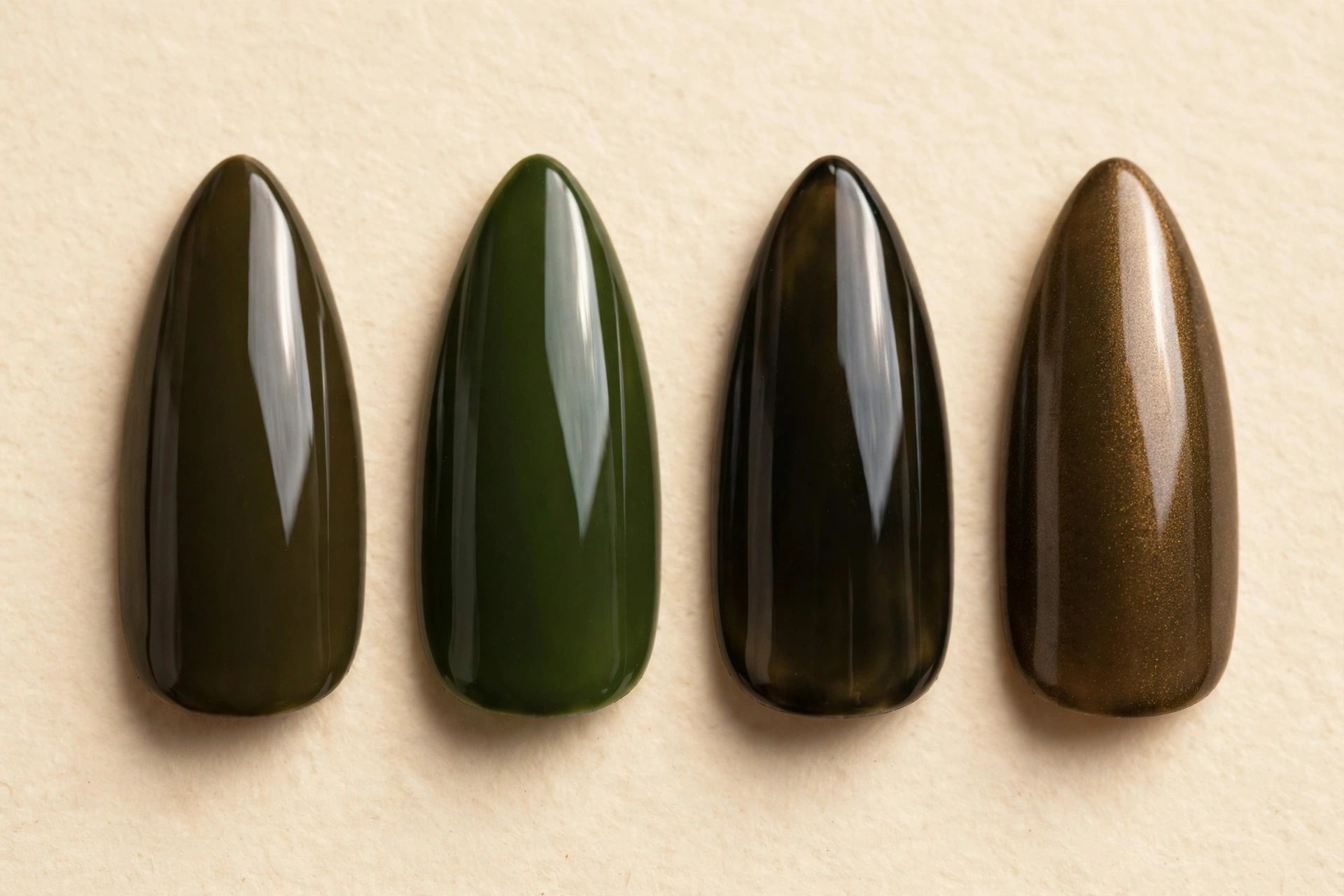
10. Smoked Olive — #4C5335
Smoked Olive is depth with a veil over it — the same dark territory as Gin & Juniper but softened with a grey, smoky finish that makes it feel hazy and atmospheric. It is arguably the most fashion-forward shade in this chart, the kind of color that shows up on runways rather than in drugstore displays. Cool and neutral undertones wear it best, and it is particularly striking on deep skin, where the smoky grey creates a beautiful tonal contrast. Next to Kalamata Night below, Smoked Olive reads cooler and greyer; Kalamata pulls warmer and browner. Choose this one when you want dark nails that feel soft instead of severe.
11. Kalamata Night — #423A26
Kalamata Night is the warmest of the deep olives, a near-black with a distinct brown-bronze undertone that keeps it from ever looking flat. It is the shade for anyone who finds true black nails too stark but still wants that dark, polished drama. Deep and warm skin tones look incredible against it, and it pairs naturally with brown leather, tortoiseshell accessories and gold jewelry. Compared to Midnight Martini below, Kalamata Night is noticeably warmer and more readable as “color” rather than “black” — Midnight Martini is for maximum mystery, Kalamata Night is for maximum richness.
12. Midnight Martini — #2F331D
The deepest shade in the chart, Midnight Martini is an olive so dark it flirts with black, revealing its green soul only in direct light. It is the ultimate statement olive — dramatic, chic, and surprisingly versatile, since near-blacks go with literally everything. Long almond or stiletto shapes show it off best, letting the color pool and catch light at the tip. On every skin tone it reads as deliberate and polished, never accidental. Set it beside Kalamata Night and you’ll see its cooler, greener heart; it is the shade to choose when you want the darkest possible take on the dirty martini theme.
How to Style Dirty Martini Nails
Olive is one of those rare color families that behaves like a neutral, which means it plays well with almost everything in a fall wardrobe. The lighter khakis — Dry Vermouth, Olive Brine — sit beautifully alongside cream knitwear, camel coats and white denim, giving an outfit a quiet color note without competing with it. The mid-tones like Manzanilla and The Original Dirty are made for the classic fall uniform of dark denim, brown boots and a wool blazer; the green picks up the earthy tones and ties the whole look together.
Jewelry choice matters more with olive than with most neutrals. Gold is the natural partner — the warmth of gold echoes the yellow in the olive and makes both look richer, which is why the lighter shades look so good with gold rings. Silver works too, especially with the grey-green end of the palette like Shaken Grey and Smoked Olive, where the cool metal sharpens the cool green. If you wear both metals, the mid-olives are forgiving enough to sit with either.
For makeup, keep it simple and let the nails carry the color story. A warm brown eye, a soft bronze blush and a nude or brown lip keep the olive feeling intentional; a bold red lip with dirty martini nails can work for evening, but it turns the look into a statement rather than an accent. The one rule worth remembering: olive already has a lot of yellow, so avoid pairing it with very yellow-toned foundation on the hands’ neighboring skin — a slightly neutral base on the face keeps everything balanced.
Best Occasions for Dirty Martini Nails
The beauty of this palette is its range — there is genuinely a dirty martini shade for every setting. The pale khakis are office-safe in a way most greens aren’t; Dry Vermouth reads as a sophisticated neutral in a meeting and nobody will blink. Cocktail-adjacent events are the obvious home for the family — dinner parties, date nights, holiday gatherings — where the olive-on-the-nails nod to the drink feels witty and intentional. As party season approaches, the deeper shades like Gin & Juniper and Olive Oil Gold carry beautifully into evening territory; pair them with our emerald shades for the holidays if you want a full festive green story across both hands.
For weddings — your own or someone else’s — stick to the lighter half. Olive Brine and Dry Vermouth photograph softly and don’t fight with bouquets or outfits, while still giving you a manicure with personality. The darkest olives are better saved for nights out, concerts and fall travel, where their drama fits the mood. And if you’re heading somewhere the dress code is conservative, Manzanilla is the one-shade-fits-all answer: interesting enough to notice, muted enough to pass anywhere.
Application & Longevity Tips
Olive cremes are some of the more forgiving dark polishes to apply, but they still reward good prep. Start with a ridge-filling base coat, especially for the deep shades — dark olives show every ridge and imperfection that a pale nude would hide. Two thin coats beat one thick coat every time with this family; olive pigment can go streaky if laid on too heavily, and thin layers level out as they dry. For the palest khakis, a third whisper-thin coat sometimes helps reach full, even opacity without flooding the cuticles.
Cap the free edge with every layer, top coat included — the tips are where olive cremes chip first, and the pale khakis show tip wear more visibly than the deep ones. A quality glossy top coat does real work here: it deepens the mid-olives noticeably, making The Original Dirty and Olive Leaf look richer, and it extends wear by several days. Expect the deep shades to last longer between chips simply because regrowth and minor wear are less visible; the light khakis need a touch more vigilance but are easier to patch invisibly. If you’re using gel, the same rules apply, and cure each thin layer fully — olive gels can look cured on top while still soft underneath if the coats are too thick.
Polish & Gel Picks
- A pale khaki-grey creme in the dry vermouth family, two coats for full opacity
- A briny medium olive creme, the classic dirty martini shade
- A bright cocktail-olive creme with fresh green pigment for contrast
- An antique gold-olive metallic shimmer for accent nails and evenings
- A near-black juniper olive creme for maximum depth
- A smoky grey-olive creme for the fashion-forward finish
Shades in this chart are inspiration references, and actual salon and retail colors vary — use the hex codes and descriptions as a guide when matching at the counter or with your nail tech.
Frequently Asked Questions
What exactly are dirty martini nails?
Dirty martini nails are manicures in the olive green family, named for the cocktail’s signature olive garnish and briny look. The shades range from pale khaki and grey-green through classic cocktail olive to near-black olive, and the trend is about wearing green in its most sophisticated, muted, fall-ready form rather than bright or neon green.
Do olive nails suit all skin tones?
Yes, because the family is so wide. Fair skin tends to look best in the paler khakis and mid-olives, which give contrast without heaviness. Medium skin wears the whole chart well, especially the bright cocktail olives. Deep skin glows against both the pale briny shades, which create beautiful contrast, and the near-black olives, which look rich and tonal. The key is matching the shade’s undertone — warm olives for warm skin, grey-greens for cool skin.
Are dirty martini nails appropriate for work?
The lighter half of this palette absolutely is. Shades like Dry Vermouth and Olive Brine read as polished neutrals in a professional setting, similar to wearing taupe or sage. Save the near-black olives for after hours if your workplace is conservative, and keep the finish glossy and the shape neat — a tidy application makes any shade look more office-appropriate.
How do dirty martini nails differ from regular olive green nails?
The difference is mostly in framing and range. Regular olive nails usually mean one classic army-olive shade. Dirty martini nails treat olive as a full palette — twelve or more shades from khaki to olive-black, often with briny, cocktail-inspired undertones — and lean into the chic, slightly edgy mood the drink’s name carries. Think of it as olive nails with a concept behind them.